Physics World
Pathways to commercial and academic success in medical physics
Nick Zacharopoulos, CEO of Aktina Medical, is our podcast guest
The post Pathways to commercial and academic success in medical physics appeared first on Physics World.
This episode of the Physics World Weekly podcast features the medical physicist Nick Zacharopoulos, who is CEO of US-based Aktina Medical.
In conversation with Physics World’s Tami Freeman, Zacharopoulos reflects on the twists and turns in his career developing new technologies for radiation oncology. His journey began when he was a child helping his father build radiotherapy components in family’s garage and led to academic and commercial success.
Zacharopoulos talks about his role in the development of a pivotable product for Aktina and how his persistence – and a chance lunch with a colleague – led to his enrolment in a PhD programme at McGill University.
The post Pathways to commercial and academic success in medical physics appeared first on Physics World.
Faster cryogenics speeds up quantum testing
A cryostat that can reach temperatures of 4 K and warm back up again within just two hours offers an efficient solution for testing the electronic components needed to build quantum computers
The post Faster cryogenics speeds up quantum testing appeared first on Physics World.
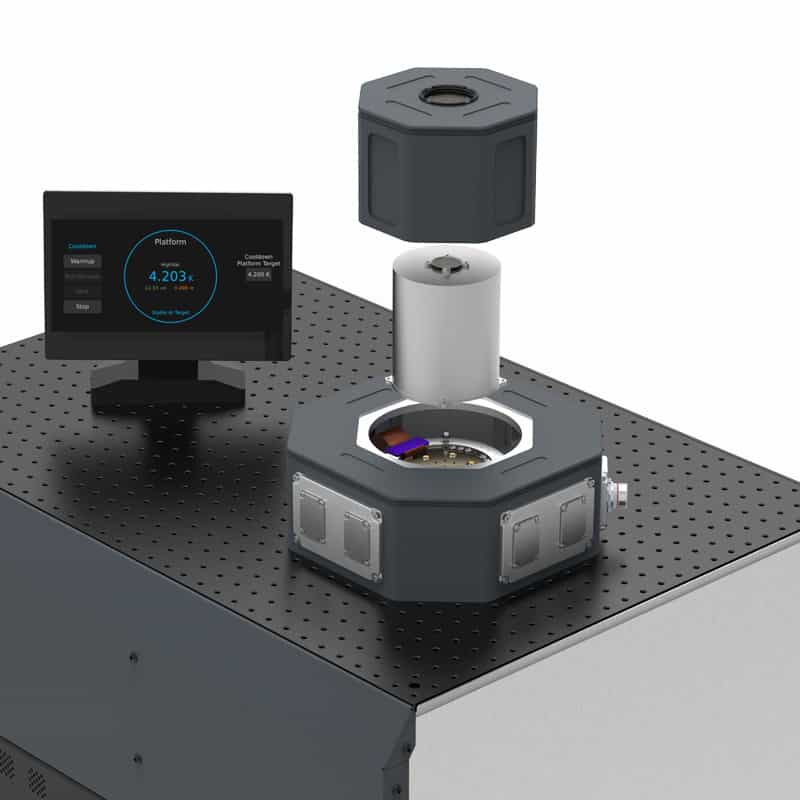
As quantum computing enters its commercial phase, demand is growing for electronic components that can operate reliably at ultralow temperatures. But suppliers that routinely test the performance of their devices under a wide range of conditions rarely extend their characterization efforts to the cryogenic regime. Quantum developers must either test the components themselves, or run the risk that a faulty device ruins the performance of increasingly complex quantum machines.
“Quantum computers are often operated within a dilution refrigerator, which takes days or weeks to cool down,” says Ben Wilbur, a senior design engineer at cryogenics specialist Montana Instruments. “A single faulty component requires the whole system to be warmed up again, which can waste the best part of a month and slow down progress.”
To avoid that scenario Montana Instruments has designed and built a cryostat, called the RapidCycle 100 EC, that can cool down from room temperature to 4 K within an hour and warm back up again just as quickly. The overall cycle time is around three times faster than for similar systems, and a fraction of the time needed to cool down and warm up a large-scale dilution fridge.
Such a rapid cycle time offers an efficient solution for quantum engineers to validate electronic components before integration and for suppliers to measure the low-temperature response of their devices before shipping them out to customers. “From talking to different companies we know there is a market desire to test more components, but there is also a commercial impetus to streamline the testing process,” says product manager Patrick Gale.
Gale points out that many of the electronic components that are being used to build quantum computers have not been designed to operate at ultralow temperatures. As an example, radio-frequency devices play a critical role in many qubit architectures for controlling and reading out the quantum states, but manufacturers of these components are unlikely to have the expertise or equipment to know whether their components function effectively in this regime.
“This system is designed for companies that want to understand how their devices perform at ultralow temperatures, but without needing to hire a cryogenics engineer,” says Gale. “Having the capability to characterize their own components could offer suppliers a competitive advantage, allowing them to pre-qualify their devices and even to improve their low-temperature performance for quantum applications.”
Commercial drivers
The idea for the RapidCycle cryostat first emerged in 2023. Initial development results were promising, but more immediate priorities delayed efforts to engineer a commercially viable product. Around a year ago, as the need for faster cycle times became more urgent within the rapidly expanding quantum industry, the company restarted its design work. “We felt we were in a unique position to tackle this problem,” says Gale.
But cutting the cycle time by a third was not an easy task. “Most of the thermal energy is from room temperature down to around 50–70 K, so that is where we needed to focus our development efforts,” says Wilbur. “Beyond that the temperature starts to drop much more rapidly, since the heat capacity of the materials become much lower close to absolute zero.”
While the original work had shown that rapid cool downs were feasible, further iterations were needed to achieve the target temperature of 4 K and to generate enough cooling power to maintain the device at that temperature during the test. “To optimize the performance we needed to think carefully about the materials we used, and about the amount of thermal mass that really needed to be in the system,” says Wilbur. “The more you have in there, the longer it will take to cool down.”
While there was a clear design focus to minimize the thermal mass, the system has been engineered to provide plenty of space and flexibility for testing electrical components. Samples can be mounted on a 100 mm platform, large enough to accommodate a diverse range of electronic components, while the configuration can easily be adapted to different testing protocols. Extra space has also been created around the sample to provide an easy-access wiring system that supports a flexible combination of RF and DC feedthroughs into the cryogenic environment.
“As these tests get more complicated, all the inputs and outputs to the sample can make the cryostat really messy,” says Wilbur. He explains that the unit has a tiered structure, with the sample space at the top and a lower housing that provides extra room for connecting and disconnecting the cables. “It really cleans up the wire management but also reduces the volume within the sample space to achieve a fast cycle time.”
Targeted design
Other design features have focused on the usability of the system, particularly for electronic engineers and technicians with limited knowledge of cryogenics. In keeping with the company ethos of making cold science simple, the complexities of the cool-down process – such as reaching the right vacuum level before engaging the cryocooler – are hidden from view. “The user just needs to set a target temperature and press the cool-down button,” says Gale. “The same for warm-up, all the temperature monitoring is done automatically so the user can just walk away.”
A touchscreen interface provides real-time readouts of the internal temperature, vacuum pressure and temperature stability, while the system can also be connected to a computer network to allow for remote control and monitoring. All the measurements taken with the system can easily be exported over the network connection, enabling them to be combined with other performance data that have been collected for device characterization.
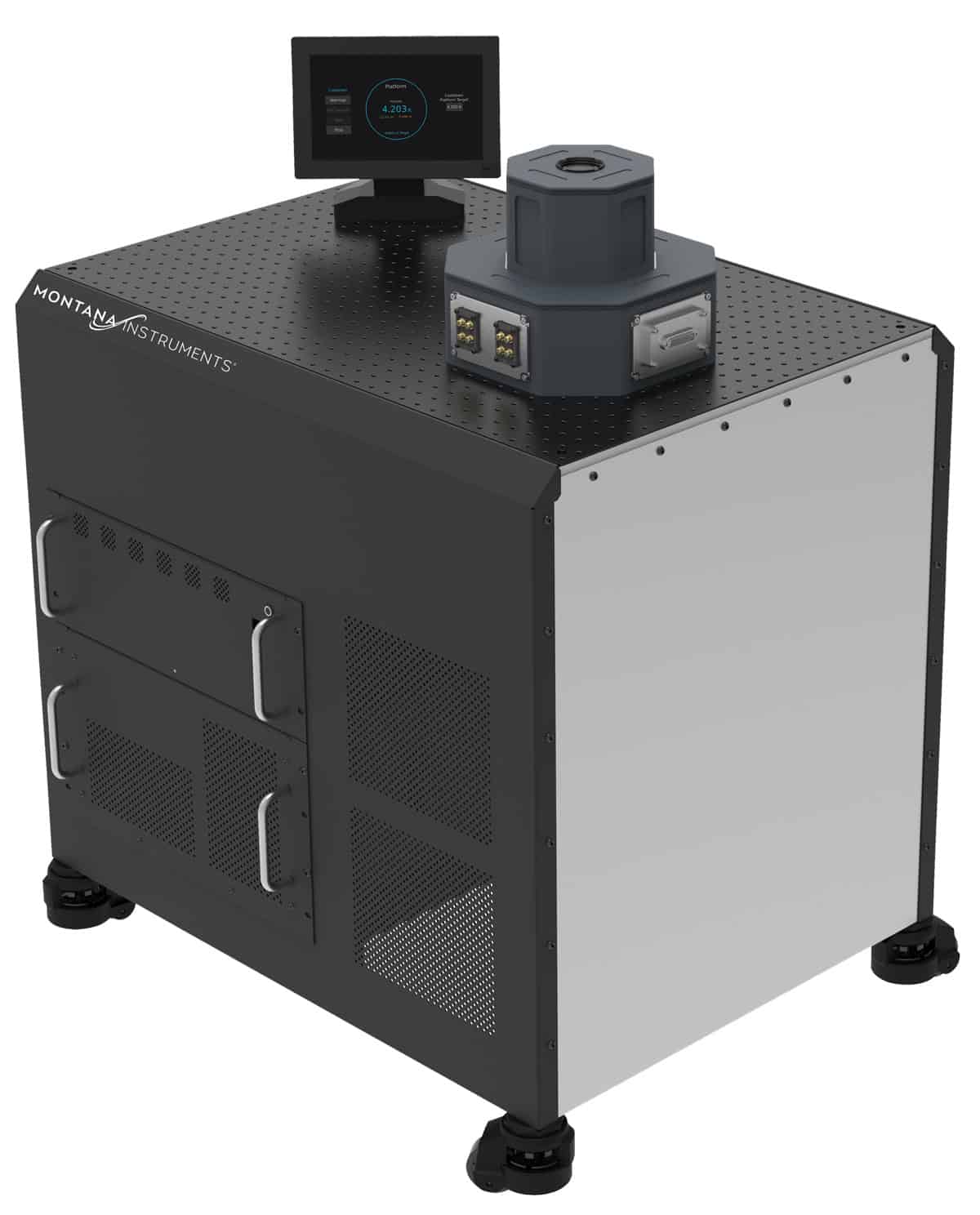
Such automated processes are nothing new for Montana Instruments, which has built a reputation for building systems that allow users to focus on their own experiments and assemblies rather than the intricacies of the cryogenics. In this case, however, special attention was also paid to creating an integrated system that can operate within the constraints of a manufacturing environment. “We focused on consolidating the form factor to ensure that the unit doesn’t take up too much space on the production floor,” says Wilbur. “The cryostation and all the controls fit into a cart that can easily be wheeled around.”
Following the official launch of the RapidCycle earlier this year, Montana Instruments is expecting to ship the first commercial units in the next month or two. But Gale points out that some beta customers in the manufacturing sector have already been trialling the system. “The feedback has been positive,” he says. “With some simple training we have had them up and running in a day or two, and they really appreciate the fast cooldown.”
The post Faster cryogenics speeds up quantum testing appeared first on Physics World.
What can cutting a photon in half tell us about causality and local equivalence?
Calculations identify complicated consequences of removing a mirror
The post What can cutting a photon in half tell us about causality and local equivalence? appeared first on Physics World.
Physicists in Norway have combined quantum mechanics with relativity to show that the act of “cutting a photon in half” has no immediate effect on how that photon appears to an observer outside of a small transition region where the truncation took place. Within that region, however, their calculations suggest that large numbers of photons are required to describe the truncated photon.
Light is complex. For some phenomenon, it exhibits particle-like behaviour, and for others, it exhibits wave-like behaviour. This duality is reconciled by quantum field theory, which describes light as both a particle and a wave at the same time. More precisely, in this framework, light can be considered as consisting of particles called photons, and these photons are defined as excitations in quantum electromagnetic fields.
A common technique in optical experiments is to chop a beam of light into divisions called pulses, and an interesting – and until recently, unexplored – question is what happens to a single photon when it is chopped? The physicists Isak Cecil Onsager Rukan, Jan Gulla and Johannes Skaar at Norway’s University of Oslo set out to answer exactly this question.
Can one cut a photon in half?
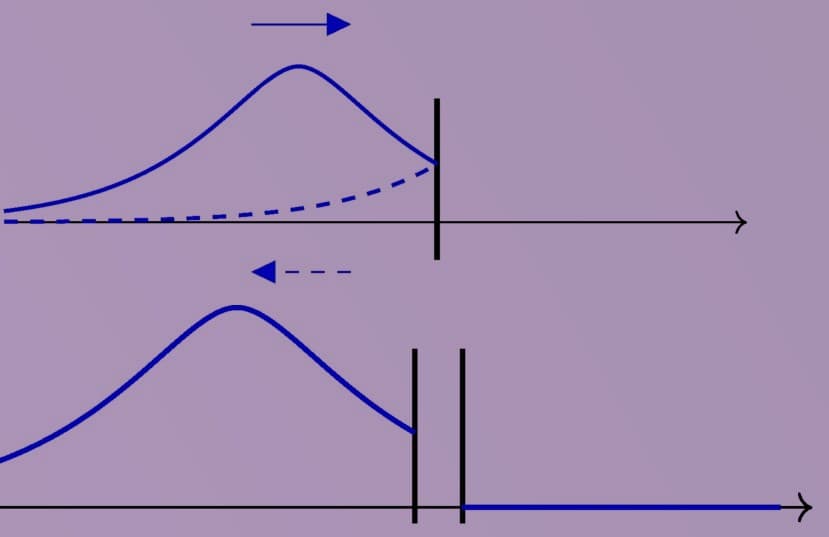
What do the researchers mean by cutting a photon in half? In the wave picture of light one can imagine an electromagnetic wave that is separated in two parts by an ideal shutter. Writing in Physical Review Letters, the trio considers that thought experiment with a set-up displayed in the upper portion of the figure.
Here, a photon is represented by an electromagnetic wave that is moving from left to right towards a mirror. If the mirror is ideal, then the photon is reflected completely.
A photon can be truncated by removing (either gradually or abruptly) the mirror while the wave is being reflected. Because some of the wave has already been reflected when the mirror is removed, the result is forward-moving and backward-moving modes – the solid and dashed lines respectively.
In this way, the action of removing the mirror has effectively “cut” the photon in half if we ignore the backward-moving modes. The outcome is surprising. In the particle picture of light, one would expect to find or not find a forward propagating photon. However, calculations done by the trio show that the outcome is a complicated state consisting of a classical mix and a quantum superposition of multiple photons.
Shifting perspectives
Returning to our earlier definition of a photon, the absence of excitations of the quantum electromagnetic field corresponds to the absence of photons. This is called a vacuum (or empty) state. However, this notion of photons (and particles in general), is not always fixed, and can be observer or scenario dependent. For instance, what looks like a vacuum to a stationary observer, might look like radiation (a bunch of photons) to an accelerating observer. This is known as the Unruh effect.
In a similar manner, what is considered a vacuum state and a photon is different before and after the mirror is removed. This is because the presence of the mirror divides the physical space in half. The nature of excitations before and after the reflector is removed is different, thereby changing the notion of what is considered as a particle. The definition of vacuum in different frames (observers) is related mathematically by the Bogoliubov transformation. It is the same mathematics that also describes why black holes must eventually decay by emitting radiation. In this case the incoming vacuum state is related to outgoing thermal radiation via these transformations.
Using these mathematical tools, the researchers were able to calculate the complicated final state. First, they assumed that the reflector was removed instantaneously. In such a scenario, they had the unphysical result that the expected number of photons in the final state is infinity. If they assume that the mirror is slowly removed, they get a finite number of expected photons in the final state. However, you can still observe any number of photons. “There is a non-zero probability of observing any number of photons,” explains Skaar.
Nothing is faster than the speed of light
Understanding what happens when the mirror is removed requires the invocation of both classical and quantum physics. On one hand, the quantum state of the electromagnetic field changes on removal of the mirror, with the very definition of a particle or a vacuum state being a very non-local concept. This is because quantum mechanics requires that the excitation must be defined over the entire physical space. On the other hand, the classical principle of causality dictates that information cannot travel faster than the speed of light. As a result, the change in the physical state of the electromagnetic fields caused by the removal of the reflector cannot propagate faster than the speed of light. This means that, for an observer at a location far enough from the mirror such that light has not had enough time to travel there yet, should experience no change in physical state.
So, quantum mechanics requires the instantaneous change of the entire global physical state on removing the mirror, whereas causality requires a finite speed limit on the propagation of any change. The challenge for the Oslo trio was how to reconcile these two requirements.
They do this by considering what an observer can actually measure about the electromagnetic field at any point. By considering only such localized measurements, the researchers ascertain that beyond a certain region around the mirror (which they call the transition region), the final state looks exactly like the initial state. This is illustrated in the lower portion of the figure.
On the right of the reflector, far enough such that light has not had enough time to travel there (right of the transition region), the region is indistinguishable from the vacuum state if one were to only rely on these localized measurements. Similarly, on the left side of the transition region, the state cannot be differentiated from a single photon state. This is known as “local equivalence” whereby a quantum state in a finite region is locally equivalent to another, if they cannot be distinguished by local measurements in that region.
Skaar comments, “We find it interesting that in quantum field theory, a complicated state can look very simple locally, in this case everywhere except in a narrow transition region.”
The post What can cutting a photon in half tell us about causality and local equivalence? appeared first on Physics World.
Thirty Meter Telescope rejects La Palma as alternative host site
€1bn funding package has been turned down by the Thirty Meter Telescope International Organization
The post Thirty Meter Telescope rejects La Palma as alternative host site appeared first on Physics World.
Members of the Thirty Meter Telescope (TMT) International Organization have turned down Spain’s €1bn offer to build the instrument at the Roque de los Muchachos Observatory in La Palma. The package was put forward in July with funding also provided from the European Investment Bank and Spain’s Official Credit Institute. The decision makes Hawaii’s Mauna Kea as the only possible option for the telescope.
The TMT, if built, would use a segmented primary mirror consisting of 492 elements of zero-expansion glass for a 30 m-diameter primary mirror that will allow astronomers to resolve the faintest and oldest galaxies.
The TMT’s members include the University of California, the California Institute of Technology, Canada, India, and Japan.
Officials at the TMT have not released a final construction cost for the telescope, but it is expected to be at least $3bn, of which $2bn has been committed.
In 2009, the TMT organization choose Hawaii’s Mauna Kea peak as its location. However, in 2015 protests by indigenous Hawaiians, who regard the site as sacred, delayed the start of construction.
The issue forced officials to consider a change of location with the island of La Palma, belonging to Spain’s Canary Islands, proposed as its preferred alternative site in 2016.
Some astronomers, however, were concerned by the potential move given that La Palma’s environmental conditions may limit the telescope’s scientific potential. In particular, the warmer climate and lower elevation of La Palma compared to Mauna Kea could affect mid-infrared observations, which require dry, cool conditions.
Rival designs
Further woes hit the TMT project beginning in 2024 when the US National Science Foundation (NSF) announced it would only support the construction of the Giant Magellan Telescope (GMT) or the TMT – but not both facilities.
A year later, the NSF decided to pursue the GMT, which uses seven primary and seven secondary mirrors to give it an optical surface of 25.4 m. Building of the GMT is already under way at Chile’s Las Campanas peak with officials working toward a final design review.
In 2025, Spain then offered €400m to join the project if the TMT was built in La Palma. In July, the European Investment Bank and Spain’s Official Credit Institute said it would provide an additional €600m in loans towards construction.
Yet according to a statement from the Astrophysics Institute of the Canaries (IAC), which operates the Roque de los Muchachos Observatory, TMT officials have now rejected that offer.
The IAC say that TMT members were “unable to reach the consensus required to accept the financial offer”.
The IAC adds that despite the decision, the institute “remains fully committed to the scientific and technological development of the [Roque de los Muchachos Observatory]” and will continue to promote the installation of new infrastructure including the Cherenkov Telescope Array Observatory and the European Solar Telescope.
The post Thirty Meter Telescope rejects La Palma as alternative host site appeared first on Physics World.
How the Nancy Grace Roman Space Telescope will turn the sky into a dataset
Richard de Grijs looks at how the Roman Space Telescope will change astronomy forever
The post How the Nancy Grace Roman Space Telescope will turn the sky into a dataset appeared first on Physics World.
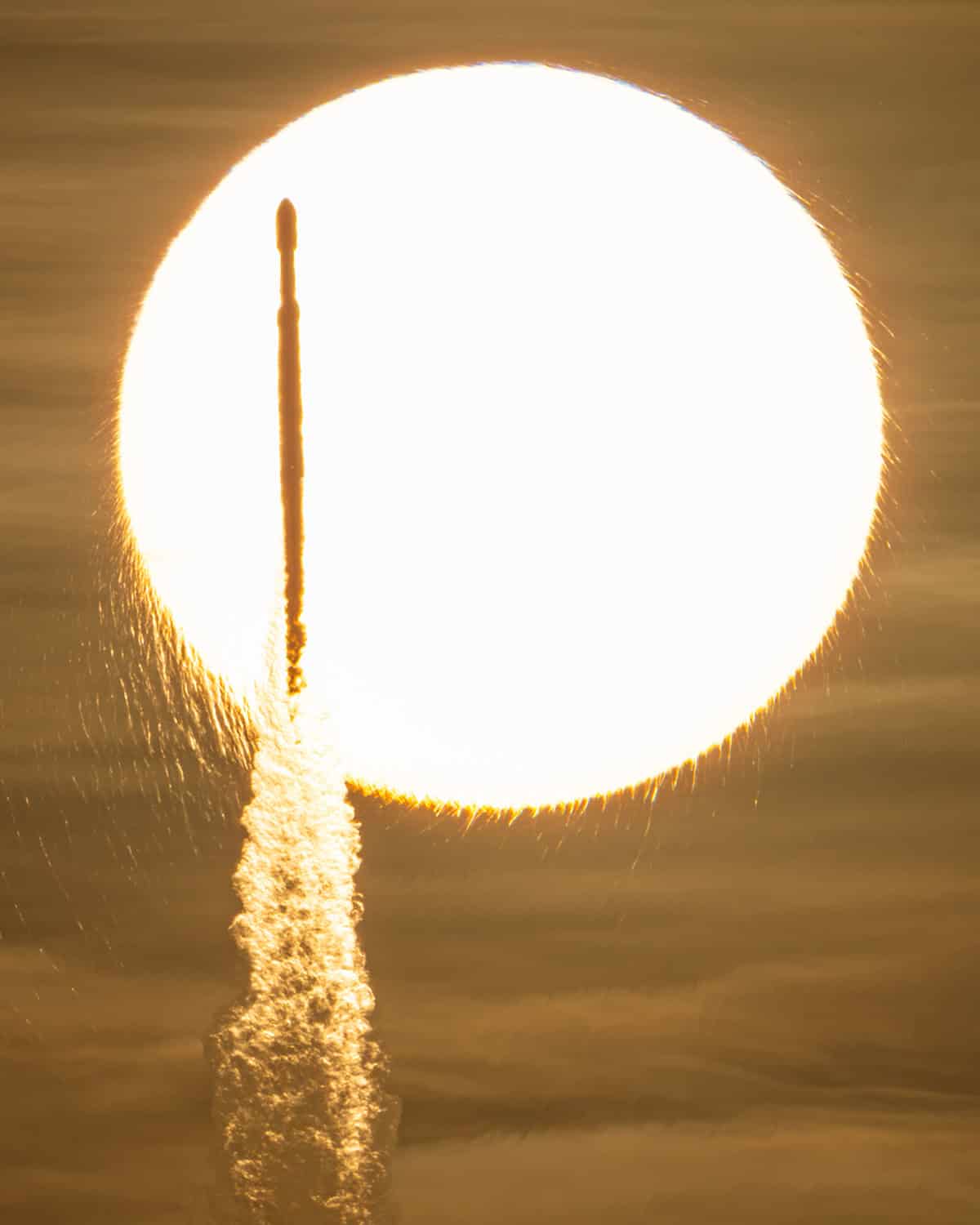
At 7.26 a.m. on Sunday 30 August 2026, a SpaceX Falcon Heavy rocket rose from the Kennedy Space Center in Florida, carrying NASA’s Nancy Grace Roman Space Telescope on its initial three-month journey beyond the Moon. As I watched online from my home in Sydney, Australia, that evening, the launch did not disappoint. There was all the familiar theatre of a rocket taking off: the brilliant column of flame, mission control calling out that it had gone through the point of peak aerodynamic stress, then the booster and main-engine cut-offs, before the fairing finally fell away.
Just 31 minutes after lift-off, Roman separated from its carrier rocket and began its long journey to L2, the second Sun–Earth Lagrange point, 1.5 million kilometres from Earth. Once it arrives there at the end of November, the gravitational balance will let Roman maintain its orbit with relatively little fuel. The Sun, Earth and Moon will all be on the same side of the spacecraft so that a single shield can block their light and heat, while the telescope faces away from them and stays cold.
Yet the most impactful part of Roman’s journey will be less visible. When its first images are released, hopefully in early 2027, the telescope will accelerate a change already long under way in astronomy. Rather than investigating carefully selected objects in the sky, astronomers are now increasingly mapping entire populations – monitoring a changing sky and searching enormous datasets for discoveries no single observer could conceivably find by eye. Roman will speed up that trend much further.
During the launch broadcast, I heard NASA administrator Jared Isaacman say Roman will study the “ecology of the universe”. Some cameras, he suggested, can provide an overview of a forest, while others can zoom in on individual birds and leaves. Roman, however, will combine both approaches. With a 2.4 m-diameter primary mirror, its images will be as sharp as those from the Hubble Space Telescope. But Roman’s Wide Field Instrument (WFI) can cover at least 100 times as much sky in a single pointing.
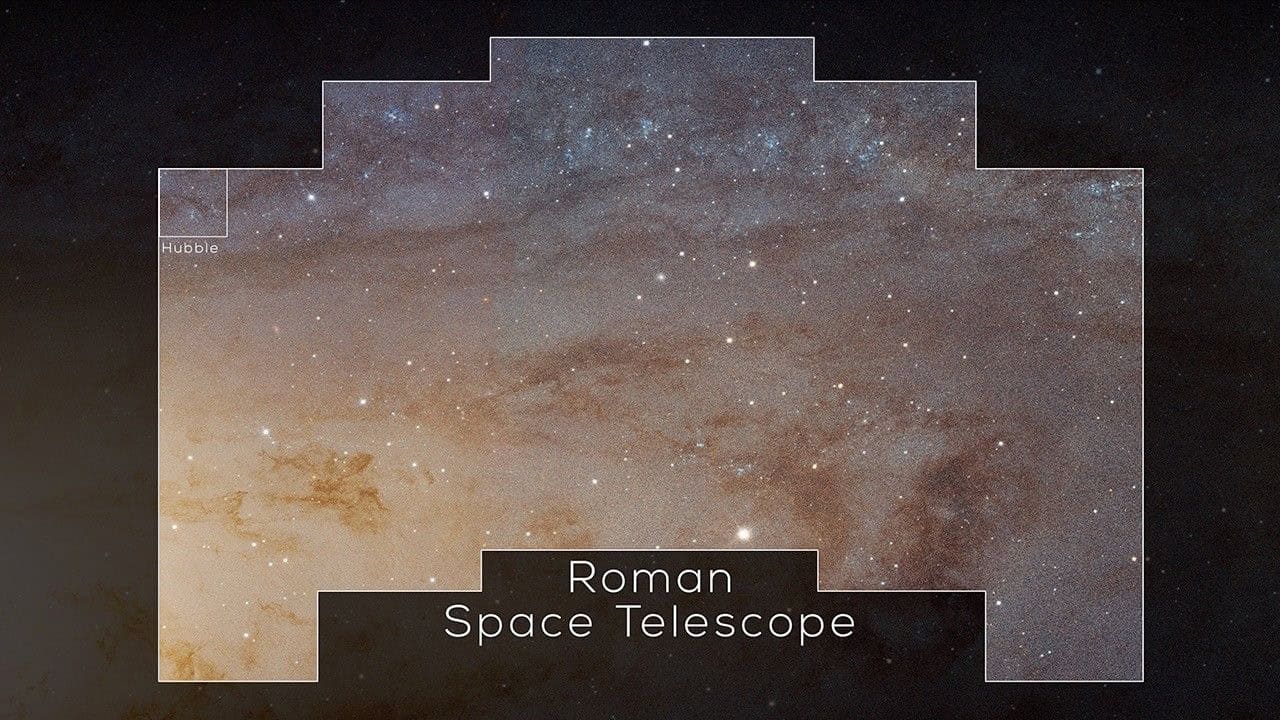
With Roman, the detailed and population views become part of the same observation. Traditionally in astronomy, a sharp image of a single galaxy can reveal its stars, dust and morphology, while a wide but (usually) less detailed survey can tell us how galaxies are distributed. Roman will do both: it will record fine detail while retaining the wider view of the environments and populations to which individual objects belong. It will, in essence, allow astronomers to study in detail entire cosmic ecosystems as well as their constituent objects.
And that is what makes Roman so revolutionary.
From observing targets to interrogating surveys
For much of modern professional astronomy, observing began with a proposal to study an object of scientific interest. If it was accepted by an observatory’s time-allocation committee, the astronomer would travel to the telescope (or, later, log in remotely), collect a manageable quantity of data, reduce and analyse it, and retain exclusive access during a proprietary period while preparing their first research paper. The observer knew why each exposure had been taken.
That model has not disappeared. The Hubble and James Webb space telescopes remain extraordinarily powerful precisely because they can study selected targets in fantastic detail. Roman’s coronagraph, meanwhile, will test active optics that suppress starlight far more effectively than existing space-based coronagraphs, allowing it to image giant planets orbiting nearby stars and paving the way for future missions to photograph smaller, Earth-like worlds.
However, alongside targeted astronomy, a different observing mode has become increasingly important, namely observatories designed to produce systematic, reusable maps of the sky. The Gaia mission of the European Space Agency (ESA) is one such example. Over its 11-year life between 2014 and 2025, Gaia took more than three trillion (3 × 10¹²) observations of roughly two billion stars and other objects. Its public catalogues have allowed researchers to reconstruct the Milky Way’s structure, identify stellar streams and star clusters, examine binary stars and search for rare objects, often without ever applying for new telescope time.
Gaia’s third data release, which was made public in June 2022, included 10.5 million “variable sources” – any objects that change in brightness over time, sometimes regularly and sometimes unpredictably. They were all classified using supervised machine-learning techniques, in which an algorithm learns from previously labelled examples. No astronomer could personally have inspected that many light curves (records of brightness versus time).
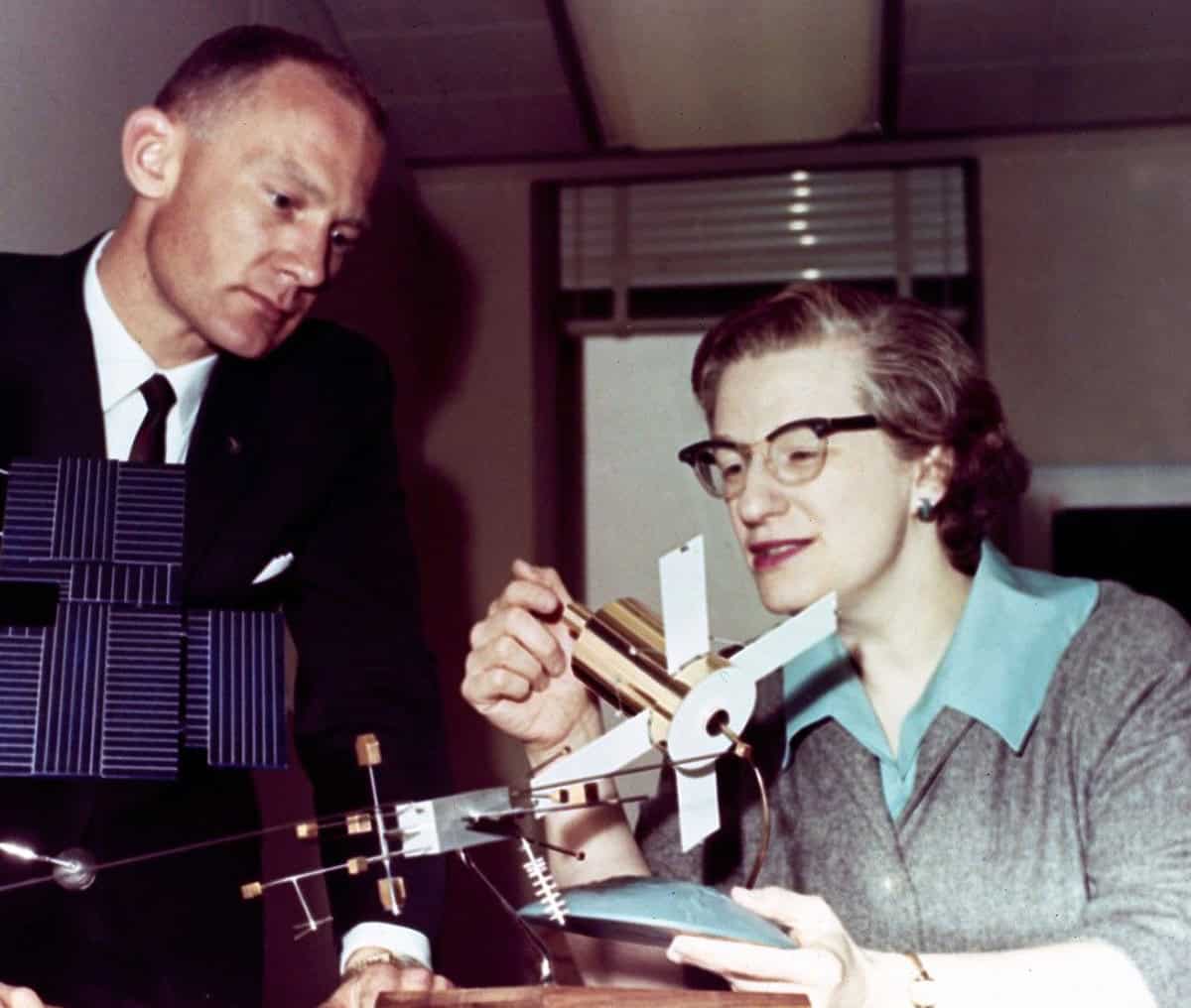
The Vera C Rubin Observatory in Chile makes the new approach to professional astronomy even more explicit. Its decade-long Legacy Survey of Space and Time, which began in 2026, is collecting some 10 terabytes of data each and every night. Whenever its software detects that something has changed, it issues an alert. When alerts are triggered, they will be sent to automated “brokers”, which will cross-match them against existing catalogues, classify them and rank candidates for follow-up scrutiny. It is unlikely that an astronomer searching for supernovae, variable stars or hazardous asteroids, for example, will begin with the telescope’s raw images. Throughout modern astronomy, the starting point will instead be a filtered stream produced by a chain of algorithms.
Roman will carry this survey logic into space, beyond the blurring and infrared glow of the Earth’s atmosphere. As Roman’s deputy WFI scientist Ami Choi explained during the launch broadcast, the wide view is essential, especially for cosmologists. They don’t only need sharp measurements of individual galaxy shapes but also data on enough galaxies across a sufficiently large volume. That way they can distinguish the behaviour of the universe on large scales from the peculiarities of one small region.
Roman's three surveys
Roman’s three core surveys will show how a dataset can be designed to answer one question while creating the raw material for many others.
The High-Latitude Wide-Area Survey will map more than 5000 square degrees, which is more than 12% of the sky. It will do this using both imaging and “slitless” spectroscopy, in which spectra are recorded for every suitable object in the field rather than just individually selected targets.
Measuring the subtly distorted shapes of hundreds of millions of galaxies should reveal the distribution of dark matter – the mysterious, invisible stuff that makes up 27% of the universe by mass-energy – and also how cosmic structure has grown over time. Yet the same observations will also contain stars in the Milky Way, nearby galaxies, distant quasars, strong gravitational lenses and objects that no survey committee will ever have thought to put on a target list.
Roman’s High-Latitude Time-Domain Survey, meanwhile will repeatedly image “deep” fields at roughly five-day intervals, producing an anticipated 100,000 transient light curves. Type Ia supernovae, whose luminosities can be standardized to make them cosmic distance indicators, will trace the expansion history of the universe, but the repeated images should also expose variable galactic nuclei and rare explosions.
Finally, the Galactic Bulge Time-Domain Survey will revisit six fields of the sky about every 12 minutes during its most intensive observing seasons. Its main goal is to detect the temporary brightening of a star that occurs when the gravity of an unseen object passes in front and bends its light. Such “gravitational microlensing” events can reveal cold planets orbiting their host stars as well as free-floating planets and isolated black holes. The same sequence becomes a record of stellar variability and motion.
The reuse of data that we’ll see with Roman is not entirely new. Photographs recorded on physical glass plates often preserved far more sky than the astronomer who exposed them intended to study. Indeed, there have been instances of researchers trawling through old plate archives who’ve made discoveries decades after the photos were originally recorded. Electronic detectors, which produce digital images, made searching old data in this way far easier.
But what is new is the scale and the degree to which reuse is built into the Roman observatory from the outset. Many papers about data from the Roman mission will, I am sure, be written years later by researchers who were never involved in choosing the original data collection and may encounter the observation only as a row in a database.
Together, these observatories mark the arrival of what might be called astronomy’s “production era”. The phrase may sound industrial, but it describes a real shift in our professional practice. Telescope time remains precious, but it is no longer the only scarce resource. What will be increasingly hard to come by will be the capacity to process, connect and interpret what surveys have already observed, and to formulate a question sharp enough to extract meaning from an archive built for many purposes.
A picture too large to see
The data that Roman will yield is mind-boggling. Roman’s WFI has 18 infrared detector arrays with a total of about 300 million pixels. Even one field would require three dozen 4K television screens to display at full resolution. But Roman will tile thousands of such fields into surveys. During the pre-launch broadcast, Roman programme scientist Dominic Benford joked that NASA would need more than 500,000 TV sets to display the largest completed survey; laid out together, they’d cover some 45 city blocks.
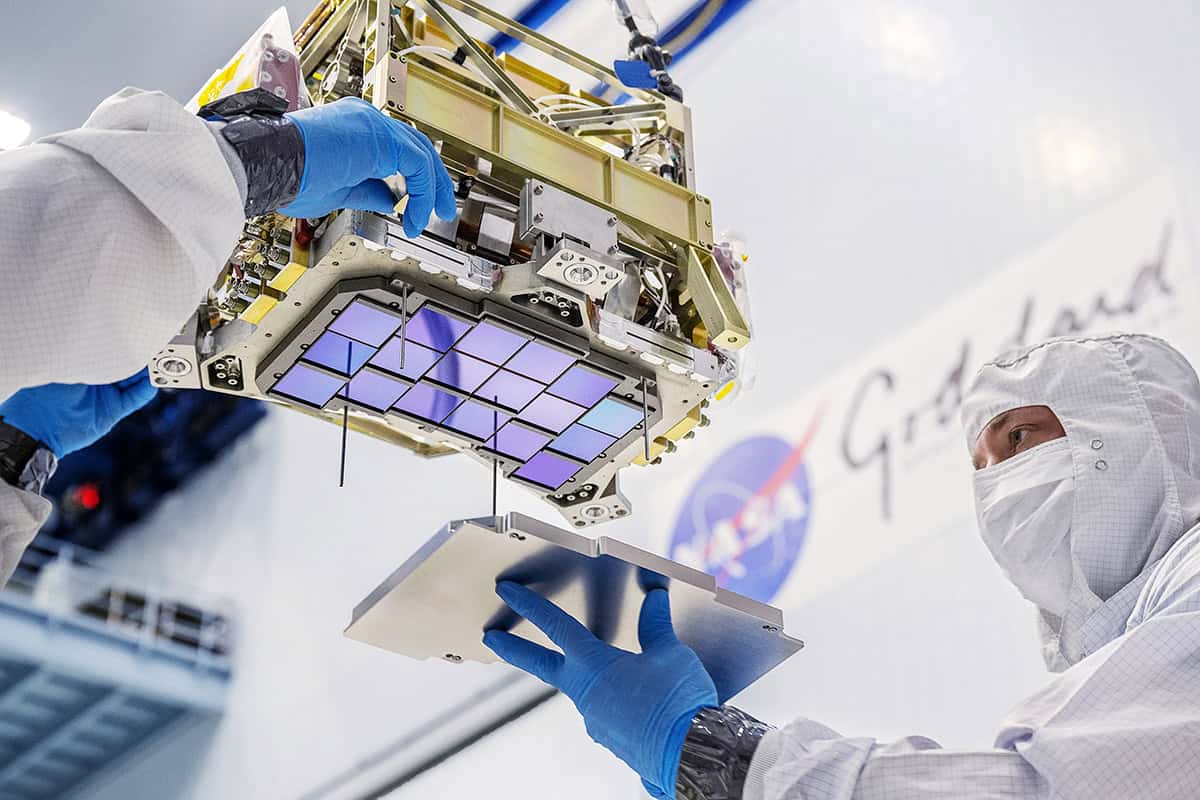
Calling this a single “picture” is convenient but misleading. It will be a computationally constructed portrait assembled from many pointings, observing epochs and filters. The telescope collects photons; processing pipelines calibrate the detectors, remove instrumental signatures, align exposures and turn them into images, mosaics and catalogues. In survey astronomy, computation is not something that happens after the observation; it is part of observing.
During its lifetime, Roman is expected to return around 1.4 terabytes (1.4 × 1012 bytes) of compressed data each and every day. In fact, if you take into account the intermediate data generated when the information is processed, Roman’s archive could top 20 petabytes (20 × 1015 bytes) over its five-year primary mission. NASA expects automated methods, including machine learning, to help explore the torrent of data.
Automation is unavoidable, but it poses a subtle problem. Algorithms are excellent at finding examples of phenomena on which they have been trained. The discoveries that change science, however, often do not fit into established categories. An anomaly-detection system can flag statistical outliers, but deciding which outliers are artefacts, familiar objects in unusual circumstances or genuinely new phenomena remains a scientific assessment.
Human involvement in Roman won’t be entirely superfluous, however, and will still be required to make breakthroughs. Citizen scientists will play their part too. We need to encourage amateur sleuths to follow in the footsteps of people like Hanny van Arkel – the Dutch schoolteacher who in 2007 spotted an unfamiliar green cloud in data gathered by the Sloan Digital Sky Survey. “Hanny’s Voorwerp”, as it became known, is an ionized cloud preserving the light echo of a quasar that had faded dramatically.
Open data, uneven opportunity
Roman will need both kinds of intelligence: machines capable of surveying the statistical forest and people – whether professional astronomers or citizen scientists – willing to pause over a strange bird in one of its trees. But the question is not just how Roman’s data will be searched. It is also who will get to search them.
The Roman space telescope will fundamentally change who gets the first chance to make a discovery
Roman, you see, will fundamentally change who gets the first chance to make a discovery. Hubble observers can receive up to a year of exclusive, “proprietary” access to their new data, which is typical for space- and ground-based professional programmes. Roman, however, will have no such period. Calibrated exposures are intended to become public within days, with more elaborate mosaics and catalogues following in periodic releases.
In principle, therefore, anyone will be able to start looking at observational data as soon as it’s released. The beauty of Roman is that a PhD student, a researcher at a small institution, or members of large international consortium will all be able to get going at the same time. The move to “open data” will also benefit astronomers at institutions who have traditionally lacked access to major telescopes.
However, it also complicates familiar ideas about ownership and priority. Who receives credit when one team designs a survey, another builds the pipeline, a machine identifies a puzzling candidate, and a third group recognizes its significance? Will researchers feel pressure to publish quickly rather than investigate carefully when competitors can access the same data?
Indeed, open access does not automatically create equal opportunity. A 20-petabyte archive cannot simply be downloaded onto a laptop. Researchers need computing resources, efficient code and the expertise to use them. That’s why the Space Telescope Science Institute in Baltimore, Maryland, has developed the cloud-based Roman Research Nexus, which will let users analyse mission data where they are stored.
Rather than trying to transfer vast wodges of raw data to their home institutions, researchers will instead write or upload code to a cloud-based environment where the Roman archive is stored, run the analysis there and then download the results. Essentially, they will take their code to the data, not the data to the code. Without such a platform, nominal access to the archive would be of limited use.
Even so, differences in funding, training, network bandwidth and available time will continue to shape who can exploit the archive most effectively. Astronomers will, in other words, still need to understand telescopes, detectors, calibration and astrophysics. But they will increasingly work alongside software engineers and statisticians, evaluate machine-generated classifications and design searches that can operate across billions of sources. Knowing what not to trust in a catalogue may become as important as knowing where to point a telescope.
From 3596 pixels to 300 million pixels
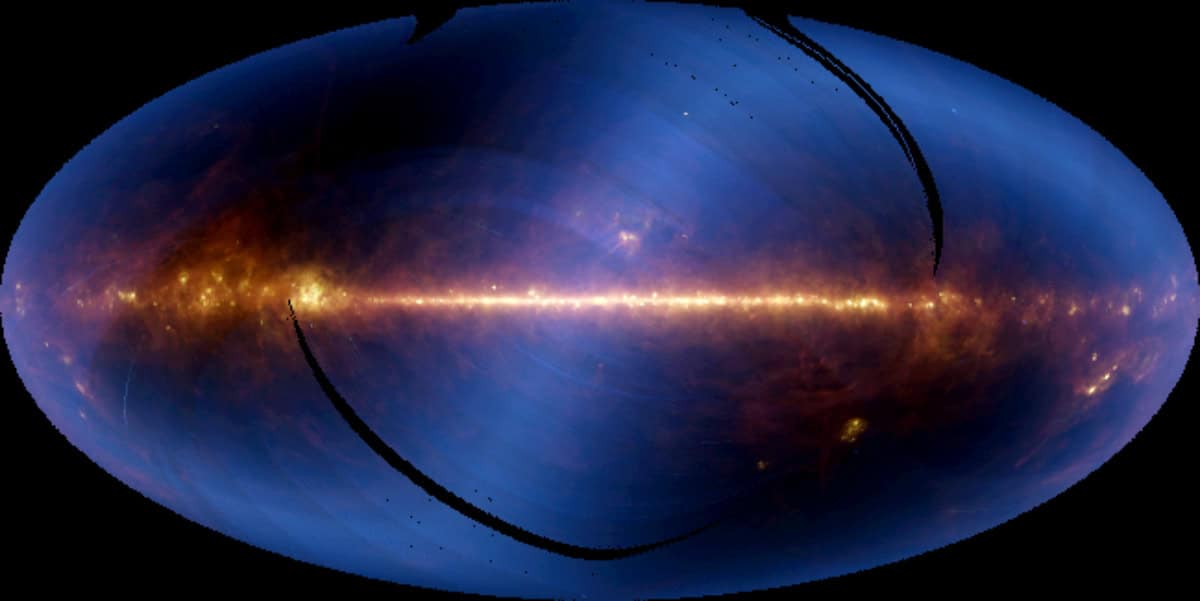
In the early days of optical astronomy, researchers used traditional photographic plates to record individual images of the sky. To look at infrared light, astronomers turned to heat-sensitive detectors, but they’d still have to measure one position at a time, scanning a telescope across a source to build up information sequentially.
That logic changed in 1983 when NASA launched the Infrared Astronomical Satellite, which was the first space-based infrared observatory and had 62 separate detectors. By the 1990s, huge 256 × 256 arrays, encompassing 65,536 detector elements, had become common enough to support detailed infrared imaging of galaxies. Hubble’s Near Infrared Camera and Multi-Object Spectrometer, installed in 1997, used three arrays of this format.
I’ve seen the changes at first hand myself. In 1994 when I was doing my PhD at the University of Groningen in the Netherlands, I published my first paper on near-infrared astronomy, which I’d co-written with an undergraduate student I was supervising. It was based on infrared images of a galaxy taken with a camera on the 2.1 metre telescope at the Kitt Peak National Observatory in Arizona, which used an indium-antimonide detector with just 3596 pixels.
For my PhD itself, however, I observed a sample of galaxies using the European Southern Observatory’s 2.2-metre telescope at La Silla in Chile using a mercury cadmium telluride detector with 65,536 pixels. That was an 18-fold increase over the Kitt Peak camera, yet Roman’s focal plane, with its 18 detector arrays, contains more than 300 million physical pixels.
Progress is not just about pixel count. The advantages of working in space are even bigger because you get none of the atmospheric turbulence or infrared background that you do on Earth. However, it’s not all plain sailing. Space-borne infrared arrays need to be sensitive, uniform, low-noise and reliable; they also have to operate at cryogenic temperatures (roughly 90 K) and endure a harsh radiation environment.
In fact, Roman’s equipment represents decades of progress in materials science, fabrication, electronics, calibration and computing as well as our ability to make pixels ever-smaller. Its infrared detectors are cooled passively by radiators that discharge heat into space rather than by liquid helium.
Larger arrays have also changed what it means to select an astronomical target. A single detector requires an astronomer to decide where to measure: a small array records one selected view. Roman, however, will capture a panoramic field large enough to contain a huge amount of scientifically useful objects. It will transform astronomy, which will be less about choosing what to study and more about working out how to analyse huge data sets.
Looking differently
Roman will not replace targeted observatories or the astronomer’s intuition. Its most intriguing discoveries will often require the James Webb Space Telescope, Hubble or ground-based telescopes to inspect individual objects in greater detail. Instead, these facilities are complementary: one maps entire populations, another inspects exceptional objects, and each changes what the other knows to look for.
Roman’s launch on 30 August lasted little more than half an hour. But the transition the observatory represents has taken decades, driven by larger detectors, faster electronics, public archives and increasingly sophisticated software. I entered professional astronomy when infrared images containing tens of thousands of pixels were normal (see box). Roman will create survey portraits containing trillions of pixels, release its data rapidly to the world and ask humans and machines to explore them together.
When Roman reaches L2 and begins returning science data, its most important legacy may be a way of observing in which the sky becomes a shared, continuously growing dataset. And discovery begins with learning how to explore it.
The post How the Nancy Grace Roman Space Telescope will turn the sky into a dataset appeared first on Physics World.
The free-to-read Physics World Big Science Briefing 2026 is out now
Discover how big science is playing its part to tackle the climate crisis
The post The free-to-read <em>Physics World Big Science Briefing</em> 2026 is out now appeared first on Physics World.
This summer in the Northern hemisphere has been a real scorcher with Western Europe experiencing prolonged hot and dry conditions that have fueled extreme wildfires across the region.
With that weather set to become the norm rather than a one-off event, everyone will need to do their bit to curtail the impact of climate change and “big science” is no different.

In this year’s Physics World Big Science Briefing, we report how accelerator science is making its technologies and facilities more sustainable. The aim is not only to cut the energy and resources that accelerators use, but also to understand – and, more importantly, minimize – their “whole-lifetime” environmental impact.
Longer term, researchers are also prioritizing disruptive accelerator concepts that could slash the size, cost and carbon footprint of next-generation facilities.
One example is plasma-wakefield acceleration, which uses laser- or particle-beam-driven intense “plasma waves” as the accelerating medium, yielding electric fields up to 1000 times greater than in classical accelerators. Those ultra-high accelerating gradients promise a significant reduction in the size, cost and carbon footprint of next-generation accelerator facilities.
Commercial considerations
With the world’s energy demands increasing, and our impact on the climate becoming ever clearer, the search is on for greener, cleaner energy production. That’s why fusion energy has undergone something of a renaissance in recent years.
According to a report by the Fusion Industry Association on the state of the fusion industry, 71% of the 56 private fusion companies surveyed for the report expect the first fusion plant to deliver commercial electricity by the 2030s.
One of the companies with such ambitious aims is Focused Energy, a laser-fusion firm based in Germany and California, which is attempting to generate energy from the laser-driven fusion of hydrogen isotopes.
In this briefing, Debbie Callahan, chief strategy officer at Focused Energy, describes how they plan to have a pilot plant, dubbed LightHouse, operational by the end of the 2030s.
While many milestones need to be hit before we see fusion generating electricity for the grid, when it comes to meeting the demands of a changing climate, big science is continuing to play a key role. Indeed, sustainability will be a keyword at this year’s Big Science Business Forum held in Maastricht from 27–30 October.
We hope you enjoy the briefing and let us know your feedback on the issue.
The post The free-to-read <em>Physics World Big Science Briefing</em> 2026 is out now appeared first on Physics World.
Producing hydrogen, electricity and freshwater with one reactor
A proposed tri-generation system uses a small modular reactor to deliver clean electricity, hydrogen fuel and desalinated water from the same energy source
The post Producing hydrogen, electricity and freshwater with one reactor appeared first on Physics World.
The majority of hydrogen comes from natural gas, produced in a process called Steam Methane Reforming. Even though this process is relatively cheap, it has the downside of producing significant amounts of the greenhouse gas carbon dioxide. Alternatively, hydrogen can be made by splitting water, a process that requires electricity for electrolysis and therefore another energy source, as well as large supplies of water. There is an ongoing desire for low-carbon electricity, clean hydrogen for industry (e.g. steel manufacturing, fertiliser manufacturing and heavy transport), and greater freshwater supplies, particularly in water-stressed regions.
In this work, the researchers investigate how a small nuclear reactor can be used to produce all three: hydrogen, clean electricity, and freshwater through seawater desalination. A small modular reactor produces 200 MW of thermal power. The heat creates steam that drives turbines and generates electricity. Part of the steam is diverted to a process called High-Temperature Steam Electrolysis, which splits water into hydrogen and oxygen. Because the steam is already hot, less electricity is needed than in conventional electrolysis. After the hydrogen production process, the steam is cooler but still contains useful heat, which is then used in a desalination plant to convert seawater into freshwater.
The integrated system was able to simultaneously produce around 90 MW of electricity, 0.6 kg/s of hydrogen (~52 tonnes/day), and 612 m³/day of freshwater from a single reactor module. By reusing waste heat from hydrogen production to drive desalination, the overall energy utilisation increased from 48% for electricity generation alone to 53% in the full tri-generation system.
The researchers evaluated two operating modes: a self-sufficient option, where desalinated water is used internally for hydrogen production, and a market-led option, where freshwater is sold externally. The market-led scenario achieved lower hydrogen production costs ($2.93-3.19/kg compared with $3.49-3.88/kg for the self-sufficient scenario) due to the additional revenue from water sales.
Overall, the study demonstrates that a small modular nuclear reactor could be used to produce clean electricity, hydrogen, and freshwater, offering an efficient and potentially attractive solution for water scarce regions seeking low carbon energy and industrial hydrogen supplies.
Read the full article
Fateme Dehghani et al 2026 Prog. Energy 8 035002
Do you want to learn more about this topic?
Energy storage in long-term system models: a review of considerations, best practices, and research needs by John Bistline et al. (2020)
The post Producing hydrogen, electricity and freshwater with one reactor appeared first on Physics World.
Voltage switches exciton transport in 2D hybrid material
Researchers demonstrate electrical control over exciton transport and valley polarisation in a perovskite-WS₂ heterostructure
The post Voltage switches exciton transport in 2D hybrid material appeared first on Physics World.
Information can be transported using electrons, for example in conventional computing, or using light in photonic devices. A third option that researchers are exploring is the use of excitons, which are bound electron-hole pairs created when a material is excited by light. Excitons can be thought of as an intermediate state between light and electrical charge carriers. However, excitons typically recombine quickly and emit light or undergo non-radiative recombination, limiting how far they can travel. One way to extend their lifetime is to separate the electron and hole across two different material layers, creating an interlayer exciton that can transport energy over longer distances.
Previous studies have used stacked transition-metal dichalcogenides such as MoSe₂/WSe₂ or WS₂/WSe₂, which require extremely precise rotational alignment between layers to form prominent interlayer exciton emission. In this work, however, the researchers use a hybrid perovskite-WS₂ heterostructure that does not require such careful twist-angle engineering. They demonstrate a device in which an applied voltage switches between two different exciton states—interlayer excitons and intralayer excitons, allowing them to control whether excitons can move through the material or remain localised.
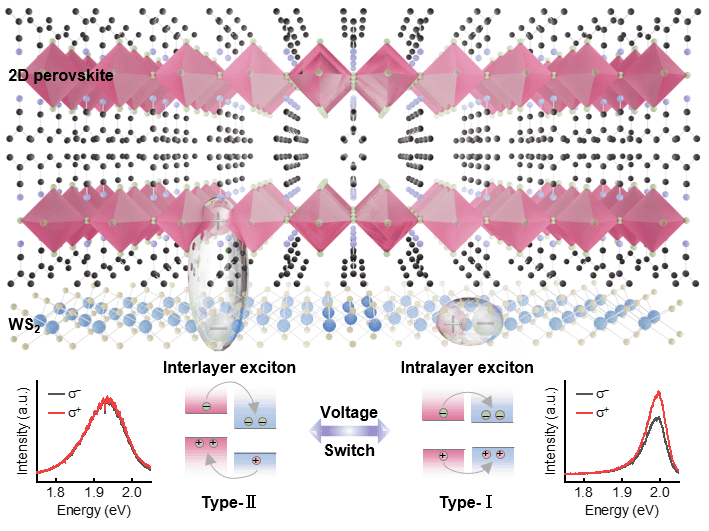
Valley polarisation describes how strongly carriers favour one of two equivalent energy minima, known as valleys. The researchers used voltage to switch the device between low and high valley-polarisation states between these two different exciton states, allowing them to electrically control a form of information carried by excitons. This capability is an important step toward future valleytronic devices, which aim to use valley states for information processing.
More broadly, the research demonstrates a practical way to electrically control both energy transport and information states in a 2D material system, bringing excitonic and valleytronic circuits a step closer to reality.
Read the full article
Yingying Chen et al 2026 Rep. Prog. Phys. 89 078004
Do you want to learn more about this topic?
Valley manipulation in monolayer transition metal dichalcogenides and their hybrid systems: status and challenges by Siwen Zhao et al. (2021)
The post Voltage switches exciton transport in 2D hybrid material appeared first on Physics World.
Miniature microprobe enables internal imaging of smaller blood vessels than ever before
A microprobe can navigate and image smaller arteries than previously possible, helping diagnose and plan treatments for vascular diseases
The post Miniature microprobe enables internal imaging of smaller blood vessels than ever before appeared first on Physics World.
Cardiovascular disease is the leading cause of death globally, with atherosclerotic disease – caused by the build-up of fatty plaques in the arteries – responsible for around three-quarters of these deaths. Modern intravascular imaging allows us to see these fatty plaque build-ups in detailed cross sections, revolutionizing atherosclerosis diagnosis and treatment planning. A research team in China is pushing this imaging technique to smaller blood vessels and higher resolution than ever before. Their approach could even enable imaging of the cerebrovasculature – the network of tiny vessels within the brain.
Intravascular optical coherence tomography (IV-OCT) uses near-infrared light emitted and received at the end of a catheter to image the walls and texture of the blood vessel. It works by comparing the wavelength and phase offset of reflected light from tissues with reference light reflected from a mirror, with 360° sensor rotation generated by electromagnetic motors.
The two most common designs of OCT catheters are proximal (where rotational force is generated outside of the body) and distal (with rotational force generated by a small motor inside the catheter). However, proximal systems suffer from friction-induced rotational distortion in smaller vessels, while distal scans are blocked from full 360° vison by wire artefacts.
Size is a major limitation in IV-OCT imaging. The catheters traditionally used are around 2 mm in diameter and perform optimally in vessels of 10 mm in diameter – medium/large arteries in the body. This diameter is limited by the size of electromagnetic motors needed to induce the sensor rotation and the wiring of these motors.
In this latest work, the researchers – led by Dawei Wu at Nanjing University of Aeronautics and Astronautics and Rui Liu at Nanjing University Medical School – show that it is possible to make a tiny 0.55 mm diameter probe, optimal for imaging 2 mm vessels, whilst retaining 360° field-of-view. The piezoelectric microprobe achieves this small size, and resolves both the rotational distortion and limited field-of-view difficulties, by exploiting a functionally different miniature drive mechanism.
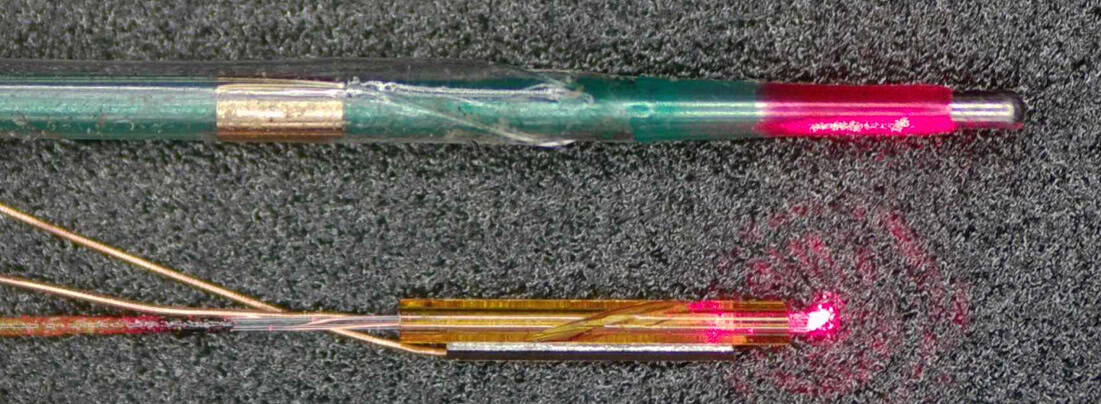
The microprobe uses a single-phase AC circuit and piezoelectric crystal to vibrate a glass tube. A 10° groove in the glass translates this longitudinal vibration into torsional vibration, thus generating elliptical motion of the lens in a similar way to a crank and slider. When AC voltage is applied, the piezoelectric crystal expands and contracts and the lens rotates, thereby producing the required optical scanning.
Device testing
First author Boquan Wang and colleagues first tested whether their probe reduces rotational distortion by imaging metal tubes arranged around a small, curved vessel. The probe was able to scan the tubes at 50 revolutions per second while maintaining angular deviation of just 1° – a significant improvement compared with the 9° found in traditional proximal IV-OCT catheters. They note that this test also demonstrated the probe’s full 360° field-of-view and that the single-phase voltage required to rotate the lens meant that the wiring was minimal.
The researchers confirmed the probe’s ability to navigate and image small vessels via successful tests on leaf microveins, a vascular stent and ex vivo pig vessels. In an important milestone in assessing the suitability of the probe for imaging the cerebrovascular system, the probe successfully traversed through a full-scale human vascular model to reach the middle cerebral artery.
Finally, to verify the efficacy of the probe in identifying pathological lesions, the team compared images of human plaques acquired by the probe with histological analyses. The OCT and histology findings agreed well in identifying locations of plaque rupture sites and regions high in collagen fibres.
Why does this matter?
By putting a novel miniature rotational motor directly inside the probe and powering it with a single-phase AC circuit, the team created a probe that’s smaller than traditional IV-OCT probes and eliminates rotational torsion artefacts while achieving full 360° imaging.
Importantly, the improved catheter navigation could allow access to high-resolution images of the structure of arterial walls in smaller, more curved vessels than is currently possible clinically. This opens the door to assessment of plaque pathology and planning of stent positions in the heart–brain system.
“Although the probe would need more development and testing to be used clinically, intravascular OCT could one day give physicians a much closer look at what is happening inside the small arteries of the brain,” says Wu in a press statement.
The researchers describe the microprobe in Biomedical Optics Express.
The post Miniature microprobe enables internal imaging of smaller blood vessels than ever before appeared first on Physics World.
Real-time multi-gas sensing
Detecting several gases at once is crucial in areas such as environmental monitoring, industrial physics and fault diagnosis in electrical equipment. Methane is a key sign of natural-gas leakage, while acetylene, can indicate high-temperature faults such as arcing in transformer oil. The challenge right now is that many sensitive gas sensors either need separate detectors […]
The post Real-time multi-gas sensing appeared first on Physics World.
Detecting several gases at once is crucial in areas such as environmental monitoring, industrial physics and fault diagnosis in electrical equipment. Methane is a key sign of natural-gas leakage, while acetylene, can indicate high-temperature faults such as arcing in transformer oil.
The challenge right now is that many sensitive gas sensors either need separate detectors for each gas or measure gases one after another, which means they cannot capture truly simultaneous changes.
A team of researchers from the Harbin Institute of Technology in China have recently developed a new approach using light-induced thermoelastic spectroscopy, or LITES.
In this method, gas molecules absorb modulated laser light resulting in a small amount of heating. This in turn causes tiny mechanical vibrations in a quartz tuning fork. These vibrations are then converted into an electrical signal.
The clever part in the new work is a technique called orthogonal phase modulation. Two lasers are modulated so that their effective signals act orthogonal to each other in signal space. A lock-in amplifier can then split the combined tuning-fork signal into two independent outputs, one for methane and one for acetylene.
The signal separation is described using Lissajous figures, which are patterns produced when two vibrations combine. When the two signals are exactly orthogonal, the unwanted mixing between channels remains very low.
After averaging, the detection limits reach 0.32 parts per million for methane and 0.29 parts per million for acetylene – this is good sensitivity but not record-breaking.
The significance of the work lies not in the detection limit, but the new method. If this phase-separation approach can be extended beyond two gases, future instruments might monitor several chemical species with fewer detectors, fewer demodulation channels and less hardware complexity.
That could have big consequences for industrial safety, greenhouse-gas monitoring, transformer health, combustion diagnostics and enclosed-space gas alarms. The next step would be showing that the method remains stable outside controlled lab conditions and in more complex gas mixtures.
Read the full article
H. Ma et al 2026 Rep. Prog. Phys. 89 067902
The post Real-time multi-gas sensing appeared first on Physics World.
How scientific publishers are fighting back against fraudulent papermills
The growth of AI and papermills has caused publishers countless headaches
The post How scientific publishers are fighting back against fraudulent papermills appeared first on Physics World.

On 17 April 2016, Elisabeth Bik, a microbiologist at Stanford University, published a paper that shocked the world of medicine – and also shook the foundations of scientific publishing. Working with Ferric Fang from the University of Washington in Seattle and Arturo Casadevall from the Johns Hopkins School of Medicine in Baltimore, she conducted a huge study into image duplication and manipulation covering more than 20,000 published papers in 40 journals published between 1995 and 2014.
Together, the team documented 782 instances of image duplication – where the same photo, graph or data is reused improperly to represent different experiments – as well as 196 published papers that contained “duplicated figures with alteration”. Before the paper, Bik had anonymously been submitting reports on plagiarism and image duplication to journal editors, which she was motivated to do after discovering that someone had plagiarized her own work.
But following the paper’s publication, Bik became a scientific “sleuth-in-chief”, kickstarting a whole industry of so-called amateur scientific sleuths, to which she provided advice and mentorship. In 2024 she was awarded the Einstein Foundation Award for “identifying misconduct and potential fraud in scientific publications, highlighting science’s problems policing itself”. She donated the €150,000 prize money to the non-profit Center for Scientific Integrity to create a fund that supports fellow sleuths.
Bik’s work was a wake-up call not only for academics, but also for scientific publishers, journal boards and journal editors to focus on, and hopefully halt, scientific misconduct. IOP Publishing, for example, which publishes Physics World, employs a team of six research-integrity officers handling misconduct cases, which has become a far bigger problem than 10 or 20 years ago. Back then, examples of scientific misconduct, which mostly involved data fabrication, plagiarism or self-plagiarism, were notorious – certainly in physics – for their rarity.
One high-profile outlier involved the Bell Labs physicist Hendrik Schön, whose work promised to revolutionize the fields of organic electronics, superconductivity and nanotechnology. He published several high-profile papers in journals such as Nature and Science, but some scientists gradually began to notice that data in some of his figures appeared to have been duplicated. An independent committee was set up to investigate and in 2002 it found that Schön had fabricated data and falsified reports in 16 of 24 papers published between 1998 and 2001.
More recently, condensed-matter physics was hit by another high-profile case in which Ranga Dias claimed to have discovered superconductors that could operate at high pressures and ambient temperatures. A subsequent investigation by the University of Rochester in New York, where Dias was employed, concluded that he had committed misconduct, including data fabrication.
While misconduct generally used to be carried out by an individual looking for academic notoriety, it has now evolved into a co-ordinated and commercial activity that is tapping into science’s dependence on metrics when it comes to prestige and career progression. Referred to as “papermills”, these businesses sell authorships, citations, data and even produce full papers. Such papermills have evolved incredibly quickly to evade publisher checks and the peer-review process. Papermills also often market their services to students, promising guaranteed acceptance and citations.
Few people at the time of Bik’s discovery, however, could have foreseen the growth of artificial intelligence (AI) and machine learning (ML). These developments have given bad actors a powerful new tool – letting them rapidly increase their output and also target journals that lack the necessary checks needed to stop scientific misconduct at scale.
Scientific publishing terms at a glance
Open access Where research and academic work is free for everyone to read, share and use online.
Article processing charge A fee paid by an author or their funder to make a research paper open access.
Peer review An evaluation process where academic or scientific research is scrutinized by experts in the same field before it is published. Its main goal is to check the validity, accuracy and quality of a study to ensure only credible work enters the scientific record.
Impact factor A number that shows how often articles in an academic journal are cited in other research papers. It helps measure the relative importance or rank of a journal within its field, with a higher number meaning the work published in the journal is used more often by other scientists.
Papermill A shady, profit-driven business that creates fake or poor-quality scientific manuscripts and sells co-authorship on them to researchers.
Predatory journals Deceptive, profit-driven publications that claim to be legitimate scholarly journals but bypass proper peer review, editorial oversight and quality control. Their main goal is to trick researchers into paying an article processing charge without offering real academic services.
Artificial intelligence Intelligent behaviour exhibited by machines. But the definition of intelligence is controversial so a more general description of AI that would satisfy most is: the behaviour of a system that adapts its actions in response to its environment and prior experience.
Machine learning As a group of approaches to endow a machine with artificial intelligence, machine learning is itself a broad category. In essence, it is the process by which a system learns from a training set so that it can deliver autonomously an appropriate response to new data.
Large language model An artificial intelligence program trained on massive amounts of text to predict the next word in a sequence, allowing it to write text, translate languages, answer questions and power conversational chatbots.
Dark side of science
The term “publish or perish” is a well-worn phrase in academia. It originates because scientific success is often measured by the number of high-impact articles a researcher has co-authored. Publishing in high-impact-factor journals, and the citations that often generates, can affect an academic’s career and influence job or grant applications. Some institutions have been known to even award cash bonuses for publishing in such journals; with research contracts even not being renewed when a researcher can’t keep up with the publication rate required.
This pressure to publish is partly why publishers and journals have grown so much in recent years. That is especially so for open-access journals, which remove the requirement for traditional subscriptions. Articles are instead made immediately and freely available for anyone to read, with publication costs covered by authors who pay an article-processing charge, which can typically be around £2500 per article and rise to as much as £10,000.
That cost has made scientific publishers less reliant on journal subscription fees paid by libraries and more on income earned from individual scientists. According to an analysis carried out in 2023 by researchers in Canada and Germany, scientists globally paid more than $1bn in open-access fees between 2015 and 2018 to the big five academic publishers: Elsevier, Sage, Springer Nature, Taylor & Francis, and Wiley.
But as the popularity of open-access journals has risen, so too has the growth of “predatory” journals. They exploit the open-access model – and the need for scientists to boost their publication records – by taking publication fees but not carrying out a proper peer-review process, if at all.
A study in 2025 by researchers at Northwestern University found that the publication of fraudulent science, aided by papermills, is now at a point where it is outpacing the growth rate of legitimate scientific publications. According to the Retraction Watch Database, which is now part of the not-for-profit organization Crossref, some 13,000 papers globally were retracted in 2023, compared to roughly 6000 in 2022 and 5000 in 2021 (see figure 1). There are now more than 60,000 retractions in the Retraction Watch Database, with estimates of the number of papermill papers that did manage to make it into the scientific record at 10 times that number.
1 Fighting back
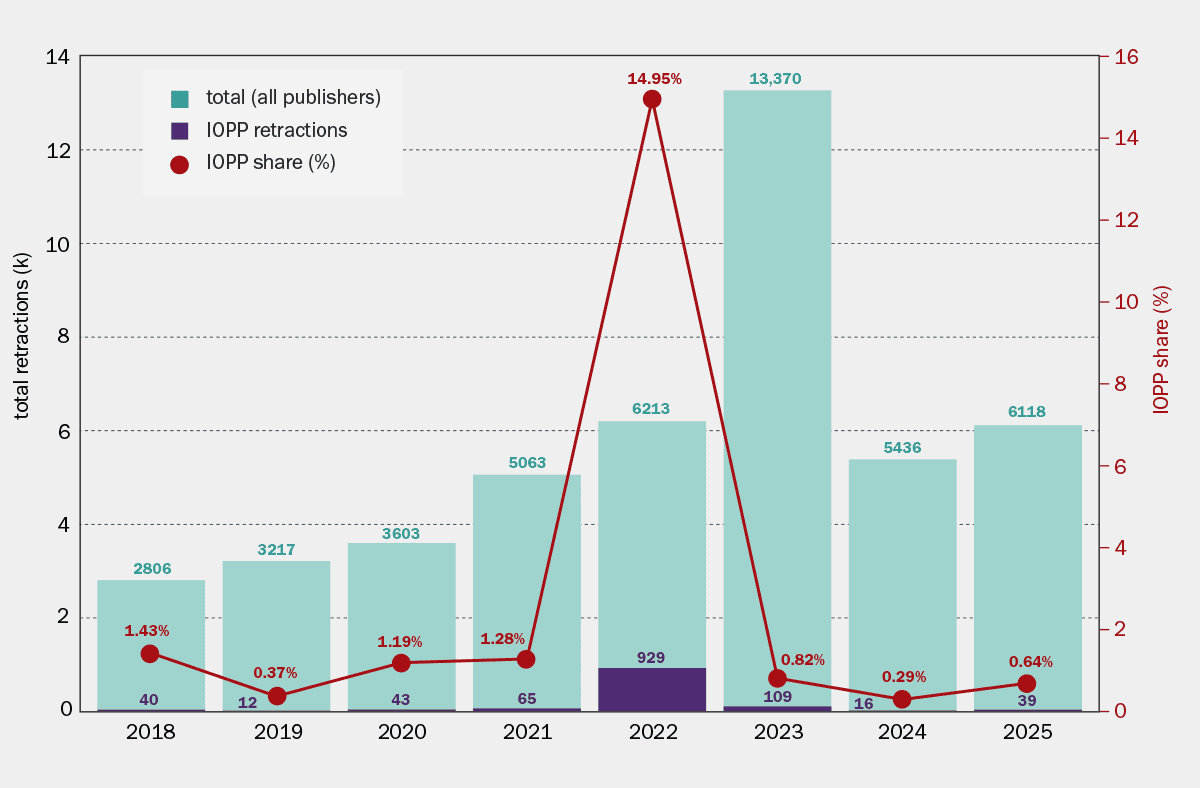
Papermill activity in the early 2020s led to a significant rise in the number of retracted articles, according to data from Retraction Watch. Publishers subsequently built up research integrity teams and developed new tools to tackle the issue, but it still remains a significant challenge within scholarly publishing.
Part of that increase has been the huge growth in the use of AI tools and techniques. AI is particularly potent in microscopy, where generative AI has made it simple to generate fake images of any microscopy technique within minutes that are indistinguishable from real pictures. Indeed, it is estimated that between 1999 and 2024, about 10% of papers published in cancer research were from papermills. An analysis carried out in 2023, meanwhile, found that about 400,000 papers across all disciplines – representing about 2% of all published papers – were from papermills.
In 2022 Anna Abalkina, a research-integrity sleuth and social scientist at the Free University of Berlin, spotted papers with author e-mail addresses that had domains that did not match where the academic institution was based. In a subsequent analysis the papermill – which was dubbed Tanu.pro and is one of the largest in Europe – was found to have produced 1517 papers between 2017 and 2025. It also listed more than 4500 researchers affiliated with around 460 universities across 46 countries. The majority of the authors were in Ukraine, Kazakhstan and Russia.
The trouble that scientific publishers have is that Al allows a paper to be produced at the click of a button, which comes with some unintended consequences. In 2021 computer scientist Guillaume Cabanac from the University of Toulouse and colleagues discovered the use of “tortured phrases” in thousands of research paper thanks to algorithms taking the names of scientific terms rather too literally. Examples include “Sun oriented force” for solar energy, “motor vitality” for kinetic energy or “counterfeit consciousness” for artificial intelligence.
Cabanac began his efforts charting scientific misconduct in 2020 by working with the computer scientist Cyril Labbe to spot gibberish in computer-science papers that were automatically generated using SCIgen, a piece of software that can produce a scientific paper with just a few prompts. “My research began to move towards the quantitative study of science and so we began to collaborate,” notes Cabanac. The pair’s work led to thousands of papers being retracted with Cabanac adding that the scale of use of these tortured phrases in the literature was “a surprise”.
Cabanac says that as AI tools have improved, there are fewer papers with such phrases being published, and spotting misconduct now involves different “smoking guns”. In 2023, for example, Cabanac was one of the first to identify the so-called “regenerate response” fingerprint in dozens of publications. This specific phrase is the label of a button on ChatGPT and while many publishers allow authors to use large language model (LLM) tools to help them produce manuscripts, they must declare it. The problem was that many authors did not make such a declaration, but left the fingerprints of LLM use in their manuscript.
Cabanac says that the latest misconduct smoking gun can be found in bibliographies and the growing use of hallucinated references – citations to other papers that have been simply made up by an LLM. Along with data falsification, other forms of scientific misconduct include citation manipulation, in which irrelevant or unnecessary references are added to boost the citation figures of a colleague or other author. This can also be reciprocal, in which groups of scholars cite each other’s work.
Some fields suffer more than others. In mathematics, for example, the number of research papers and general citations are quite low, which makes citation numbers more prone to manipulation. In 2023 data firm Clarivate announced they would exclude the entire field of mathematics from their influential list of “highly cited researchers” due to the issue of citation manipulation – a decision they reversed two years later.
Run of the papermill
The boom in AI techniques and papermills has been a real headache for publishers, with papermill “attacks” resulting in mass retractions in recent years. Such attacks involve co-ordinated, industrial-scale assaults on academic journals, flooding editorial offices with large batches of fake, plagiarized or completely fabricated research manuscripts. While some papermills function in the so-called “shadow market”, others are officially registered businesses, or mimic legitimate businesses with a website offering services.
Although papermills have targeted all types of journals including open access and subscription and any publisher regardless of size, they have mostly focused on conference proceedings and special issues. They make for easy targets thanks to their softer-touch peer review and use of “guest editors” who are responsible for overseeing the peer-review process for the issue.

In 2022, for example, IOP Publishing retracted nearly 500 articles in one go, of which the vast majority – 463 articles – came from the Journal of Physics: Conference Series. In 2024, meanwhile, the Swiss National Science Foundation stopped paying article-processing charges for articles published in special issues over quality concerns.
Yet the problem is not solely focused on conference proceedings and special issues. In 2023 the Public Library of Science (PLOS) retracted more than 100 papers from its flagship journal PLOS One over manipulated peer review. That same year, Hindawi and its parent company Wiley identified some 1200 articles that had compromised peer review and were retracted – a few months after Hindawi had announced that it would retract 511 articles across 16 journals for manipulated peer review.
Wiley then announced it would end the Hindawi brand name, costing the company up to $40m in lost revenue, and compelling it to integrate its 200 journals into Wiley’s 2000 journal portfolio. Yet the issues didn’t go away for Wiley, and in March 2025 the publisher retracted a further 250 papers.
Fighting AI with AI
Since the issue of papermills has come to a head in the last few years, publishers are fighting back (see box “How IOP Publishing is tackling the rise of papermills”) and the industry as a whole is taking action. The Committee on Publication Ethics (COPE) – a non-profit organization founded in 1997 that aims to define best practices and promote integrity in scholarly publishing – has issued new guidance on the use of AI in publishing.
Publishers are also pooling their resources into the STM Integrity Hub, which is run by the International Association of Scientific, Technical & Medical Publishers (STM). This cloud-based platform offers services that publishers can use to examine a variety of patterns that are indicative of papermills or other research integrity concerns, serving as an “early warning system” for integrity issues.

Antonia Seymour, chief executive of IOP Publishing, which is a member of STM, thinks that the rise in fraudulent papers is one of the most concerning issues for the whole scholarly ecosystem, with initiatives like the STM Integrity Hub being critical. “All publishers are being attacked by these bad actors trying to infiltrate the system with fraudulent papers,” she says. “The STM Integrity Hub is about combining signs of fraud not just from our corpus of content, but from other publishers as well.”
Other programmes supporting research integrity are Silverchair and Morressier, which check submission criteria such as missing author information (for example, e-mail address and institutional affiliation), missing ethics statements or missing keywords; and also confirms author identities using ORCiD. Somewhat ironically, they both use AI to beat AI by running the text through AI tools to check for tortured phrases, fraud and plagiarism as well as analysing citations.
Last year, the Science family of journals, run by the American Association for the Advancement of Science, adopted the use of Proofig, an AI-powered image-analysis tool, to screen for manipulation. ImageTwin is another programme that can detect image duplication and manipulation as well as spot AI-generated content.
Cabarnac, meanwhile, has worked with the French National Centre for Scientific Research (CNRS) to develop an online bibliography checker called bibCheck. “I’ve personally used bibCheck to flag hallucinated references in manuscripts I have reviewed,” says Cabarnac. “Finding these informed my decision to immediately reject.”
How IOP Publishing is tackling the rise of papermills
Many publishers have had to respond to the rise of papermills and fraudulent papers (see main text). That includes building up internal integrity teams and investing in new technology to manage the huge numbers of allegations and corrections.
“Retraction reporting is often reliant on self-declaration by publishers, therefore these figures are likely underestimating the scale of retractions out there,” says Kim Eggleton, research integrity manager at IOP Publishing, which publishes Physics World. “We’re of the opinion that retracted articles should be very clearly marked and we report all our retractions to Retraction Watch and PubPeer.”
Since 2023 IOP Publishing has also donated revenues from author-processing charges (APC) that it has earned from retracted works to charity, supporting Research4Life, which helps researchers in low- to middle-income countries to access published work.
Thanks to technological developments, and the work of some “scientific sleuths”, it is becoming easier to spot problematic papers. At the same time, that brings challenges to work through them all, contacting the authors and giving them a chance to explain.
At the start of 2021 IOP Publishing had one part-time position handling cases of misconduct; now it has one research integrity manager as well as six research integrity officers, all of whom are full time and fully trained to guidelines outlined by the Committee on Publication Ethics. The organization has also strengthened its screening process for conference organizers and invested in new technology.
IOP Publishing rejects about 55% of roughly 7000 submissions each month before they have even been sent for peer review. About 700 of those rejected papers are due to research integrity concerns. IOP Publishing’s research integrity team, which works on cases raised both before and after publication, typically has hundreds of papers under investigation at any one time.
But it is not only the papers themselves that can be fraudulent; there are even fraudulent peer-review reports. IOP Publishing has developed a machine-learning tool to detect duplicate peer-review reports – where the same reviewer report is sent for multiple submissions. The most egregious examples of this are “review mills”, organizations churning out fake reviews, often to inflate citations for a paying customer.
Until now, such patterns in reviewer reports had been difficult to identify, but the new tool automatically flags duplicate reviews to editorial teams. Indeed, since its pilot in 2024, the tool has processed around half a million reviewer reports dating back to 2020, identifying nearly 2500 cases where more than 60% of the content closely matched other reviews. These included instances in which reports were reused across multiple manuscripts or submitted under different reviewer names.
Any duplicate report submitted is flagged for investigation to IOP Publishing’s research integrity team. “This tool is a powerful addition to our efforts to defend high peer-review standards and weed out bad actors who try to manipulate the peer-review process,” says Eggleton. “It reflects our commitment to tackling unethical reviewing practices head-on and reinforces our role as a trusted, transparent and responsible publisher.”
Researchers are aware that the problem will not resolve itself and that publishers also cannot do all the fraud prevention alone. There are calls for researchers to undergo compulsory training in research ethics, and for journals to require raw instrument file datasets as a criterion for publication, as well as having dedicated conference sessions on combating AI risks. In 2025 Sense about Science and Taylor & Francis released a research integrity toolkit, created with and for early-career researchers, that answers common questions and provides practical advice.
Some have suggested that replication could and should be incentivized, perhaps by journals inviting a research group to replicate studies that are getting considerable attention in their journal (for example, studies with suspected AI-generated images), or inviting the replicating group to submit their replication for publication in the same journal. The replication study could then be linked to the original publication, and given an appropriate level of prominence.
But all these approaches take time and money. After several years of large numbers of retractions, in 2024 the number of retractions globally dropped back down to 5000 (see figure 1) – although many will still see that as being too much and others still estimate that figure to be much larger. The reality is that a lot of fraudulent material still exists in the scientific record, and may never come to light or be removed. Indeed, of the 782 papers that Bik found problematic in her analysis, only 177 have so far been retracted, with 42 having an expression of concern and 256 having been corrected. The remaining 307 remain in the scientific record untouched.
That is an issue that Seymour at IOP Publishing says must be resolved. While organizations like Clarivate are trying to clean up the scholarly record by potentially delisting a journal if it has found to be publishing too much fraudulent content, that can actually be a disincentive for publishers to go and find cases of fraudulent research in their journals. “Transparency and correcting the record is really important,” adds Seymour. “But at the moment, we’ve got quite a lot of sticks for publishers and perhaps not enough carrots.”
The post How scientific publishers are fighting back against fraudulent papermills appeared first on Physics World.
Dirty magnetite nanoparticles keep cleaning up dyes
Synthesizing magnetite nanoparticles directly in dye-polluted water gives them new surface chemistry that lets them adsorb different pollutants
The post Dirty magnetite nanoparticles keep cleaning up dyes appeared first on Physics World.
Each year, approximately 5000 tonnes of dyes (about 50 times the weight of a blue whale) are discharged into industrial wastewater. These dyes block light from reaching aquatic plants and animals, cause unpleasant odours and pose risks to human health. Congo red, for instance, is notably persistent in the environment. Another dye, methyl orange, is difficult to remove using standard biological or chemical treatments and has been linked to cancer and DNA damage. Researchers in Egypt and the US are devising a new method to clean up such contamination.
One of the well-established routes for cleaning wastewater from dyes is using nanoparticles (of similar size to a small virus) with high surface area, which gives the dye molecules plenty of places to adsorb onto the nanoparticle surface. It’s especially useful if the nanoparticle has magnetic properties – then it’s possible to remove nanoparticles with adsorbed dyes from water using a magnet. The nanoparticles can then be washed and reused, for up to four cycles, enabling the same material to be used again and again instead of being thrown away.
Ideas for breakfast
Lead researcher Hebatullah Hassan Farghal from The American University in Cairo and her team have synthesized magnetite nanoparticles (particles made from a naturally magnetic form of iron oxide) directly in dye-polluted water. As the particles form, they pull the dye molecules out of the water and onto their own surfaces – meaning that the water is left with less dye in it. The researchers then used those same “dirty” nanoparticles to capture two entirely different dyes afterwards. This route, described in RSC Advances, skips the usual “make-wash-dry-treat” sequence. Instead, it offers a more efficient, simpler and greener way to create a working wastewater adsorbent.
Farghal’s previous research work had been on magnetic adsorbents. “The idea for this paper came exactly one or two days after my PhD defence,” she explains. “While I was having breakfast, I realized adsorbent synthesis requires time and cost…I then went to the lab and started my experiments to find that it was successful.”
Catch and catch again
First, Farghal loaded the nanoparticles with two dyes – congo red (CR) and bromocresol green (BCG) – as they formed in the wastewater. More than 90% of both dyes stuck to the particles and the loaded particles grew slightly larger (about 34 nm, compared with 26 nm for plain magnetite). Later, the same “dirty” particles went on to adsorb almost 80% of methylene blue (MB) from a single-dye system after about 3 h, dropping to just over 50% when a second dye, methyl orange (MO), was mixed in.
To reuse the particles after adsorption of MB, the researchers rinsed them in alcohol, which pulled the trapped blue dye molecules back off. They repeated this four times without any drop in performance, and none of the originally loaded dyes leaking out in the process. They note that MB removal worked best at high pH, where the nanoparticles become negatively charged (while MB molecules are positively charged). This electrostatic attraction gave the main mechanism an extra boost.
Simulations second the results
There are several different mechanisms that can happen when a dye molecule attaches to the surface of a nanoparticle. The two most common types are chemisorption, where the molecule forms new chemical bonds with the surface, and physisorption, a weaker attraction more like static cling – no permanent bond is formed, and the molecule can be pulled off relatively easily.
Several lab measurements, including infrared spectroscopy of the particle surface, already hinted that physisorption is the main mechanism responsible for binding CR, BCG and MB molecules to nanoparticles. This weak binding is also why the ethanol wash could strip the dye back off without damaging the particle.
To confirm this idea, the team also ran a computational method called density functional theory (DFT) on a single dye molecule sitting on a magnetite surface. All dyes bound with similar strength. The simulations also showed electrons flowing in opposite directions depending on the dye’s charge – from the negatively charged CR and BCG toward the surface, and from the surface toward the positively charged MB – the same charge attraction seen in the lab.
The researchers point out that DFT and experimental outcomes cannot be compared quantitatively, only qualitatively, since the first one examines a perfect molecule on an ideal surface and the second one concerns real-world conditions. They note that the DFT analysis was carried out by Ahmed A Abokifa and Mohamed S Mohamed from the University of Illinois Chicago, with Mayyada El-Sayed supervising the wider study.
Outside of the lab
In standard tap water or saline (3% NaCl), the story gets more complicated. The researchers increased the adsorbent dose by roughly 15 times – from 0.67 to 10 g/l – to try to compensate for real-world conditions. This worked in saline, but removal in tap water was only about half of what it was in distilled water, likely because calcium, magnesium and other substances naturally present in tap water compete with the dyes for space on the particle’s surface.
“Though the dose significantly increased in tap water and saline, this dose is still applied in the literature,” Farghal says, adding that her future investigation will try to close that gap and reduce costs.
Still, one thing works in the material’s favour: making the particles is cheap. Producing 1 kg costs around $3730 – roughly eight times cheaper than other nanomaterials sometimes used for the same purpose, such as cobalt ferrite (which costs roughly $30,100 per kilogram).
Farghal says her next research will involve “circular economy approaches that will be outside the box.” Circular economy is an approach in which waste from one process becomes a resource for the next – that waste doesn’t have to be wasted. This study is itself an example of that thinking: dye-polluted water became the raw material for a new, useful adsorbent.
The post Dirty magnetite nanoparticles keep cleaning up dyes appeared first on Physics World.
Einstein’s equivalence principle put to two new tests
The theory of general relativity still holds, according to new space-based and laboratory experiments
The post Einstein’s equivalence principle put to two new tests appeared first on Physics World.
A new quantum test of the weak equivalence principle performed on the China Space Station using cold atom interferometry is the most precise to date, yielding an uncertainty of 2.8 x 10⁻⁸ and a test result of around –2.7 x 10⁻⁷. Meanwhile, a separate team in Israel, Germany and the UK has measured an object’s quantum phase in freefall in the laboratory and confirmed that Einstein’s equivalence principle holds here too.
The weak equivalence principle (WEP), or the “universality of freefall”, is an important pillar of Albert Einstein’s general theory of relativity, in which mass and gravity are intimately linked to the curvature of space–time. The WEP states that, in the absence of other forces, all objects fall with the same acceleration under the influence of gravity regardless of their mass or composition. In other words, gravitational mass (the m in F = GMm/r2, where F is the gravitational attraction between two masses placed a distance r apart and G is the gravitational constant) and inertial mass (the m in F = ma, where a is the acceleration produced by the force F) are the same.
Precisely measuring this principle is crucial since any detected violation could point to new physics. It is also important for continuing to corroborate the theory of general relativity, which may be incomplete because it appears to be fundamentally incompatible with another well-tested theory: quantum mechanics. Today, tests of the WEP using macroscopic bodies have reached extraordinary precision – at the 10−13 level on Earth and 10−15 in space. These latest studies investigate the principle in the quantum realm.
Cold atomic interferometry
Conventional interferometry works by splitting a coherent beam of light and then recombining the different components at a detector. If the two components are in phase when they recombine, the interference is constructive and the two components reinforce each other. However, if the two components are out of phase, they cancel each other out, leading to a characteristic pattern of bright and dark fringes. Atomic interferometry is similar but relies on beams of atoms rather than beams of light.
Cold atom interferometry (CAI), which is atomic interferometry at ultracold temperatures of just above absolute zero, has found applications in inertial sensing and fundamental physics research. It also turns out to be a powerful technique for testing the WEP.
There is a problem with using CAI on Earth, however, because our planet’s gravity limits the interference time of the atom beams to just a few seconds. Experiments in microgravity allow this time to be extended to minutes, but because the resolution of a WEP test scales inversely with the square of the interference time, even longer interference times are needed to achieve the required precision (10−17 or more). This necessitates a permanent microgravity environment, something that is only possible in space.
Clouds of billions of 85Rb and 87Rb atoms
In the new work, detailed in Science Advances, a team of physicists led by Mingsheng Zhan from the Chinese Academy of Sciences, Hefei National Laboratory and Wuhan Institute of Quantum Technology sent their experiments to be performed onboard the China Space Station, using the cold atom interferometer installed on its High Microgravity Level Research Rack. This instrument contains clouds of billions of 85Rb and 87Rb atoms that interfere when probed with counterpropagating Raman lasers reflected by a piezo tilt mirror.

By exciting and detecting the fluorescence of the isotopes sequentially at slightly different times, the researchers obtained two sets of symmetric interference images, one from the 85Rb atoms and one from the 87Rb atoms. Measuring the differential phase of these images – after suppressing the residual acceleration of the space station and effects from vibrations – allowed them to calculate the difference in the acceleration between the two isotopes in the vertical, freefalling direction.
After running their experiment for 280 days, during which time the researchers acquired more than 9700 pairs of interference fringes, they obtained a test result of around –2.7 x 10⁻⁷, after correcting for errors.
“We believe that our technique will have a significant impact,” says Zhan. “First, it demonstrates that an integrated interferometer meeting the requirements of in-orbit operation is possible, giving the community confidence to continue with even more technically demanding space-based interferometry experiments that aim for ever increasing precision. The technology developed in this project will also itself help advance atom-interferometry-based instruments, such asinertial navigation systems.”
Measuring an object’s quantum phase in freefall
Meanwhile, physicists at the Ben-Gurion University of the Negev, the University of Ulm and the University of Oxford have also used CAI, this time to measure an object’s quantum phase in freefall. They confirm that the effect is the same as predicted by Einstein’s equivalence principle (EP), which states that for an observer in freefall, gravity should locally disappear.
In their work, also detailed in Science Advances, the researchers used a completely novel version of the CAI technique that they call the Quantum Galileo Interferometer (QGI) – in honour of Galileo Galilei’s discoveries regarding the laws of freefall. The experiment, which was carried out at Ben-Gurion University, again makes use of clouds of 87Rb atoms cooled to just above absolute zero.
The researchers began by applying microwave pulses to put the ultracold atoms – which were placed 113 µm below the surface of an atom chip containing current-carrying wires that produce magnetic field gradients – into a quantum superposition. This meant that each atom effectively travels along two different paths at once. One part of the atomic wave responded to the magnetic fields such that an applied upward force exactly counteracted the downward pull of gravity and the wave was held stationary in the apparatus – that is, static relative to Earth. This part of the wave is referred to as the reference atomic wave (or wavepacket). The second part of the wave was sent upwards in a ballistic trajectory.
A magnetic cannon and parachute
Realising this ballistic trajectory, affected only by gravity, required a “magnetic cannon” and a “magnetic parachute”, explains Ron Folman, who is one of the leaders of this study. “After the short-duration magnetic cannon, we switched this part of the wave into a state that is almost unaffected by the magnetic field so that it could fall freely under gravity. And at the end of the fall, we used another precisely controlled magnetic pulse to stop the relative motion between the two waves and reunite the two parts so that they interfered with each other.”
That interference allowed the researchers to measure the tiny difference in quantum phase accumulated while one was falling and the other was held still — two frames that may be referred to as the Einsteinian and the Newtonian frames, respectively. This means that when both parts of the wave have the same velocity, the transformation between the wavefunction in a Newtonian (laboratory) frame of reference and the wavefunction of the same object in an Einsteinian frame that freefalls with the same acceleration, involves a transformation phase known as a gauge phase.
According to their experiments, the gauge phase measured by the researchers is the same as the one predicted when Einstein’s EP is applied to such a quantum wave, so confirming the principle for these quantum objects and at these low masses and energies.
“Some members of our team,” notes Folman, “including Nobel laureate Sir Roger Penrose, expect this co-existence between general relativity and quantum mechanics to break for objects with higher masses. Indeed, the Ben-Gurion University group is now repeating the same experiment with nanodiamond particles to test this hypothesis,” he tells Physics World.
The observation, says study co-leader Vlatko Vedral at Oxford University’s department of physics, constitutes a fundamental test of the interface between quantum theory and gravity. “The connection between these two pillars of modern physics remains one of the most important open questions in physics, and it is thus of paramount importance to understand the phenomenon of freefall and the EP in the quantum domain.”
The post Einstein’s equivalence principle put to two new tests appeared first on Physics World.
Impact of VC on high temperature cycling of LFP/Gr cells
Join the audience for a live webinar at 6 p.m. BST/1 p.m. EDT on 14 October 2026
The post Impact of VC on high temperature cycling of LFP/Gr cells appeared first on Physics World.
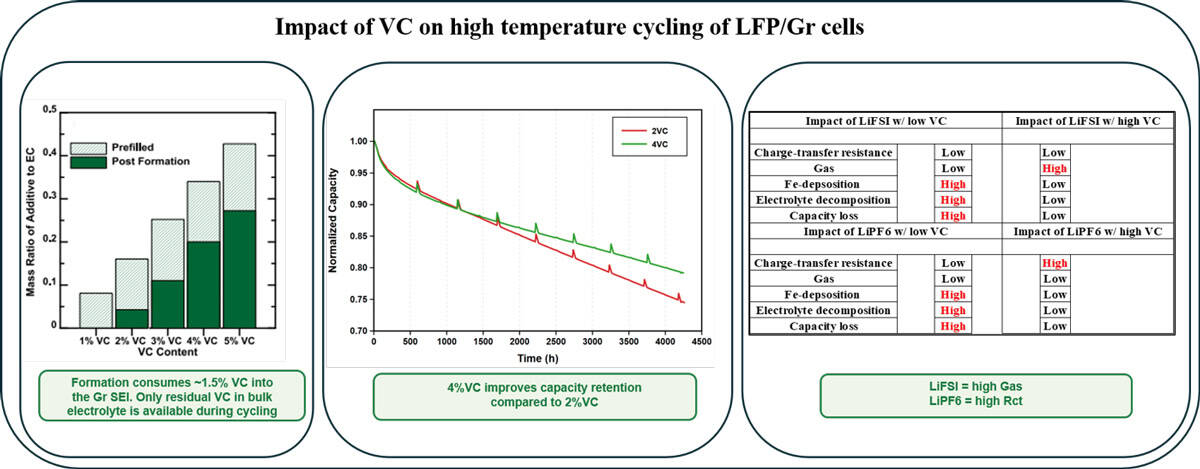
With the growing adoption of LiFePO4 (LFP)/Graphite (Gr) cell chemistry in electric vehicles and grid energy storage, understanding and enhancing its performance under high-temperature conditions has become increasingly critical. In this study, various concentrations of vinylene carbonate (VC) (1% to 5%) were introduced to LFP/Gr pouch cells cycled at 70°C to evaluate their impact on cell lifetime. Additionally, two different lithium salts, LiFSI and LiPF6, were investigated. Upon reaching the end-of-life (80% capacity retention), detailed post-mortem analyses were performed, including qNMR and GC-MS to determine changes in electrolyte composition, micro X-ray fluorescence (μXRF) to quantify Fe deposition on the negative electrode, and electrochemical impedance spectroscopy (EIS) to assess charge-transfer resistance.
Various LFP/Gr pouch cells were evaluated, encompassing four distinct graphite types, two LFP surface area variations, and two cell form factors. The results demonstrate that higher VC concentrations significantly improve cell lifetime, reduce Fe dissolution and suppress electrolyte degradation pathways, including the formation of ethyl methyl carbonate (EMC) and dimethyl 2,5-dioxahexane carboxylate (DMOHC). Furthermore, while LiFSI-based LFP/Gr cells exhibit enhanced performance in certain metrics, they suffer the production of gas at 70°C, which can be mitigated by incorporating LiPF6 salt.

Saad Azam is a battery scientist whose research focuses on improving the lifetime, safety and performance of lithium-ion batteries for electric vehicles and grid energy storage. He completed his PhD at Dalhousie University in the Jeff Dahn research group, where his work centered on electrolyte additives, high-temperature degradation, transition-metal dissolution, gas evolution and long-term cycling of LFP/graphite and NMC/graphite pouch cells. His research combines electrochemical testing with advanced post-mortem methods, including qNMR, GC-MS, EIS, and micro-X-ray fluorescence, to connect cell performance with chemical degradation mechanisms. His recent work in the Journal of The Electrochemical Society examines how higher concentrations of vinylene carbonate improve the lifetime of LFP/graphite pouch cells cycled at 70°C.

The post Impact of VC on high temperature cycling of LFP/Gr cells appeared first on Physics World.
Illuminating, beautiful and disturbing: a photographic record of the Trinity atomic test
Margaret Harris reviews Trinity: an Illustrated History of the World’s First Atomic Test
The post Illuminating, beautiful and disturbing: a photographic record of the Trinity atomic test appeared first on Physics World.
One does not simply walk into the Trinity test site. Although the radioactivity from the world’s first atomic explosion has mostly dissipated over the past 81 years, the gates to this real-life Mordor are still guarded by military police, and the US Army continues to use it as a missile range.
Members of the public are allowed in just once a year, on the third Saturday in October, between 8 a.m. and 3.30 p.m. Apart from these tightly controlled “open house” events, the site where Manhattan Project participants gathered on 16 July 1945 to witness the dawn of the nuclear age is strictly off-limits.
For fans of atomic history who lack the time, money or inclination to visit this inhospitable corner of New Mexico during its annual open house, Trinity: an Illustrated History of the World’s First Atomic Test is the next best thing. In some respects, this coffee-table-sized book by Emily Seyl and her colleagues at the Los Alamos National Laboratory’s National Security Research Center (NSRC) may even be better.
As the book makes clear, there is not much to see at Trinity nowadays. A few dilapidated buildings; a commemorative obelisk; a fragment of a half-million-pound steel tank – these are all that remain of the once-bustling site where the first atomic device, known as the Gadget, was assembled and tested.
Trinity’s great achievement is to turn back the clock and make both the site and the individuals who worked there come alive. Using more than 200 photos from the test’s official archive and other sources, Seyl and her colleagues have created an important public record of a period that is fast receding from living memory and a place that is still veiled in secrecy. The result is a book that is by turns illuminating, beautiful and disturbing.
A fresh look at familiar history
Let’s start with the illuminating part. As an undergraduate intern at Los Alamos, I read Richard Rhodes’ seminal book The Making of the Atomic Bomb. Since then, I’ve read (and occasionally reviewed for this magazine) numerous other works of atomic history, from Ray Monk’s 800-page biography of the Manhattan Project’s scientific leader, J Robert Oppenheimer, to Denise Kiernan’s The Girls of Atomic City and Kate Brown’s Plutopia, both of which focus on less well-known figures.
Even so, once I got past Trinity’s introduction – which takes just six pages to cover Lise Meitner and Otto Frisch’s 1938 realizations about nuclear fission; the start of the Second World War; Enrico Fermi’s demonstration of the first nuclear chain reaction; and the launch of the Manhattan Project to weaponize these discoveries and thereby secure an Allied victory – I was into material new to me.
That steel tank, for example. Its name is Jumbo, it cost $12m in 1940s money, and it was originally designed to withstand the conventional explosives that imploded the Gadget’s plutonium core. If the explosives worked, but the chain reaction didn’t (a definite possibility – hence the need to test the Gadget’s design before deploying it in a bomb), the idea was that Jumbo would prevent plutonium from spraying all over the site.
So far, so sensible. In early 1944, Manhattan Project engineers duly drew up specifications for a containment vessel. An Ohio-based manufacturer, Babcock & Wilcox, agreed to build it, though for security reasons no-one told them what this mysterious “accumulator” was for. The finished Jumbo was then transported, under wraps, to New Mexico by heavy-duty freight train, offloaded onto a specially built carriage and wheeled to a location 800 yards from the intended ground zero.
Which is where it stayed. By the time it arrived in spring 1945, scientists working at the Manhattan Project’s nerve centre in Los Alamos, nine hours’ drive north of Trinity, had grown confident enough in the Gadget that Jumbo was deemed surplus to requirements, more likely to confuse diagnostic tests than to provide any useful safety function.
The fact that technicians had spent days hauling Jumbo across the desert is an excellent example of how the Manhattan Project combined herculean effort and ingenious engineering with tremendous cost and institutionally stupid bureaucracy
The fact that their technician colleagues had spent days hauling it across the desert is thus an excellent example of how the Manhattan Project combined herculean effort and ingenious engineering with tremendous cost and institutionally stupid bureaucracy. Despite this, I do not recall reading about Jumbo before. It’s to Seyl’s credit that she and her NSRC managers granted this potentially embarrassing episode so many pages of gorgeous black-and-white photos.
Because make no mistake, Trinity is gorgeous. I love the New Mexico desert, but you don’t need to be a fan of this austere landscape to appreciate these photographs of the people who toiled there and the machines they built. Though Oppenheimer and other well-known physicists appear in several photos, much of the book focuses on the contributions of relative unknowns such as Jack Aeby, a technician in the Army’s Special Engineer Detachment.
This organization existed to divert soldiers with technical training away from battlefields and into atomic grunt work, and Aeby, an amateur photographer, asked his group leader (the physicist Emilio Segrè) if he could document the explosion with his personal camera. Due to technical problems with the official Kodak cameras, Aeby’s snapshot is now the only decent colour image we have of the Trinity test.
My favourite photo in the book is of a chemist called Donald Hornig. As the inventor of the X unit – a heavy-duty switch that triggered the Gadget’s detonators – Hornig had the unenviable job of arming this switch a few hours before the test, with a summer lightning storm flickering all around him. He thus became the last person to see the Gadget intact, and his expression as he slumps next to it is hard to read. Is he smiling? Proud? Or merely exhausted and wishing the photographer would leave him alone?
The final pages of Trinity depict events that followed the test, including the atomic bombings of Hiroshima and Nagasaki. Only five photos are known to exist of the immediate aftermath in Hiroshima, and the book reproduces three of them. Taken by Yoshito Matsushige, a staff photographer at the regional newspaper Chugoku Shimbun, they are far more disturbing for what they don’t show than for what they do. Although Matsushige later explained that he felt a professional duty to document the bombing, he found himself unable to press the shutter on most of what he witnessed. It was simply too horrible.
Beauty and horror make an unsettling combination. Despite Trinity’s quality, it is hard to see it appealing to a broad audience; in one of the book’s two forewords, Jim Eckles, who used to work in the missile range’s public affairs office, suggests it will “make a great memento for visitors to the site”. This unambitious statement is probably correct, but I hope that some physicists – weaponeers, disarmament campaigners and everyone in between – will also find space for it on their shelves. Our atomic age may yet end with a whimper, but it began with a bang, and it is worth remembering that bang in all its complicated majesty.
- 2026 University of Chicago Press $39.00/£32.00hb 344pp
The post Illuminating, beautiful and disturbing: a photographic record of the Trinity atomic test appeared first on Physics World.
Proton–oxygen collisions put cosmic-ray models to the test
CERN’s ATLAS experiment probes the extreme universe
The post Proton–oxygen collisions put cosmic-ray models to the test appeared first on Physics World.
Physicists at CERN have recreated the collisions that trigger cosmic-ray air showers in Earth’s atmosphere. Results from the ATLAS experiment on the Large Hadron Collider (LHC) show that none of the computer models used to simulate showers gets every detail right. Their measurements of particle production in proton–oxygen collisions are more than ten times more precise than the differences between the models – which could be improved by these latest results. This will be a step toward understanding the most energetic particles in the universe.
Cosmic rays are energetic particles (mostly protons) from outer space. They strike Earth’s atmosphere at nearly the speed of light, setting off cascades of secondary particles.
“Cosmic-ray air showers are sprays of particles raining down from high in the sky,” explains Jesse Liu of New York University, the lead author of a paper that describes the study. He adds that cosmic rays come from “extreme corners of our universe,” with exploding stars and supermassive black holes in distant galaxies as likely sources.
Still, the origin of the most energetic cosmic rays remains “one of the biggest mysteries in astrophysics,” says Karl-Heinz Kampert of the University of Wuppertal in Germany, who was not involved in the study. Such particles carry a hundred billion-billion electron volts or more – compared to the million-million electron volts achieved by the LHC. At the highest energies, only about one such particle hits each square kilometer of Earth’s surface per century. “The only way to measure them in sufficient numbers is to detect the extensive air showers they produce,” he says.
Difficult calculations
Interpreting these showers relies on computer simulations. But, the role of the strong nuclear force, which governs the underlying collisions, is notoriously difficult to calculate. The simulations therefore use models informed by accelerator data, yet “existing models widely disagree with one another on how these showers form,” says Liu.
The most energetic cosmic rays collide at energies far beyond the reach of the LHC, so “we must extrapolate the known properties of particle interactions at man-made accelerators to those occurring in the upper atmosphere,” Kampert explains. Moreover, the LHC’s beams had previously consisted only of protons or heavy nuclei such as lead, rather than the light nitrogen and oxygen nuclei found in air. “For more than a decade, the cosmic-ray community has been working to convince the CERN and particle physics communities of the importance of such measurements,” he says.
That changed in July 2025, when the LHC was reconfigured “to make protons acting as cosmic rays collide with oxygen nuclei playing the role of Earth’s atmosphere,” says Liu. The ATLAS detector recorded the charged particles these collisions produced.
Key parameter
ATLAS physicists studied “how many particles are created during collisions of protons and oxygen nuclei, alongside what energies and angles these particles fly out at,” Liu explains. They also determined the cross section, which “tells us how often these collisions occur,” he adds. Kampert calls it “a key parameter,” because it determines the average depth at which cosmic rays first interact in the atmosphere. This depth affects “essentially all air-shower measurements that are needed to infer the mass” of the incoming particle.
The measured cross section lies at the low end of model predictions, agreeing with only two of the seven models tested. The team also used it to infer the cross section for protons colliding with air, a quantity previously measured at such high energies only by cosmic-ray observatories. The result agrees with earlier air-shower measurements at similar energies.
“Our measurements are more than ten times more precise than the differences between the existing computer models,” says Liu. “Our data show that no model correctly describes the number of particles created in these collisions.” Some models misjudge the frequency of rare, particle-rich collisions by a factor of ten. A model called Angantyr best reproduces the particles’ energies and directions, but no model describes all the results consistently.
Blind spots and next steps
Kampert points out that the measurement has a blind spot because multipurpose detectors like CERN’s ATLAS and CMS are optimized to track particles flying out at relatively large angles to the beam. He explains, “most of the collision energy remains unseen by ATLAS and CMS and escapes close to the beam pipe, at very small angles. This unseen region most strongly influences the features of the air showers.” Specialized experiments, such as LHCf at CERN, are designed to fill this gap.
The next step, says Liu, is “to apply our data to improve the computer models of cosmic-ray showers.” Physicists will then check whether this eases the “muon puzzle” — facilities such as the Pierre Auger Observatory in Argentina see more muons, heavier cousins of electrons, in air showers than simulations predict. “Our proton–oxygen data are an important step toward resolving these puzzles and help decipher cosmic mysteries, namely what high-energy cosmic rays are made of and where they come from,” Liu adds.
“Model builders have been eagerly awaiting this data and have started improving their models based on it and earlier accelerator data,” says Kampert. Because Auger results suggest that the most energetic cosmic rays are mostly heavier nuclei such as carbon, nitrogen, oxygen and silicon, he calls data from oxygen–oxygen or nitrogen–nitrogen collisions “another important step forward.”
Earlier this year, he and colleagues outlined in Nature Reviews Physics how such data could feed into a common tuning of the models, an undertaking he calls “a great community effort involving researchers from different fields of science.”
“I hope [our work] strengthens the cross-disciplinary connections between particle physics and high-energy astrophysics, with much to learn from each other,” says Liu.
The research is described in Physical Review Letters.
The post Proton–oxygen collisions put cosmic-ray models to the test appeared first on Physics World.
In situ and operando optical microscopy and spectroscopy: investigating perovskite optoelectronic devices at work
Join the audience for a live webinar at 4 p.m. GMT/5 p.m. CET on 3 November 2026
The post In situ and operando optical microscopy and spectroscopy: investigating perovskite optoelectronic devices at work appeared first on Physics World.
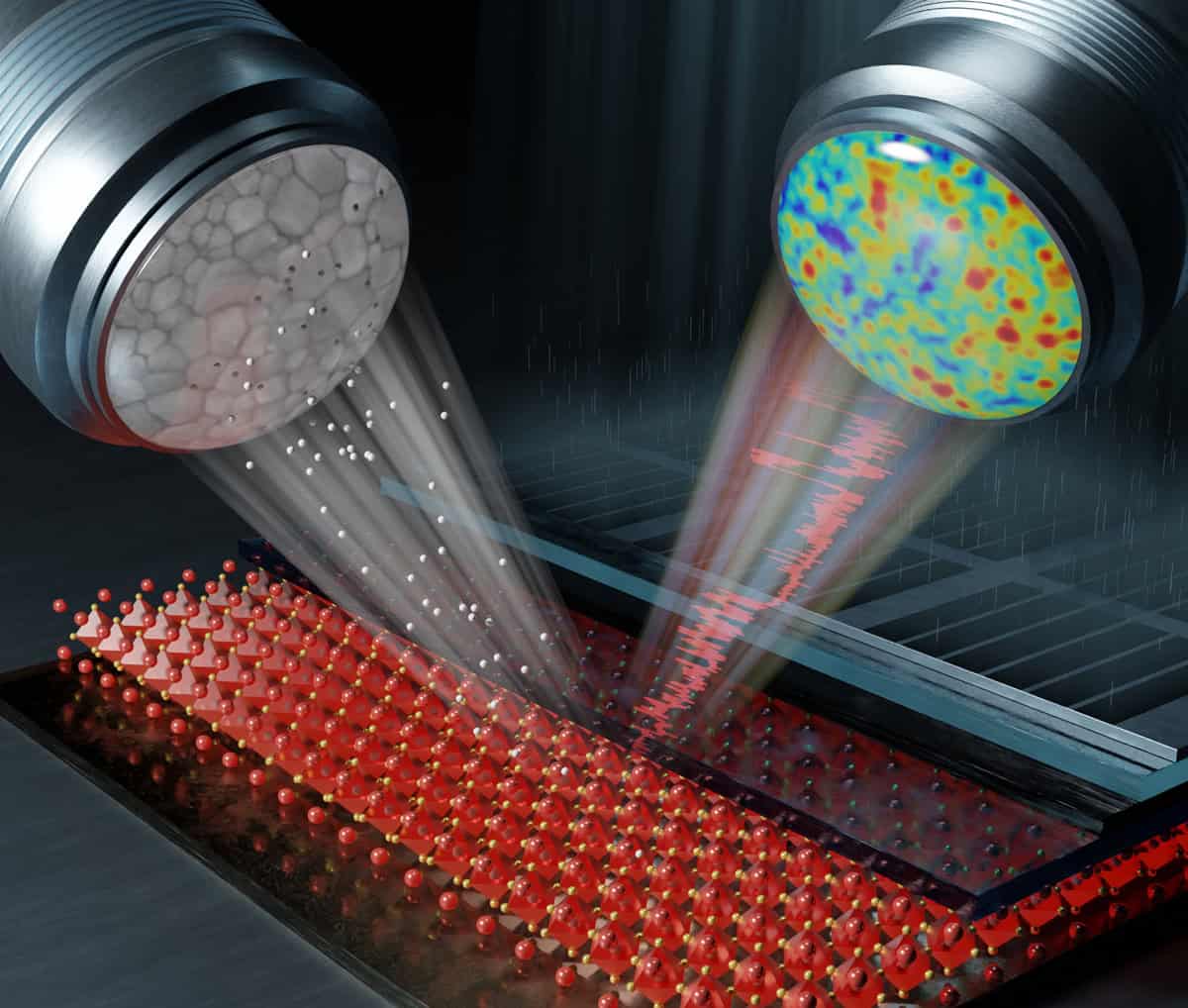
The performance of optoelectronic materials and devices relies on carrier transport, recombination, ion migration and phase segregation. They unfold on length scales from nanometers to micrometers and timescales from picoseconds to hours. Conventional characterization averages over this heterogeneity and rarely captures these events in operational devices.
Optical microscopy and spectroscopy can recover this hidden picture. They convert local material function directly into optical contrast, and that contrast can be resolved across the length and time scales where the function happens.
In this webinar, Dr Sudipta Seth will talk about advanced optical microscopy and spectroscopy that interrogate halide perovskite materials and corresponding optoelectronic devices under relevant in situ and operando conditions. This approach uncovers the local fields, transport bottlenecks, and defect chemistry that set solar cell performance. He will show how these local optical signatures translate into a mechanistic understanding of device operation, and how that understanding feeds back into the design of better probes, interfaces, defects and devices.
The talk is aimed equally at materials scientists curious about what happens inside their samples and at microscopists and spectroscopists looking for new problems suited to their tools.
Certificate of attendance will be awarded upon completion of the webinar.

Sudipta Seth is a research associate at KU Leuven, Belgium, where he conducts advanced research at the intersection of materials chemistry, optoelectronic devices and spectroscopy through the development of innovative microscopy methodologies. He leads the nanoscale device spectroscopy research line at Hofkens Laboratory. He completed his PhD at the University of Hyderabad and subsequently worked as a postdoctoral fellow at Lund University and as a visiting junior fellow at the Tokyo Institute of Technology. His work integrates single-particle spectroscopy, super-resolution and nanoscale microscopy and ultrafast spectroscopy to investigate fundamental photophysics in semiconductor materials and optoelectronic devices. He has received several academic fellowships, including INSPIRE-SHE (India), Wenner-Gren Postdoctoral Fellowship (Sweden), FWO Research Stay Abroad (Belgium), and Marie Sklodowska-Curie Postdoctoral Fellowship (European Commission).
The post In situ and operando optical microscopy and spectroscopy: investigating perovskite optoelectronic devices at work appeared first on Physics World.
Quiz of the week: how long could a lunar city survive?
Have you been keeping up to date with physics news? Try our short quiz to find out
The post Quiz of the week: how long could a lunar city survive? appeared first on Physics World.
Fancy some more? Check out our puzzles page.
The post Quiz of the week: how long could a lunar city survive? appeared first on Physics World.
Microbes may survive at the Moon’s south pole
Crewed missions to the lunar polar regions must limit the unintended transfer of Earth life forms, say scientists
The post Microbes may survive at the Moon’s south pole appeared first on Physics World.
The Moon’s polar regions may be less hostile to microbes than previously thought. This is the new finding from researchers at NASA and the University of Maryland in the US who say that future crewed missions to the lunar south pole will have to be carefully thought out to limit the unintended transfer of Earth life forms.
High ultraviolet radiation and temperatures make the Moon’s surface a harsh place and not somewhere bacteria and other micro-organisms can easily survive. This is particularly true for the equatorial regions, where all previous crewed missions have been sent. Things might be quite different at the lunar poles, however, since sunlight strikes these high-latitude regions at a low angle because of the Moon’s minimal tilt to the Sun of 1.5°. The result is long permanent shadows where it is cooler. The moonscape is also as rugged here as elsewhere with mountains and hills, which also cast shadows, and deep craters protected from the Sun’s heat and ultraviolet flux. These conditions allow for water ice too.
Because of these unique properties, future crewed missions, such as NASA’s Artemis IV, are scheduled to go to the Moon’s south pole, which has also been identified as a possible future location for a human outpost. The polar regions have already been observed by spacecraft such as ESA’s SMART-1, India’s Chandrayaan, Japan’s Kaguya and NASA’s Lunar Reconnaissance Orbiter. These provided a wealth of information that will be used to prepare future missions.
The problem is that no matter how stringent the sterilization procedures are prior to take-off, the astronauts on these missions will take microbes from Earth with them. Indeed, humans carry millions of microbes on their skin and even more in their bodies.
Landing sites for Artemis IV
To investigate whether microbes could survive in the polar regions, the researchers, led by Prabal Saxena, who works at NASA’s Goddard Space Flight Center, and Stefano Bertone at the University of Maryland, modelled how bacteria and fungi commonly found on human skin would behave in the environment of three candidate landing sites for the upcoming Artemis IV mission. The researchers began by making highly resolved spatial maps of the topography in these regions that included ruggedness, slopes and shadowing effects. They also modelled the UV exposure and temperature in these regions to identify specific locations where micro-organisms could survive for at least 24 h.
They obtained seasonal temperature data on length scales of 240 m from measurements by Lunar Reconnaissance Orbiter’s (LRO) Diviner. As for estimated regional UV (≤320 nm) fluxes, these were gleaned from averaged illumination maps with a pixel scale of 60 m based on topography derived from LRO Lunar Orbiter Laser Altimeter (LOLA) measurements.
“Since the temperatures at the lunar poles are rarely high enough to kill bacteria and low temperatures can preserve microbes on Earth, UV radiation is generally likely to be more dangerous in these regions, says Saxena. “We therefore analysed UV fluxes at finer spatial scales using a technique called ray tracing, and for some regions, included optical effects such as reflection and refraction as sunlight hits the Moon’s surface, leveraging updated LOLA-based topography maps on a scale of 5 m/pixel.”
Understanding how sunlight behaves at the poles is crucial, he adds. “Since the Moon has a very small axial tilt, the Sun appears to hover just above the horizon here, so even small hills and rocks can prevent light from reaching lower-lying ground, creating small, shadowed areas protected from UV rays.”
Up to seven days survival
The simulations revealed that the bacteria and fungi studied could survive in certain niches for up to or potentially beyond seven days. One particular fungus, the Aspergillus, is particularly resistant to UV radiation and could potentially survive in 15 to 30% of the areas assessed, even those that receive some sunlight during the lunar winter. The reconstructions also showed that all five microbes in this study, Bacillus, Deinococcus, Staphylococcus, Aspergillus and Fusarium could possibly survive in certain areas of the De Gerlache Rim’s permanently shaded regions, including when scattered UV light is incorporated into the simulations.
Survival does not mean growth (which requires active metabolism and potential reproduction), however, stresses Saxena. Indeed, surviving microbes are in a dormant, so-called cryptobiotic state and would only grow if the conditions were amenable to life – which is not the case for the Moon as we currently understand it.
“Cells may also be dead,” he tells Physics World, “but even dead cells may persist in the environment as another potential source of contamination.”
The work could apply beyond the Moon, he says. Indeed, a number of different airless bodies such as Mercury, Ceres, some asteroids and comets and exoplanets that may have similar properties could also have potential survivable niches for microbial life. Understanding how these niches may exist, how life may be transferred to them and how human exploration may leave its mark will all serve as a key testbed for future potential human exploration of Mars, which likely has far more habitable environments.
“We need to understand what was there before us, because when we search for signs of life beyond our planet on these bodies, we will want to make sure it’s not stuff we brought,” says Saxena.
The research is described in Science Advances.
The post Microbes may survive at the Moon’s south pole appeared first on Physics World.
Tiny biodegradable stars enhance drug delivery to the skin
Microneedle-coated polymer particles rubbed onto the skin increase the delivery of medication by up to 37-fold
The post Tiny biodegradable stars enhance drug delivery to the skin appeared first on Physics World.
Delivering drugs directly to the skin provides a targeted means of treating dermatological conditions while minimizing side effects. The approach is limited, however, by the stratum corneum – the skin’s outer layer – which acts as a barrier that can restrict the effectiveness of most topically applied drugs. To overcome this, a team at Georgia Tech has developed biodegradable “STAR particles” that use microscopic needles to painlessly puncture the skin and increase its absorption of medication.
“Very few drugs can be absorbed effectively into the skin, which means that many drugs in dermatology are given by mouth or injection,” explains team leader Mark Prausnitz. “This exposes the whole body to the drug, often causing side effects and reducing drug efficacy. STAR particles painlessly make micropores in the skin that allow drug that is rubbed on the skin to be absorbed. This targets drug delivery exactly to the site where it is needed.”
Previously, the researchers fabricated the STAR particles from a ceramic material (titania), which is safe to use on the skin, but not biodegradable, raising possible environmental concerns. In their latest work, reported in Advanced Healthcare Materials, they designed polymer STAR particles that dissolve or biodegrade after use, reducing their potential environmental impact.
STARs effectively create micropores
Prausnitz and colleagues created STAR particles from three polymers: water-soluble poly(vinyl alcohol) (PVA), enzyme-degradable cellulose acetate (CA) and hydrolysable polylactic acid (PLA). All three materials have previously been used to create microneedle patches, which enhance drug delivery but can generally only be used on small areas of skin.
“For dermatological conditions like eczema and psoriasis, patients need to treat skin with variable and sometimes large areas,” says Prausnitz. “STAR particles provide the power of a microneedle patch to increase skin permeability with the flexibility to apply them over large and variable areas by simply rubbing a gel or cream containing STAR particles on the skin.”
The researchers fabricated the polymer STAR particles using femtosecond laser micromachining to create star-shaped structures with sharp, well-defined microneedle tips and a tapered profile. They tested the ability of the various particles to puncture pig skin samples.
While PVA STAR particles cannot be applied using water-based vehicles, when suspended in non-aqueous formulations such as isopropyl palmitate (a non-toxic ingredient widely used in dermatology), they successfully punctured the skin. The STAR particles remained intact after use and the formulations worked equally well after storage for one week.
Similarly, CA and PLA STAR particles in water formulations demonstrated consistent skin-puncturing ability, even after a week’s storage, with no visible damage to the particles after application. The researchers note that titania STAR particles in water (examined as a control) generated more pores than the polymer particles, due to their higher hardness.
Drug delivery demonstration
The team next investigated how the STAR particles could enhance the delivery of three drugs – tacrolimus, methotrexate and copper tripeptide-1 – into pig skin samples.
Tacrolimus is used to treat inflammatory skin conditions and is soluble in non-aqueous solvents. After topical drug delivery, rubbing the skin with PVA STAR particles in isopropyl palmitate for 10 s or 30 s increased drug levels within the skin 1.7- or 3.2-fold, respectively, compared with control samples.
For CA STAR particles, the researchers examined methotrexate, which is commonly used for psoriasis treatment but cannot be delivered topically due to its very low skin permeability. Treatment with CA STAR particles for 10 or 30 s increased intradermal delivery of methotrexate 5.4- or 25.2-fold, respectively.
Finally, they used PLA STAR particles to deliver copper tripeptide-1, a skincare ingredient employed for anti-aging, wound healing and skin regeneration applications. The particles enhanced intradermal drug delivery 12.1- or 37-fold, after 10 or 30 s application, respectively.
Safety considerations
As the STAR particles are designed to create micropores in skin, it’s possible that they could unintentionally end up in other parts of the body, where the microneedles could cause damage. While this risk is likely small (as the STAR particles require forceful application to be effective), the water-soluble PVA STAR particles eliminate any potential risk as they rapidly dissolve upon contact with wet tissues.
The CA and PLA STAR particles will likely retain their structure immediately after use, but will eventually become blunt and weak upon enzymatic degradation or hydrolysis. Likewise, any potential environmental consequences of non-degradable STAR particles are reduced or eliminated with the water-soluble and biodegradable materials.
The team concludes that the biodegradable STAR particles address environmental and safety concerns while enhancing drug delivery to the skin. The approach paves the way for improved patient outcomes and broader applications, enabling delivery of hydrophilic drugs and larger molecules that are usually blocked by the stratum corneum barrier. Prausnitz tells Physics World that the research is primarily targeted at treatment of dermatological diseases that can spread over large areas of skin – such as psoriasis, eczema, vitiligo and allergic rashes – as well as cosmetic applications.
“We have licensed the STAR particle technology to a company that is preparing for a clinical trial next year using STAR particles to deliver siRNA as a novel eczema treatment,” he says. “At Georgia Tech, we are focused on advanced materials, manufacturing and formulations for the next generation of STAR particles.”
The post Tiny biodegradable stars enhance drug delivery to the skin appeared first on Physics World.
Spectacular image of the Shark Nebula wins Royal Observatory Greenwich prize
The picture – The Quiet Predator– was taken by Kuwaiti photographer Ali Alobaidly
The post Spectacular image of the Shark Nebula wins Royal Observatory Greenwich prize appeared first on Physics World.
Kuwaiti photographer Ali Alobaidly has beaten thousands of amateur and professional photographers from around the world to bag the 2026 Royal Observatory Greenwich’s ZWO Astronomy Photographer of the Year.
The image – The Quiet Predator – captures the Shark Nebula, which lies almost 650 light years away in the constellation Cepheus. The nebula is made of interstellar dust dense enough to block starlight with the blue-coloured areas in the image being “reflection nebulae” – clouds of interstellar dust that do not emit their own visible light but rather scatters and reflects light from nearby stars.
The image was taken in August 2025 with an Askar 140 APO telescope from the Jahra Governorate, Kuwait.
Sam Wen, founder and chief executive office of the astrophotography firm ZWO, says the image “is a stunning blend of technical excellence and artistic vision”.
“Showcasing the intricate structures of a rarely photographed nebula, the image combines remarkable detail with a striking composition and colour palette, inviting viewers to explore the hidden beauty of the cosmos,” adds Wen.
Alobaidly says it is a “tremendous honour” to receive the award.
“The juxtaposition of an oceanic predator prowling the skies above the Kuwaiti desert is something I find deeply poetic, and it is what first drew me to this remarkable region of the sky,” adds Alobaidly. “To me, it represents perfectly my love for both the Universe and the deserts of my ancestors.”
Alobaidly now hopes to continue using astrophotography for outreach and scientific research.
As well as winning the £10,000 top prize, the image will go on display along with other selected pictures from the competition at an exhibition at the National Maritime Museum observatory on 18 September.
The award – now in its 18th year – is run by the Royal Observatory Greenwich in association with ZWO and BBC Sky at Night Magazine.
The post Spectacular image of the Shark Nebula wins Royal Observatory Greenwich prize appeared first on Physics World.
Creating better batteries for electricity grids
The applied scientist Lin Ma is our podcast guest
The post Creating better batteries for electricity grids appeared first on Physics World.
This episode of the Physics World Weekly podcast features Lin Ma, who is at the University of North Carolina at Chapel Hill. His research group tackles energy and environmental challenges using sustainable materials and electrochemical techniques.
In this episode I chat with Ma about the growing importance of energy storage in electricity grids. Much of this is driven by the growth of wind and solar generation, which can both be intermittent in nature.
Ma talks about the batteries that are currently used in grids and explains what improvements are needed as more renewable energy comes on line. We chat about the different battery technologies that can be used for grid storage and Lin explains why sodium-ion batteries offer advantages over lithium-based devices when it comes to large-scale deployment. Lin also talks about some of the safety issues surrounding large battery facilities and how artificial intelligence can be used to improve many aspects of battery technology.
This podcast is presented in partnership with the Electrochemical Society. The mission of the ECS is to advance theory and practice at the forefront of electrochemical and solid state science and technology, and allied subjects.
The post Creating better batteries for electricity grids appeared first on Physics World.
Uncertainty and the random universe: a slide puzzle
Can you reconstruct the astrophysics illustration in our interactive slide puzzle?
The post Uncertainty and the random universe: a slide puzzle appeared first on Physics World.
Image courtesy: Shutterstock/svekloid
Fancy some more? Check out our puzzles page.
The post Uncertainty and the random universe: a slide puzzle appeared first on Physics World.
Metasurface optical device boosts nonlinear frequency conversion
Nanostructured device efficiently transforms light into different frequencies – including those at technologically important near-infrared wavelengths
The post Metasurface optical device boosts nonlinear frequency conversion appeared first on Physics World.
By combining a band-structure engineered multi-quantum-well heterostructure with a nanostructure known as a metasurface, physicists in Austria and the US have created a device that can efficiently transform light into different frequencies – including those at technologically important near-infrared wavelengths. Their technique, which boosts nonlinear frequency conversion, could help in the development of smaller and more efficient components for telecommunications, quantum information transfer and other photonics technologies.
Nonlinear frequency conversion is an optical process in which a material is used to generate light of a different frequency to that incident on the material. It is now routinely employed in a wide range of photonics devices that rely on frequency mixing, ultrafast signal processing, broadband and pulsed light sources, and high-speed light modulation. It is also used to generate entangled photon pairs for quantum communication. One common type of frequency conversion, and the one used in this new study, is second-harmonic generation. Here, two input photons are combined to produce one photon with twice the energy.
Efficient nonlinear devices require light with high electric field strengths and materials that respond to these intense electromagnetic fields by producing a light polarization that is not directly proportional to the applied field. “Only a handful of such nonlinear crystals exist and these have complicated structures with weak nonlinearities, which means they require high optical powers to make photons interact with each other,” says Marcus Ossiander from the Institute of Experimental Physics at TU Graz in Austria, one of the authors of the new study published in Nature Nanotechnology. “While, new such crystals emerge from time to time, their structure is fixed, which dictates which light wavelengths they work at and how efficiently.”
Asymmetrically coupled multi-quantum wells
Recently, a group of researchers at the University of Texas at Austin in the US, led by Seth Bank, also an author of this latest study, succeeded in creating an optical nonlinearity not via a new crystal structure but by growing a semiconductor metamaterial made from nanoscale layers of gallium arsenide and aluminium gallium arsenide. These layers contain multiple quantum wells that are asymmetrically coupled to each other.
The quantum wells confine electrons in one dimension while allowing them to move freely in the other two dimensions, something that has the effect of restricting their energy levels into discrete, quantum states. Since they are asymmetrically coupled, the electrons end up mainly moving in one direction when exposed to light. This so-called “one-way street leads to increased nonlinear electron oscillations, allowing light waves to interact with each other extremely efficiently and exceed naturally occurring nonlinearities.
Ossiander and his colleagues, including Federico Capasso at the Harvard John A. Paulson School of Engineering and Applied Sciences (SEAS), have now added a second, two-dimensional metamaterial atop the first one. This metasurface, which consists of titanium dioxide pillars, each several hundred nanometres in size, precisely creates the particular light polarization required to deflect incoming light so that it scatters along the one-way street. This enhances the interactions between light waves even further and so increases the intensity of light in the structure.
An extra lap
Researchers have known for a while now that metasurfaces are extremely good at resonantly trapping light and increasing the interaction of light with matter. Usually, the process is straightforward, explains first author Pernille Undrum Fathi, who works in Capasso’s group: you implement a resonant metasurface, and it enhances, for example, the nonlinear effects that you are aiming for.
“The new material sent us for an extra lap, however, because, during our experiments, we discovered that the designable second-order nonlinear susceptibility tensor element (the required incident polarization) is different to that of conventional materials,” she says. “Therefore, when we shone light at exactly normal incidence, the metasurface–material combination generated light waves whose polarizations cancelled each other out completely, so annihilating any enhanced optical nonlinearity.”
However, the researchers found that tilting the sample by just 0.3° broke this symmetry and solved this challenge. Indeed, they were able to increase the effective nonlinear conversion of the light to three orders of magnitude higher than that for a non-patterned heterostructure. The effect is also higher than previously reported values for comparable devices at near‑infrared wavelengths.
“Nonlinear optics are ubiquitous in modern science and technology, with examples including the generation of light at new frequencies (where lasers might be unavailable), all-optical signal processing and the generation of entangled photon pairs for quantum communication,” Ossiander tells Physics World. “Enhancing the fundamental processes enabling this technology will allow for much more efficient, compact devices and enable new measurements that would previously be impossible.”
Metasurfaces offer an excellent route to control and enhance the interaction of light with matter, and the team was intrigued to find out what could be made possible when combining these materials with nanostructures, adds Fathi.
“Working with new materials of course comes with additional uncertainty, and we spent a lot of time learning about and understanding the mechanisms of these new structures and how the particular nonlinear tensor elements of this material interact with the resonant modes introduced by the metasurface,” she says.
“The material we studied is very interesting but also complex,” adds Ossiander, noting that the reseachers believe they can learn how to make even better use of the designer nonlinearity in it by further investigating its fundamental properties. “Indeed, there is a new publication in Optica by Bank’s group on how to improve the multi-quantum-well material even more.”
The post Metasurface optical device boosts nonlinear frequency conversion appeared first on Physics World.
Belarusian sculptor unveils artwork honouring US physicist Jim Gates
The sculpture forms part of Pavel’s sculptural series devoted to figures in science and culture
The post Belarusian sculptor unveils artwork honouring US physicist Jim Gates appeared first on Physics World.
Belarusian sculptor Pavel Wilimaytis has created a portrait of the theoretical physicist Jim Gates who is based at the University of Maryland and Brown University.
Gates is best known for his work on supersymmetry and superstring theory as well as the connections between quantum physics and information theory. He is also known for his outreach in particular the PBS series The Elegant Universe.
Wilimaytis, who has been living in Saint-Jorioz in France for the past three years, has a hearing impairment and chooses people to sculpt based on the “human presence in their faces”.
“For the first eight years of his life, Pavel perceived the world outside of language,” Wilimaytis’ mother Natallia told Physics World. “Before he learned to understand words, he already knew how to feel people: their warmth and coldness, light and shadow, pain, tension, kindness or inner closedness. Not what a person says about themselves, but what emanates from them before any words.”
Wilimaytis noticed photos of Gates online and was struck by the physicist’s “warmth, openness and distinctive charisma”.
“There is the quiet generosity of a scientists and teacher known for his exceptional ability to open the world of knowledge to others,” notes Wilimaytis.
The portrait of Gates, standing around 30 cm tall, was first modelled in plasticine and then cast in Acrystal – a water-based mineral composite material.
The sculpture forms part of Pavel’s sculptural series devoted to figures in science and culture. The series – “The lesser-known faces of famous people” – also includes Nikola Tesla, Marie Curie and Erwin Schrödinger.
In an e-mail to Natallia, Gates noted that he was “absolutely delighted” by the sculpture.
The post Belarusian sculptor unveils artwork honouring US physicist Jim Gates appeared first on Physics World.
Get your teeth into the cutting edge of materials science
Robert P Crease discovers the true extent of materials science in a dental lab
The post Get your teeth into the cutting edge of materials science appeared first on Physics World.

My dentist, Dr Albora, told me I needed a new tooth. He made me bite down on a U-shaped tray filled with polyether, an elastomeric material that’s been used in dentistry for decades. I tried not to gag while the gooey stuff set. Albora then waggled it off and sent the imprint to a company on Long Island that makes false teeth. But as my tooth’s colouring was unusual, Dr Albora said I had to go there myself.
A week later I drove to Marotta Dental Studio, where Igor Binshteyn sat me in a chair, lifted my lip and inspected a tooth to the side of my upper jaw. He was helping to fabricate its replacement and needed to get the exact colour.
As Binshteyn finished, I remarked teasingly on the company’s car park, which was chock full. Do you need that many people to make false teeth? What could possibly be involved to make things smaller than the nail on my little finger?
Binshteyn laughed. “Follow me”.
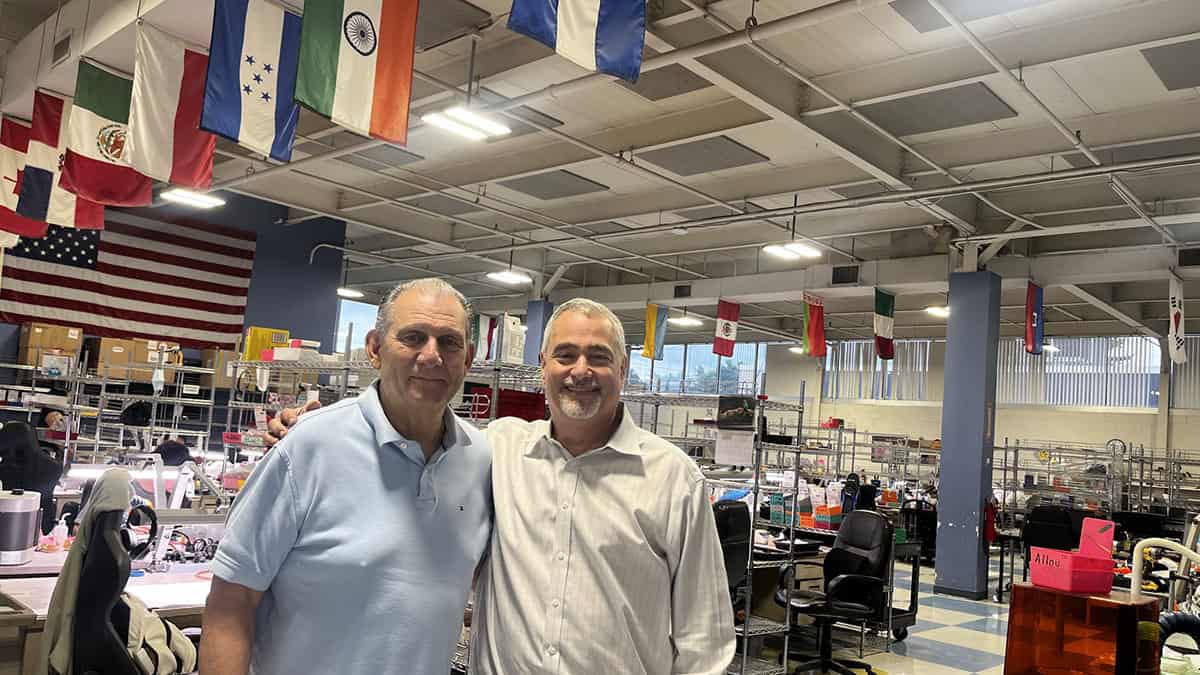
He opened a door to a huge undivided warehouse-like space about 1200 square metres in size. Some 50 people were working at lines of tables where the steady hum of conversation was punctuated by the noise of ovens, lathes and grinding machines; imagine the sounds of a metalworking shop in a busy train station.
“Do you want a tour?” Binshteyn said.
Of course I did.
Open wide
My tour guide was Marotta’s vice-president, Steven Pigliacelli, who teaches prosthodontics at New York University. A prosthodontist is a dental specialist who has completed dental school and, in the US, has had at least three additional years of advanced training to focus on restoring and replacing missing or damaged teeth. As I learned, prosthodontists must practice materials science.
The lab has two paths for making teeth, Pigliacelli explained, each with different materials and methods. The first is known as “porcelain-fused-to-metal”, or PFM. It begins with technicians applying gypsum – hydrated calcium sulphate – to create stone replicas of the jaw and teeth from the impressions given to them by dentists such as Albora.
Gypsum has different coefficients of expansion for different dental purposes, and textbook formulas give the amounts of liquid for each kind. But Marotta employees found that tiny amounts of water must be added or subtracted to the gypsum to compensate for things like humidity and temperature before the gypsum is used. “It took us months,” Pigliacelli explained, “to realize that how it’s shipped, how it’s stored, what season it is – all these affect the material.”
I watched as a technician sectioned a stone jaw replica to cut out a tooth, turn it into a master model called a die, and test it in an articulator that mimics jaw movements. I saw another wax that die, use a lost wax technique to create a solid gypsum frame, and cast a silver-palladium alloy. That creates the metal inner core for the tooth, called a coping, which is shaped and finished before porcelain is applied. Porcelain is baked onto the coping in another area of the lab.
“The metal and porcelain need closely matched coefficients of thermal expansion or the porcelain can separate from the metal,” Pagliacelli told me. “Every once in a while a company tells us ‘We’ve got this really cool new alloy!’, but we need to match the coefficients of expansion in the ceramic material. We’re working with sensitive materials for sensitive applications, and we have to experiment with and adapt them. This stuff about materials you don’t learn in school but work out in the lab.”
Smile for the camera
The second path to making a tooth involves scanning the teeth rather than waxing a die. The electronic files are worked on in the computer, printed out, reworked and rescanned, and milled by a CAD machine using materials such as zirconia – nicknamed “ceramic steel” – and EMAX, a lithium disilicate glass-ceramic. Zirconia is extremely hard and used for teeth that endure heavy grinding forces, while EMAX is more aesthetically pleasing and often used for front teeth.
“So we have two parallel paths, PFM and digital scans”, Pigliacelli said. “It’s usually a personal choice of the dentist”. But external pressures are driving a move away from PFM, he said. Five years ago the price of palladium – a key component of the PFM alloy – soared as it was increasingly used in devices to reduce auto and other emissions. “That’s cut down on the PSM market.”
In another corner of the lab I ran into Binshteyn again, who was using different porcelains and ceramic stains to create colours. “Teeth are not a solid colour,” he said, “but vary in shade from reddish near the gum line to lighter colours toward the biting edge. They also vary in translucency.” (Check this out yourself.) Furthermore, the colour of a tooth must match not its neighbours but the corresponding tooth on the other side of the mouth. To make a natural-looking tooth, Igor picks out a base colour and then layers in shades of porcelain.
As my lab tour went on, Pigliacelli showed me different materials for different applications. One challenge is making teeth for a person with bulimia, whose acidic oral environment can corrode dental materials. Other challenges arise with people who have had failed implants, or temporomandibular joint – or TMJ – a disorder involving jaw joints and muscles.
On the way out I met Lenny Marotta, Pigliacelli’s brother-in-law, who had founded Marotta Studio in 1981. Marotta is fascinated by the history of dental materials, which include bone, ivory, wood, gold and silver. He showed me his collection of early prosthodontic instruments, including milling machines, furnaces, hammers and air compressors.
Later, Marotta also pointed out a strange-looking oven. “That’s for processing vulcanite, a hardened rubber material widely used for dentures before modern plastics.” But he’s been unable to find a museum interested in old prosthodontic stuff. “Nobody knows we exist,” he complained.
The critical point
I’d assumed that materials science was required to make prosthetic teeth biocompatible, corrosion resistant, and able to withstand mechanical motions such as crushing, biting and grinding. I also knew that teeth have to be made economically enough to be widely available, aesthetic enough to be desirable, and versatile enough to withstand a variety of oral environments.
But I had no idea how much materials science was required to bring all these properties together.
Back in his office, Dr Albora installed the tooth and handed me a mirror. I had to pull up my lip to see it way on the side of my mouth. “I’d have to smile before somebody notices it,” I complained. “Well,” he said, “that’s for just in case you do.”
The post Get your teeth into the cutting edge of materials science appeared first on Physics World.
Establishing a research career in advanced X-ray Imaging: insights from Xiaochuan Pan and PMB award winner Ronan Smith
Join the audience for a live webinar on 6 October 2026 sponsored by IOP Publishing's journal, Physics in Medicine and Biology
The post Establishing a research career in advanced X-ray Imaging: insights from Xiaochuan Pan and PMB award winner Ronan Smith appeared first on Physics World.

Join us for an in-depth conversation with Xiaochuan Pan as he shares an expert perspective on the rapidly evolving landscape of advanced X-ray imaging—highlighting the breakthroughs shaping the field, what defines high-impact research, and how Physics in Medicine & Biology supports and amplifies this work. He will also explore what sets outstanding early-career research apart and offer practical strategies for increasing the visibility, reach, and long-term impact of your publications.
This session will also spotlight the research of Ronan Smith, winner of the 2025 PMB Early Career Award, who will reflect on his contributions to advanced X-ray imaging—including his award-winning paper—and how his work connects to wider developments in medical physics and imaging.

Moderator
Carol Clark, Publisher, Physics in Medicine & Biology
Speakers
Xiaochuan Pan is Professor of Radiology, Radiation & Cellular Oncology, Committee in Medical Physics, the College, and the University of Chicago Medicine Comprehensive Cancer Center at The University of Chicago. His research centers on physics, algorithms, and engineering underpinning tomographic imaging and its biomedical and clinical applications. He has made pioneering, significant contributions to advanced theory and algorithms for conventional and spectral computed tomography (CT), positron emission tomography (PET), and single-photo-emission computed tomography (SPECT). He has contributed to algorithm development for digital breast tomosynthesis (DBT), digital lung tomosynthesis (DLT), magnetic resonance imaging (MRI), electron-paramagnetic resonance imaging (EPRI), phase-contrast CT, and photo-acoustic tomography (PAT). He has also developed strong translational imaging technological programs tailored to specific applications of biomedical and/or clinical significance. Xiaochuan is a Fellow of AAPM, AIMBE, IAMBE, IEEE, OSA, NAI, and SPIE.
Ronan Smith is a physicist interested in better ways of X-ray imaging. He completed his PhD at Southampton University (UK) in 2023, developing a technique called dark-field X-ray imaging, before moving to the warmer climate of Adelaide University in Australia as a grant-funded researcher in the School of Medicine. He focuses on developing and implementing imaging techniques for challenging and dynamic environments, such as the respiratory system. His current area of research is novel ways of analysing and understanding a new method for dynamic lung imaging called X-ray Velocimetry, with side projects looking at dark-field X-ray imaging.
About this journal

Physics in Medicine & Biology. The international journal of biomedical physics and engineering, published by IOP Publishing on behalf of the Institute of Physics and Engineering in Medicine (IPEM)
Editor-in-chief: Katia Parodi, Ludwig-Maximilians University, Munich, Germany
The post Establishing a research career in advanced X-ray Imaging: insights from Xiaochuan Pan and PMB award winner Ronan Smith appeared first on Physics World.
Fast 3D imaging reveals how seizures move through the brain
A high-speed, 3D light-sheet microscope allows researchers to record seizure dynamics in larval zebrafish
The post Fast 3D imaging reveals how seizures move through the brain appeared first on Physics World.
Neuroscientists are debating a seemingly simple question: which way does a seizure propagate in the brain? Answering such a question could advance our understanding of epilepsy, but requires the development of cutting-edge microscopy techniques that are far from simple. Researchers from the University of Georgia have now developed an improved light-sheet microscope with the ability to perform fast 3D imaging of zebrafish seizures.
Reporting their findings in Biomedical Optics Express, the researchers found that seizures originated in the hindbrain and propagated forward (anteriorly). This corroborates a previous study examining 3D imaging of zebrafish seizures, but contradicts two earlier studies of 2D imaging (reported in Frontiers in Neural Circuits and eNeuro) that observed propagation in the reverse direction.
“I think the discrepancies about the direction of seizure propagation point to the need for more imaging,” says Peter Kner, an engineering professor who led the research efforts at the University of Georgia. “I believe we still don’t know how probabilistic the behaviour is and what factors are important.”
Adding a third dimension
The microscope developed by Kner and his team uses a so-called light sheet — a thin pancake of light that selectively illuminates a single 2D plane of a sample. This technique strongly reduces background noise from other planes that are not illuminated. Fluorescence light from the sample plane passes through a series of lenses, orthogonal to the light sheet, which reimage the sample onto a camera.
“There have been several papers analysing seizure events in zebrafish by looking at 2D imaging. So, the motivation here was to extend that work to 3D imaging”, explains Kner. Compared with other microscopy techniques, such as confocal microscopy, Kner’s team wanted to develop a solution for simple, fast and large field-of-view imaging in all three dimensions.
Light-sheet microscopy works inherently in 2D. To extend it to 3D, the researchers dynamically swept the light sheet through different planes of their sample. To keep the illuminated plane in focus at all times, they synchronously shifted the imaging system’s focal plane using an electrically tunable lens (ETL), which has a focal length that changes with applied current.
While this sounds straightforward in theory, in practice, adjusting the ETL introduces distortions or optical aberrations that degrade image quality. The researchers compensated for wavefront distortions using a deformable mirror whose shape was carefully calibrated at each axial plane imaged.
A wider view of seizures
Using predetermined settings for the deformable mirror, the team imaged volumes of 499 x 499 x 148 µm at a rate of four volumes per second. They also reported a fivefold increase in the area over which imaging remained near-diffraction-limited compared with uncorrected microscope images. These achievements allowed them to image zebrafish seizure propagation in real time under their microscope.
“This work adds pragmatic utility to 3D light-sheet microscopy for fast volumetric dynamics,” says Sixian You, an electrical engineering professor at the Massachusetts Institute of Technology who was not involved in this research. While deformable mirrors have been used to correct ETL aberrations before, she emphasizes that the advance comes from pre-calibration of the corrections; this is what makes the fast, wide field-of-view imaging possible. “I expect the same approach will transfer readily to other scanning modalities that stand to benefit from tunable lenses,” she adds.
After imaging the zebrafish continuously over a 2.5 min period, the researchers found that seizures propagated from the back of the brain to the front, and that the seizures subsided over tens of seconds. The findings add one more data point towards elucidating the statistics of seizure propagation which, if better understood, could aid epilepsy treatments in the future.
Kner’s team hopes to extend this work by next exploring different strains of zebrafish.
The post Fast 3D imaging reveals how seizures move through the brain appeared first on Physics World.
Forecasting future demand on the Texas grid
By modelling a range of demand-growth scenarios, researchers identified how future electricity needs could transform grid planning in Texas
The post Forecasting future demand on the Texas grid appeared first on Physics World.
In Texas, US, electricity demand is expected to grow because of rapid population growth, increased adoption of electric vehicles, expansion of AI data centres, and other societal and industrial developments. Most of Texas’ electricity system is managed by the Electric Reliability Council of Texas (ERCOT), which operates a grid that is largely independent from the rest of the United States. Combined with the state’s rapidly changing demand patterns, this makes Texas an important test case for exploring future energy scenarios.
In this work, the researchers developed a framework to model how different sources of electricity demand growth could affect the Texas grid through to 2050. They separately examined the impacts of population growth, electrified heating, electric vehicles, large industrial loads such as data centres, and electrification of oil and gas operations.
The study found that electric vehicles have the greatest impact on peak electricity demand because charging tends to occur at similar times of day, creating sharp increases in demand. In contrast, large industrial loads, including data centres, cryptocurrency mining, hydrogen production and manufacturing facilities, have the greatest impact on overall electricity consumption because they often operate continuously. Electrification of heating had a smaller net effect because heat pumps increase winter electricity demand while simultaneously reducing summer electricity demand through more efficient cooling.
The findings suggest that different types of demand growth require different grid solutions. Battery storage is particularly effective for managing the sharp demand peaks associated with electric vehicle charging, whereas growth from data centres and other large industrial loads is most economically met through additional natural gas, wind and solar generation. The study also showed that uncertainty in future demand could lead to dramatically different grid expansion requirements by 2050.
A key impact of this work is demonstrating that the source of future electricity demand can be just as important as its size, since different demand drivers require different investments in generation, storage and grid infrastructure. The framework developed in this study could help planners, investors and policymakers make more informed decisions about future electricity systems.
Read the full article
A method to assess the energy impacts of meeting ERCOT’s uncertain future electricity demand
Drew A Kassel et al 2026 Prog. Energy 8 035001
Do you want to learn more about this topic?
How different power plant types contribute to electric grid reliability, resilience, and vulnerability: a comparative analytical framework by K Ramirez-Meyers et al. (2021)
The post Forecasting future demand on the Texas grid appeared first on Physics World.
A new way to study giant gravitons
A defect framework unlocks difficult calculations in N = 4 super Yang-Mills
The post A new way to study giant gravitons appeared first on Physics World.
N = 4 super Yang-Mills is a highly symmetric quantum field theory that physicists use as a model system for exploring ideas in quantum gravity and string theory. The researchers study interactions between small and large excitations of the theory. The small, or light, excitations are super gravitons, which can be thought of as particle-like ripples of spacetime. The large, or heavy, excitations are giant gravitons: extended brane-like objects that arise when a graviton carries a very large amount of angular momentum. The goal is to understand how the light excitations behave in the presence of these heavy objects.
To study this, the authors analyse a four-point correlation function containing two light (L) and two heavy (H) operators, known as an LLHH correlator. These correlators are notoriously difficult to calculate directly because doing so requires detailed knowledge of how the supergravity fields couple to the giant graviton and its fluctuations. The key idea of the paper is to treat the pair of heavy operators as a zero-dimensional defect. This reformulates the four-point function as a two-point function of light probes in the presence of the defect, allowing bootstrap techniques to be applied.
Using this defect framework together with bootstrap techniques, the authors compute all strong-coupling four-point functions involving two maximal giant gravitons and two supergravitons of arbitrary dimension. They also uncover a partially broken higher-dimensional hidden conformal symmetry that organizes these correlators. Finally, they determine the leading interaction-induced energy shifts for a complete class of double-particle states associated with the defect and argue that the defect picture provides the natural description of heavy-light correlators more generally. This establishes a powerful new framework for studying giant gravitons, non-planar effects, and aspects of quantum gravity and strongly coupled quantum field theories.
Read the full article
Defect approach to giant graviton dynamics
Junding Chen et al 2026 Rep. Prog. Phys. 89 067801
Do you want to learn more about this topic?
Bootstrap and amplitudes: a hike in the landscape of quantum field theory by Henriette Elvang (2021)
The post A new way to study giant gravitons appeared first on Physics World.
How do you design an invisibility cloak?
A new metamaterial design rule shows how simple steady-field patterns can be turned into a method for controlling complex waves
The post How do you design an invisibility cloak? appeared first on Physics World.
Material behaviour is traditionally determined by chemistry. Free electrons in metals give rise to conductivity, unfilled orbitals make elements reactive. Metamaterials, on the other hand, have properties that come mainly from its internal design, not just from what it is made of.
These types of materials are characterised by a specifically designed larger-scale repeating pattern that interacts with waves in a chosen way. Invisibility cloaks are one such example. These are designed so that waves bend around an object and then recombine on the other side, making the object scatter much less light, sound or another type of wave.
The challenge is designing metamaterials to give you exactly the properties that you want. Two equations come into play.
- The Laplace equation. This describes steady-state conditions with no oscillations or waves and has only one free parameter. It is easy to use but the metamaterial properties you can get are often limited.
- The Helmholtz equation. This describes oscillations – sound waves, light waves etc. To use this equation, the wave medium usually needs two material parameters. For acoustics, these are equivalent to mass density and bulk modulus, which together determine how sound travels. Harder to work with, but more powerful.
The goal of new research from a team of researchers from China and Singapore is to have the best of both worlds. They were able to develop a mathematical correspondence between these two equations and use it to design metamaterials with new properties. Counterintuitively, they found that less complicated designs can achieve more. This less-for-more approach doesn’t try to design every aspect of how a wave behaves, but instead starts with a simpler, more manageable problem to access a wide range of useful effects.
The team used acoustics as testbed to demonstrate the power of their work. They demonstrated a range of novel phenomena such as three-dimensional freeform conformal cloaking, an experimentally validated waveguide cloak and the hyperbolic invisibility mentioned earlier. Because the technique is based on equations shared by several types of waves, their approach could also be applied to water waves and electromagnetic waves. This makes it a broadly transferable strategy for designing metamaterials
Real devices will still face practical limits from losses, dispersion and the need to approximate continuous material properties with fabricated structures. However, this new work does offer a practical method to design new metamaterials with exotic properties, and to manipulate waves beyond conventional constraints.
Read the full article
A less-for-more metamaterial paradigm via Laplace-Helmholtz correspondence – IOPscience
Z. Guo et al 2026 Rep. Prog. Phys. 89 077501
The post How do you design an invisibility cloak? appeared first on Physics World.
Above-average correlative materials characterization
Bringing measurements across time, space and spectrum together is revealing the hidden dynamics of innovative optoelectronic devices and novel semiconductor materials
The post Above-average correlative materials characterization appeared first on Physics World.
When evaluating new materials for optoelectronic applications – perhaps promising solar panel materials like halide perovskites or semiconductor compounds for microLED displays – optical characterization is almost always the materials scientists’ first port of call. And up to now steady-state photoluminescence (PL) has been the de facto workhorse for this task.
This non-destructive and highly sensitive technique involves optically exciting a sample and recording the integrated intensity and wavelength of re-emitted photons. Through this, researchers gain a quick understanding into a material’s electronic structure, optical transitions and emission characteristics.
However, these spectra alone can be misleading. Materials with substantially different microscopic properties can generate similar steady-state PL results, masking the fundamental physical dynamics that govern the material’s performance in the real world. To gain deeper understanding of a given material, a more comprehensive and correlated approach is needed.
Blinding average
The core issue lies in the fact that steady-state PL provides a time-integrated view of the emission and depending on the measurement geometry, may also average over spatial variations. Steady-state PL records a static equilibrium in which charge carrier generation balances recombination. This means that, on its own, it does not directly reveal how these excited charge-carriers evolve and ultimately dictate how a device manipulates energy and light.
For example, although two semiconductor thin films may show identical steady-state emission, they can perform very differently in a real device. One film might have long carrier lifetimes consistent with low non-radiative losses – useful in solar cells, for example – while the other could suffer from high defect densities that are masked by strong light absorption or intense excitation light.
Conversely, weak emission does not necessarily mean poor material quality. Again using a layered solar cell as an example, dim luminescence often signals fast, beneficial charge extraction across an interface rather than harmful defect recombination (where structural imperfections convert charge-carrier energy into wasted heat). Because steady-state measurements only show an overall average, they cannot separate these competing mechanisms.
Resolving in time, space and spectrum
Time-resolved PL (TRPL) is a key technique in illuminating these hidden dynamics. Unlike steady-state PL, which continuously bathes a sample with light, TRPL uses a short laser pulse and measures how the photoluminescence intensity evolves afterwards. This can reveal carrier dynamics over timescales ranging from picoseconds to microseconds.
TRPL is particularly important in materials where local variations strongly influence device behaviour. For instance, it can expose the difference between regions that exhibit long-lived emission consistent with efficient radiative recombination, and those that exhibit fast decay caused by, for example, defect recombination.
Of course, steady-state PL averages over time and space, and therefore TRPL only solves part of the problem. Spatially resolved TRPL addresses the missing spatial dimension. Combining a high-precision, motorized XY stage with TRPL’s precise timing, spatially resolved TRPL forms a 2D map that directly correlates localized structural features – such as grain boundaries and defects – with variations in carrier kinetics across the surface.
Complementary to these techniques is time-resolved emission spectroscopy (TRES), which combines spectral selection with time-resolved detection to measure how emission dynamics vary across the spectrum. By recording wavelength-dependent decay behaviour, TRES reveals how different spectral contributions evolve following excitation.
In short, where TRPL reveals kinetics over time and spatially resolved TRPL locates variations in space, TRES adds a spectral dimension, showing how the emission spectrum evolves after excitation. This allows researchers to track changes in the distribution of photon energies over time to understand carrier evolution and gain insight into the mechanisms underlying material behaviour.
A correlative approach
Though powerful in isolation, reconciling insights across these different instruments is slow and prone to errors. There can be microscopic differences between samples or even within positions in a single sample that dramatically alter emission spectra. Moreover, moving a sample between separate instruments is fraught with difficulty, potentially damaging the sample or causing delays that lead to sample degradation.
More comprehensive and reliable physical insight comes when temporal, spatial and spectral factors are recorded correlatively on the exact same sample region. This need for correlation is the motivation behind PicoQuant’s Solira, an integrated workflow platform for steady-state PL, TRPL, spatially resolved TRPL and TRES (the latter when combined with the complementary FlexLambda Kit), as well as additional imaging techniques, such as hyperspectral imaging, required for different scientific questions.
Bringing these techniques together within one configurable microscope system means a materials scientist can gain a more informed interpretation of material behaviour. For instance, they can identify the relevant emission bands at selected points of interest with steady-state PL. They can then wield TRPL to measure the associated decay kinetics, before perhaps applying TRES to resolve how those kinetics vary across the emission spectrum.
Bright demonstration
The power of this correlated approach was demonstrated recently by Professor Eva Unger’s group at Helmholtz-Zentrum Berlin, Germany, with measurements carried out by Maxim Simmonds. Investigating perovskite solar mini-modules, the team worked with PicoQuant and used Solira to locate precise laser-patterned lines – microscopic scribes used to interconnect individual cells in a solar module – before verifying emission from the active layer. Localized TRPL measurements then revealed significantly faster decay dynamics next to these laser cuts compared to the pristine bulk material, indicating altered carrier recombination or diffusion near structured features.
However, point measurements alone were not enough to discern whether the laser had fully removed the perovskite or merely modified it. Switching to spatially resolved TRPL imaging on Solira revealed that measurable photoluminescence persisted along the laser-patterned lines. This showed that laser structuring had altered local photophysical properties rather than eliminating the active layer – a conclusion only made possible by consistently mapping charge-carrier dynamics across temporal, spatial and spectral dimensions together on one setup.
As semiconductor materials and optoelectronic devices become more complex, optical characterization tools must keep pace. By unifying these tools within an integrated workflow platform such as Solira, materials scientists now have the means to paint a more complete picture of material characteristics and thereby unlock the next generation of innovative functional materials.
The post Above-average correlative materials characterization appeared first on Physics World.
‘Vacuumtronics’ could help make better superconductors
Vacuum fluctuations could be a non-invasive way to tune superconductivity
The post ‘Vacuumtronics’ could help make better superconductors appeared first on Physics World.
Vacuum fluctuations can enhance superconductivity in a bulk material. This is the new finding from researchers in China and the US who have put forward the concept of “vacuumtronics”. This is a new way to tune superconductivity without chemically altering a material, applying pressure to it or driving it with intense light.
In quantum electrodynamics, a vacuum is not empty but is host to fluctuating electromagnetic fields in which pairs of virtual particles are continuously being created and annihilated. Such vacuum fluctuations are thought to be responsible for phenomena like the Lamb shift, spontaneous emission and the Casimir effect.
In recent years researchers have been looking into the possibility of exploiting these fluctuations to change the properties of bulk matter. This is challenging because the fluctuations are extremely weak and produce little measurable change in macroscopic quantum states. They can, however, be amplified by a factor of 100 or even more using structures like resonant cavities. Indeed, such enhanced vacuum fields have already been exploited to modify material properties like chemical reactivity, topological states and conductivity.
In theory, vacuum fluctuations could be used to modulate superconductivity too, but until now this had never been demonstrated in an experiment.
Split-ring resonant “dark cavity”
In the new work, an experimental team led by Changgan Zeng and Guanghui Cheng at the University of Science and Technology of China (USTC), partially embedded the layered superconductor niobium diselenide (NbSe2) inside a specially designed near-terahertz split-ring resonator, referred to as a “dark cavity”. The researchers then systematically compared the superconductivity of the NbSe2 outside and inside the cavity by measuring the resistance of the material as a function of temperature.
They found an increase of up to 5.4% in the superconducting critical temperature, Tc, of NbSe2 within the cavity compared with regions outside it, even although both samples came from the same NbSe2 flake.
Higher current and field
The researchers say they also observed substantial increases in the critical current and critical magnetic field near Tc. This is exciting, says Cheng, because the cavity is dark: no light shines on the material and no energy is actively pumped into it. “Instead, the effect arises from the ever-present electromagnetic fluctuations of the quantum vacuum.”
One of the challenges in the experiments, he explains, was to distinguish between genuine vacuum-fluctuation effects from more mundane explanations, such as sample inhomogeneity, strain or device fabrication-related effects. He says he and his colleagues invested considerable effort in control experiments to rule these out.
Zheng and Cheng’s theorist colleagues Qingdong Jiang from Shanghai Jiao Tong University and Frank Wilczek from the Massachusetts Institute of Technology (MIT) department of physics developed a theoretical model to explain the underlying mechanism behind the effects observed. Within a Ginzburg–Landau framework, they put forward the hypothesis that the superconducting state exchanges virtual photons with the dark cavity, which lowers the energy of this state and thereby strengthens superconductivity. And, when the characteristic energy of the cavity mode matches the low-energy superconducting fluctuations, the NbSe2 device exhibits resonant enhancement, producing the peak in superconductivity enhancement, explains Jiang.
Wilczek adds “In most practical physics experiments, the vacuum serves merely as the passive stage on which such phenomena play out”. “Our work shows that the background itself can become an actor – engineered to strengthen superconductivity and reshape the behaviour of quantum matter.”
The work establishes quantum-vacuum engineering as a new non-invasive way to tune superconductivity, Zeng tells Physics World. “Although the temperature enhancement we demonstrated is modest, it is a proof-of-principle for what could become a broadly applicable approach. It could be relevant to superconducting circuits, quantum sensors and other quantum devices, where non-invasive control of superconducting properties would be particularly valuable. More broadly, such engineered vacuum fields could also be used to control states of matter other than superconductivity.”
The China–US team says it would now like to further enhance the effect through improved cavity and material design and continue to investigate the underlying microscopic mechanisms in collaboration with theorists.
The post ‘Vacuumtronics’ could help make better superconductors appeared first on Physics World.
Moon’s water reserves insufficient to sustain a lunar city, astronomers find
While energy usage could be met, water would cause some issues
The post Moon’s water reserves insufficient to sustain a lunar city, astronomers find appeared first on Physics World.
Some countries and even wealthy individuals are setting their sights on the Moon, with ambitious plans to create a lunar colony.
That would require a lot of resources launched from Earth, but how much water and power would be required to keep a lunar city going?
Astronomers Martin Elvis and Jonathan McDowell from the Smithsonian Astrophysical Observatory have now taken a look at the resources required for several population sizes.
When it comes to power, the pair think it should be possible to generate sufficient energy even for a large city and without the need for nuclear power.
They estimate it would be possible to generate 3 GW of electricity using kilometre-tall towers covered with photovoltaic arrays. Not only that but it would be possible to manufacture solar panels on the Moon given the amount of silicon on the surface.
Yet it is not good news when it comes to water consumption. We have known for well over a decade that the Moon’s poles contain water ice, possibly as much as a billion tonnes, with Moon-orbiting craft mapping out likely locations in great detail.
Even assuming one billion tonnes of water on the Moon, if nothing was recycled then a city of a million would last only a few years, while a population of 100,000 would run for 20 years before running dry.
Even when recycling the water with an efficiency of 98% – as performed on the International Space Station – a city of a million would only have enough water for around a century.
The authors say that to sustain a lunar city of that size would require improving water-recycling efficiencies beyond 99.5%, reducing water usage through vertical farming or simply finding more water on the Moon.
So for now it sounds like a Moon village may be the only possibility. The authors state that a town of around 10,000 people, for example, may be sustainable for several centuries.
The post Moon’s water reserves insufficient to sustain a lunar city, astronomers find appeared first on Physics World.
Could quantum information theory explain universe evolution?
Gravity from entropy theory offer hints of why low-entropy regions persist in the universe
The post Could quantum information theory explain universe evolution? appeared first on Physics World.
The gravity from entropy (GfE) theory has been used to explain how low-entropy structures such as galaxies emerge and endure in a universe in which entropy increases with time. Using the theory, Ginestra Bianconi of the UK’s Queen Mary University of London has shown how entropy density can decrease locally, while the total entropy of the universe increases.
The laws of thermodynamics are arguably among the most fundamental principles in most areas of physics. Perhaps none more so than the second law of thermodynamics, which states that the entropy of a system must increase over time. Uniquely, it is the only law of physics that captures the direction of time we experience.
Fundamentally, entropy is a measure of disorder: lower entropy means more structure and higher entropy means a less structured system. Increasing entropy is the reason diffusion occurs from a high concentration to a low concentration, gases expand, and coffee goes cold.
Cosmological paradox
It is believed that the evolution of the universe also follows the second law. The early universe was in a state of low entropy, and it has evolved to states of high entropy. It is also true that during this evolution, the universe has given rise to some incredibly complex structures. Galaxies are a prime example of one of these structures, which are low in entropy but have formed in a high-entropy environment. Their creation seemingly violates the second law. This is a longstanding contradiction in the field of cosmology that is motivating the gravitational framework proposed by Bianconi.
In a recent paper called “Thermodynamics of the gravity from entropy theory”, Bianconi, built on her previous work on the GfE theory and applied it to the whole universe to tackle this challenging paradox.
In Einstein’s general theory of relativity, the metric mathematically describes how the space–time of a universe is curved. Mass follows this curvature, and this is how a gravitational force is realized. In quantum mechanics, operators are mathematical objects that can be applied to physical quantum states to transform them (for example the time evolution or reflection of a quantum state).
Quantum relative entropy
The key insight of the GfE theory is that these metrics are treated as quantum operators which encode the geometry of space–time. Quantizing the geometry of space–time in this manner leads to two notions of the metric – one that is the “true” metric, and one that is induced via mass and energy. The distinguishability between the true manifold metric and one that is induced from the mass, and energy is measured by a quantity rooted in quantum information theory, called quantum relative entropy (QRE). It is this interplay between the two geometries measured through QRE that, in this scenario, defines the dynamics of the space–time.
In other words, the QRE leads to equations of motion that describe gravity. Bianconi found that in the low curvature limit, classical general relativity is reproduced exactly from these equations. However, outside of this limit, the equations must be modified by a mathematical object called the ‘G-field’. This G-field generates a dark-energy term that is surprisingly dynamical. Dark energy is thought to drive the universe’s expansion directly. In standard general relativity, dark energy is driven by the static cosmological constant, which is why a surprising dynamical dark energy term from the G-field is an avenue that has the potential to be testable.
Preserving the second law
In a recent paper, Bianconi describes how the GfE theory can be applied to a Friedmann–Robertson–Walker (FRW) metric universe. The FRW model is one from general relativity that provides a first approximation to the universe’s behaviour, displaying simple characteristics such as isotropy (it looks the same in all directions when observed from a single point), homogeneity (globally uniform in distribution of its contents) and expansion (a property observed in the universe).
The expansion is driven by the dominant composition of the universe, such as dark matter, matter, or radiation. As the universe expands, its volume also increases, along with its total entropy. Due to this growth, the local entropy per unit volume decreases over time, as there is the same amount of entropy contained in a now larger unit volume; the entropy density decreases (along with similar decaying behaviour for the local energy density). This decrease in local entropy in a universe of entropy growth provides a mechanism for low-entropy structures such as galaxies and even life forms to be created in an expanding universe.
The question then remains: does this mechanism violate the second law of thermodynamics? Thankfully, Bianconi also answered this question for a non-empty universe described by the FRW metric. To find the total entropy of such a universe, the entropy density must be integrated over a space–time region, which, due to the fact that the volume increases, is a time-dependent quantity. This is a result of the expansion being faster than the decay of the entropy density. For radiation- and matter-dominated universes, then, the entropy is increasing in time, specifically following the second law of thermodynamics even when the entropy density is decreasing locally. To summarize, while entropy density decreases locally, the total entropy of the universe is still increasing in this model.
Bianconi emphasizes that the GfE theory is still in its infancy, and experimental verifications are required. However, this work highlights the intrinsically thermodynamic nature of the GfE theory, which opens new avenues for both classical and quantum gravity. By framing gravity in terms of quantum information and entropy, the theory may offer an alternative route towards quantizing gravity—one of the longstanding challenges in fundamental physics.
Bianconi describes her research in Physical Review D.
The post Could quantum information theory explain universe evolution? appeared first on Physics World.
Ask me anything: Kiefer Vermeulen – ‘We had to figure everything out on a shoestring budget and on a really challenging timescale’
Kiefer Vermeulen is research team lead at Delft Circuits in the Netherlands
The post Ask me anything: Kiefer Vermeulen – ‘We had to figure everything out on a shoestring budget and on a really challenging timescale’ appeared first on Physics World.
Kiefer Vermeulen studied applied physics at Delft University of Technology in the Netherlands, where he did his master’s thesis at its QuTech research institute on the topological properties of Majorana quantum bits. He is now head of research at Delft Circuits, where he leads a team of quantum engineers developing the cabling and wiring needed for quantum-based devices.
What skills do you use every day in your job?
When I was at QuTech, I’d work on qubit systems using equipment that was sometimes worth several hundreds of millions of dollars. It’s now very different at Delft Circuits, which is a start-up company, where I have to get by with budgets that may be as little as few hundred dollars. So I need to take problems and condense them down into manageable work packages. After being a junior and then senior researcher at the company, I now lead a team of eight fantastic scientists and one of the most important skills for me is talking. I don’t just mean chatting – but really trying to figure out a problem by talking and listening to different stakeholders.
It’s vital to be able to communicate what might be a very niche understanding of a specific field to a wider audience
If you’re in academia and want to go into industry, it’s vital to be able to communicate what might be a very niche understanding of a specific field to a wider audience. If you can do that, then you can solve problems, which is what being in industry is all about.
What do you like best and least about your job?
I really like innovation. For anyone in industry, the aim is to make money, which means developing and selling products. At Delft Circuits, we make cryogenic cabling for quantum computing, but none of that technology previously existed. We had to do it all ourselves – figuring everything out on a shoestring budget and on a really challenging timescale. That to me is super exciting especially when you’re doing something for the first time ever. As for the least favourite part of the job, raising money – whether it’s to build a lab or a factory – is tough. I’m currently in Denver, I was in Taiwan a few weeks ago, I’ve got three or four meetings coming up elsewhere in the next few weeks because the speed at which you need to do things might even outpace the money you can get for selling the things you have. I also don’t like the sheer amount of e-mails I have to deal with. When I started at Delft Circuits, there were just four members of staff. But now we’re so much bigger, I might get 50 or 100 e-mails a day. I guess I could speed things up by feeding them all into AI but I can’t really do that as a lot of work is confidential.
What do you know today that you wish you knew when you were starting out in your career?
I wish I’d known how important communication is, whether that’s getting your ideas across – or understanding those of other people – and really being able to frame your expertise and explain it to potentially non-technical people. Trust is important too because in start-up companies you all need to rely on each other and work through problems together so that things come to fruition. I also wish I’d known to talk a bit less – and let the other person in a conversation come up with the answers that might be different to your own. When I started out, I always wanted to answer problems quickly – in fact, I had to do that because it was expected of me. But as I’ve started managing and leading teams, I’ve learned to give others the opportunity to go through the same type of brain puzzles and thinking that I went through myself.
The post Ask me anything: Kiefer Vermeulen – ‘We had to figure everything out on a shoestring budget and on a really challenging timescale’ appeared first on Physics World.
A hybrid energy system for heating, cooling and generating electricity
New concept exploits both the heat of the Sun and the coldness of outer space
The post A hybrid energy system for heating, cooling and generating electricity appeared first on Physics World.
Researchers at the Karlsruhe Institute of Technology (KIT) in Germany and Stanford University in the US have developed an energy-collecting device that can simultaneously cool, produce electricity and generate heat. In their prototype, a radiative cooling layer reached 6.5 °C below ambient temperature while a solar collector generated electricity and reached nearly 111 °C.
“The new system could be installed on the roofs and facades of buildings to provide these three energy services at once,” says Gan Huang, who is head of the Hybrid Solar Technologies lab at KIT. “It could also be attractive for AI data centres that need both intensive power and cooling at the same time.”
As many of us have experienced, summer in the northern hemisphere has been particularly hot this year – a situation that is only likely to worsen in the future as the effects of climate change take hold. With this warming will come the increased need for air conditioning to cool down buildings. The problem is that current compression-based systems consume a lot of electricity and produce large amounts of CO2.
Passive daytime radiative cooling
A potential alternative is passive daytime radiative cooling (PDRC), in which heat is continuously exchanged between objects at different temperatures by absorbing and emitting thermal radiation. When the heat absorbed by the material is less than the energy radiated to outer space, it can cool down during the day – even without electricity.
Our planet naturally experiences this effect by radiating heat out to space. This allows it to cool down at night because its temperature (of around 300 K) is much higher than that of outer space (around 3 K) and there is no incident solar irradiation from the Sun at night.
A good PDRC material needs to satisfy several criteria. For one, it must reflect sunlight strongly at solar spectrum wavelengths (of 0.3 to 2.5 µm) to avoid it heating up. It also needs to emit heat strongly in the long-wave infrared (LWIR) wavelengths (of 8–13 µm) where the atmosphere is more transparent to infrared radiation, so that it can lose energy to the cold sky. Over the past decade, researchers have succeeded in developing a wide range of PDRC materials, including multilayer nanophotonic emitters, single-layer polymers on reflectors and porous ceramics. However, conventional PDRC systems cannot harvest the coldness of outer space and solar energy from the same surface at the same time.
A hybrid PDRC and photovoltaic-thermal collector
In the new work, which is detailed in Cell Reports Physical Science, the KIT researchers made a hybrid PDRC and photovoltaic-thermal collector. The emitting layer in the device, which is transparent, consists of a silica substrate coated with the silicone polymer polydimethylsiloxane. This layer allows sunlight to pass through while simultaneously emitting heat as LWIR radiation through the atmospheric window. Beneath the transparent emitter, a Fresnel lens concentrates the transmitted sunlight onto the (gallium arsenide-based) photovoltaic-thermal collector mounted on a two-axis solar tracker. This is where electricity is generated.
In outdoor experiments performed during the day, the prototype simultaneously achieved cooling of up to 6.5 °C below ambient temperature, an electrical power density of 60.6 W/m² and heating up to 110.8 °C. “This is exciting,” says Huang, “because it shows that the hot Sun and the cold universe can be harvested together, rather than treated as separate resources as has been the case until now.”
The main challenge was ensuring that the solar collector became hot while the radiative cooler stayed cool, he explains. “We achieved this by concentrating the transmitted sunlight onto a much smaller solar collector underneath the transparent cooling layer, so reducing thermal interference between the hot and cold parts in the device.”
The team is now busy improving the efficiency and practical design of its system. “We are already working on a better optical design, improved thermal management and more efficient solar cells,” reveals Huang.
“The Sun is not the only renewable energy resource in the sky, the coldness of outer space is another,” he says. “We believe there are many exciting possibilities for a new generation of energy systems if we learn how to manage both these together.”
The post A hybrid energy system for heating, cooling and generating electricity appeared first on Physics World.
Quiz of the week: how far ahead can we predict the weather?
Have you been keeping up to date with physics news? Try our short quiz to find out
The post Quiz of the week: how far ahead can we predict the weather? appeared first on Physics World.
Fancy some more? Check out our puzzles page.
The post Quiz of the week: how far ahead can we predict the weather? appeared first on Physics World.
Mercury may not need an ancient dynamo to explain its magnetic crust
New analyses of MESSENGER data find that present-day magnetic field can explain most of its crustal magnetism
The post Mercury may not need an ancient dynamo to explain its magnetic crust appeared first on Physics World.
A new study using data from a space mission suggests that most of Mercury’s crustal magnetic fields can be explained by iron and other magnetized rocks in the crust responding to the planet’s weak present-day core magnetic field, rather than from an ancient field, as had been inferred previously. Mercury is the only solar-system planet other than Earth to possess both a global magnetic field arising from its core and a crustal magnetic field resulting from rocks that were magnetized in either the present-day or an ancient core field. Present-day (induced) magnetization reveals the location and amount of iron in the crust, whereas ancient (remanent) magnetization records the planet’s dynamo history.
NASA’s MErcury, Surface, Space ENvironment, GEochemistry and Ranging (MESSENGER) mission observed the planet in 2011–2015. Data from the mission are allowing scientists to explore the strength and distribution of Mercury’s magnetic field. During the mission, a last-minute decision was made “to reduce the orbit altitude thereby allowing crustal fields to be detected” explains Lon Hood at the Lunar and Planetary Laboratory at the University of Arizona. He has worked extensively on Mercury’s crustal magnetism using the MESSENGER data but was not involved in the new study.
Crustal magnetism was expected to be “partly due to remanent magnetization dating from the time when the crustal sources formed in the planetary magnetic field,” Hood says. This interpretation is drawn from earlier analyses of the mission data. But a key challenge in understanding the crustal magnetic field remained – how to delineate the contributions of induced and remanent magnetization. Separating the relative contributions of ancient and present-day induced magnetization on the crustal magnetic field can reveal new ways of understanding the spatial abundance of magnetic rocks, variations of magnetic properties of crustal minerals, and the dynamo history of Mercury.
New insights from old data
The new study, led by Catherine Johnson at the University of British Columbia in Vancouver, uses field observations of Mercury’s crustal magnetic fields from MESSENGER to develop a magnetization model of the planet and identify sources of its magnetization. The researchers calculated the expected induced magnetization strength using the low-altitude observations with assumptions on the crustal thickness, magnetic mineralogy, iron content, and the present-day core field.
In line with previous studies, the researchers found that the largest magnetization strengths occur in the Caloris region, along with localized signals elsewhere. The spatial pattern of magnetization strength, however, does not consistently match the variation in near-surface iron content seen in MESSENGER spectroscopic data. Instead, magnetization strength correlates with crustal thickness, up to about 30 km, suggesting the magnetized rocks are concentrated within the upper part of the crust.
The researchers found that induced magnetization is relatively small, given the low iron content of the planet’s crust and its weak core field – about a hundred times weaker than Earth’s. Even so, they estimate that induced magnetization can fully account for the calculated magnetization strength across more than 85% of the area north of 38 °N. This assumes it extends through the crustal column to a depth of about 30 km, which means that no remanent magnetization is required to explain the observed crustal field over that majority of the mapped region. Areas where induced magnetization does not explain the observed crustal fields may be the result of iron delivered by ancient asteroid impacts, which would locally increase the induced magnetization. Elsewhere, a contribution from remanent magnetization may be required to explain the observed fields.
Towards better characterization
On Earth, the robust separation of induced and remanent magnetizations requires laboratory measurements of rock samples. For Mercury no such samples exist, so the magnetic properties of its crust must be inferred from satellite observations constrained by assumptions about the composition and magnetic behaviour of its rocks. The delineation in the new study depends on “assumptions about magnetic mineralogy that cannot be verified due to the lack of returned samples”, says Hood.
Better characterization of the crust’s low-field magnetic susceptibility – currently inferred from a limited number of laboratory measurements on meteorites and minerals believed to resemble Mercury’s crust – can advance our understanding of Mercury’s crustal fields. Better core-field models and higher-resolution iron maps from the European–Japanese BepiColombo mission could help. This mission comprises two spacecraft that launched in 2018 and is expected to run until 2029.
However, Hood says “there are no current plans for either spacecraft to approach near enough to the planet to detect or map more of the crustal magnetic field”. Although the spacecraft will eventually descend below 100 kilometres, giving us a first look at the southern hemisphere. Indeed, we may have a long wait before we have the complete picture because Hoods says, ” there are no plans to obtain samples of Mercury’s crustal rocks, which are needed to definitively determine the origin of the crustal magnetization”.
The researchers report their findings in PNAS.
The post Mercury may not need an ancient dynamo to explain its magnetic crust appeared first on Physics World.
Non-reciprocal interactions keep particles in collective motion
New finding could help create active matter with a structure that continuously reorganizes itself
The post Non-reciprocal interactions keep particles in collective motion appeared first on Physics World.

Attractive interactions between particles do not necessarily lead to these particles aggregating. This is the new finding from researchers at the Tokyo University of Science in Japan who say this behaviour comes from non-reciprocal interactions amongst particles of different sizes that exert unequal forces on each other. These interactions could serve as a general design principle for creating active matter with a structure that continuously reorganizes rather than simply relaxing towards a static state.
Nature abounds with examples of active matter, with some well-known examples being flocks of birds, fish and insects, sheets of biological cells and swarms of bacteria. Researchers have been trying to copy this collective behaviour and make synthetic active materials – such as self-propelled colloids and dense phases of mechanically driven biopolymers – in the laboratory. Before such applications see the light of day, however, they need to first understand the fundamental physics of these systems.
In their new study, a team led by Yutaka Sumino and Kiwamu Yoshii of Tokyo University of Science’s department of applied physics, came across a system in which colloidal particles interact through electrohydrodynamic flow. “We found that mixing particles of two different sizes in such a system completely changed the collective behaviour of these particles,” explains Sumino. “Instead of forming increasingly large crystal-like aggregates, as is the case for particles with the same size, the system remained highly dynamic.”
The physicists’ experiment involved suspending polystyrene colloidal particles with radii of 1 and 1.5 µm in water and confining them between transparent indium tin oxide-coated electrodes. This set up allowed them track more than 10,000 particles and quantitatively analyse their dynamics for more than an hour, as opposed to just a few minutes in previous such studies.
Newton’s third law holds
When the researchers applied an alternating electric field to the system, they observed electrohydrodynamic flows around the particles, the strength of which increased strongly as the size of the particles became bigger. The electrohydrodynamic-mediated attractive interactions therefore became asymmetric, they explain, something that causes larger particles to attract smaller ones more strongly. This imbalance leads to non-reciprocal interactions, meaning that a larger particle pushes a smaller one, but a smaller one doesn’t push back.
While the effective interaction between the particles appears to break Newton’s third law, it doesn’t because there is no violation of momentum conservation, explains Sumino: momentum is transferred to the surrounding fluid through the induced flows and is ultimately dissipated through friction with the substrate.
The researchers also observed that particles of different sizes spontaneously pair together to form asymmetric structures with a distinct front and tail. These pairs behave as self-propelled units and move through the suspension – even though individual particles cannot propel themselves. As more self-propelled pairs form, they assemble into larger clusters, but these clusters do not continue growing into large aggregates and instead repeatedly fragment, rearrange themselves and reform. Importantly, they note: “the larger particle tends to be at the front of these moving pairs. This head-heavy size asymmetry, together with excluded-volume interactions, promotes the fragmentation of larger clusters and thereby prevents continuous coarsening”.
Sumino and Yoshii combined their experiments with numerical simulations, thereby identifying non-reciprocal pair motion as the microscopic origin of this behaviour.
The results, they say, suggest that non-reciprocal interactions can serve as a general design principle for creating active materials with structures that continuously reorganize rather than simply relaxing toward a static state. “An interesting aspect,” explains Sumino, “is that self-propulsion does not need to be built into each individual particle: it can emerge collectively from non-reciprocal interactions between particles that do not self-propel on their own.”
If such interactions can be controlled externally, they could provide a way to design microscopic systems that collectively gather, transport, fragment or mix materials, he tells Physics World. “Possible directions include programmable active materials and microrobotic systems, although these applications are still some way off.”
Reporting their findings in Physical Review Letters, the researchers say they would now like to understand how general this non-reciprocal mechanism is and whether the same principle – collective activity emerging from non-reciprocal interactions – can be transferred to other experimental systems. In the system studied in this work, the strength of the non-reciprocity depends on parameters such as particle size, composition and the applied electric field. By systematically tuning these parameters, they aim to explore what other types of collective states can be generated and whether transitions between them can be controlled.
“A more detailed hydrodynamic analysis of the system is also needed to develop a quantitative understanding of the interactions and ultimately predict the collective motion of the colloids,” says Sumino.
The post Non-reciprocal interactions keep particles in collective motion appeared first on Physics World.
Doubts cast on ‘superradiant neutrino laser’ proposal
Debate spans atomic and particle physics
The post Doubts cast on ‘superradiant neutrino laser’ proposal appeared first on Physics World.
Could radioactive atoms in a Bose–Einstein condensate (BEC) form a “superradiant neutrino laser”? According to a paper published last year by Benjamin Jones of the University of Manchester and Joseph Formaggio of the Massachusetts Institute of Technology the answer is “yes”. We were intrigued by this proposal and commissioned the freelance physics writer Tim Wogan to write an article for us.
As part of his reporting, Wogan sought the opinion of a BEC expert – James Thompson of NIST, JILA and the University of Colorado in Boulder. Thompson told us that he was sceptical of the viability of such a device – in particular, he pointed out that the de Broglie wavelength of the emitted neutrinos is much too short for superradiance to occur.
Now, another physicist (Wolfgang Ketterle, who shared a Nobel prize for his pioneering work on BECs) has published two papers that cast doubt on Jones and Formaggio’s proposal. All three papers are published in a very prestigious journal, so this is a scientific debate of note.
So what is superradiance, and how could it be used to create a source of coherent neutrinos?
Coherent burst
Superradiance was originally envisioned in an ensemble of excited atoms, each of which can decay by emitting a photon. Normally, the rate at which photons are emitted from such an ensemble is simply proportional to the number of atoms present. Double the number of atoms, and the rate of emission will double. However, if the ensemble is dense enough that the wavelength of the emitted photons is much longer than the separation between neighbouring atoms, the emission of a single photon will involve all of the atoms. What is more, the superradiant emission rate is proportional to square of the number of atoms. The result is short, intense burst of coherent radiation. It is this coherence that has caused some to refer to superradiant lasers – although the physics of lasers is different.
Jones and Formaggio’s proposal involves radioactive atoms that decay with the emission of a neutrino, rather than a photon. Their idea is to cool an ensemble of these atoms to near absolute zero so that it forms a BEC. This is a unique form of matter that can be described as a macroscopic quantum state. Under this condition, the duo argued that neutrinos would be emitted rapidly from a superradiant state.
Now, Ketterle, Yu-Kun Lu and Hanzhen Lin at the Massachusetts Institute of Technology argue in two papers that such a superradiant neutrino laser is an impossibility. As well as backing up Thompson’s concerns about the short wavelength of the neutrinos, they point out that the atoms produced by the neutrino decays are fermions, and this precludes superradiance. They also showed that the recoil of atoms after neutrino emission would not allow the coherent emission of neutrinos to occur.
I think this is a fascinating subject and I hope that Jones and Formaggio can revive their proposal, because a BEC-based neutrino laser would be very cool!
You can read more about the debate in an article in Physics by Thompson and colleagues.
The post Doubts cast on ‘superradiant neutrino laser’ proposal appeared first on Physics World.
Porous material offers the benefits of graphene in 3D
Marco Caffio, the co-founder of iGii, is our podcast guest
The post Porous material offers the benefits of graphene in 3D appeared first on Physics World.
My guest in this episode of the Physics World Weekly podcast is Marco Caffio, who is co-founder of iGii. The UK-based company has developed a porous 3D carbon nanomaterial called Gii, which it manufactures for a range of customers and applications.
Caffio describes Gii as a 3D version of graphene that delivers many of the useful electronic, structural and chemical properties of that 2D wonder material. Unlike graphene, which can be difficult to manufacture and integrate into devices, Caffio explains that Gii can be customized for use in practical technologies such as chemical sensors, batteries and heaters.
We also chat about the genesis of the company and Caffio offers career advice to physicists who are keen on working in the materials-technology sector.
The post Porous material offers the benefits of graphene in 3D appeared first on Physics World.
How far ahead can we predict the weather?
New work on predictability limits suggests that around 129 days is probably the maximum limit
The post How far ahead can we predict the weather? appeared first on Physics World.
What will the weather be like tomorrow, or next week or, indeed, in a month’s time? Today’s numerical weather predictions can easily answer the first two parts of this question, but they fall short beyond about 14 days. New work on predictability limits by scientists at the University of Miami and the NOAA Cooperative Institute for Marine and Atmospheric Studies (CIMAS) say that this maximum could be extended to around 129 days – but probably no further. Whether this limit can be reached in practice, however, will depend on future improvements in forecasting technologies, they say.
Numerical weather prediction was developed in the late 1940s. Indeed, it was one of the first major applications of electronic computers. As these have advanced, so have the predictions. Indeed, thanks to ever more sophisticated mathematical models capable of analysing increasing amounts of observational data, we can now predict, for example, when hurricanes will occur as far as eight days in advance – something that was deemed impossible even a few decades ago. But how far ahead can such predictions be made?
Previous attempts to determine this predictability limit have largely relied on analysing the behaviour of very small perturbations in the atmosphere. These tiny errors, however, are inaccessible either observationally or via numerical modelling, explains Zoltan Toth of the NOAA who led this new study together with his colleague Wei Zhang. “These past studies therefore had to make some assumptions about the behaviour of the small errors, and these assumptions are necessarily somewhat arbitrary.”
Analysing the energetic balance of the atmosphere
The method developed by Toth, Zhang and their colleagues makes no reference to this error behaviour and instead goes back to analysing the energetic balance of the atmosphere, which continually absorbs solar radiation on the molecular level. In their approach, the researchers began by considering how our planet’s atmosphere would behave as a closed system, the deterministic dynamics of which preserves information about its initial state, assumed to be perfectly known. In theory, such a hypothesis would allow forecasts of the atmosphere’s behaviour right out to infinity. This is not possible in reality, they explain, because the atmosphere is obviously not a closed system: it receives and emits radiation. In the real atmosphere, the phases of photons in sunlight are completely random and cannot be determined, injecting quantum-scale uncertainty into the atmosphere.
These unknown quantum characteristics act as noise and destroy any retained information, beginning first of all on the smallest scales, explain the researchers. As these scales become bigger, noise eventually affects all parts of the system. When the total energy in the atmosphere is entirely replaced, the ability to make any prediction is completely lost.
“Using the relatively well-measured quantities of total energy in the atmosphere and the incoming and outgoing solar radiation fluxes at its upper boundary, we estimate that the range of skilful forecasts could potentially be extended from 14 days as at present to 129 (±7) days at the most,” explains Toth.
Very different from the mainstream discourse
“This result is very different from the mainstream discourse about atmospheric predictability, which to this day is strongly influenced by early publications in the field,” adds Toth. “More recently even, the authors of a 2018 article in the Bulletin of the American Meteorological Society speculated on whether current forecast systems are reaching their limits for when it comes to predicting tropical cyclones. In 2020, we argued that this limit is at least decades, if not much farther away.”
The theoretical foundation for the new methodology to determine the time limit of predictability is rather simple, he says. “At its core is a conceptual realization, which came to us intuitively. This is that the energy turnover time (that is, the time it takes for all energy in the atmosphere to be replaced by incoming solar radiation) is equivalent to the upper limit of predictability.”
While there is no complex mathematics involved, Toth notes that he and his colleagues had to find a way to describe the technique in a readily understandable way – something that was not easy, he admits, given the complexity of the subject.
Looking ahead, the researchers, who detail their present work in Advances in Atmospheric Sciences, are now looking into several other independent ways to estimate the limit of predictability. “There is no doubt, this limit has a theoretical feel to it,” Toth tells Physics World. “Yet there are a number of very practical implications for both traditional equation- and AI-based modelling of the atmosphere following on from the theory of predictability that we are also exploring in a series of ongoing studies.”
The post How far ahead can we predict the weather? appeared first on Physics World.
Skyrmion topology makes long-distance optical communications more robust
New work will help advance the development of more reliable free-space networks
The post Skyrmion topology makes long-distance optical communications more robust appeared first on Physics World.
Researchers at the University of the Witwatersrand (Wits) in Johannesburg, South Africa, have succeeded in harnessing a relatively unexplored property of light – its topology – to robustly transfer information through the atmosphere. The work could advance the development of more reliable long-distance optical communications, including space-based ones, and connect remote and underserved communities worldwide.
Their work is detailed in two separate studies, one based on classical and the other on quantum optics. These studies show that the topological information can remain remarkably robust – even when the states of light carrying this information are subject to the severe distortions caused by atmospheric turbulence. Instead of relying entirely on increasingly sophisticated hardware or computational algorithms to correct atmospheric distortions before or after light transmission, the new concept provides a fundamentally different way of thinking about robust optical communication in complex environments, such as air or water, they say.
Both studies are based on the same fundamental idea: creating an optical topological structure known as a skyrmion in a light field and testing whether it remains robust when it passes through a distorting environment, explains Andrew Forbes, who is head of the Structured Light Lab at the Wits School of Physics. Skyrmions are quasiparticles with a two-dimensional, knot-like structure and were first observed in magnetic materials. They have, however, recently been seen in electromagnetic fields and the electric field of light waves. Here, the swirling structures are created by twisting the polarization or spin vectors of light in space so that every polarization is found exactly once, twice, three times and so on – the count being the skyrmion number. Skyrmions are topologically stable, which means that external perturbations do not affect them in any way.
Real-world test
In the first study, Forbes and colleagues used laser light with a wavelength of 532 nm shaped into various vectorial beams using a spatial light modulator and a modified Mach–Zehnder interferometer to generate optical skyrmions with skyrmion numbers of 1, 2 and 3. These numbers, which are always whole integers, describe how twisted the vortex-like structure of the skyrmion is. They then sent the laser light through a 270-m-long real-world free-space optical link located on Wits’ Braamfontein campus in the centre of Johannesburg.
The researchers measured the topology of the skyrmions with a Stokes polarimetry setup and found that the skyrmion number remains robust in a wide variety of atmospheric conditions, ranging from “calm, cool morning air to the highly erratic and intense distortions at midday” when it is hotter. “This result holds true even when the vectorial polarization of the underlying laser beam has been highly scrambled by atmospheric turbulence effects – and was therefore unrecognizable,” says Forbes.
In-built correlations
In the second work, the team created the topology through the in-built correlations between two photons entangled in their optical angular momentum (OAM). The OAM quantum states are not themselves stable in distorting environments and the information they encode is easily lost. The researchers investigated the robustness of a skyrmion with a skyrmion number of 1 in a controlled laboratory environment by studying photons in media with varying levels of turbulence.
The result? Despite local distortions, the skyrmions maintained topological numbers close to 1. This, they say, suggests the topological number is fundamentally decoupled from modal crosstalk induced by the turbulence and the spreading of an individual photon’s OAM.
Despite the very different physical systems, both experiments reveal a similar result, says Forbes: the conventional properties of optical fields can be strongly degraded by distortions, while the topological information encoded in those states remains remarkably robust. Together, the two works demonstrate that topology can be harnessed in both classical and quantum optical systems as a robust carrier of information in very different communication and information-processing scenarios.
Robust protection
Topology is a concept that appears throughout physics, from fundamental particle physics to magnetism and condensed matter systems. In many of these systems, explains Forbes, topology comes with a physical protection mechanism – such as an energy barrier – that explains why a topological structure is resistant to external disturbances. In optics, however, the situation is rather different. Optical topologies can be created and manipulated with relative ease, but their robustness is not necessarily guaranteed by any particular underlying physical protection mechanism. “We therefore wanted to address a fundamental question: how robust is optical topology when light encounters a real-world, highly distorting environment?
“The atmosphere provides a particularly interesting testbed because it is highly relevant to optical sensing and communications and represents an extreme case where the distortions vary rapidly both in space and time,” he tells Physics World. “Demonstrating robustness in this setting was therefore both a fundamental test of the dynamics and resilience of optical topologies and an indication of its potential practical value.”
Hurdles and challenges
One of the major challenges was simply doing precision optical experiments outdoors, he adds. “We had to contend with the unpredictability of nature: changes in sunlight and temperature, wind, rain and even the thermal expansion of buildings, which can affect optical alignment, making it difficult to maintain stable measurements over long periods.”
Another hurdle to overcome was to find a way of measuring the optical topology itself. Existing methods to do this can be quite sensitive to experimental noise and imperfections, so the researchers say they had to carefully distinguish genuine changes in the optical channel from apparent changes introduced by the measurement process. Ultimately, this meant developing new ways to both obtain and process the experimental data so that they could reliably track the topological properties of the light despite the noise that was present.
Applications include free-space optical, satellite and space communications, and linking remote or underserved communities, where atmospheric turbulence and the lack of physical infrastructure can present significant challenges, says Forbes. “More broadly, topology could be useful beyond communication,” he adds. “Indeed, its underlying robustness could potentially be exploited for optical sensing, information processing and other applications where light has to propagate through complex or noisy environments.”
The quantum experiment adds another possibility, he notes. “We know that entanglement decays in real-world conditions that are not pristine. Our work shows that despite this, the quantum information stored in the topology remains intact. This may allow us to distribute information across a quantum network in a more reliable and robust manner.”
Looking ahead, the Wits researchers say they will now assess whether the robustness they have observed extends to other kinds of challenging environments, such as underwater and biological tissue, where scattering, birefringence and other phenomena can be much more prevalent than in the atmosphere.
“We also want to develop detectors and techniques for measuring optical topology,” says Forbes. “Improving how we characterize these structures will be important for moving from proof-of-principle experiments towards practical applications.
“Finally, we would like to actually exploit the robustness of the topology we have identified in high-speed communication experiments. This means implementing realistic communication protocols and investigating how much information can be reliably transmitted using a ‘topological alphabet’.”
The post Skyrmion topology makes long-distance optical communications more robust appeared first on Physics World.
Bilayer approach ramps performance of all-perovskite triple-junction solar cells
A novel graphene oxide bilayer pushes triple-junction perovskite solar cells to a milestone 27.3% efficiency with unprecedented operational longevity
The post Bilayer approach ramps performance of all-perovskite triple-junction solar cells appeared first on Physics World.
Researchers at the Helmholtz-Zentrum Berlin (HZB) in Germany have overcome a long-standing barrier in next-generation photovoltaics by developing a new type of all-perovskite triple-junction solar cell. Perovskites are a class of synthetic materials with a unique crystal structure that excel at absorbing light, while a triple-junction design stacks three distinct perovskite sub-cells together, each tuned to capture a different part of the solar spectrum to maximize energy harvesting. With this combination, the device achieved a power conversion efficiency of 27.3%.
Stacking three such individual sub-cells allows multi-junction devices to bypass the theoretical efficiency ceiling of traditional single-junction solar cells. However, their real-world implementation has been severely constrained by optical and electrical losses at the buried interfaces of their narrow-band-gap sub-cells. By introducing a novel graphene oxide and self-assembled monolayer (SAM) bilayer strategy, the HZB team has effectively suppressed these losses, unlocking both high efficiency and unprecedented operational stability.
The challenge of buried interfaces
The main bottleneck in multi-junction all-perovskite architectures centres on the narrow-band-gap tin-lead bottom sub-cell, which captures near-infrared light. For years, the field has relied on an organic polymer called PEDOT:PSS as the hole-transport layer to extract positive charges from this sub-cell. However, PEDOT:PSS suffers from a high degree of parasitic light absorption, robbing the underlying bottom cell of valuable incoming photons. Furthermore, its highly acidic and hygroscopic nature chemically degrades the sensitive perovskite material, creating a critical compromise between efficiency and device lifespan.
This results in a severe material trade-off, whereby a layer intended to extract electric charge ends up blocking the very light needed to generate that charge, all while slowly destroying the underlying solar cell structure.
To move away from PEDOT:PSS, researchers have frequently looked to SAMs, molecularly engineered alternatives that perform exceptionally well in pure lead-based perovskites. Yet, when deposited directly onto tin-lead perovskite layers, SAMs present an unexpected physical anomaly, triggering severe internal electrical field screening and inducing uneven grain growth at the buried interface. Using fast-hysteresis measurements and bias-assisted charge extraction measurements, the HZB team discovered that standard carbazole-based SAMs lead to massive ion accumulation, which severely hinders the cell’s ability to separate and extract photogenerated charge carriers.
Unlocking charge flow with a molecular bilayer
Led by Steve Albrecht, the HZB team designed a synergistic bilayer to circumvent this destructive ion accumulation and field-screening mechanism. They deposited an ultrathin, uniform layer of hydrophilic graphene oxide directly onto the transparent indium tin oxide conductive base, before introducing a specialized SAM molecule, MeO-2PACz. The phosphonic acid head groups of the SAM anchor strongly onto the oxygen-containing functional groups of the graphene oxide via hydrogen and covalent bonding.
This chemical arrangement prompts a favourable molecular reorientation that deepens the layer’s electronic work function, markedly enhancing its electrical conductivity. Additionally, the graphene oxide provides a smooth, hydrophilic foundation that accelerates crystal nucleation, generating a uniform, high-quality perovskite film completely free of the microscopic empty spaces (nanovoids) that plague SAM-only devices in this study.
When integrated into single-junction tin-lead solar cells, the new bilayer achieved a standalone power conversion efficiency of 22.1%, heavily outpacing the 12.0% efficiency of SAM-only equivalents. Using optoelectronic characterization, the team confirmed that this massive improvement was driven almost entirely by the mitigation of internal electronic and ionic extraction losses.
Record stability and the path to 30%
The researchers demonstrated the true potential of this technique when they integrated the bilayer into a monolithic triple-junction stack featuring sub-cells with band gaps of 2.00, 1.60 and 1.25 eV. By replacing the conventional gold and PEDOT:PSS interconnecting layers with an optimized indium tin oxide and graphene oxide/SAM bilayer configuration, they minimized parasitic light absorption in the near-infrared spectrum. This structural optimization raised the short-circuit current density of the narrow-band-gap bottom cell to 10.3 mA/cm2, driving the overall triple-junction efficiency to 27.3%.
Beyond the efficiency milestone, the chemically benign and robust nature of the graphene oxide/SAM interface yielded exceptional longevity. While traditional PEDOT:PSS-based cells degrade rapidly due to chemical interactions, the encapsulated bilayer devices successfully retained 90% of their initial performance after 770 h of continuous operational tracking under 1-sun illumination at room temperature. This sets a new stability record for triple-junction all-perovskite configurations.
The team notes that the current triple-junction performance is still bound by slight current mismatches and series-resistance transport losses across the interconnecting sub-cell junctions. By further optimizing the quality of the wider-band-gap perovskite layers and fine-tuning the band alignments of the intermediate contacts, the researchers project that the efficiency of this multi-junction solar architecture can comfortably clear the 30% barrier in the near future.
The solar cell design is detailed in Joule.
The post Bilayer approach ramps performance of all-perovskite triple-junction solar cells appeared first on Physics World.
Word flower puzzle no. 8
How many words can you find in this puzzle?
The post Word flower puzzle no. 8 appeared first on Physics World.
How did you get on?
28 words Warming up nicely
38 words Getting hot, hot, hot
48 words Top dog!
Fancy some more? Check out our puzzles page.
The post Word flower puzzle no. 8 appeared first on Physics World.
Universities should judge quantum-computing investments by what students learn
Students need to experiment with real quantum-computing systems, says Alex Krasnok
The post Universities should judge quantum-computing investments by what students learn appeared first on Physics World.
The best moment in my quantum-computing class often comes when something fails. A student writes a short quantum circuit – a program that tells qubits what operations to perform – then runs it on an ideal simulator and gets the clean answer theory predicts. Yet when the same circuit runs on real quantum hardware, unexpected results appear.
What once looked certain now becomes messy. The student may think the machine has failed but this is, in fact, when the real lesson begins. A run on a quantum processor is a physical experiment that produces a computational result.
Quantum education is expanding rapidly. A recent analysis of course catalogues from 1456 US institutions identified more than 8000 courses the titles or descriptions of w hich mentioned “quantum”. That growth is welcome, but it also carries a risk. Many students on such courses first meet quantum computing as a perfect cartoon: ideal qubits, flawless gates and clean probabilities.
Such idealization can be useful with computer simulators – ordinary software that imitates a quantum computer without real qubits. Simulators make excellent first classroom tools because they let students grasp three basic quantum ideas: superposition, where several outcomes remain possible before measurement; interference, where those possibilities strengthen or cancel one another; and entanglement, where two qubits become linked so measuring one helps predict the other.
Students should feel the shock of an imperfect result
Simulators also let students debug code and see the mathematics clearly. That matters in my classroom, because many students arrive with more confidence in Python than in quantum mechanics.
Useful as those abstractions are, they are not enough: students should learn not only the algorithm but also the machine that runs it. Real hardware exposes the gap between an ideal circuit and a physical device. A qubit is not a tiny coin showing heads and tails at once. It is a fragile physical system that gives different answers with varying probabilities when measured. Qubits lose information, gates make small mistakes, measurements misread states and nearby qubits can disturb one another.
The educational goal is to connect a quantum circuit to a real device – one in the lab, or one reached through the cloud. Yet that same circuit can behave differently after a recalibration, or after the device has “drifted”.
Students should see this as soon as possible. Teaching noise early shows students that quantum computing is an experimental science. If universities buy or rent quantum computers merely so that students can press “run”, they miss the best part of the lesson.
Intel inside
At Florida International University, this view shapes how I teach quantum computing. My students use Python, Qiskit, Jupyter notebooks, simulations and cloud quantum systems. My students have cloud access to an IonQ quantum computer that uses trapped-ion qubits, charged atoms confined by electromagnetic fields and manipulated with lasers. For now, our teaching uses cloud access to a quantum processing unit (QPU), raising a useful question: what does that access teach well, and what does it hide?
What cloud access teaches best is comparison. Students can run the same circuit on a simulator and a real QPU, then ask why the histograms – bar charts of measured output strings – differ. On platforms that expose device details, students can compare connectivity maps and calibration data such as coherence times, readout error rates and gate error rates.
Cloud systems, however, can still hide too much. A polished interface can make a QPU look like a web service rather than a delicate machine. Students may not see the lasers that control ions or atoms, the cryostat that cools a superconducting chip, the microwave electronics that drive gates, or the human work behind calibration, where engineers tune the machine to keep it reliable. Cloud access teaches students to submit and analyse circuits. Access to hardware, control settings and error data helps them understand how the processor operates.
On-campus systems matter when students can inspect what sits behind the screen. In 2024 Rensselaer Polytechnic Institute in New York became the first university campus to host an IBM Quantum System One, initially powered by a 127-qubit Eagle processor. It is a striking example of a university putting a major machine within students’ reach.
Yet the educational value of any system depends less on qubit count than on what students can inspect, control and measure. A modest, accessible teaching platform – such as a photonic testbed that uses light to process information, a cryogenic set-up for testing devices at extremely low temperatures or a control-electronics lab that shows how signals drive qubits – can often teach more than a larger system that students cannot inspect.
Universities then should judge quantum-computing investments by learning outcomes, not headlines. Can students compare simulation and hardware? Can they test how a quantum computer changes over time by running the same circuit in the morning, afternoon and again the next day? Can they keep a notebook of circuits that worked in simulation but failed on hardware? Can they explain why one qubit pair works better than another? Can they connect algorithms to measurement, control, optics, microwaves, cryogenics and error reduction?
The experience has an emotional dimension too: a beautiful circuit on the whiteboard can become a difficult experiment on the chip. Students need to ask, “What algorithm did I write, and what physical experiment did the machine actually run?”
Students should feel the shock of an imperfect result, the frustration of a circuit that should have worked and the satisfaction of tracking down the physical cause. That experience turns quantum computing from a diagram into a craft.
A university quantum computer should be a teaching instrument that reveals the machine behind the calculation. Its purpose is to train people who can question claims, understand the hardware, and build the technology with sound judgement. The field needs graduates who understand the algorithm, the machine and the gap between them.
The post Universities should judge quantum-computing investments by what students learn appeared first on Physics World.
Using AI to plan for climate variability in renewable energy systems
A new AI approach shows how batteries and hydrogen can improve renewable energy reliability
The post Using AI to plan for climate variability in renewable energy systems appeared first on Physics World.
Using solar and wind power for clean energy generation relies on the weather, which can be unpredictable. In addition to seasonal changes and daily variability, energy planners must also account for rare and extreme weather events. Traditional planning methods often fail to capture these events accurately, resulting in systems that are either overly expensive or insufficiently reliable.
In this work, the researchers aimed to develop a more effective way of planning energy systems that can cope with real climate variability. They built an artificial intelligence model trained on 30 years of wind and solar data from Pingtan in China. The model generated thousands of realistic weather scenarios, including both typical conditions and extreme events.
The researchers then used these scenarios to determine the most cost-effective and reliable combination of energy technologies. Their Integrated Energy System included solar panels, wind turbines, batteries, hydrogen production and storage, and a connection to the national electricity grid. The optimal system configuration was identified by testing its performance across all of the AI-generated scenarios.
The optimisation showed that the most effective renewable energy system combines several technologies working together. Wind and solar provide the main source of electricity, batteries manage short-term fluctuations in supply and demand, hydrogen storage provides backup during extended periods of low renewable generation, and the grid acts as an additional safety net.
The key finding is that batteries and hydrogen have complementary roles: batteries are best for balancing daily variations, while hydrogen is better suited to storing energy over weeks or months. Together, they help create a renewable energy system that is both reliable and cost-effective.
Read the full article
Jiawei Tan et al 2026 Prog. Energy 8 025008
Do you want to learn more about this topic?
Energy policy and public opinion: patterns, trends and future directions by Parrish Bergquist, David M Konisky and John Kotcher (2020)
The post Using AI to plan for climate variability in renewable energy systems appeared first on Physics World.
Real-number quantum theory can be more wrong than you thought
Imaginary numbers first appeared in the 16th century as a mathematical invention, introduced to solve equations that real numbers could not. As the name implies, many treated them as kind of trick to get results, rather than an underlying truth about the nature of reality. Although highly controversial at the time, these numbers are now ubiquitous […]
The post Real-number quantum theory can be more wrong than you thought appeared first on Physics World.
Imaginary numbers first appeared in the 16th century as a mathematical invention, introduced to solve equations that real numbers could not. As the name implies, many treated them as kind of trick to get results, rather than an underlying truth about the nature of reality. Although highly controversial at the time, these numbers are now ubiquitous in many fields of physics and mathematics.
One such field is quantum mechanics. Researchers routinely use complex numbers, which include both imaginary and real parts. For many simple quantum systems, you could think this is a mathematical convenience rather than a physical necessity. Predictions made with complex numbers can often be reproduced using only real numbers, albeit in a larger mathematical space.
The key question is: are complex numbers merely just a convenience, a trick, or are they necessary to understand complicated quantum systems? And if they are necessary, to what extent?
A team of researchers from France, Poland and Spain have been working on this problem and they’ve now come up with an answer. Their work relies on the composition postulate – a standard starting point for formulations of quantum mechanics which describes how quantum systems are combined mathematically.
They set out by studying a star-shaped quantum network. In this network, a number of outer parties (N) each receive one part of a quantum system, while a central party (Eve) receives the other parts from independent sources.
Each outer party chooses between several simple two-outcome measurements, while the central party performs one measurement with many possible outcomes.
Their strategy was to build a specially designed, conditional Bell test. The most well-known Bell test compares classical physics with quantum mechanics, with experiments demonstrating the latter is a better description of reality. However, Bell tests can compare the correlations predicted by many other different theories.
The two theories studied here were standard quantum theory using complex numbers and a different formulation of the theory only using real numbers. While it was already shown that complex numbers are necessary, just how much the predictions of complex and real quantum theories differ is still an open question.
They found that the ratio between the predictions of the two theories increased proportional to N-1. So as the network gets larger, real-number quantum theory becomes increasingly bad at reproducing the results of standard complex-number quantum theory.
The work therefore gives a clear answer to the original question. Namely, in sufficiently large quantum networks, complex numbers provide an advantage that can become arbitrarily large. If the composition postulate is respected, they are physically required.
Read the full article
Gap between quantum theory based on real and complex numbers is arbitrarily large – IOPscience
S. Sarkar et al 2026 Rep. Prog. Phys. 89 070503
The post Real-number quantum theory can be more wrong than you thought appeared first on Physics World.
Optical vortices provide a natural way to create topologies
New work suggests that building nontrivial topologies around optical vortices could be a better strategy than engineering delicate polarisation patterns across an entire beam
The post Optical vortices provide a natural way to create topologies appeared first on Physics World.
Structured light is light with a designed spatial pattern. It can be shaped into standard topological structures, such as a twist in its phase or a changing polarisation across the beam. These patterns are useful because they can encode information, probe small distances and create topological field structures.
However, the issue is that is that these carefully engineered patterns often spread or degrade as the beam travels. This is a problem for real-world applications, such as precision metrology and super-resolution sensing.
In a new work, a team of researchers from Singapore and Spain went down a different route. They identified a spin structure which is both a topological texture and topological defect that is not laboriously engineered but appears automatically at the dark core of an optical vortex because Maxwell’s equations require it.
An optical vortex is a dark core in a light beam where the electric field vanishes. Because the field is zero there, the phase cannot be defined. The researchers found that the light around this core has a tiny, ordered spin pattern.
The called this a meronic spin defect. A meron is a texture that covers half of a sphere of possible spin directions, while a defect is a point where the direction becomes undefined. Here, both features occur together: the spin vanishes at the centre but forms a half-sphere-like pattern around it.
Crucially, these defects do not spread out during propagation. The beam might diffract as usual, but the normalised spin and polarisation patterns remain confined on subwavelength scales. They are also more stable against turbulence than standard engineered structures, because they arise intrinsically from Maxwell’s equations rather than from carefully balanced beam components.
Although still a fundamental result, the finding suggests that vortex cores could provide unusually stable and compact building blocks for future structured-light technologies.
Read the full article
Non-spreading meronic spin defects around optical vortices – IOPscience
N. Mata-Cervera et al 2026 Rep. Prog. Phys. 89 077901
The post Optical vortices provide a natural way to create topologies appeared first on Physics World.
Cling film helps stamp two-dimensional materials onto patterned surfaces
An unexpected material comes to the rescue of 2D material transfer
The post Cling film helps stamp two-dimensional materials onto patterned surfaces appeared first on Physics World.
Since the discovery of graphene over two decades ago now, two-dimensional (2D) materials have revolutionized almost all areas of science and technology thanks to their unique properties compared with bulk materials. These include high electronic conductivity, high mechanical strength, transparency and flexibility, to name just a few. The problem since the beginning, however, has been to produce sheets of these materials large enough for real-world applications and, importantly, to be able to transfer them onto other substrates without cracking the sheets. A team of researchers in Amsterdam, the Netherlands, has now succeeded in doing just this, with the help of an unexpected material – kitchen cling film. Their work could help in the continuing development of next-generation electronic and optoelectronic devices.
“The method we developed allows us to, for the first time, pick up, transfer and place large (roughly 1-mm-sized) 2D layers on almost arbitrarily patterned surfaces,” explains Jorik van de Groep of the 2D Nanophotonics group at the UvA-Institute of Physics, who led this research study. “Being able to do this is crucial since it enables the integration of 2D materials with structures like larger electronic devices and photonic coatings. Most importantly, the transfer is no longer probabilistic (as were most other methods) but has a near-unity yield.”
In the early days of 2D materials, researchers obtained micron-sized mono- or multi-layers of these structures by mechanically shaving off, or exfoliating, flakes from the bulk material using sticky tape. This was first famously done for graphene, a sheet of carbon just one atom thick. More recently, a technique known as gold-assisted exfoliation has allowed them to produce high-quality centimetre-sized layers of technologically important materials like transition-metal dichalcogenides (TMDCs) and transfer these onto flat glass surfaces.
For the field of nanophotonics in particular, explains van de Groep, we need to be able to transfer large-area 2D materials onto both flat and patterned substrates – such as those with electrical contacts and optical coatings on them, for example – if we are to fabricate functional devices. The problem is that existing transfer techniques are limited in this respect.
Kitchen cling film to the rescue
The Amsterdam team – which also includes researchers from UvA’s Van ‘t Hoff Institute for Molecular Sciences, ARCNL and AMOLF – has now developed a simple method that allows them to reliably transfer both large-area monolayers of TMDCs and hexagonal boron nitride/monolayer heterostructures onto patterned or non-patterned substrates, ranging from flat surfaces to high-aspect ratio and low adhesion patterned interfaces. In their process, which is detailed in ACS Nano, they used low-density polyethylene (LDPE), or kitchen cling film, an inexpensive and widely available polymer that has a low melting temperature.
In their work, the researchers transferred a gold-assisted-exfoliated large-area monolayer of the TMDC tungsten disulphide (WS2) from a silica (SiO2) substrate to another target SiO2 substrate. They began by fabricating a stamp made of a heat-resistant half-sphere covered by LDPE cling film. They then mounted the stamp on an xyz-micron precision stage and moved it slowly towards the WS2 monolayer, which was heated to 70 °C, at a speed of 0.5 µm/s until it contacted with the LPDE.
“We used force sensors in the stage to measure the forces involved during the stamping procedure, both in the plane of the 2D material (Fx and Fy) and perpendicular to it (Fz),” explains van de Groep. “This not only offers better control and repeatability of the transfer, it also provides crucial information on the contact and friction dynamics throughout the process.”
During initial contact with the substrate, the normal force (Fz) increases to 120 mN, at which point the researchers stop moving the stamp. Once it has contacted the monolayer, they heat the system to 140 °C. This induces a phase transition at which the LDPE melts, so allowing it to strongly adhere to the monolayer. They then cool the ensemble back down to 70 °C to solidify the LDPE. Finally, they pull off the monolayer from the LPDE with the stage moving at 0.5 µm/s and clean it to remove any polymer residue.
Material retains its good photoluminescence properties
To assess how the transfer process affects the monolayer, the researchers imaged it before and after the procedure. Before transfer, cracks covered 8% of the material. This figure increased to 14% after, with the cracks mainly generated at the edge of the stamp contact area. “As such, the procedure only modestly increases the cracked area fraction and largely preserves the monolayer topography,” says van de Groep. “More importantly, the material retains its good photoluminescence properties.”
The new work could help 2D materials scientists working in a variety of different fields to build larger and more complex devices. “Already, we are using it to develop atomically thin optical elements, optical modulators, single-photon emitters and other optoelectronic devices,” van de Groep tells Physics World. “Also, and more fundamentally, the method we have developed could allow for the fabrication of complex heterostructures of interest for quantum materials.”
The Amsterdam team is now busy optimizing its method further by, for example, building a humidity-controlled environmental enclosure around the stamping setup. “2D materials and the (van-der-Waals) adhesion between them strongly depends on the surface chemistry and, as such, on the relative humidity during the stamping procedure,” explains van de Groep. “We’re also working on additional methods to characterize the thickness of the materials in situ, that is, during the stamping process.”
The post Cling film helps stamp two-dimensional materials onto patterned surfaces appeared first on Physics World.
Missing decay at BESIII points to long-sought glueball
Heavy particle could be dominated by gluons
The post Missing decay at BESIII points to long-sought glueball appeared first on Physics World.
Physicists at China’s BESIII experiment in Beijing have found the strongest evidence yet for the existence of glueballs – subatomic particles made of gluons alone. The glueball-like particle is called X(2370) and it was first spotted at BESIII 15 years ago.
Gluons carry the strong nuclear force that binds quarks into protons and neutrons. Gluons also pull on each other as hard as they pull on quarks, which means they ought to be able to clump into particles called glueballs.
“So far, all ordinary matter that we know of is composed of quarks and leptons,” says Colin Morningstar of Carnegie Mellon University, whose 1990s supercomputer simulations helped predict what glueballs should look like. “A glueball is a totally new form of matter made up entirely of gluons – no quarks, no leptons,” explains US-based Morningstar, who is not a member of the BESIII team.
For four decades, detecting glueballs have been an important goal of BESIII and its predecessor – according to Shan Jin of China’s Nanjing University. BESIII is on the BEPCII accelerator, where electrons collide with positrons to create large numbers of J/ψ particles. A J/ψ can sometimes decay by shedding a flash of light and dumping the rest of its energy into gluons. The gluons could then bunch together to create a glueball.
Lightest glueball
In 2011, Yanping Huang was Jin’s PhD student and observed the production of the short-lived X(2370) particle at BESIII. “The most important next step was to determine its spin-parity quantum numbers, and it turned out to be one of the most difficult steps for us due to large background processes,” says Huang, now at China’s Institute of High Energy Physics in Beijing. Those numbers describe how a particle behaves when turned around and seen in a mirror – a kind of fingerprint. Only in 2024, with an exceptionally clean chain of decays and all 10 billion J/ψ particles, could the team read it, and it matched the prediction for the lightest glueball.
Now, Huang, Jin and the rest of the BESIII team have gone further and searched in vain for a specific X(2370) decay channel. They argue its absence suggests that X(2370) contains no quarks and the lightest glueball is its dominant constituent.
Quarks come in several types, or flavours, and a glueball contains none, so it cannot favour one flavour over another. That even-handedness forbids the X(2370) from breaking up into a particular pair of kaons, which are lightweight particles carrying a strange quark. BESIII looked for that break-up and found that the decay occurs at a rate that is at most 8% of the rate of a much more common X(2370) decay channel.
Huang explains that an ordinary quark-based particle should undergo the kaon-pair decay far more often. “The lightest glueball is essential for a natural and complete explanation of all these properties, while all other interpretations can hardly explain them simultaneously”.
Like a duck
Francesco Giacosa at Jan Kochanowski University in Poland is enthusiastic about the BESIII research, which he was not involved with. “We have an object, X(2370), that walks like a duck, quacks like a duck and, in addition, does not do something that the duck we are searching for should not do.”
Jin says that the BESIII result has important implications. “This is the direct proof of self-coupling among gluons predicted by QCD about 50 years ago,” where QCD is quantum chromodynamics, the theory of the strong force. It also illuminates the origin of mass, “since the gluon mass is zero and the glueball mass is totally from the strong interaction”. Glueballs, he says, are “a unique kind of matter made of pure force”.
Morningstar observes, “The results are the strongest evidence yet that particles dominated by a glueball component can exist in nature. This work is certainly an experimental triumph.”
Not everyone is ready to call the 50-year search over. “In my opinion, an independent experimental confirmation would be extremely important,” says Giacosa. A glueball can also blend with ordinary quark particles, he notes, so “even if X(2370) is predominantly a glueball, we do not know precisely how large its non-glueball component is”.
Upgrade needed
Gentler collisions elsewhere could shed further light on this, says Jin, “but it seems difficult for them to collect 10 billion J/ψ events to perform systematic studies as BESIII in a short time, unless we upgrade BEPCII itself again”.
That upgrade is on the collaboration’s wish list. Huang plans further measurements of the particle’s properties, which “will also certainly help us to identify more glueballs”. Reaching them may take ten times more data.
Morningstar also looks forward to further discoveries, “Our theoretical computations have suggested other glueballs that might exist, so with this successful study, I believe the search for other glueballs will intensify”.
Giacosa thinks the prize is worth it. “Glueballs are, in my view, among the most fascinating composite objects predicted within the Standard Model,” he says, meaning physicists’ theory of the fundamental particles and forces. “Establishing one experimentally would be much more than adding one more particle to the list – it would confirm one of the most remarkable predictions of the theory of the strong interaction.”
The results were presented in August at the International Conference on High Energy Physics and are described in a preprint on arXiv.
The post Missing decay at BESIII points to long-sought glueball appeared first on Physics World.
Researchers shrink double-slit experiment to atomic scale
Using a crystal as an atomic-scale interferometer enables direct visualization of local atomic arrangements
The post Researchers shrink double-slit experiment to atomic scale appeared first on Physics World.
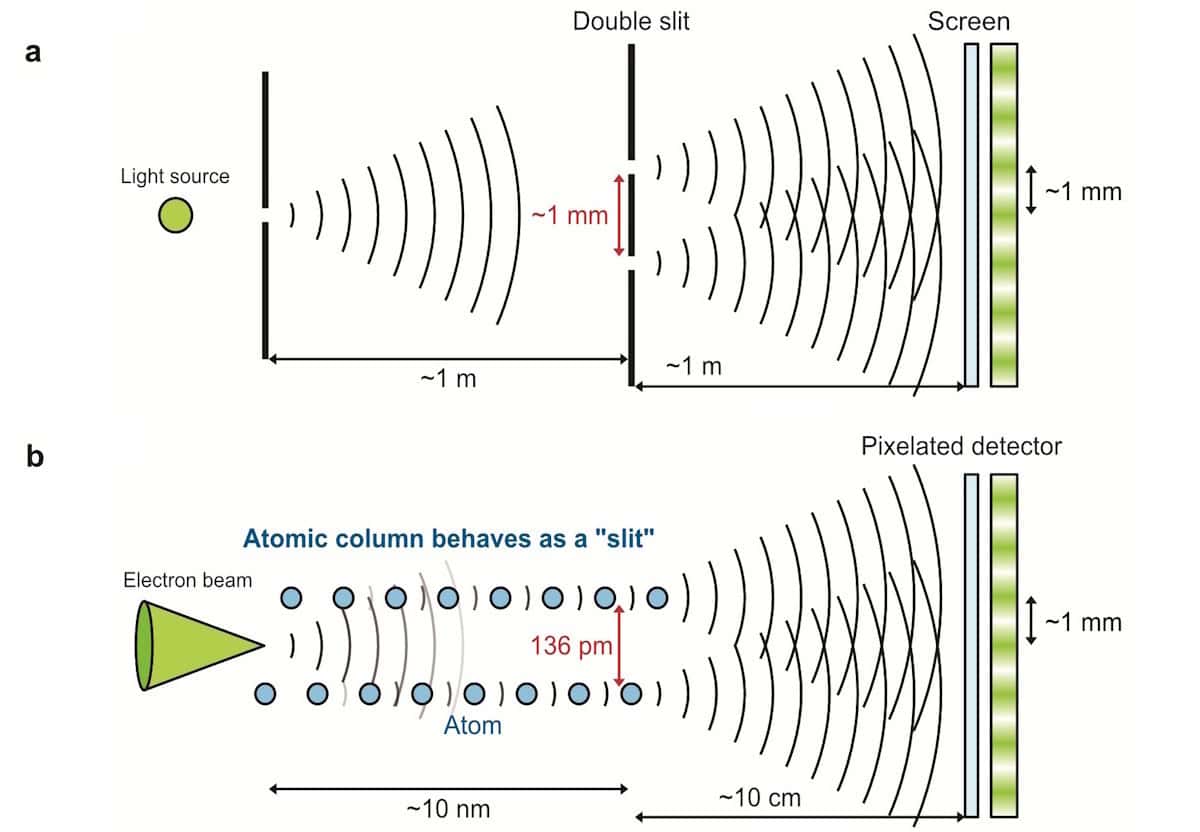
For the first time, physicists in Japan have carried out an atomic-scale version of the double-slit experiment. Using an ultraprecise electron beam channelled along two adjacent columns of atoms in a crystal of silicon, Naoya Shibata and colleagues at the University of Tokyo observed clear interference fringes in electrons scattered by the atoms: fringes that persisted even at high temperature, thanks to correlations in the atoms’ thermal vibrations.
The double-slit experiment is perhaps the most iconic demonstration in quantum mechanics: showing how a single particle’s wavefunction interferes with itself as it passes through two slits at once, with a tangible impact on where the particle is ultimately observed.
In practical research, this effect is now routinely harnessed in electron, neutron and atom interferometers. By observing the interference fringes that it creates, researchers can extract valuable information about both the quantum matter wave and whatever object is doing the diffracting.
Recently, physicists have attempted to push double-slit interferometry all the way down to the atomic scale, replacing conventional slits with crystal lattices. When a moving electron encounters an atom in a crystal, it scatters across a range of angles – producing an outgoing spherical wave that’s mathematically identical to the diffraction pattern from a classical slit.
Since atoms in a crystal sit at such well-defined separations, any neighbouring pair of them could, in principle, act as a double-slit interferometer. In reality, however, the many repeated unit cells in a crystal mean the resulting interference fringes are washed out, making it difficult to isolate the signal from a single atomic pair.
To address this challenge, Shibata’s team used the ultraprecise probe of a 4D scanning transmission electron microscope: an instrument designed to capture electron diffraction patterns with a pixellated detector. Fired into a pure silicon crystal at just the right orientation, the microscope’s precision let the researchers target two adjacent columns of aligned silicon atoms, separated by just 136 pm. As a result, the electron wave overlapped both columns, and no others.
“Our key idea was to use these two atomic columns as the two slits,” describes team member Takehito Seki. “By channelling the probe along both columns at once, we turned them into two coherent scattering sources – effectively making the crystal itself into an atomic-scale double-slit interferometer.”
At this scale, Shibata and Seki’s team created electron interference fringes some seven orders of magnitude smaller than in Thomas Young’s original double-slit experiment with light, first carried out in 1801.
Just as in a larger-scale experiment, these patterns encoded information about the crystal and the electron beam. But at this scale, the researchers could also detect the signature of individual phonon modes in the columns. Rather than destroying coherence as uncorrelated atomic motion would in a classical picture, these correlated vibrations between the two atomic columns kept them moving in sync, preserving the interference.
“In a which-path picture, relative motion of the two atomic columns makes the two electron pathways more distinguishable and reduces the interference, whereas correlated in-phase motion preserves coherence,” Shibata explains. As a result, distinct interference fringes remained visible across temperatures ranging from 300 to 900 K.
The team’s results already point to how an atomic-scale double-slit experiment could offer new ways to measure phonon correlations directly between single pairs of atoms. But as Shibata explains, the possible applications could stretch much further.
“It also opens a route to probing local lattice dynamics at the scale of individual atomic bonds, including at interfaces and defects, where local lattice dynamics can strongly influence thermal transport,” he says. “In the long run, such atomic-scale insight could help inform better thermal management strategies for future chip technologies.”
The study is published in Nature.
The post Researchers shrink double-slit experiment to atomic scale appeared first on Physics World.
Noise that entangles may accelerate the dawn of quantum technologies
Two superconducting qubits, a metre of cable apart, have been driven into an entangled state not in spite of their environment, but by it
The post Noise that entangles may accelerate the dawn of quantum technologies appeared first on Physics World.
Qubits are delicate and often misbehave. A qubit’s advantage over an ordinary bit is that in addition to “0” or “1”, it can hold values of 0 and 1 at once, in a specific combination; that combination is what quantum algorithms actually run on. But any stray interaction with the surrounding world (a vibration, a stray field, a single errant photon) leaks out a bit of information about which state the qubit is in – and that’s enough to collapse the combination back into an ordinary, classical either/or state. Coupling to the environment leads to high decoherence, meaning high error rates, and is normally how we lose good quality qubits. As such, most of the engineering effort in quantum computing goes into avoiding this coupling.
Yet recently, a team at the Institute of Science and Technology Austria (ISTA), working with collaborators in Munich and Madrid, has defied this norm.
Writing in Physical Review X, Alejandro Andrés-Juanes, Johannes Fink and colleagues show that two superconducting transmon qubits, separated by a metre of coaxial cable, can settle into an entangled state by being exposed to the same quantum-correlated microwave field. Avoiding synchronized pulses, heralding, post-selection and feedback (techniques usually used to actively generate and verify entanglement, rather than to fix decoherence), the entanglement can be generated and maintained for as long as the field is on. In other words, the researchers have managed to exploit noise to generate entanglement, rather than losing their qubits to it.
This idea of entangling by using fields belongs to a family of techniques known as dissipation engineering. “The common understanding is that the environment is bad, and it will decohere your qubits,” Andrés-Juanes tells Physics World. “The main idea [here] is that one can engineer a specific interaction with the environment that is not detrimental but – like in this case – prepares your qubits in an interesting state without you having to actively apply any action on the system.”
This proposal dates back more than 20 years, to work performed by Barbara Kraus and Ignacio Cirac, but this is its first experimental realization.
The correlated environment comes from a superconducting device (a Josephson parametric converter) that splits each pump photon into a pair of photons at gigahertz frequencies. The two photons of this pair are entangled with one another and each is sent down its own coaxial cable to one of the qubits, half a metre away in either direction.
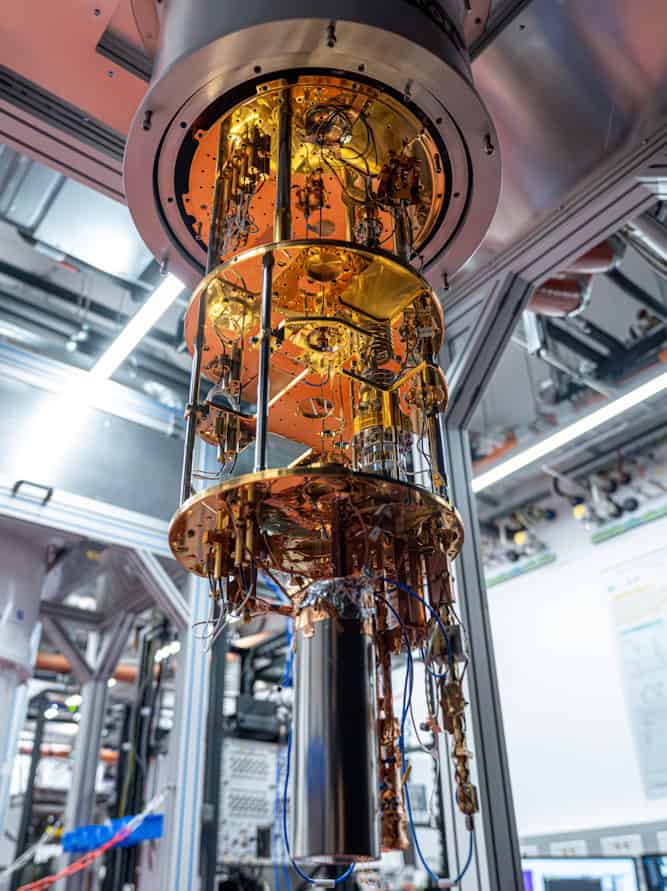
Because the noise reaching the two qubits is correlated, relaxing into it does not scramble them (specifically, it does not wash out the fixed phase relationship between them, as independent noise on each qubit would). They settle instead into a superposition, for which absorbing a photon from the field and emitting one into it interfere destructively: “the destructive interference between a photon emission event in the first waveguide and a photon absorption process at the location of the second qubit,” as the authors explain.
Once there, the qubits stop evolving and the field passes through unchanged: the entangled state is dark, invisible to the very field that created it. What the experiment does, in effect, is convert the continuous-variable (CV) entanglement carried by the two microwave beams into ordinary entanglement between two conventional transmon qubits – “we obtain qubit entanglement from CV entanglement,” Andrés-Juanes confirms – with roughly a tenth of it inherited.
Most entanglement-distribution schemes deliver entanglement as events: a pulse sequence runs, a detector clicks, a pair is announced, and the state then decays until the sequence runs again. The author’s autonomous version could enable the elimination of this machinery.
“It removes a lot of overhead on the pulse sequences you need to run to get the entanglement,” says Andrés-Juanes, an advantage that’s expected to matter most at scale, since one correlated photon source can drive many pairs at once. “Another differential feature of this protocol is that the entanglement is ‘always on’ for when you need to use it. In active protocols, you would have to reinitialize the entangled state because it would decohere after a while.”
The practical limit of this setup is temperature: “We use microwave frequencies, which are only quantum at very low temperatures,” Andrés-Juanes explains. “The real limit in the separation is how big your dilution refrigerator is”, with the longest such link so far being 30 m, at ETH Zurich. He positions the work as an intermediate-distance technology rather than a long-distance one. At optical frequencies, the constraint would lift, though achieving the same strong qubit–waveguide coupling in an atomic system would be its own problem.
For now, the numbers are modest: two qubits, entangled with a concurrence of just 0.10 (on a scale where 1 is a perfect pair), inheriting only about a tenth of the entanglement carried by the microwave beams. The group is working on a module with more than one qubit per node.
But critically, the idea is no longer theoretical. The team has now realised an entangled link that is always “there”, bringing us one step closer to distributed quantum computing (linking separate processors into one machine via entanglement), networked sensing (detectors sharing entanglement to jointly see what none could alone) and quantum repeaters (relay stations for long-distance quantum links, needed because a quantum state can’t be copied and amplified like a classical signal).
The post Noise that entangles may accelerate the dawn of quantum technologies appeared first on Physics World.
Magnetism likely played a key role in early solar system formation
Study of inclusions in a primordial meteorite suggests that magnetism must be considered in simulations of planet formation, and may even be the dominant factor
The post Magnetism likely played a key role in early solar system formation appeared first on Physics World.
The oldest known solids in the solar system contain evidence that the protoplanetary disc that went on to form the planets around our Sun experienced a magnetic field stronger than the field on Earth today, new research suggests. Study of inclusions in a primordial meteorite called a carbonaceous chondrite indicates that magnetism needs to be considered in simulations of planet formation, and may even be the dominant factor.
When planetary systems condense, they initially form high-temperature molecular nebulae. These later cool and accrete into planets surrounding central stars – which, at some point, begin to undergo nuclear fusion. Even before this happens, however, the gas is highly ionized. “A good portion of the ionization is coming from the molecular cloud itself,” explains planetary scientist Cauê Borlina of Purdue University. “It’s a combination of radiation from space and high temperature.”
In any ionized system there is the potential for magnetic fields, but simulations of disc formation often take no account of them, partly as they remain poorly constrained: “It’s a lot easier to just crank up the gravity and use that as a way to match the accretion rate,” says Borlina.
The new study from Borlina and colleagues in the US, China and the UK provides an unprecedented peek at fields in the terrestrial planet-forming region in the first 500,000 years of the Solar System’s existence – before the Earth had formed – using calcium-aluminium-rich inclusions. These are the oldest known solar system solids, comprising minerals with extremely high melting points that are inclined to condense early. “It is very unlikely to get them at later stages,” says Borlina. Previous researchers have confirmed their ages using isotopic dating.
Millions of years after these inclusions formed, they agglomerated with other protoplanetary material into planetesimals, some of which went on to form planets. Planetary scientists think the remaining material accreted to form the chondrites – which astronomers distinguish into several different types depending on their chemical composition. When they fall to Earth as chondrite meteorites, therefore, they provide a valuable glimpse into the solar system’s raw material.
Carbonaceous chondrites hold particular interest as they are thought to have the most primitive chemical compositions of all meteorites. The researchers studied calcium-aluminium inclusions in the 667 g Dominion Range 08006 carbonaceous chondrite discovered in Antarctica in 2008. Such inclusions had, until around 2010, been thought to contain no magnetic minerals. Borlina and colleagues, however, found that some – although not all – of the inclusions contained nanometre-scale amounts of ferromagnetic iron-nickel.
The researchers measured the thermoremanent magnetization of these iron-nickel grains (the field strength they experienced at the time when they cooled down through their “Curie temperature”, thereby fixing their own magnetism). In theory, this could be achieved by heating the sample above the Curie temperature, which for iron-nickel is about 1050 K, and measuring the field required to demagnetize it. Unfortunately, says Borlina, heating meteorites up in the laboratory tends to oxidize the materials extremely quickly, making reliably calibrated experiments very difficult.
Instead, the researchers used an established method called anhysteric remanent magnetization, concluding that the inclusions were exposed to fields of 150–600 µT when they cooled through the Curie temperature (the field on Earth today is around 30–60 µT). “This is good evidence that…you can’t just ignore magnetic fields,” says Borlina. “They need to be present in your simulations.”
The researchers are now studying other carbonaceous chondrites and other types of chondrite meteorites – some of which are thought to have formed in different regions of the protoplanetary disc – hoping to gain a fuller picture of how magnetism shapes disc evolution. “The idea was to put it out there that there’s this new inclusion that might hold magnetic carriers, and there’s a lot of work to be done,” says Borlina.
Meenakshi Wadhwa of University of California, San Diego – who formerly directed the Center for Meteorite Studies at Arizona State University – describes the work as “genuinely significant”. First, she says, it provides the first definitive paleomagnetic signal from a carbonaceous chondrite. Second, the estimated field is multiple times previous estimates.
“Yes, the sample size is small (five inclusions from a single chondrite), but I think the authors make a reasonably solid argument for their conclusions,” she says. The next step, she concludes, “is to measure inclusions from other chondrite groups to see if the signal is reproducible, and to test whether it’s a real nebular record versus something very localized, specific to DOM 08006 or the carbonaceous chondrite reservoir. Beyond that…pinning down when and where inclusions acquired their magnetization will also be important.”
The research is published in Proceedings of the National Academy of Sciences.
The post Magnetism likely played a key role in early solar system formation appeared first on Physics World.
Quiz of the week: how much data will NASA’s Nancy Grace Roman Telescope produce each day?
Have you been keeping up to date with physics news? Try our short quiz to find out
The post Quiz of the week: how much data will NASA’s Nancy Grace Roman Telescope produce each day? appeared first on Physics World.
Fancy some more? Check out our puzzles page.
The post Quiz of the week: how much data will NASA’s Nancy Grace Roman Telescope produce each day? appeared first on Physics World.
Astronomers discover unusual 10-sided atmospheric wave on Saturn
Astronomers estimate the decagon-shaped wave may still be evolving
The post Astronomers discover unusual 10-sided atmospheric wave on Saturn appeared first on Physics World.
While Earth’s atmosphere is constantly changing, many spectacular storms and atmospheric waves on Saturn remain stable for decades or even centuries.
Images from NASA’s Voyager craft as it flew-by the planet in the early 1980s revealed a large and long-lived hexagonal atmospheric wave around Saturn’s north pole.
Yet despite decades of observations from other craft such as the Cassini mission, no similar wave has been reported in the southern hemisphere or elsewhere.
Now, Agustín Sánchez-Lavega from the University of the Basque Country in Bilbao and colleagues have spotted a growing decagon-shaped wave around the planet’s south pole.
The researchers discover the phenomenon thanks to images from NASA’s Hubble Space Telescope as well as ground-based telescopes as the planet’s south pole came back into view from Earth due to Saturn’s axial tilt.
It seems that the 10-sided wave developed between 2023 and 2025 and may still be evolving, in contrast to the 40-plus years of steadiness shown by the hexagon.
The longitudes of the decagon’s vertices oscillate over a period of 32 days, and its movements suggest it may be trapped by the curvature of an atmospheric jet.
The researchers suggest the wave could have been created by a spatially periodic disturbance in the jet peak or driven by an “anticyclonic vortex” to its north.
However, further study is required to better understand how it formed and how it compares to the hexagon structure in the north.
“The most intriguing part to me is that this seems to have just formed recently,” notes study co-author Amy Simon from NASA’s Goddard Space Flight Center in Maryland. “The question is, why did it suddenly form now when we haven’t seen one before?”
The post Astronomers discover unusual 10-sided atmospheric wave on Saturn appeared first on Physics World.
‘Lid’ of asteroid dust smothered and burned the dinosaurs, say scientists
Heat and fire may have caused the mass extinction of Cretaceous creatures
The post ‘Lid’ of asteroid dust smothered and burned the dinosaurs, say scientists appeared first on Physics World.
As wildfires and extreme heat events rage across the world, “apocalyptic” has become an increasingly common descriptor. These climate disasters are not unprecedented, however. New research suggests they may have been the main mechanisms behind the mass extinction event that killed the dinosaurs – and much other life on Earth – 66 million years ago.
Our modern understanding of this extinction dates back to 1980, when the father-and-son, physicist-and-geologist team of Luis and Walter Alvarez presented evidence that it was triggered by an asteroid strike. Subsequent work identified the Chicxulub crater in Mexico’s Yucatán Peninsula as the likely impact site, but debate has persisted – including over how a single asteroid could cause worldwide destruction.
In the latest work, Brandon and Alexandria Johnson, a husband-and-wife duo at Purdue University in the US, fit another piece into this puzzle. By combining Brandon’s research on impact cratering with Alexandria’s expertise on the behaviour of atmospheric particulates, they found that the asteroid impact sent up a near-impermeable layer of dust that smothered the entire planet. Their research, published in Journal of Geophysical Research: Biogeosciences, breathes new life into a theory that had fallen out of favour: that extreme heat and wildfires were the main killers on the day the asteroid hit.
The key to ignition
At some level, this dust layer likely produced a cooling effect, much as large volcanic eruptions do today. Indeed, a previous study showed that condensed droplets of rock known as spherules would have blocked the Sun’s radiation from entering the atmosphere.
At the Earth’s surface, however, the Johnsons think the dinosaurs had the opposite problem. The impact also sent a massive plume containing over 1000 km3 of vaporized material high into the atmosphere. When this material rained down as spherules, the dust cloud’s potential cooling effect was reversed.
“[The spherules] are essentially adding energy back to the atmosphere by travelling through it to the surface. That energy has to go somewhere,” Alexandria Johnson explains. “What we found is that this dust layer over the planet is essentially acting like a lid, and it’s keeping almost all the radiation that should try to find its way back out to space and reradiating it back down to the surface. So it’s enough to not only kill the dinosaurs but actually start widespread wildfires.”
Both researchers were surprised at just how opaque this dust layer was. By their reckoning, it trapped almost all radiation within the atmosphere, allowing a staggeringly tiny upwards transmittance of just 10-286.
“I asked [Brandon] to redo my calculation, I was like ‘make sure these numbers are right’, because this is absolutely nothing,” says Alexandria. “I expected more than what we got to be reradiated out, but the fact that it doesn’t just enhances the whole idea of the heat pulse killing things off in a very quick manner.”
Based on the Johnsons’ estimated heat fluxes, any creatures that couldn’t shelter or burrow – dinosaurs included – would have suffered temperature-induced deaths within an hour or two of the impact. The radiation was also more than enough to ignite lichens, grasses and pine needles, destroying vast amounts of plant life through wildfires.
Never-ending night
Anything that survived the heat then had to face the darkness. “You would have had darkness lasting for a long time which then can cause collapse of the food chain in the oceans and cause oceanic extinctions,” says Brandon Johnson. The dust particles were about as small as those in wildfire smoke, and they may have blocked out the Sun for as long as decades before settling into what we now see as the K-Pg boundary: a rock layer a few millimetres thick that contains high levels of iridium, identified by the Alvarezes as coming from an asteroid.
Although some previous works suggested that the impact couldn’t have ejected enough material to trigger such large-scale effects, Brandon says his analysis of rock vaporization thresholds indicates that the plume’s mass was big enough to facilitate the transport of material across the planet’s atmosphere. Without this transport, he adds, the wreckage would have been more localized to the Chicxulub impact site.
Given the interdisciplinary nature of the field, Brandon thinks there are many ways this line of research could continue. Possibilities include investigating the geological record in more detail and combustion experiments to better understand the wildfires’ impacts. He himself is hoping to carry out 3D impact simulations which can more accurately incorporate the vaporization of rock. “Essentially, [we want] to see what happens to that vapour and see if it is going to expand and be deposited globally as we expect,” he says.
The post ‘Lid’ of asteroid dust smothered and burned the dinosaurs, say scientists appeared first on Physics World.
Finding careers in STEM and the weirdness of AI
Career consultant Alaina G Levine and AI researcher Janelle Shane are our podcast guests
The post Finding careers in STEM and the weirdness of AI appeared first on Physics World.
This episode of the Physics World Weekly podcast features two conversations. The first is with career consultant Alaina G Levine who gives advice on how to build a “unicorn career” in science, technology, engineering, and mathematics. Our second guest is the optics and artificial-intelligence researcher Janelle Shane who writes extensively about the absurd, and often hilarious, side of AI.
Levine’s latest book is called Create Your Unicorn Career and Shane writes about artificial intelligence on her blog AI Weirdness.
 This podcast is supported by American Elements, the world’s leading manufacturer of engineered and advanced materials. The company’s ability to scale laboratory breakthroughs to industrial production has contributed to many of the most significant technological advancements since 1990 – including LED lighting, smartphones, and electric vehicles.
The post Finding careers in STEM and the weirdness of AI appeared first on Physics World.
Antineutrino detector could monitor spent nuclear fuel for clandestine activity
Sensitive new measurements suggest that monitoring can continue even when reactors are offline
The post Antineutrino detector could monitor spent nuclear fuel for clandestine activity appeared first on Physics World.
Scientists have measured antineutrino emissions from spent nuclear fuel for the first time, demonstrating that monitoring efforts need not stop when the reactors do. This is important because although independent nuclear safeguarding agencies have long used antineutrino emissions to glean information on reactor operations, previous detection schemes only worked when the reactors were running. Now, however, members of the Double Chooz collaboration have shown that it is possible to detect residual antineutrino emissions during a complete reactor shutdown – including from spent fuel stored in cooling pools.
Like neutrinos, antineutrinos are tiny, nearly massless fundamental particles that come in three flavours: electron, muon and tau. The largest human-made sources of electron antineutrinos are the reactor cores of nuclear power plants, which produce them via beta decay of neutron-rich fragments that are primarily generated during the fission of heavy elements such as uranium and plutonium.
Because antineutrinos interact so rarely with other particles, their emissions cannot be shielded and their signatures cannot be altered. They can also be detected some distance from the power plant itself. All these features make them valuable for nonintrusive nuclear reactor monitoring. Indeed, the idea of using antineutrinos to provide real-time information about the fissile content of a reactor core – and thereby detect illicit production of material that could be used in nuclear weapons manufacturing – dates back to the 1970s.
When a reactor is shut down, long-lived fission products (found in burnt fuel assemblies that remain in the reactor core, as well as assemblies that were previously removed and stored in nearby cooling pools) continue to decay, producing a residual neutrino flux. However, this residual signal is only around 1% as strong as the signal from an operating reactor. It also lies in a region of the energy spectrum that is strongly affected by background activities.
Measuring the residual neutrino flux and its energy spectrum
In the new work, which is detailed in Physical Review Letters, a team led by Thierry Lasserre and Anthony Onillon from the Max-Planck-Institut für Kernphysik (MPIK) in Heidelberg, Germany, succeeded in measuring the residual neutrino flux and its energy spectrum despite these difficulties. They obtained their data from the Double Chooz neutrino detection experiment, which is located near the two 4.25 GWth cores of the Chooz B nuclear power plant in the French Ardennes. This experiment uses a pair of detectors – labelled “near” and “far” and located around 400 m and 1.05 km from the cores – to study a fundamental parameter called the 𝜃13 neutrino mixing angle that describes how neutrinos transform between different types as they travel.
The Chooz plant uses a pair of pressurized water reactors, each of which contains 205 fuel assemblies consisting of roughly 600 kg of enriched uranium dioxide (mainly 238U with a few percent of 235U). During operation, these reactors also produce additional fissile isotopes, 239Pu and 241Pu, through neutron capture and subsequent decay processes involving 238U. In a typical cycle, they operate at full power for over a year and are then shut down for six to eight weeks for refuelling. During this time, some of the spent fuel assemblies are removed and transferred to storage pools in a nearby building.
The Double Chooz neutrino detector consists of more than 30 m3 of liquid scintillator, which is a material that emits short, double flashes of light when an antineutrino hits it. The outer part of the detector is shielded from the background radiation of the surrounding mountain rocks by 15 cm of demagnetized steel for the far detector and 1 m of water for the near detector. The inner part of the detector is shielded by a thick layer of mineral oil. Finally, an outer “muon veto” consisting of segmented scintillator modules positioned above the detector eliminates contributions from cosmic muons that can mask the signal from the antineutrinos.
Over 100 events observed
The researchers collected their data in 2017 when both of Chooz’s reactors were simultaneously shut down for 24.4 days for refuelling and maintenance. This unusual double shutdown was long enough for the team to obtain the statistics and low background signals needed to extract, for the first time, a quantitative residual reactor antineutrino spectrum.
After accounting for muon veto-induced dead time, the researchers clocked up 17.2 days of measurements for the near detector and 22.2 days for the far detector. While they analysed data from both, they mainly focused on the near detector because it is closer to the reactor cores and spent fuel pools and is therefore more sensitive to the residual antineutrino flux.
In the 1–3 MeV range, where the residual neutrino signal is strongest, the researchers observed 106 ±18 events, which represents a 5.9 σ excess over the background. This value, they say, is in very good agreement with the 88 ±7 events predicted by detailed simulations of the remaining nuclear fuel inventory and the decay of long-lived fission products.
According to the researchers, this result had a long gestation period: “In 2003, the IAEA safeguards met with the neutrino community and raised a question: could antineutrinos also provide information on spent nuclear fuel?
“The main difficulty has been detecting the faint residual antineutrino signal. This meant obtaining data during periods when both Chooz reactors were simultaneously off, very low and well-controlled detector backgrounds, and a detailed simulation of the irradiation and cooling history of relevant fuel assemblies.”
The researchers hope that their result will become a robust benchmark for agencies and experimenters designing detectors for specific spent-fuel monitoring applications. “Such monitoring is feasible and could provide an independent, non-intrusive complement to reactor-status and spent fuel inventory,” they tell Physics World, though they add that “it will not necessarily be easy, compact or inexpensive to implement.”
The post Antineutrino detector could monitor spent nuclear fuel for clandestine activity appeared first on Physics World.
Plasmonic metamaterial makes a photonic time crystal
New nanostructure could be used to make lasers that work in the terahertz frequency range
The post Plasmonic metamaterial makes a photonic time crystal appeared first on Physics World.
Researchers in France and Germany have created the first all-optical photonic time crystal. The nanostructure could be used to make ultrafast optical computers and amplifiers, frequency converters and perhaps even new types of lasers that work in the terahertz range.
Photonic crystals are nanostructured materials with a refractive index that varies on a length scale comparable to the wavelength of light, producing a phenomenon known as a photonic bandgap. This gap affects how photons propagate through the material in a way that resembles how a periodic potential in semiconductors affects the flow of electrons by defining allowed and forbidden energy bands. In the case of photonic crystals, light in certain wavelength ranges can pass through the material, but other wavelengths cannot.
Photonic time crystals (PhTCs) are similar to this, except their properties vary periodically in time, not space. Among other adjustments, this means that instead of photonic bandgaps, they host momentum bandgaps. These gaps are special in that light waves whose momenta fall within them grow exponentially in time.
Optical modulation at THz frequencies
PhTCs show much promise for applications like new types of tuneable lasers and ultrafast frequency converters, but controlling their photonic properties has proven very difficult. This is because these properties need to be modulated very strongly and on ultrashort timescales – on the order of the temporal period of the light itself.
Producing such extremely fast modulations is a key goal for scientists working in a branch of highly nonlinear optics known as time-domain photonics. Previously, their efforts have paid off in the microwave frequency range using PhTCs containing electrical circuits, but all-optical systems have proven elusive.
A team of physicists led by Yannis Laplace of the Ecole Polytechnique in France has now made a PhTC with properties that can be optically modulated at terahertz (THz, 1012 Hz) frequencies. The new PhTC is made from a type of photonic crystal known as a plasmonic metamaterial: an artificially engineered nanostructure consisting of micron-sized cavities made of gold atop an insulating layer and a semiconductor material based on indium and antimony. The cavities trap photons between the gold and semiconductor layers, and surface plasmons – collective, coherent oscillations of conduction electrons that interact very strongly with light – then keep them on the surface of the semiconductor.
Working with scientists from the Collège de France and the Helmholtz-Zentrum Dresden-Rossendorf (HZDR) in Germany, the researchers applied pulses of THz light from the TELBE light source at the HZDR’s ELBE accelerator to their structure. They found that they could use this intense multi-cycle THz light field to modulate the material’s optical properties over timescales of just picoseconds.
Towards new types of lasers in the THz range
“This study builds on previous work in my group related to the development and study of tuneable plasmonic metamaterials in the THz range as a means to create functional devices to control light-matter interactions in this range,” Laplace says. “One of the central questions in our work was to determine if the temporal modulation of the metamaterial would be strong and fast enough.
“By developing a theoretical model in collaboration with our colleague Marco Schiró and his team at the Collège de France that reproduced the experimental observations remarkably well, we showed that the system presented the characteristic spectroscopic signatures expected for a PhTC and provided an explanation for the behaviour of the photons therein.”
The researchers, who detail their work in Nature, also found that the ultrafast temporal modulation reduced the dissipation of photons within the metamaterial by half and they are now looking to reduce these optical losses even further.
“The THz frequency range lies at the junction between electronic and photonic technologies and is historically less developed than these two,” Laplace explains. “With the THz PhTCs that are now achievable, we hope we can soon develop devices like THz amplifiers, frequency converters and maybe new types of THz lasers in this range, hence contributing to the closing of the so-called ‘THz gap,’” he tells Physics World.
The post Plasmonic metamaterial makes a photonic time crystal appeared first on Physics World.
Two-dimensional material shows promise for long-term memory, thanks to slow electrons
A 2D magnetic material exhibits a charge-ordered state in which electrons move collectively and unusually slowly while maintaining quantum coherence
The post Two-dimensional material shows promise for long-term memory, thanks to slow electrons appeared first on Physics World.
Two-dimensional (2D) materials have attracted a lot of attention in recent years for their excellent electronic, thermal and mechanical properties, as well as their interesting quantum effects. While graphene has gathered the most commercial attention, there are hundreds of 2D materials, all of which have different combinations of properties for different applications. A research team headed up at the University of Chicago has discovered some unusual behaviour in the 2D material Fe5GeTe2.
Some 2D materials exhibit superconductivity properties and charge orders (in which the electrons are confined in a specific arrangement rather than being able to move freely). Charge orders arise from the reshaping of ground states in the electronic bands of a 2D materials to create flat electronic bands. And these flat bands cause the electrons to move very slowly in the lattice, at speeds much slower than expected.
Extremely flat electronic bands can often become incoherent, due to an ultrastrong electronic interaction strength between charge carriers. In research published in Science Advances, Shuolong Yang and colleagues found that Fe5GeTe2 exhibits a charge-ordered state where electrons move both collectively and very slowly, while remaining quantumly coherent.
“I was originally motivated by the fact that Fe5GeTe2 was discovered to host multiple structural phases with nearly the same stoichiometry. Each structural phase is associated with its unique electronic and magnetic phase,” says Yang. “These different structural phases have almost degenerate energies, which means that they can all be stabilized at room temperature.”
According to Yang, this discovery prompted two key research questions: What is the nature of each phase? Can we utilize these nearly energy-degenerate phases to encode information?
Fe5GeTe2 is part of specific class of 2D materials called van der Waals magnets, which could be used to develop new memory technology. The researchers probed the electronic structure and magnetic states of Fe5GeTe2 using angle-resolved photoemission spectroscopy (ARPES). “We were able to surgically probe the electronic band structure of each individual phase region (tens of microns in size) and figure out the physics,” Yang tells Physics World. “This immediately allows us to answer the question of ‘What is the nature of each phase?’”
After discovering that the electronic band was flat in Fe5GeTe2, further studies into the material showed that the charge order in Fe5GeTe2 was caused by the folding of electronic bands in the Brillouin zone within 30 meV of the Fermi level.
“We revealed a so-called Kondo-like phase, so the localized electronic states strongly interact with itinerant states, resulting in very peculiar, quantum coherent flat bands right at the Fermi level which dictates low-temperature transport,” says Yang. “The discovery of an effective Kondo lattice in a ferromagnetic phase [instead of magnetically non-ordered phase] is quite a surprise from a theoretical point of view, which forced us to go back to the drawing board to understand its physics. We think that that our surprising finding originates from a many-body localized state interacting with the conduction electrons.”
Because of the flat bands, the electronic system wants to spontaneously break the space-translation symmetry. It then forms a new superlattice order commensurate with the original lattice. “Our results provide the first experimental evidence that an interaction-driven flat band can itself drive electronic ordering through flat-band nesting, without relying on Moiré or geometrically frustrated flat-band engineering,” Yang explains. He notes that this “peculiar physics” used to be something obtained in delicately designed, twisted 2D materials. This finding, however, provides a new avenue to study complex many-body physics enabled by flat bands in stoichiometric and strongly correlated materials.
There’s the potential that the material’s different magnetic states could encode information for memory systems. This idea is being trialled by the team by using a micro-focused laser to switch between this observed quantum many-body phase and other phases.
“We’re using carefully designed laser pulses of different frequencies to switch between the multiple phases of Fe5GeTe2, including our discovered Kondo-like phase. If successful, we will utilize the many-body physics for some real memory operations,” Yang explains. This follow-on aims to tackle the second stated research question. However, to be practical, it will have to work at room temperature, and these quantum effects have so far only been realised at ultralow temperatures.
“Fundamental work is underway to understand the exact nature of this Kondo-like phase, whether it has any topological properties, and whether it connects to structural defects,” says Yang. “Eventually we want to understand how to microscopically describe such an exotic system.”
The post Two-dimensional material shows promise for long-term memory, thanks to slow electrons appeared first on Physics World.
AI dominates the 4th International Congress of Basic Science in Beijing
Subir Sarkar finds that AI was a hot topic among the over 800 delegates
The post AI dominates the 4th International Congress of Basic Science in Beijing appeared first on Physics World.
China has made astounding scientific progress over the past decade, with the country outperforming all others in the world according to a recent analysis by Nature. Based on data from 2025, its 2026 Research Leaders study puts China ahead of the US (in second), Germany (third) and the UK (fourth).
Across all disciplines, Nature reports that most (51) of the top 100 institutions in the world are in China, with only four in the UK. The picture is slightly different if you judge academic institutions based only on their work in the physical sciences, but China still has 30 of the top 100 institutions, with only seven from the UK.
Professional physicists may not care much for such league tables but they do reveal just how far China has come in recent years. The country’s scientific strength was particularly evident at the fourth International Congress of Basic Science (ICBS) in Beijing, which I recently attended.
Founded in 2023 by the Fields-medal-winning mathematician Shing-Tung Yau, this year’s ICBS ran from 9-21 August at the Beijing Institute of Mathematical Sciences and Applications (BIMSA), of which Yau is president. Its international character is evident from the fact that a total of 50 of its 140 full-time researchers are from outside China.
Awards and honours
Over 800 participants from more than 30 countries attended the congress, which had the theme “Advancing science for humanity”, with my participation supported by the organisers. The programme was huge, featuring over 500 academic sessions covering topics from generative AI reasoning to quantum information.
Nine scientists, including four women, were awarded an inaugural Basic Science Medal. They were Claire Voisin (algebraic gemoetry), Horng-Tzer Yau (probability theory), Shou-Wu Zhang (maths), Yifang Wang (particle physics), Xiao-Gang Wen (condensed matter), Andrea Liu (complex systems), Zhenan Bao (flexible electronics), Xiaowei Zhuang (imaging), and Feng Zhang (CRISPR co-discoverer).
Meanwhile, Frontiers of Science Awards were given to over 500 researchers from 20 countries who had done work of “excellent and of outstanding scholarly value” over the last 5-10 years in the three fields represented at the ICBS. Authors from many Chinese institutions were among the recipients, underscoring the growing international impact and vitality of China’s basic science research.
There were 20 plenary sessions, over 400 Frontiers of Science Awardee talks, plus events for entrepreneurs and school and university students. Especially engaging were the “nights of mathematics, physics and engineering”, enlivened by dance amd music performances by students. An exchange meeting was held too for research institutions in Beijing seeking to integrate basic science with frontier technologies
The closing ceremony saw the winners of this year’s ICBS Innovation Fellowships announced. They are all researchers under 50 who work full-time in China and have demonstrated potential in mathematics, physics, information sciences, and other fundamental and interdisciplinary fields. Each receives research funding and can work with a partner institution in China for an agreed period.
AI surges ahead
Artificial intelligence (AI) was one of the major themes of ICBS 2026. Fields medallist Martin Hairer from EPFL Lausanne, for example, said AI won’t end mathematics, but will transform how it’s carried out. It may speed up certain areas while others might fall away.
Caucher Birkar from Tsinghua University – another Fields medallist – pointed out that AI is highly capable in computation, searching for examples, and completing proofs of mathematical lemmas, but it remains difficult for AI to generate truly original ideas.
As for Robert Endre Tarjan, a Turing award laureate from Princeton University, he encouraged young researchers to be curious and commit themselves to long-term scientific exploration. Researchers, he said, can train AI to be a powerful tool for scientific discovery, but they must also develop their own ability to identify meaningful questions and establish independent judgment.
The last word was left to congress chair Shing-Tung Yau, who emphasised that while AI will enhance scientific research, the essence of scientific discovery will always depend on human creativity, imagination and independent thinking.
The post AI dominates the 4th International Congress of Basic Science in Beijing appeared first on Physics World.
Breaking in: how ultrasound smuggles drugs past the blood–brain barrier
A creative spin on MRI technology measures the amount of drug delivered to a brain tumour
The post Breaking in: how ultrasound smuggles drugs past the blood–brain barrier appeared first on Physics World.
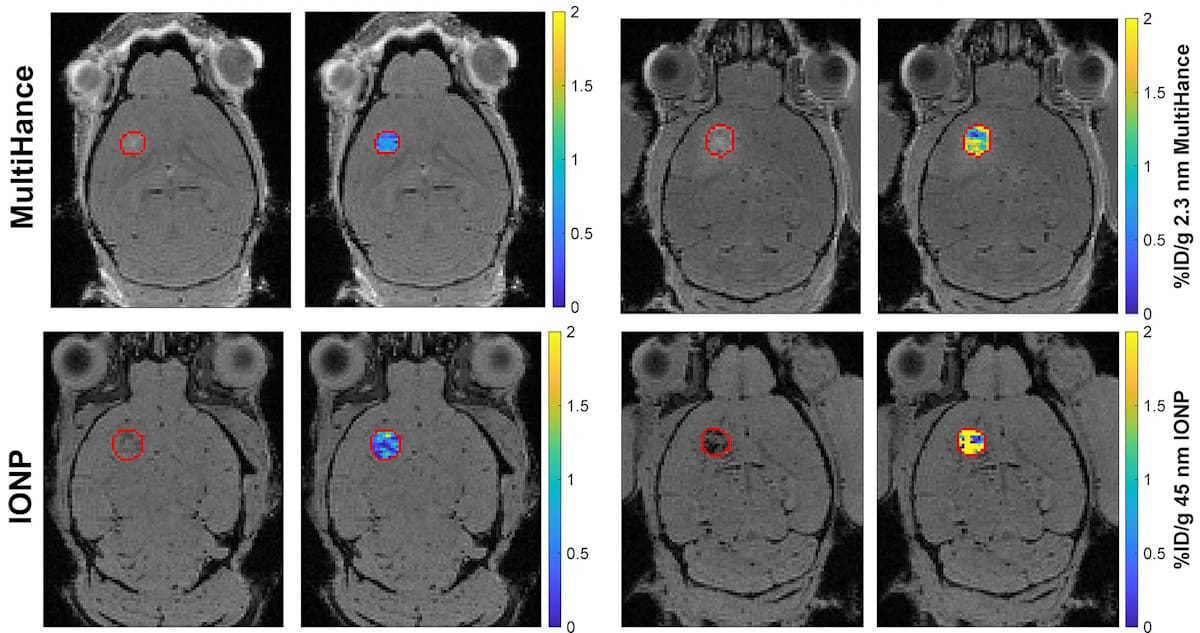
Drug delivery to the brain has been a longstanding challenge in medicine. One option is focused ultrasound (FUS), which can safely disrupt the blood–brain barrier for drug delivery. But how much of a drug gets into the brain depends heavily on its size. A long-standing assumption is that delivery decreases as drug size increases. But by using a clever spin on MRI physics, researcher Matthew Hoch and colleagues from the University of Virginia have shown that “the smaller the better” might not be entirely correct.
The blood–brain barrier is one of biology’s toughest engineering problems. Composed of a dense, tightly sealed layer of cells lining every blood vessel in the brain, the blood–brain barrier only lets nutrients and oxygen through and protects the central nervous system by blocking bloodborne pathogens. In doing so, however, it also blocks the delivery of drugs to the brain. Brain tumours compound this with their own blood–tumour barrier, further hindering drug delivery. For years, researchers have pondered how therapeutics could be delivered past these checkpoints; the answer may simply lie in the use of sound.
The process begins with the injection of gas-filled microbubbles into the bloodstream, where they circulate freely. Exposure to FUS then expands and contracts the volume of these microbubbles, creating a temporary, localized gap that pries the barrier open just long enough for drugs to slip through. Although the technique works, it is unclear how much of a drug actually comes through. In this new study, the team investigate how the size of the drug influences FUS-mediated drug delivery and introduce a novel technique to measure precisely how much drug is delivered.
The measurement problem
Many neurotherapies, with a range of sizes, could benefit from this drug delivery method. But measuring how much of the drug gets past the blood–brain barrier is challenging with current imaging methods. For example, fluorescence imaging is limited by its semi-quantitative nature, while PET scanning suffers from poor spatial resolution.
Standard MRI methods are not only time-consuming, but, in the form of T1-mapping, are typically limited by the size of commercially available contrast agents, which are small in comparison to larger neurotherapeutics used for immunotherapy and gene delivery. Other standard MRI methods sensitive to the presence of iron (T2-mapping) provide an alternative avenue to measure larger agents, but can again be limited by scan time for 3D visualization. Both approaches also have potential to suffer from low sensitivity at low concentrations.
Hoch and his team solve this measurement problem by introducing quantitative susceptibility mapping (QSM), an MRI technique with diverse applications in neuroimaging including evaluation of haemorrhage, iron deposition and calcification. QSM works by exploiting the distortion of local magnetic fields by different materials, a property called magnetic susceptibility. By injecting iron-based nanoparticles that induce measurable, spatially localized shifts in the MRI signal’s phase, QSM can generate a 3D map of magnetic susceptibility. This can then be used to calculate the actual concentration of iron-based nanoparticles within tissues.
By transforming an MRI scanner into a sensitive nanoparticle detector, the researchers present a novel way to quantify drug delivery down to fractions of a percent of the injected dose.
What did they find?
The team tested this approach using four different particles, with a 20-fold range in size. The first was a small gadolinium-based contrast agent, MultiHance (a proxy for small molecule therapeutics), at around 2.3 nm; the other three were iron oxide nanoparticles (IONPs) of 15, 23 and 45 nm, sizes that mirror the dimensions of therapeutic candidates used for immunotherapy and gene therapy.
Using healthy and glioma brain tumour-carrying mice, the researchers used FUS treatment to open the blood–brain barrier and deliver particles of varying sizes. They recorded MRI scans before and after delivery and used QSM to generate a precise measurement of how much of each particle made it into brain tissue.
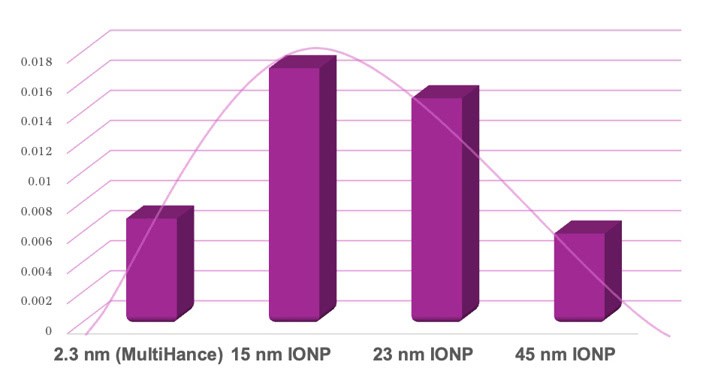
The results were unexpected. Drug delivery followed a bell-shaped curve in healthy mice. From the smallest (2.3 nm) particle to the 15 nm IONP, delivery increased 2.6-fold, then at 23 nm, remained steady. Interestingly, at 45 nm, delivery dropped by 2.5-fold compared with the 23 nm nanoparticle, comparable to that of the smallest agent.
This sweet spot, ranging from 15 to 23 nm, demonstrates that smaller isn’t always better. The researchers suspect that this trend in drug delivery is due to a balance between how easily a particle can squeeze through the barrier (so favouring smaller particles) and how long a particle stays in circulation, giving it more time to travel across the barrier (favouring larger particles).
In the mice with brain tumours, where there is an addition of the tumour’s own leaky, disorganized vasculature, the blood–tumour barrier, drug delivery can differ from that to healthy brain. Specifically, this barrier is thought to make drug delivery more difficult than in healthy tissue due to higher tissue pressures and inconsistent blood flow. But the researchers unexpectedly found that FUS boosted delivery of both small and large agents into tumours, with no real difference to the drug delivery levels seen in healthy brain tissue, despite the added presence of the blood–tumour barrier.
“The outcome is exciting because it means that focused ultrasound delivery performance is not expected to diminish in brain tumours,” says senior author Richard J Price in a press statement. “In fact, it may even be enhanced for some types of therapeutics.”
FUS-mediated barrier opening is currently in clinical trials for use in Alzheimer’s disease and glioblastoma, and this research has implications in both drug engineering and treatment planning. By introducing QSM, Hoch and his colleagues have provided a universal, precision technique to quantify contrast agent delivery. Taking existing tools, used for a specific physics measurement problem, and developing them to answer a completely different biological question is no small feat. Here, the researchers present an ingenious intersection of physics and biology, and its potential application in medicine.
The researchers report their findings in Radiology.
The post Breaking in: how ultrasound smuggles drugs past the blood–brain barrier appeared first on Physics World.
Resolving an exciton debate
Researchers disentangle two competing mechanisms that govern how a promising semiconductor material responds to light
The post Resolving an exciton debate appeared first on Physics World.
When light is absorbed by a semiconductor, it first creates an electron-hole pair before free charges can be generated. The electron and hole can remain bound together in a quasiparticle known as an exciton. This intermediate stage is important because excitons determine how light is absorbed and emitted, and how efficiently a material can convert light into electrical current.
Monolayer tungsten diselenide (WSe₂) is a material that researchers are investigating for use in photodetectors, optical computing and quantum technologies. It is an atom-thick semiconductor that interacts very strongly with light. The excitons formed in WSe₂ are unusually stable, allowing quantum effects to be observed particularly strongly. WSe₂ therefore provides a model system for learning how to control light-generated excitons, knowledge that could eventually lead to more efficient solar cells, photodetectors and low-energy photonic technologies.
A key question in this area of research is what causes the WSe₂ exciton energy to shift to a higher energy (blue shift), a lower energy (red shift) or split into two levels. Two leading explanations are the Optical Stark Effect, in which the laser’s electric field directly modifies the exciton energy, and exciton-exciton interactions, in which excitons alter one another’s energies through many-body interactions.
In this work, the researchers used helicity-resolved transient absorption spectroscopy to show that, while the laser pulse is present, the Optical Stark Effect dominates, causing a blue shift, splitting or a red shift depending on the laser detuning. After the pulse ends, exciton-exciton interactions become dominant, producing a blue shift. By varying the laser detuning and tracking the exciton response on femtosecond timescales, the researchers were able to separate the coherent Optical Stark Effect from the later incoherent exciton-exciton interaction. The work provides a clearer picture of how light and excitons interact on ultrafast timescales, which is important for the design of next-generation optoelectronic devices.
Read the full article
Xiu Zhang et al 2026 Prog. Energy 8 025007
Do you want to learn more about this topic?
Intercalation in two-dimensional transition metal chalcogenides: interlayer engineering and applications by Dibyendu Ghosh, Pooja Devi and Praveen Kumar (2022)
The post Resolving an exciton debate appeared first on Physics World.
Tuning frustrated magnetism with stress
Uniaxial stress induces a new magnetic phase in PdCrO₂, revealing strong coupling between magnetic order, electronic structure and lattice elasticity
The post Tuning frustrated magnetism with stress appeared first on Physics World.
In an antiferromagnet, neighbouring spins prefer to align in opposite directions to minimise their energy. In a geometrically frustrated magnet, this is not always possible; for example, three spins on a triangle cannot all simultaneously be antiparallel to one another. The magnet PdCrO2 contains chromium (Cr) atoms on a triangular lattice, so that the magnetic moments on the Cr atoms cannot point antiparallel to each other. This compound also contains sheets of palladium (Pd) atoms that have very high electrical conductivity. PdCrO2 is therefore a system in which the interaction between magnetism and electronic structure can be studied in a precise way.
Previous studies have shown that the Cr-Cr exchange interaction is highly sensitive to inter-atomic spacing. In consequence, the magnetic ordering wavevector shifts rapidly as uniaxial stress is applied to PdCrO2, distorting the triangular lattice. In this work, the researchers have taken a step further by applying enough stress to qualitatively change the magnetic structure. They use a combination of X-ray diffraction and measurement of the stress-strain relationship to probe the effects on the elastic properties, and elastic neutron scattering to see how the magnetism changes. As the magnetic structure changes, the Young’s modulus changes by around 100 GPa, showing that magnetic interactions have a large effect on the crystal’s mechanical stiffness.
As stress is initially applied to PdCrO2, the magnetic wavevector changes rapidly, reflecting the sensitivity of the Cr-Cr exchange interaction to strain. The main finding of this work is that, under a uniaxial stress of about 0.6 GPa, the magnetism undergoes a first-order transition into a state where the magnetic wavevector is rigid, that is, no longer responds to continued change in lattice strain. The rigidity of this stress-induced magnetic structure is reflected in the elastic properties: the Young’s modulus almost doubles, and the Poisson ratio falls from about 0.7, an exceptionally high value, to about 0.3, which is more typical. This rigidity may be a consequence of nesting: the wavevector of this stress-induced magnetic phase nests the Fermi surface of the Pd sheets. PdCrO2 may therefore provide a system in which the thermodynamics of nesting can be studied with quantitative precision. More broadly, the work demonstrates that uniaxial stress is a powerful tool for tuning frustrated magnetism and accessing new magnetic states.
Read the full article
Uniaxial-stress-induced magnetic transitions in the triangular-lattice antiferromagnet PdCrO2
Nina Stilkerich et al 2026 Rep. Prog. Phys. 89 068007
Do you want to learn more about this topic?
Unusual ordered phases of highly frustrated magnets: a review by Oleg A Starykh (2015)
The post Tuning frustrated magnetism with stress appeared first on Physics World.
Probing quantum critical points
A new Quantum Monte Carlo method reveals distinct entanglement signatures of different quantum critical points
The post Probing quantum critical points appeared first on Physics World.
A critical point is where a material changes phase. For example, water turns to ice below 0°C (273 K) at standard pressure. A quantum critical point occurs at absolute zero (0 K) and, instead of being driven by temperature, is caused by changing another property such as a magnetic field, pressure, or interaction strength. One example is the transition between an ordered magnetic state and a disordered quantum state.
Entanglement entropy is a measure of how much quantum information two parts of a system share. If a system is split into two regions, a low entanglement entropy means that knowing about one half tells you little about the other half, while a high entanglement entropy means that the two halves are strongly connected through quantum mechanics. Entanglement entropy provides important information about quantum phases of matter, quantum critical points, and universal properties of quantum systems. However, calculating entanglement entropy accurately at quantum critical points in two-dimensional quantum systems is very difficult. These systems are commonly described as (2+1)-dimensional because their critical theories involve two spatial dimensions and one time dimension.
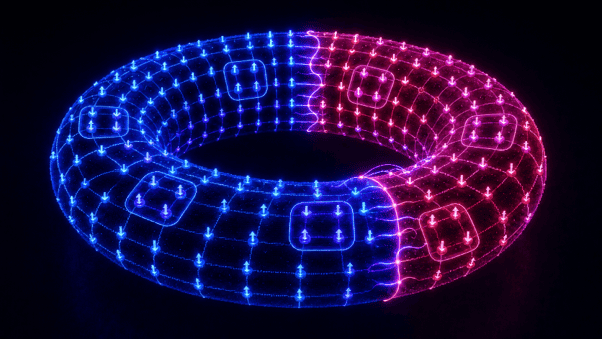
In this work, the researchers developed a novel Quantum Monte Carlo algorithm to calculate entanglement entropy more accurately. Quantum Monte Carlo methods use random sampling to study quantum systems that are too complex to solve exactly. The researchers started with a standard quantum magnet model, the transverse-field Ising model, and added extra interactions that allowed them to study different types of phase transitions, including ordinary Ising critical points and a tricritical point that, in (2+1) dimensions, is described by a Gaussian free theory.
The researchers compared the second Rényi entanglement entropies of two specially chosen regions with the same boundary length. This directly cancelled the dominant area-law contribution, allowing the much smaller universal corner term to become the leading signal. They then used the same approach to obtain a precise value for the Ising critical point. The results showed that the Ising and tricritical/Gaussian critical points have different universal entanglement fingerprints, demonstrating that entanglement can distinguish between different types of quantum critical behaviour. More broadly, the work provides a powerful new method for studying entanglement in strongly interacting quantum systems and for testing theoretical predictions in two-dimensional quantum materials.
Read the full article
Ben Lee-Yeung Ngai et al 2026 Rep. Prog. Phys. 89 068006
Do you want to learn more about this topic?
Dynamical quantum phase transitions: a review by Markus Heyl (2018)
The post Probing quantum critical points appeared first on Physics World.
Take this quiz to test your knowledge of science on stage
Check how much you know about physics at the theatre
The post Take this quiz to test your knowledge of science on stage appeared first on Physics World.
How did you do?
0–4 Back to stage school
5–9 Wooden performance
10–13 Leading light
14 Darling, you were wonderful
- Feeling stuck? Check out the feature “Theatre is bringing physics to new audiences but what is the definitive science play?” by Chris Sinclair
The post Take this quiz to test your knowledge of science on stage appeared first on Physics World.
NASA launches Nancy Grace Roman Space Telescope to shed light on the dark universe
The observatory will also study exoplanets, black holes and map billions of galaxies
The post NASA launches Nancy Grace Roman Space Telescope to shed light on the dark universe appeared first on Physics World.
NASA has successfully launched the $4.3bn Nancy Grace Roman Space Telescope. The observatory took off atop a SpaceX Falcon Heavy rocket from Florida’s Kennedy Space Center at 7.26 a.m. local time on 30 August. The craft will now spend three months travelling to a point in space known as the second Sun–Earth Lagrange point (L2) where it will survey space with a field of view at least 100 times greater than the Hubble Space Telescope.
From L2, which lies about 1.6 million kilometres from Earth, the Nancy Grace Roman Space Telescope will yield insights into dark energy and dark matter, discover and characterize exoplanets, map billions of galaxies, and gain fresh understanding of black holes.
It will do so via a 2.4 m primary mirror that is accompanied by two instruments: a wide-field instrument will obtain images in visible and near-infrared light, while an experimental coronagraph will use masks, prisms and mirrors to cancel out the light from stars to help detect exoplanets.
“Roman will be a discovery machine that will bring us closer than ever before to answering humanity’s most profound questions about our cosmic history,” notes Nicola Fox, associate director for NASA’s Science Mission Directorate.
NASA intends the observatory to operate for at least a decade, with three specific surveys planned for its initial five years. The first will identify tens of thousands of distant supernovae, many more than the 2000 currently known, while a second survey will observe more than a billion galaxies.
Both these sets of measurements, combined with data from other survey telescopes, will be used to improve our understanding of dark energy and its potential role in the speed at which the universe expands. Their observations of gravitational lensing will also allow astronomers to map dark matter.
A third survey, meanwhile, will search the centre of the Milky Way for signs of gravitational microlensing that will reveal more than 2000 otherwise invisible exoplanets.
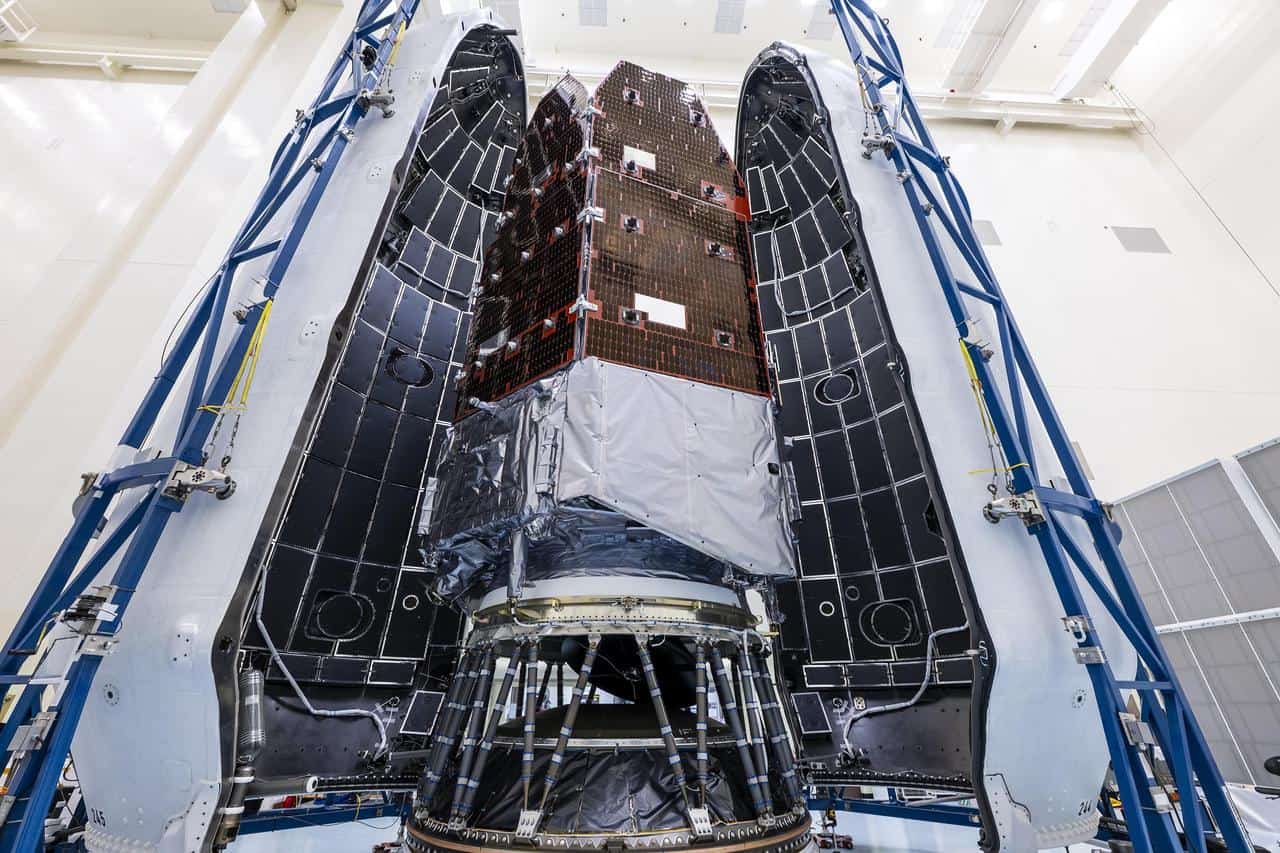
Mother Hubble
The observatory was initially known as the Wide-Field Infrared Survey Telescope before it underwent several design changes due to cost pressures. In 2020 it was then renamed after Nancy Grace Roman (1925–2018), who in the early 1960s became NASA’s first chief astronomer and is known as “the mother of the Hubble Space Telescope”.
Yet the Roman observatory won’t replace Hubble or the James Webb Space Telescope, rather it will complement them, providing data from wide areas of the universe that those two instruments will then be able to observe in greater detail.
Indeed, Roman will survey the universe a thousand times faster than the Hubble, creating 1.4 billion terabytes (1.4 zettabytes) of information daily – the highest data rate of any NASA astrophysics mission.
NASA says that machine learning, artificial intelligence and “citizen science” will be used to help sift through the data and flag findings that astronomers will then study.
NASA administrator Jared Isaacman praised the mission as “exactly the kind of success story we want to see”. He noted that it was completed “ahead of schedule and on budget”, adding that it “will demonstrate what is possible when America’s space programme pairs bold ambition with disciplined execution”.
The post NASA launches Nancy Grace Roman Space Telescope to shed light on the dark universe appeared first on Physics World.
Theatre is bringing physics to new audiences but what is the definitive science play?
Chris Sinclair explores the plays that are bringing physics to new audiences
The post Theatre is bringing physics to new audiences but what is the definitive science play? appeared first on Physics World.
As audiences poured out of London’s Old Vic theatre on a crisp night in January, one theatregoer and their companion were overheard chatting about the second law of thermodynamics. “I wish I knew more about what they were discussing,” one remarked, referring to the characters in Tom Stoppard’s Arcadia. “It’s an unusual play,” the other responded.
Was this curiosity about thermodynamics a sign of confusion, that the production had failed to communicate its ideas clearly for a lay audience? Or had the evening in the theatre inspired a desire for these audience members to dig deeper and learn more about physics through the shared experience of watching a play?
Written in 1993, Arcadia is an early example of an ever-growing number of plays that have at their heart scientific ideas or scientists themselves. Newtonian determinism, chaos and iterated algorithms all crop up in Stoppard’s masterpiece, but Arcadia is a play about much more than just physics or mathematics.
With scenes alternating between a country house in the early 19th century and the present day, Arcadia is also a literary mystery about the poetry of Byron set against academic rivalry. Like all of Stoppard’s work, it’s an agile, clever and entertaining tour de force of ideas, led by characters who are just as concerned with traditional dramatic themes including love, jealousy and flawed ambition.
The Old Vic’s Arcadia was sufficiently popular with audiences that it received a transfer to London’s West End for an extended run in summer 2026. But it was not the only major revival of a classic “science play” in London this year, with Hampstead Theatre staging a new production of Michael Frayn’s Copenhagen.
Arguably no other play about physics has been as popular and successful as Copenhagen since it was first produced at the National Theatre in London 1998. It imagines what might have been discussed when Werner Heisenberg visited Niels Bohr at his home in the Danish capital during the Second World War. It also explores the implications of the meeting for the development of nuclear weapons.
Plays depicting physics or physicists fall into three main types. Some are straightforward biographical representations of physicists – from Lise Meitner to Stephen Hawking. Others focus on the process of “doing” physics. A third kind uses scientific concepts to structure the play itself. Copenhagen is perhaps unique in achieving all these feats at once.
Curtains up
The representation of scientists on stage is not a new phenomenon. The ambitious alchemist and natural philosopher Doctor Faustus, who sold his soul to the devil in Christopher Marlowe’s 16th-century play of the same name, is one early example of a learned character who could be considered a scientist seeking worldly knowledge at a cost.

Later, in 1823, there was a highly popular stage adaption of Mary Shelley’s novel Frankenstein. Performed at the English Opera House in London, Presumption; or, the Fate of Frankenstein by Richard Brinsley Peake was what first brought Shelley’s book to public prominence, reigniting suspicions of the motivations of scientists as a potential force for good or evil.
While Frankenstein led the way in the genre of science fiction, which I will not cover here, the notion of the “physics play”, where physics or physicists feature deeply, can be more readily traced to the 20th century. Bertolt Brecht’s A Life of Galileo, written in 1938, is perhaps one of the first clear examples to represent the life and work of a real scientist on stage.
First performed in German in Zurich in 1943, A Life of Galileo presents the audience with an account of a scientist whose life is well documented in the historical record. It depicts scenes from Galileo’s life including his prosecution for heresy by the church for promoting the heliocentric universe.
Since then we’ve seen plenty of other plays about real-life physicists. Also dealing with the heliocentric solar system is acclaimed science writer Dava Sobel’s short 2011 play And the Sun Stood Still (first published in her book A More Perfect Heaven). It concerns an episode in the life of Nicolaus Copernicus, depicting his discussions with mathematician Georg Rheticus when he visited Poland in 1539.
The period of scientific advancement that followed in the 17th century is represented in a number of plays depicting the life of Isaac Newton. A notable example is Craig Baxter’s Let Newton Be!, a verbatim play based on Newton’s own words that was written to celebrate the University of Cambridge’s 800th anniversary in 2009.
It was performed by Menagerie Theatre Company for the first time in 2009 at Trinity College, Cambridge, where Newton had once been a fellow. Three actors simultaneously portray Newton at different points in his life, from boyhood to establishment figure, continually interacting with each other on stage. Baxter aims to give a less conventional perspective on Newton’s life than the usual image of a scientist beneath an apple tree.

Newton’s contemporary and arch enemy Robert Hooke was also memorably represented by the actor Chris Barnes in Siobhán Nicholas’ 2008 one-man play Hanging Hooke. It was toured by Take the Space theatre company, which Barnes co-founded, to venues across the UK, including a performance at the Royal Society itself.
In a follow-up to Hanging Hooke, Take the Space also represented the contributions to astronomy of Caroline Herschel in the 18th and 19th centuries. Her work, which is arguably less well known than that of her brother William Herschel, appeared in STELLA: a Story of Women, Their Men and Astronomy, also written by Nicholas.
Centre stage
Some episodes in the history of physics are more thoroughly documented then others, lending rich source material for drama. Such is the case in Katherine Moar’s play Farm Hall about the German physicists who were famously held captive in a country house in Cambridgeshire, UK, at the end of the Second World War.
The play features six characters, all of them real scientists, including Heisenberg, Kurt Diebner and the pioneering radiochemist Otto Hahn. Their words were secretly recorded by their British military captors in 1945 in an attempt to find out how close, if at all, the German scientists were to developing a nuclear bomb.

Moar’s play is one of several that use the Farm Hall transcripts as the basis of a play text, another being Operation Epsilon by US playwright Alan Brody. Originally written in 2013, it received its British premier at the Southwark Playhouse in London in 2023, and examines the ethics of those involved in nuclear weapons programmes.
That theme was also tackled in Christopher Nolan’s blockbuster movie Oppenheimer, which was one of the biggest film successes of recent years. However, J Robert Oppenheimer has been represented on stage too, not least in Tom Morton-Smith’s 2015 play Oppenheimer, in which key figures in the Manhattan nuclear-bomb project were re-enacted in a large-scale production at the Royal Shakespeare Company (RSC). Morton-Smith’s play aimed to capture the scale and scope of a so-called Shakespearean “history play”, with a significant but flawed character at its heart, although this is arguably a tough feat to achieve.
Dramatis personae
In each of the examples above, the physicists portrayed are real people, whose names and work will be familiar from textbooks and the historical record. Other physicists to have been the subject of plays include Jocelyn Bell Burnell, Ludwig Boltzman and Wolfgang Pauli, while Nicole Kidman played DNA-structure pioneer Rosalind Franklin in Anna Ziegler’s Photograph 51.
Physicists as fictional characters and the act of doing physics are also increasingly being represented on stage, with collaboration in big-science projects becoming central
However, physicists as fictional characters and the act of doing physics are also increasingly being represented on stage, with collaboration in big-science projects becoming central. Especially fruitful as source material have been activities at CERN and particularly the Large Hadron Collider (LHC), which gained growing public awareness during the hunt for the Higgs boson in the first two decades of the 21st century.
Playwright Lucy Kirkwood had already published a play with nuclear scientists as characters in The Children in 2016 (currently playing at Lyric Hammersmith). But it was her play Mosquitoes, produced at the National Theatre in 2017, that centred on scientific themes. Many scenes are set at the LHC and its central character, Alice, is a research physicist based in Geneva who has a complex relationship with her sister, Jenny.

The play’s depiction of the two sisters centralizes the process of collaboration that is key to large-scale science research. Olivia Colman and Olivia Williams played the main characters in Mosquitoes in the National Theatre production, which benefited from some funding from the Institute of Physics, which publishes Physics World.
On a smaller scale to Mosquitoes, but also set in the periphery of CERN, is Morton-Smith’s one act play The Earthworks. Set on the eve of the switch on of the LHC, it features two strangers – a journalist and a physicist – who meet in a hotel bar in Geneva and talk about their loves and fears.
The anticipation and magnitude of the imminent new experiment gives the two characters cause to reevaluate their own lives and relationships. Although not widely produced, The Earthworks is an engaging short drama that again normalizes the process of big science in the wider cultural context through theatre.
Structured text
Featuring a physicist as a main character is also key to Constellations by Nick Payne, a playwright who has often included scientific ideas in his work. First performed in 2012 at the Royal Court Theatre, it features a physicist and beekeeper who meet at a picnic and begin a series of scenes replayed over and over again.
Unlike straightforward biographical-style plays, Constellations is a great example of a play that uses a scientific principle as a metaphorical device to help shape the play itself. Its structure is essentially inspired by the “multiverse” interpretation of physics, which implies there may be a potentially infinite number of copies of ourselves in different worlds.
The many iterations of similar scenes in Constellations make it a challenging production for actors – although not necessarily for audiences, provided the acting is good. And having only two characters on stage proved handy during the COVID-19 pandemic, when strict social-distancing rules meant it was helpful to have such a small cast.
In fact, when Constellations was revived in 2021 at the Vaudeville Theatre in London, different pairs of celebrity actors were used in different performances. Pairings included Peter Capaldi with Zoë Wanamaker, and Omari Douglas with Russell Tovey.

“I loved staging Constellations,” says the theatre director Michael Longhurst, who originally worked with Payne on the play. “When a writer does that work to understand the science for us lay audience members and then puts them into a human context in a dramatic setting, then I think there is a real gift.”
Incorporating physics into the structure of a play has also been tackled more than once by Tom Stoppard, who died last year. In Hapgood, his attempt at a spy thriller, quantum physics plays a role in structuring the play by experimenting with quantum uncertainty as a plot device. First performed in 1988, the complexity of the plot proved confusing for audiences and, although revived subsequently, it was one of Stoppard’s less successful plays.
The bewildering twists and turns of Hapgood are in strong contrast to Arcadia, which has proved a far more popular science-themed play from the great playwright. It toys with ideas of determinism and iterated algorithms in a rich drama.
Like many Stoppard plays, audiences appreciate the playfulness of ideas but can at times feel alienated by the complexity of the discourse. Nonetheless, Arcadia is a hugely significant play when it comes to science in theatre and its recent success at the Old Vic and subsequent West End transfer over 33 years later is evidence of its endurance.
It’s worth noting, however, the existence of several plays that appear to have a strong physics connection – but in fact have very little at all. Notable examples include Friedrich Dürrenmatt’s 1962 play The Physicists (which was more of a satire) and Simon Stephens’ 2015 play Heisenberg: the Uncertainty Principle. Stephens was perhaps capitalizing on a growing public awareness of “uncertainty”.
Copenhagen: the definitive physics play
Conversely, you could be forgiven for thinking that a play called Copenhagen would be largely about the Danish city. But Frayn’s drama is one of the most significant examples of a play about and featuring physicists. With just three actors on stage and minimal set or plot, it is perhaps a surprise that Copenhagen could capture the attention of theatre goers for over two hours.
However, the text is a richly researched and thought-provoking drama that successfully achieves several things at once. First, it is a faithful account of the lives and work of Bohr and Heisenberg, insofar as we can know these two Nobel-prize-winning physicists, provoking historically meaningful questions.
Second, it gives an audience a sense of the excitement, frustration and invigoration of the act of doing science through the reminiscences and insights of its characters reflecting on the heyday of the development of quantum theory.

Third, it successfully embeds concepts of uncertainty and complementarity within the text and structure of the play itself – in a way that other writers have fallen short of achieving. Copenhagen perhaps stands out among all other plays that deal with physics as achieving all three of these things at once, accounting for some of its enduring appeal, not least to physicists.
In a conversation with Physics World earlier this year, Frayn admitted that physicists hadn’t held back in pointing out mistakes. “Some of the physicists who have seen Copenhagen have taken the trouble to write to me and to point out errors I had made in the science, in spite of all my efforts,” he says. “I have as a result made a number of corrections in succeeding productions over the years. I am very grateful to them.”
Copenhagen tackles the historical and moral dimensions of nuclear weapons in a way that is as relevant today as when it was written
The care with which Frayn researched and adapted Copenhagen enables it to tackle the historical and moral dimensions of the development of nuclear weapons in a way that has made it as relevant today as when it was written. The production at Hampstead Theatre in spring 2026 was the latest in a long line of revivals of the play around the world since its first critical and popular success in 1998. In addition to Howard Davies’ 2002 film version, Emma Harding adapted Copenhagen for radio in 2013, featuring Simon Russell Beale, Benedict Cumberbatch and Greta Scacchi.
Curtains down
So were the Old Vic theatregoers wandering down the street after seeing Arcadia enthused or confused by their encounter with thermodynamics in the theatre? Should we celebrate or be sceptical of plays that put physics at their core? There is arguably no reason why physics should have a place in theatre any more or less than any other aspect of human endeavour.
However, as the importance of science becomes more embedded as an essential part of our culture in general, the role for physics in the theatre continues to grow. Current writers such as Moar and Kirkwood will continue to build on the achievements of the old guard such as Frayn and Stoppard, whether that be representing the history of physics, portraying physicists as characters or using science within the structure of a play.
In the rarest of cases all three can be achieved at once and it is intriguing to wonder how long it will be until another play comes along to match the might of Copenhagen as the definitive physics play.
- What do you think? What makes a good physics play and what’s your favourite production? Let us know by e-mailing pwld@ioppublishing.org
The post Theatre is bringing physics to new audiences but what is the definitive science play? appeared first on Physics World.
Sliding water droplets corrode Teflon-coated metal
Effect could damage outdoor equipment and monuments
The post Sliding water droplets corrode Teflon-coated metal appeared first on Physics World.
Water droplets sliding across solid surfaces can acquire electric potentials of thousands of volts and thereby corrode non-conductive surfaces on metals when they discharge. That is the conclusion of researchers in Germany who say that the poorly-understood phenomenon warrants further investigation to help prevent corrosion of vulnerable outdoor equipment and cultural heritage sites.
Metal corrosion by water droplets is a serious economic and safety issue, and prevention begins with the proper understanding of the relevant processes. Conventional wisdom is that most corrosion is caused by a combination of physical abrasion by the motion of the droplets and chemical degradation from natural acids and anthropogenic pollutants in the water. The notion that electrochemistry might play a significant role in corrosion had not been seriously considered, says physical chemist Hans-Jürgen Butt of the Max Planck Institute for Polymer Research in Mainz.
Part of the reason, he believes, is that, until relatively recently, it was thought that the triboelectric effect (electrically charging objects by rubbing them together) did not work in liquids. “If you have a solid and you rub another insulating solid against it you get electron transfer – I think this has been known for more than 2500 years” he says. However, this relies on atomic-scale roughness of the surface to concentrate charge at specific points where bonds can be broken – and fluids cannot, by definition, be rough.
“If you take a water droplet and let it slide there is some mechanical force from surface tension, but that’s much too low,” says Butt. “There is no way you could generate enough energy locally to pick up an electron or to put an electron or an ion from the water onto the surface.” In the past 10 years, however, it has become increasingly clear that sliding droplets do become highly charged.
Sloping surfaces
In their present work Butt and colleagues deposited water droplets onto copper surfaces covered with 60 nm of Teflon. When they dropped droplets straight onto the surface, they observed no corrosion. They then deposited droplets first onto a variety of other sloped insulating surfaces such as plant leaves, PVC construction boards and the perfluorooctadecyltrichlorosilane (PFOTS) hydrophobic coating often used on window glass. The droplets ran down these surfaces and then fell onto the Teflon-coated copper. After around 3000 droplet impacts, atomic force microscopy and confocal microscopy revealed evidence that the droplets had corroded both the coating and the underlying copper.
The researchers believe that the droplets become positively charged as they slide down the sloping surface. As they fall onto the coating, the potential difference between the copper and the underlying copper can exceed 1 kV. This is greater than the dielectric breakdown strength of the coating, causing the droplet to discharge. This damages the coating and leaves the underlying metal vulnerable to further oxidation.
To test their hypothesis, the researchers measured charge movement within the copper surface, showing that negative charge flowed towards droplets dripping off insulating surfaces. They also used high-speed cameras to show that, whereas a drop deposited directly retained its spherical shape before impact, a dripping drop was drawn into a cone shape, producing a tip of positive charge that would increase its corrosive capacity.
Uncertain consequences
The practical implications of this are unclear. “Technical coatings on cars, ships etc. are typically 100 microns and thicker, so the process we describe is probably not of direct relevance,”says Butt. However, the phenomenon could be involved in the degradation of monuments and other outdoor historical objects. “We have evidence that surfaces change their properties when you slide charges over them, but the real consequences are not yet known,” explains Butt.
He says his own group is most clearly focused on understanding the fundamental physics involved. “We still don’t know why the heck there is such a charge separation: it’s energetically unfavourable, it should not happen, but it happens.” he says. “The one effect we describe here is, in a way, pretty trivial – everyone knows that if you have a high potential and it’s somehow grounded there is a breakthrough – but what happens at the surface with this deposited charge is not clear.”
Materials scientist Zhong Lin Wang of Georgia Institute of Technology in Atlanta was one of the first researchers to discover the triboelectric effect in liquids, and helped to develop the triboelectric nanogenerator used to quantify it. “The transferred electrons can be kicked back to the water solution, resulting in chemical reaction at the vicinity surface. This process, called contact-electro-catalysis, was first proposed in 2022, and is now an active field of research in chemistry, materials and environmental science.” He says. “[Butt and colleagues] show that the electrons transferred from the water droplet can ‘break’ the surface coating layer and lead to local oxidation. This is an interesting discovery.”
The research is described in Nature.
The post Sliding water droplets corrode Teflon-coated metal appeared first on Physics World.
Dose calculations reveal how patient motion impacts proton minibeam therapy
A Monte Carlo-based 4D dose calculation framework assesses the uncertainties for realistic clinical treatments
The post Dose calculations reveal how patient motion impacts proton minibeam therapy appeared first on Physics World.
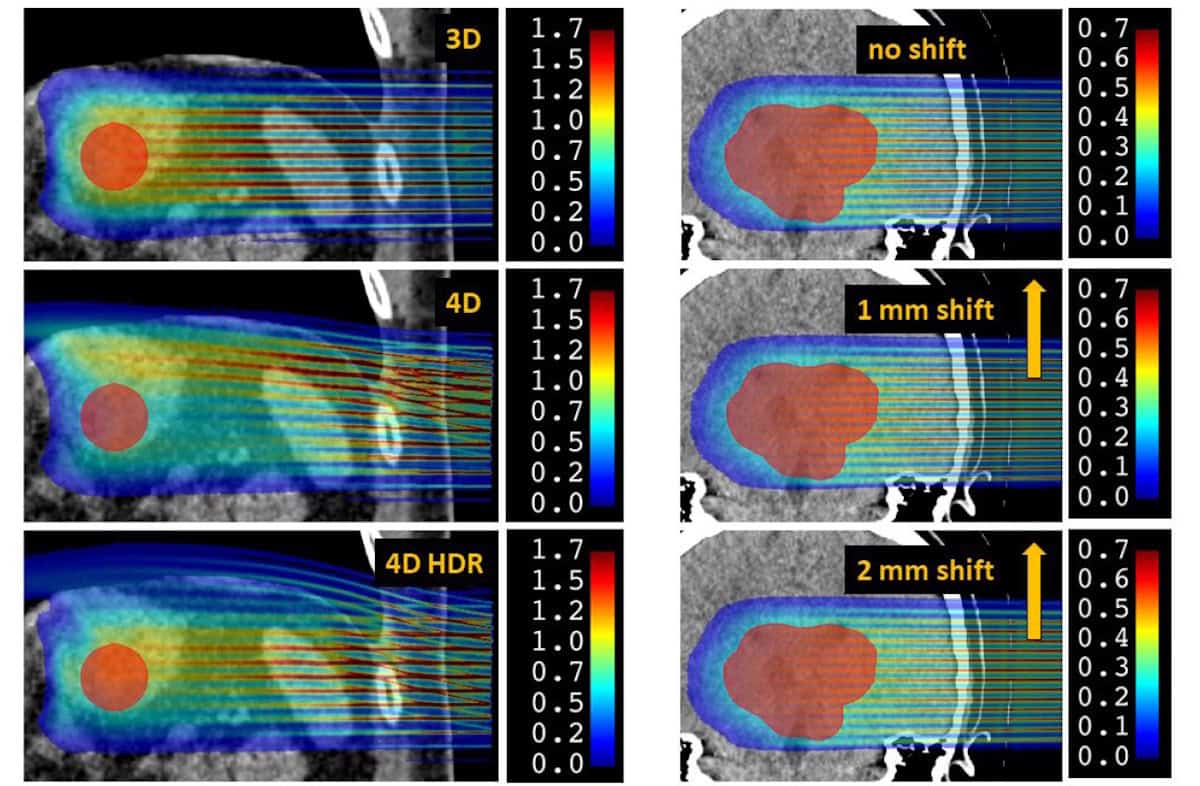
Proton minibeam radiotherapy (pMBRT) is an innovative new cancer treatment that uses an array of narrow proton beams to create alternating regions of high and low dose, before converging to a homogeneous dose distribution within the target volume. Numerous studies in small animals have shown that this spatially modulated dose distribution can destroy tumours while sparing healthy tissue and reducing side effects.
To implement pMBRT in the clinic, it’s important to first assess the impact of organ motion during treatment, which could lead to overlapping of the dose peaks and valleys, and potentially diminish the sparing effect. With this aim, a team at Institut Curie in France has developed a Monte Carlo (MC)-based framework to quantify the dose distribution for realistic clinical treatments, reporting their findings in Physics in Medicine & Biology.
To deliver pMBRT, a multi-slit collimator is used to create narrow beams, typically 0.3 to 1 mm wide, spaced 2 to 6 mm apart. As this collimator blocks much of the initial proton beam, longer treatments are needed to deliver the prescribed dose, increasing the likelihood of organ motion.
“Given the longer irradiation times, possible patient movement could deteriorate the heterogeneous spatial dose distribution of pMBRT,” explains senior author Ludovic De Marzi. “This is all the more problematic because it is this heterogeneous distribution that is believed to be responsible for the technique’s biological sparing effect.”
The dose reconstruction workflow
De Marzi and colleagues developed a 4D dose calculation workflow based on time-resolved MC simulations to determine how motion affects pMBRT dose distribution. The tool requires two main inputs: a 4D CT dataset capturing the patient’s anatomy and breathing motion over one respiratory cycle; and a proton pencil-beam scanning (PBS) treatment plan created on a reference CT.
To validate their workflow, the researchers irradiated a thoracic motion phantom with a conventional PBS plan and compared the measured dose with the simulations. For a 3%/3 mm gamma index (a standard quality check tool), the mean pass rate for nine phantom irradiations was 97.3%, confirming that the calculation performs reasonably well for 4D dose modelling in conventional PBS.
They then used the tool to assess the impact of motion in representative clinical cases, first examining a thoracic treatment with large breathing movements. They calculated 4D dose distributions for three scenarios: 3D pMBRT without motion; 4D pMBRT with 20 mm breathing motion; and 4D high-dose rate pMBRT, with the instantaneous dose rate increased tenfold to reduce beam-on time by a factor of ten.
The calculated dose distributions showed that breathing motion introduced significant variations in the patterns of peaks and valleys, impacting a crucial parameter: the peak-to-valley dose ratio (PVDR). At a depth of 5 mm, for example, the mean PVDR dropped from 11.9 for the 3D scenario to 6.7 in 4D. The high-dose rate scheme slightly mitigated this degradation, but not significantly.
“The PVDR is an index that takes into account both doses in the valleys (which are likely correlated with the biological sparing effect on healthy tissue) and the maximum delivered doses (which are likely responsible for the anti-tumour effect),” De Marzi explains. “It can also be used to help optimize the 3D dose distribution of the treatment plan.”
Breathing motion also degraded the dose delivered to the tumour, with the mean target dose and D95% (the minimum dose received by 95% of the target volume) reduced by 30% and 35%, respectively, for 4D pMBRT. Nearby organs-at-risk (OARs) were also impacted, with a decrease in dose to the stomach and a significant increase in mean dose to the spleen for the 4D cases.
The researchers next examined an intracranial treatment. While there is no intra-organ motion in this case, the patient’s head undergoes small rigid translations – generally limited to less than 1 mm using thermoplastic masks. As such, they modelled patient motion as a simple continuous 1 or 2 mm translation.
Motion did not significantly impact the mean dose or D95% for the target or OARs. A 1 mm shift was, however, enough to degrade the peak–valley patterns, reducing the mean PVDR by 10% from the static case (at 15 mm depth). For a 2 mm shift, this increased to a 24% reduction in mean PVDR.
A valuable tool
The researchers conclude that their 4D dose reconstruction workflow provides a useful tool for assessing interplay effects caused by organ motion during pMBRT. Without a specific motion management strategy, only intracranial treatment with movements below 1 mm was robust to interplay effects. A similar workflow could prove valuable for estimating the sparing effect of pMBRT while accounting for patient motion and adapting treatment plans accordingly.
Looking forward, it may be possible to minimize delivery times by combining pMBRT with the ultrahigh-dose rate delivery used for FLASH treatments.
“This idea is appealing because it could both solve the problem of reduced dose rate in pMBRT and add an additional biological effect (FLASH) to further spare healthy tissue,” says De Marzi. “However, its feasibility remains to be demonstrated, as does the value of developing a technique that combines such considerable complexities. A simple increase in dose rate – without going as far as FLASH – would already be of interest.”
In their next step towards clinical application, De Marzi and colleagues are working to validate calculation tools and measurement procedures tailored to this pMBRT technique. “Ones that are fast, accurate and usable by clinicians,” he says.
The post Dose calculations reveal how patient motion impacts proton minibeam therapy appeared first on Physics World.
From student to scientist – how to build a career with physics
Tushna Commissariat and Matin Durrani guide physics students through the maze of career options
The post From student to scientist – how to build a career with physics appeared first on Physics World.
Whether it’s cosmology, quantum mechanics or particle theory, most of us go into physics because we’re fascinated by the universe and its mysteries – and not because of the career options it might lead to. In fact, by the time you’re at university, you’re so snowed under with lectures, labs, coursework and tutorials – not to mention having fun – that there’s almost no time to think about what to do after graduating.
It doesn’t help either that most university staff are only familiar with careers in research, and so aren’t the best career mentors for physics students exploring the many options outside academia. That’s why Physics World has published countless careers articles over the years looking at what physicists do after they graduate – not just in research but also in industry, finance, teaching, IT and engineering. Each year we also gather many of these into our annual Physics World Careers guide – which includes a directory of employers seeking physics graduates.
But when the time comes to look for a job or plan your next steps, you won’t want to plough through every guide we’ve published. So to help you through the maze of options, this article brings together all our tips, information and help in one place. In today’s tough job market, a physics degree is an absolutely fantastic thing to have, giving you a deep technical knowledge and an ability to think rigorously. But before even starting to apply for jobs or courses, you first need to sit down and think hard about what it is that makes you happy and fulfilled in life.
Stop and think
As Crystal Bailey from the American Physical Society advised in a 2025 Physics World Live discussion “Not sure what to do with your physics degree? Our expert panel give their careers advice”, first ask yourself what it is you want for your career and your life. Do you prefer theoretical questions or practical problems? Do you like working alone or with people? Do you want a good work–life balance, a flexible schedule or just to make pots of money? “You need to understand what will be a good match for you,” she advises.
We suggest you do this kind of self-reflection long before you expect to graduate – don’t leave it to the last minute when you’re short of time. It also helps to make an audit of all the “soft skills” you have as a physicist, of which there are 16 different kinds. From being able to manage your time, knowing how to communicate or sort out conflict, these attributes are just as important to employers as your technical prowess.

The “hard” skills you gained while studying – such as knowing how to solve a differential equation or line up mirrors on an optics bench – are easy to provide evidence for, from the modules you took, or the lab work you did. But the other more nuanced and practical skills – such as presenting in front of your peers, writing reports or keeping to deadlines – are just as crucial.
While you’re still at university, it also helps to take advantage of the huge amount of talented people you’re surrounded by – or as Katie Perry, a physicist who works at the Daphne Jackson Trust, once put it, “network like crazy”. Scientific meetings, talks and conferences are a great place to do this, where our tip is to devise an “elevator pitch” – a short and pithy statement of who you are. If someone asks you about yourself, you can then confidently reel off a few well-considered words.
Networking doesn’t necessarily come easy so if you find it awkward, you just need to get out there and practise. As science communicator Claire Malone believes, networking doesn’t have to be scary and something that only super confident people excel at. Learn to ask questions, be a good listener, take an interest in other people – and remember to ask for their business card so you can contact them later.
And our final piece of advice before even brushing up your CV or creating a LinkedIn page is to get a sense of the current job market for physics. It always goes through ups and downs, with the rise of artificial intelligence (AI) causing huge uncertainty right now. But overall there are some constant characteristics to the physics jobs market, as you can find out in a 2023 Institute of Physics report, which is packed with information about the UK physics jobs market by size, location and salary.
From reflection to action
So now you’ve done all that self-reflection, analysed the job market, audited your soft skills, and had a go at networking, it’s time to start applying for things to do after you graduate.
A number of you might be considering a PhD and, if so, we have some specific advice just for you (see “The PhD pathway” box below). But more than half of today’s graduates move into the private sector and pursue industry careers instead. If that’s your target, plan ahead by spending a summer interning at a company and try to find the right mentor for you. It’s also a good idea to do some extracurricular activities beyond your core academic aims, which will help you develop a range of transferable skills that can help you switch into a different area beyond physics.
The PhD pathway

For graduates who choose to remain in academia, and have found a PhD position, resilience and critical thinking are key skills to have. While it can be exciting and fulfilling to do your own research for the first time, completing a PhD is challenging. Most people have tough moments during a PhD, but people don’t often share their difficulties and it’s easy to think you’re the only one struggling.
Creativity is the backbone of scientific success so, if you’re doing a PhD, take the time to have a break and let new ideas come to light. Things can go wrong – from funding cuts to global pandemics – and it’s important to make sure that you value your mental health and don’t burn out. If you are one of the many neurodivergent people in science, it’s a good idea to ensure you have the accommodations necessary for success, and to embrace your diversity and the unique perspective you bring to your work.
Once you have completed all your research and gathered your data, the final step is to write your thesis – which can be a particularly stressful task, so its important to find different ways to motivate yourself and complete that final hurdle. Even if you don’t stay in academia, a PhD will teach you a lot about how to get ahead under your own steam and complete a major piece of work on your own.
A degree in physics opens doors into many different fields, from nuclear energy to quantum and beyond (see “Across the physics careers spectrum” box below). You might also be keen to use your physics skills in a more lateral way, whether in scientific patent law or science communication. You may choose to be an entrepreneur and set up your own business or decide to teach future generations of physicists. Remember, if your original plan doesn’t pan out as you imagined, it’s never too late to take a risk and make a change even at a later stage of your career.
Across the physics careers spectrum
Green energy and sustainability: Physics graduates are ideally placed to tackle the world’s environmental challenges, with their technical knowledge and problem-solving skills. You can find out more about the physicists who are doing their bit to build a greener, more sustainable future in the field of decarbonizing energy sources.
Quantitative finance: With strong mathematical and analytic skills, physicists are a great fit for the financial world, and are often in high demand in quantitative finance in particular. Meet five physicists who pivoted to a career in finance, and explore what physics skills they use day to day.
Intelligence and cyber security: If a challenging but rewarding career is what you are looking for, you may want to consider a role in security. Here you can find out more about the careers of two leaders from GCHQ – the UK’s intelligence, security and cyber agency – with a background in physics.
Medical physics: Medical physicists have a wide variety of roles across academia and industry. From clinical research and medical imaging to computational simulations and testing new scanners, many job options for medical physicists around the world are included here.
Quantum: The quantum sector is thriving and there are numerous roles across the four main pillars of quantum computing; quantum simulation; quantum communication; and quantum sensing and metrology. From industry to academia, government and policy, and education; there are many ways to join the revolution.
Nuclear energy: With the push away from fossil fuels, there is a shortage of skills in the nuclear power sector. Here we speak to six physicists working across the nuclear energy industry – from design and construction, to safety and waste and beyond – highlighting how a background in physics can open many doors in this expanding sector.
The overall picture for all of you graduating with a degree in physics is positive. Physicists all over the world are keen to help solve some of humanity’s biggest challenges and help further our understanding of the universe at large. We hope that all of the resources above – alongside the annual Physics World Careers guide, the Physics World Jobs Hub and the Physics World LinkedIn page – will give you the headstart you need in planning your path and building a fulfilling career.
- You can sign up to our bi-monthly careers newsletter from your account area on Physics World. Just click on My Alerts and tick the box to start receiving it
The post From student to scientist – how to build a career with physics appeared first on Physics World.
No show again for mirror neutrons
For now, the existence of a mirror universe cannot be confirmed, say physicists at the PSI
The post No show again for mirror neutrons appeared first on Physics World.
Could a mirror world – in which every type of elementary particle has a corresponding mirror particle – exist in parallel to our ordinary world? For now, the answer is probably no, but in exploring this question, physicists at the Ultracold Neutron (UCN) Physics Group at the Paul Scherrer Institute (PSI) in Switzerland, say they have refuted this hypothesis with the best precision yet. Their work, which involved looking for so-called neutron-to-mirror-neutron transitions, also excludes mirror neutrons as potential components of dark matter, the mysterious substance thought to make up over 25% of the universe’s mass. Dark matter has never been detected directly, but its existence is inferred through observed gravitational interactions.
Theoretical physicists put forward the idea of a mirror world as long ago as the 1950s to address problems related to parity symmetry conservation in particle physics. Here, a set of mirror particles would exist as exact duplicates of their ordinary particle counterparts except that their so-called handedness would be reversed. In this picture, particles like the electron e, proton p and neutron n have mirror partners denoted by e′, p′ and n′. These mirror particles would have almost the same mass as the ordinary particles.
Not easy to detect
Finding proof for the existence of this mirror matter is important as it could account for dark matter – provided that during the evolution of the universe mirror matter was cooler than ordinary matter. Mirror matter is not easy to detect, however, because mirror particles are predicted to interact with ordinary matter in only two ways. The first is via the force of gravity and the second is through the rare oscillation of neutral particles such as neutrons that “mix” with their mass-degenerate mirror partners. This, explains Bernhard Lauss, one of the physicists at the PSI’s Center for Neutron and Muon Sciences who led this new study, means that ordinary neutrons might, on very rare occasions, turn into their mirror particles and simply “vanish” from our world. The time period up to this event is known as the n−n′ oscillation time, and afterwards a neutron could even reappear as if out of nowhere.
Neutron-to-mirror-neutron mixing has been predicted to have an n−n′ oscillation time as small as few tens of seconds, but it is not easily detectable because it is suppressed by environmental factors such as the presence of ordinary and/or mirror matter or of ordinary and/or mirror magnetic fields.
In recent years, researchers have been trying to reduce these environmental effects by studying neutrons cooled to extremely low temperatures. There are only a few laboratories around the world that can produce such ultracold neutrons at high regular flux. One is the Institut Laue–Langevin (ILL) in Grenoble, France, and another is the PSI.
Unexplored regions
The results from a series of experiments at the ILL in the past 20 years conducted at various magnetic fields were interpreted as being anomalous signals in the range of magnetic fields at which n−n′ oscillations could take place, thereby rekindling interest in the existence of mirror neutrons. More recently, the nEDM collaboration at PSI excluded a big part of this magnetic field range, but some magnetic field regions remain unexplored.
In the latest work, Lauss together with his colleague Géza Zsigmond and co-workers from PSI, the ETH Zurich and the Jagiellonian University in Krakow used ultracold neutrons from the PSI UCN source produced via a technique called superthermal moderation in a deuterium crystal cooled down to a temperature of 5 K. The researchers trapped these neutrons in a non-magnetic vessel made of stainless steel under vacuum. They were able to trap an unprecedented number of neutrons – on the order of 25 billion in all – something that allowed them to significantly improve the sensitivity of such experiments. A set of eight rectangular coils surrounding the storage vessel was used to generate a magnetic field that could be precisely controlled and scanned over two orders of magnitude, from 5–109 µT.
The team released around 1.5 million neutrons from the storage vessel into a gas-electron-multiplier based UCN-detector every six minutes to count how many neutrons remained in the tank after being stored there for 200 s. The researchers repeated the process over a period of several months, gradually varying the strength and flipping the direction of the magnetic field to scan all the relevant fields over which oscillations between neutrons and mirror neutrons are expected to occur. Finally, they performed complex computational simulations on the EULER cluster at the ETH Zurich to predict theoretical probabilities of n-n’ transitions that they then compared with the neutron losses they measured.
New limits set
The result? The researchers say they saw no evidence for such oscillations under the tested conditions. This finding, explains Lauss, means that there is a “very high probability” that previous speculations about the transformation of neutron particles into their mirror counterparts can be ruled out and that new limits for the n−n′ oscillation time constant have now been set. “Indeed, we have excluded the parameter space previously claimed for potential signals to 99.98 %,” he explains.
“The result therefore also excludes mirror neutrons as relevant dark matter particles,” Lauss tells Physics World.
Despite the existing limits already being very tight, Lauss, Zsigmond and their colleagues say they now plan to study the n−n′ transitions theoretically expected at zero mirror-magnetic fields to establish even more stringent limits. “Improving sensitivity further will be very challenging though, and perhaps even impossible,” admits Zsigmond. “A twofold increase, for example, will require 16 times more neutrons because the sensitivity of the experiment scales with the fourth root of the neutron counts.”
The post No show again for mirror neutrons appeared first on Physics World.
Quiz of the week: how will the new ‘AstroRad’ vest be of benefit to astronauts?
Have you been keeping up to date with physics news? Try our short quiz to find out
The post Quiz of the week: how will the new ‘AstroRad’ vest be of benefit to astronauts? appeared first on Physics World.
Fancy some more? Check out our puzzles page.
The post Quiz of the week: how will the new ‘AstroRad’ vest be of benefit to astronauts? appeared first on Physics World.
Magnetic field first kills superconductor, then brings it back to life
“Re-entrant” superconductivity discovered in a 2D material for the first time
The post Magnetic field first kills superconductor, then brings it back to life appeared first on Physics World.
Unconventional superconductors are poorly understood materials with exceptionally useful properties. One example is their response to magnetic fields. In conventional superconductors, applied magnetic fields suppress superconductivity by either breaking up the paired electrons that facilitate it (Cooper pairs) or introducing magnetic flux which introduce resistance when it moves through the material. However, in a few unconventional materials, competition between ferromagnetic ordering, where the magnetic moments align to point in the same direction, and superconducting ordering, where paired electron moments point in opposite directions, can lead to a phenomenon known as re-entrant superconductivity (RSC). This is where, in an applied field, the magnetic ordering will at first destroy superconductivity, but when the field increases further, the superconductivity reappears.
An international team of physicists led by Denis Maryenko of Japan’s RIKEN Center for Emergent Matter Science has now observed this phenomenon for the first time in a two-dimensional (2D) unconventional superconductor. “We did not look for the RSC, and it was extremely surprising that we saw that,” Maryenko tells Physics World.
2D or not 2D
RSC has previously been observed in three-dimensional ferromagnetic materials such as CeRh2As2, organic superconductors and possibly in so-called heavy fermion compounds such as UTe2. However, 2D materials have several advantages over 3D ones when it comes to superconductivity. For example, in the conductor MoS2, the material’s electronic band structure and spin-orbit coupling (SOC) combine to keep the electron spins pointing in a direction perpendicular to the sample’s surface. This locking greatly increases the value of the upper critical field, which is the maximum magnetic field at which superconductivity can persist.
Since 2D superconductivity had previously been observed at interfaces between KTaO3 and other materials, the RIKEN team took this as a starting point. “Our approach was to grow LaTiO3, [since] that has good lattice matching [to KTaO3], which is beneficial for epitaxial growth,” Maryenko explains.
Writing in Science Advances, the physicists describe how they performed magnetotransport measurements on their LaTiO3/KTaO3 heterostructures to understand how these samples behaved in the presence of increasingly large applied magnetic fields. “We just wanted to see how the critical magnetic field behaves as a function of temperature, but suddenly we started seeing something else emerging at a rather low field: a resistive peak that seemed to separate two superconducting regions,” Maryenko says.
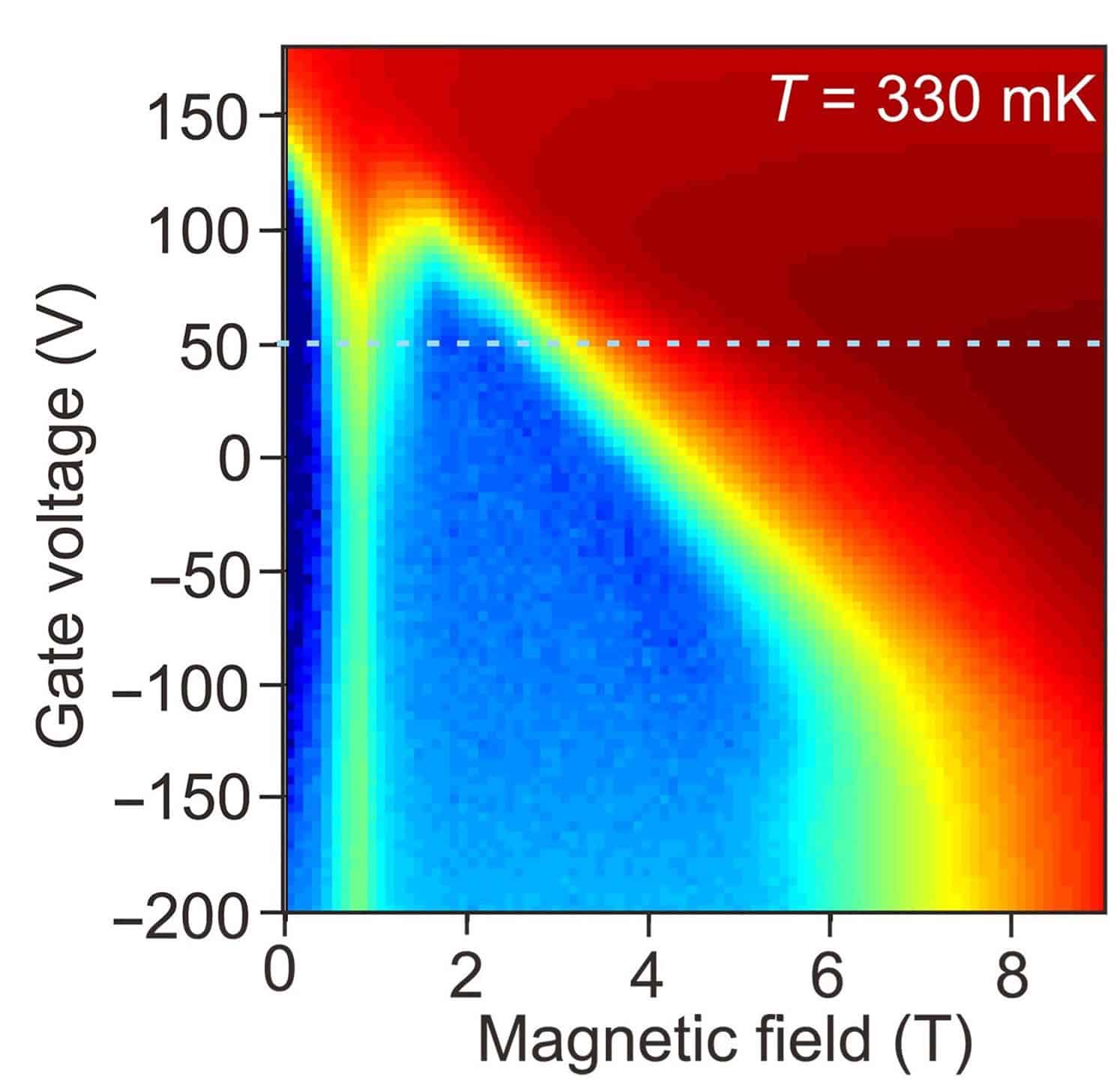
This cusp, he explains, appears at a magnetic field B∗ of 0.9 T with zero resistance measured at both lower and higher applied fields. In this experiment, B∗ is independent of temperature and the concentration of charge carriers, which Maryenko and colleagues controlled experimentally by tuning a gate voltage across the interface.
Explaining re-entrant superconductivity
The researchers considered several possible explanations for the RSC, including Zeeman splitting, orbital effects and something called the Jaccarino-Peter effect, where internal and external magnetic fields compensate for each other and cancel out.
To identify the correct explanation, Igor Maznichenko and Sergey Ostanin from Martin Luther University in Germany and Arthur Ernst from Johannes Kepler University in Austria performed ab initio calculations to determine the electron band structure for the interface. These calculations identified the presence of a so-called Van Hove singularity, where for certain momenta, the electrons will have very high density of states.
Then, Vitalii Dugaev from Rzeszów University of Technology in Poland and Evgeny Ya Sherman at the University of the Basque Country in Spain developed a SOC-based model, taking inspiration from symmetry arguments and the ab initio band structure calculations. In the absence of an applied field, they found that there is a p ↔−p symmetry in the bands. This means that electrons with opposite momenta will have the same energy, so two electrons that form a Cooper pair, and have the same energy, have a total momentum equal to zero. In other words, the system favours spin-singlet Cooper pairs which form easily.
Applying a field breaks this symmetry, thereby reducing the Cooper pairing efficiency and decreasing the critical temperature Tc for the onset of superconductivity. On the other hand, the applied field also shifts the electrons closer towards the Van Hove singularity, increases the density of states and increases Tc. The combination of these opposing effects results in a minima appearing in Tc(B), hence RSC. The discovery of RSC in these materials establishes the system as a robust platform for studying unconventional superconductivity in 2D systems.
The post Magnetic field first kills superconductor, then brings it back to life appeared first on Physics World.
With e-MERLIN facing the axe, what next for Jodrell Bank and UK astronomy?
Exploring the fallout from STFC funding cuts that have left one of the UK’s most iconic scientific facilities facing an uncertain future
The post With e-MERLIN facing the axe, what next for Jodrell Bank and UK astronomy? appeared first on Physics World.
The UK’s Science and Technology Facilities Council (STFC) recently announced funding cuts to a range of physics and astronomy projects as it seeks to reduce costs. One of the most high-profile casualties is e-MERLIN, a network of seven radio telescopes spread across the UK, including the iconic Lovell Telescope at Jodrell Bank.
To discover what the cuts could mean for UK science and the livelihoods of those affected, podcast host Andrew Glester caught up with two astronomers at Jodrell Bank: Simon Garrington, e-MERLIN director, and David Williams-Baldwin, an e-MERLIN research support scientist.
They discuss why the cuts have caused such alarm among scientists, how the UK astronomy community is mobilizing in opposition, and why the consequences could extend far beyond Jodrell Bank.
e-MERLIN combines signals from its telescopes to produce sharp radio images of the Universe – with a resolution comparable to that of the Hubble Space Telescope. As things stand, funding for the telescope array will run out in March 2028, putting the future of the network and scientific operations at Jodrell Bank in doubt.
It’s an uncertain time for an observatory that was granted UNESCO World Heritage status in July 2019 for its historical contributions and its technical and scientific ingenuity since the 1940s.
An STFC spokesperson emphasises that Jodrell Bank is “not closing” and “will continue to play an important role in UK science”. This includes the Square Kilometre Array Observatory that has its headquarters at Jodrell Bank as well as other radio astronomy research projects in the UK and elsewhere.
“We recognise the strength of feeling about Jodrell Bank and the e-MERLIN network, and the contribution they have made to UK science. The achievements of the scientists, engineers and staff who have supported e-MERLIN over many years are widely respected across the research community,” they add. “We are focusing on the next generation of radio astronomy to ensure UK researchers continue to be at the forefront of the field. Rising cost pressures mean that we have had to make difficult choices about STFC funding to make sure we are able to fund world class research sustainably into the future.”
The post With e-MERLIN facing the axe, what next for Jodrell Bank and UK astronomy? appeared first on Physics World.
Earthquake fault irregularities control rupture speed and influence ground motion
New models show that high-speed rupture propagation produces stronger and longer-duration ground motion
The post Earthquake fault irregularities control rupture speed and influence ground motion appeared first on Physics World.
Earthquakes that propagate at higher speeds make the ground move more than it would in slower but otherwise comparable earthquakes, say geophysicists. Using physics-based models, Mohamed Abdelmeguid and colleagues at the California Institute of Technology in the US showed that so-called “supershear” ruptures produce stronger and longer-duration ground motion than equivalent subshear ruptures. Because models of ground motion that underpin infrastructure standards do not account for this effect, these models may need to be updated to accurately describe hazards such as the 2025 Myanmar earthquake, which produced supershear ruptures in both directions.
Geophysicists have identified two categories of earthquake based on how fast their ruptures propagate through the Earth’s crust. Shear waves, or S waves, travel at certain expected velocities (the shear-wave velocity) depending on the stiffness and density of the ground. When a rupture travels faster than the shear-wave velocity of the surrounding ground, it is termed a supershear earthquake. Otherwise, it is subshear.
Although Abdelmeguid notes that supershear ruptures were first predicted theoretically in the 1970s, and have subsequently been observed in both laboratory experiments and the real world, most previous studies focused on their underlying mechanisms and the transition from subshear to supershear. The new study, which appears in the Bulletin of the Seismological Society of America, goes a step further by examining how the ground motion in a supershear quake differs from that of an otherwise comparable subshear one. The question is relevant, Abdelmeguid says, because nearly 36% of strike-slip earthquakes during the past 15 years contained supershear rupture, yet existing models do not factor it in.
Supershear simulations
To address this gap, Abdelmeguid and colleagues developed a dynamic rupture model that generates simulated ground motion data and used it to identify the characteristics of supershear earthquakes. They found that prolonged supershear propagation produces what they term “a distinct spatial pattern of stronger and longer-duration shaking”. However, episodic supershear segments, where rupture speed intermittently changes between supershear and subshear, produce ground motion similar to subshear ruptures.
Simulations like these are important because some supershear rupture scenarios are poorly represented in the observational record. This record is used to develop ground motion models, so simulations can “reveal physical dependencies that may not be apparent from existing observations,” Abdelmeguid says.
Characterizing the 2025 Myanmar earthquake
The 2025 Myanmar earthquake – a supershear quake in which many regions experienced higher than expected ground shaking – is a case in point. It occurred on the 1200-kilometre-long Sagaing Fault, which lies at the boundary of the Burma microplate and the Sunda plate and is not far from Mandalay, the country’s second-largest city. At magnitude 7.7, it was the largest earthquake in Myanmar in over a century, and the long rupture meant that large parts of Myanmar and Thailand were affected, with thousands of deaths and injuries as well as severe damage to infrastructure.
Initial studies were inconclusive about whether this earthquake’s rupture exhibited intermittent or sustained supershear speed. This lack of consensus is partly because recording intermittent supershear rupture is challenging when near-fault sensors are sparse, as is the case in Myanmar (and indeed most countries, with notable exceptions such as Japan, Taiwan, New Zealand and parts of the US).
A new study published in PNAS addresses this question. Using satellite earth observations, teleseismic data and CCTV footage as well as the available near-fault seismic sensor data, researchers led by Lingling Ye at the Southern University of Science and Technology (SUSTech) in China modelled the rupture process of the Myanmar quake. The result, Ye says, is a “well-resolved rupture process” that “reveals previously unrecognized dynamic rupture features”. Notably, the team’s simulations showed that the rupture transitioned between supershear and subshear as it tore through around 460 kilometres of the country.
Influence of geometry and stress distribution
To understand the cause of these variations, the researchers examined the geometry and stress distribution along the fault. Based on an existing fault model, they calculated a parameter called fault misalignment, which acts as an indicator for irregularities in the fault geometry. Higher fault misalignment, for example, indicates higher bends and branches in the fault.
When the researchers overlaid fault misalignment with the observed rupture speed, they noticed that supershear speeds coincided with fault stretches that had lower misalignment. For fault stretches with higher misalignment, subshear speed prevailed, meaning that the rupture decelerates at locations with high fault misalignment, transitioning from supershear to subshear. The researchers also found that the rupture speed, whether supershear or subshear, responded to the varying levels of local stress, with higher stress levels inducing faster rupture speed.
Although not unique in exhibiting supershear behaviour, the 2025 Myanmar earthquake rupture propagated away from the epicentre on both sides, travelling around 80 kilometres to the north and 380 kilometres to the south. Initial studies debated whether the ruptures on both sides were supershear. The researchers found that the northern rupture propagation was not supershear and claim that its shorter rupture length is caused by a combination of the fault’s complex structure and low accumulated stress resulting from the magnitude 6.8 earthquake that struck in 2012.
“Every earthquake has unique behaviour”
In future work, Ye is eager to revisit the 2023 Turkey doublet earthquakes, which she says have many more near-fault strong motion observations than the 2025 Myanmar quake, as well as a now well characterized complex fault system. “Every earthquake has unique behaviour,” she says. “Determining the key features that control their rupture processes is still underway.”
For Abdelmeguid, who recently started his own research group at the University of Houston, US, understanding these complex rupture processes is important because it will ultimately improve our understanding of geophysical processes and the ground motion models that are used for engineering applications. “We are currently extending this work to examine ground motions generated by ruptures on more complex faults, including cases in which fault geometry and heterogeneity influence both ground motion and the dynamic process, as observed during the multiple earthquakes,” he tells Physics World.
- This article was amended on 2 September 2026 to clarify the nature of the rupture propagation in the 2025 Myanmar earthquake. The researchers found that the northern rupture was subshear, not supershear as originally stated.
The post Earthquake fault irregularities control rupture speed and influence ground motion appeared first on Physics World.
Encapsulated islet transplants restore blood sugar control in diabetic mice
A thin coating that hides transplanted donor cells from the body’s immune system could enable a novel therapy for type 1 diabetes
The post Encapsulated islet transplants restore blood sugar control in diabetic mice appeared first on Physics World.
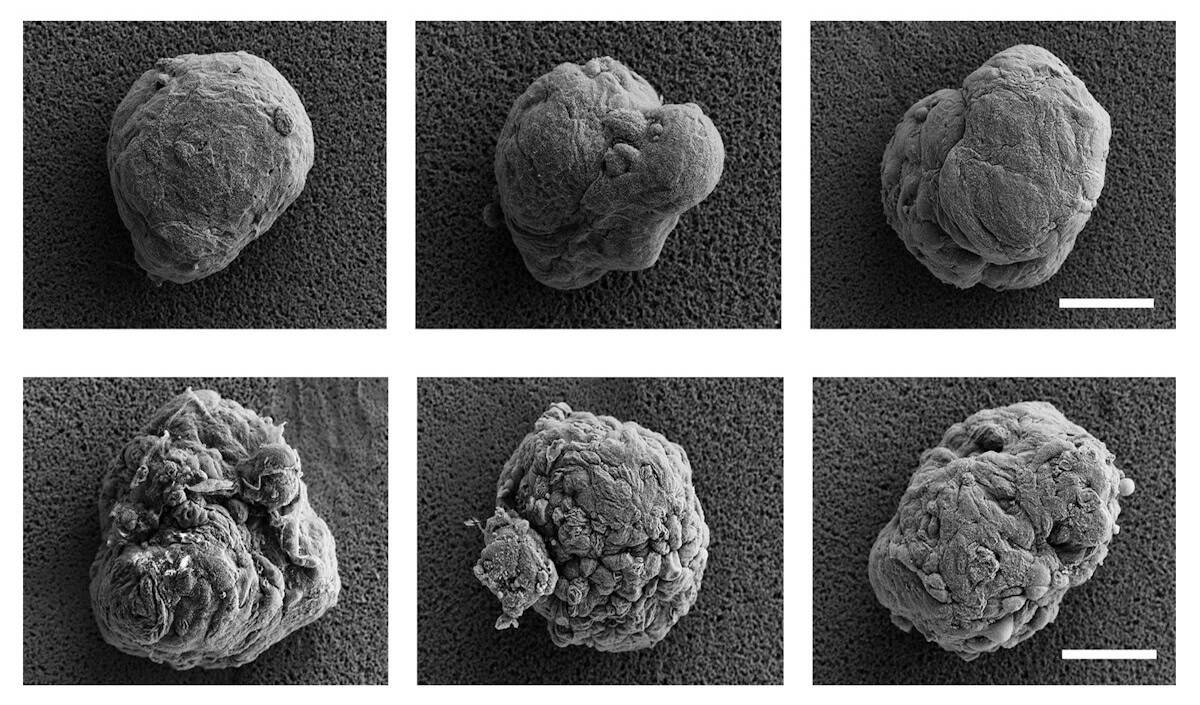
Islet transplantation, in which insulin-producing islet cells from a donor are implanted into a patient’s liver, is a promising therapy for type 1 diabetes. To prevent rejection of the donated cells, however, recipients need to continuously take immunosuppression drugs. Using a new type of cell encapsulation, researchers at The Pennsylvania State University demonstrated that diabetic mice could maintain normal blood glucose levels for 100 days, without requiring immunosuppressants. This represents a substantially longer time period than traditional cell therapies for diabetes.
The Penn State researchers developed their cell encapsulation process based on the molecular characteristics of the zona pellucida, a thin membrane that coats mammalian eggs. Once an egg is fertilized, biochemical reactions lead to hardening of the zona pellucida, which acts as a protective shield during embryo development. Here, biomimetic zona pellucida (BZP) encapsulation serves to hide the donor islets from the body’s immune system.
Pancreatic islets are clusters of five types of cells that work in tandem to regulate insulin and sugar levels in the body and prevent severe insulin deficiency. Islets harvested from healthy pancreases of deceased organ donors were first transplanted into Type 1 diabetes mellitus patients in 1974.
And in 2000, a landmark procedure increasing the mass of islets transferred and using steroid-free immunosuppression regimens was introduced by the University of Alberta in Edmonton, offering the hope of curing diabetes. But when implemented clinically, only 24% of recipients achieved insulin independence at 28 months with the Edmonton protocol.
Research on islet implantation continued unabated, particularly initiatives in islet encapsulation, using semi-permeable membranes to allow the entry of oxygen and nutrients and prevent the entrance of immune response cells. Most current work in this area uses large, 1.5 mm capsules. The Penn State team took an opposite tack: creating a thin 20-µm hydrogel capsule that spontaneously generates on the cell surface with 100% encapsulation efficiency.
Protection from immune attack
Principal investigator Yong Wang and colleagues spent eight years developing an ultrathin hydrogel layer that effectively lays against the curved edge of living cells or cell clusters without impacting their functionality. The islet encapsulation process takes place spontaneously in aqueous solutions under physiological conditions, without exposure to harsh physical, chemical or biological factors, ensuring that BZP development on the cell membrane does not cause any loss of cellular viability or function.
Writing in Nature Biomedical Engineering, the researchers explain that they emulated the biological processes that harden the zona pellucida on a fertilized egg (calcium ion-induced glycoprotein cleavage, assembly and crosslinking on the egg surface). In spite of its thinness, the BZP protects the cell as effectively as the much larger 1.5 mm diameter capsules.
The small capsule size significantly reduces the potential transplantation volume, improving an organ’s ability to receive and accommodate the large number of islets needed to be effective. When coating a 100-µm islet, for example, a 20-µm-thick BZP uses only 1/71 of the polymer volume of a 500-µm microcapsule. The researchers also suggest that the reduced polymer volume used for cell protection by the thin capsule may be a safety advantage of BZP compared to larger capsules.
In vivo assessment
The researchers first examined whether BZP could reduce the level of foreign body response to polystyrene microparticles injected into the peritoneal cavities of mice. Compared with uncoated microparticles, the BZP-coated particles induced a lower immune system response. They examined BZP synthesized using two types of alginate (involved in crosslinking reactions during BZP formation and hardening): chemically modified ultrapure alginate (BZP-U) and regular alginate (BZP-R). Tests in mice verified that BZP-U significantly mitigated the foreign body response compared with BZP-R encapsulation.
Immunocompetent diabetic mice treated with BZP-U-coated islets had their blood sugar restored to healthy levels within seven days. Additionally, the majority stayed diabetes free for over 100 days without continuously needing systemic immunosuppression. By comparison, mice treated with uncoated islets could not maintain healthy blood sugar levels for more than seven days.
In addition to effectively regulating blood glucose levels, one of the biggest advantages of the BZP approach is that it eliminates the need for long-term systemic immunosuppression. Lantidra, the only islet transplantation treatment for Type 1 diabetes cleared by the US Food and Drug Administration, requires continuous immunosuppressants to stop immune system attacks. Such long-term immunosuppressant use can lead to increased risk of infection and other serious health issues, including cancer.
Wang and colleagues plan to further study the BZP approach to better understand the specific duration of resistance each islet transplant may offer, as well as its effect in large animals.
“Large animal studies will be necessary to fully demonstrate their potential in cell transplantation,” the researchers write. “When large animals are used, one needs to examine not only glucose levels but also other key biomarkers. Moreover, the long-term immune responses to BZP and BZP-encapsulated cells warrant further investigation to yield deeper insights into BZP optimization and improvement.”
The post Encapsulated islet transplants restore blood sugar control in diabetic mice appeared first on Physics World.
Word wave puzzle no.8
Can you work out the word in this puzzle, which relates to a recent Physics World article?
The post Word wave puzzle no.8 appeared first on Physics World.
Here’s how the game works:
-
- Enter a word guess – in this game the word has six letters.
- After submitting your guess, each letter in the guessed word is coloured to provide feedback:
- Green: The letter is correct and is in the correct position in the target word.
- Yellow: The letter is correct but is in the wrong position in the target word.
- Grey: The letter is not in the target word at all.
- Using this colour feedback, refine your next guess.
- Continue guessing until you correctly identify the hidden word(s) or run out of attempts.
If you want a clue to the answer, read the article here.
Fancy some more? Check out our puzzles page.
The post Word wave puzzle no.8 appeared first on Physics World.
Gamma Knife radiosurgery brings precision treatment to benign brain conditions
This podcast features Katharine Hunt of the Sheffield Teaching Hospitals NHS Foundation Trust
The post Gamma Knife radiosurgery brings precision treatment to benign brain conditions appeared first on Physics World.
This episode of the Physics World Weekly podcast features Katharine Hunt, Head of Radiosurgery Physics at Sheffield Teaching Hospitals NHS Foundation Trust in the UK. She explains how Gamma Knife radiosurgery is being used to treat arteriovenous malformations (AVMs) and other benign brain conditions.
Sheffield is home to one of the world’s longest-running Gamma Knife centres, and Hunt shares the facility’s insights into treatment planning, dose precision, paediatric care, and long-term outcomes.
This podcast is sponsored by Elekta, which produces the Gamma Knife radiosurgery system.
The post Gamma Knife radiosurgery brings precision treatment to benign brain conditions appeared first on Physics World.
X-ray camera catches spin waves in the act
Magnon microscope focuses on useful non-linear interactions
The post X-ray camera catches spin waves in the act appeared first on Physics World.
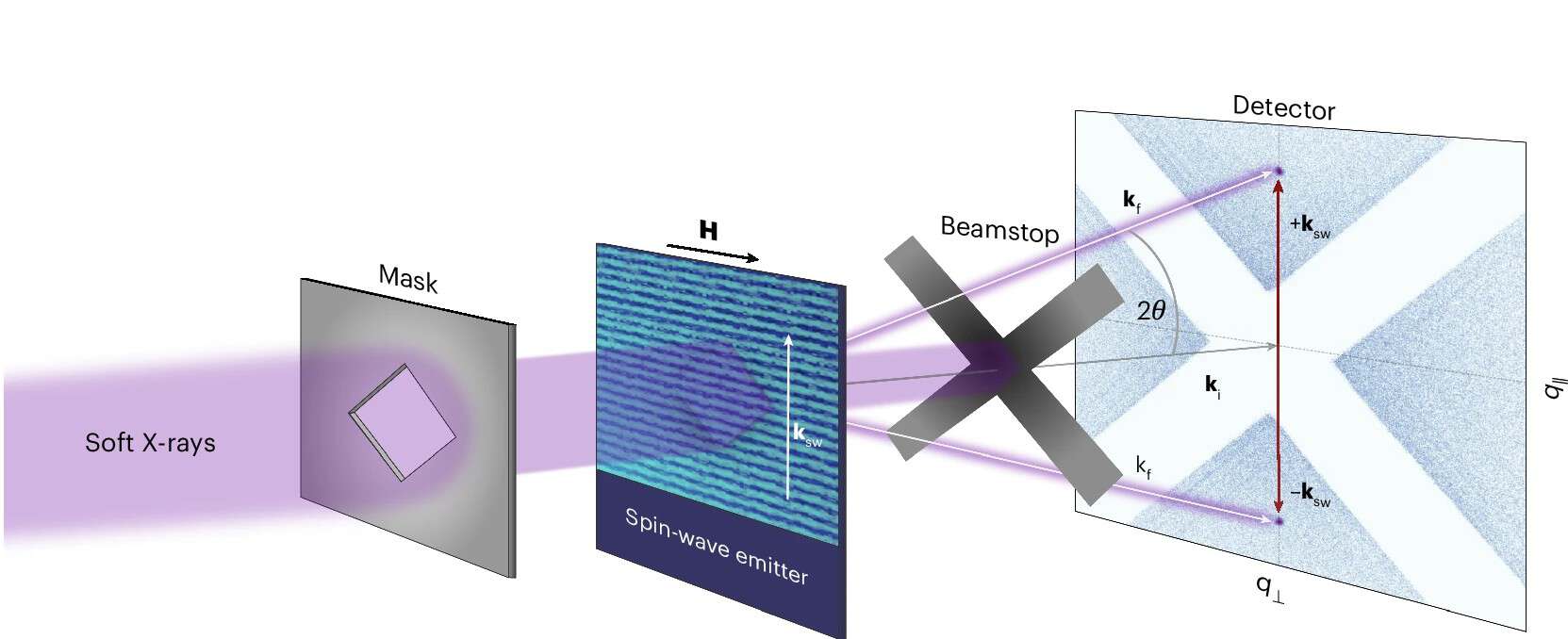
A new microscopy technique that can probe short-wavelength spin waves has been developed by researchers in Europe. Dubbed magnon momentum microscopy, the technique uses X-rays to observe quantized spin waves (magnons) in magnetic materials. Unlike existing techniques, the new method can characterize nonlinear interactions involving short-wavelength magnons – interactions that could be used to create new “magnonic” technologies.
The research was done by a team including Steffen Wittrock, Bastian Pfau and Daniel Schick at Germany’s Helmholtz Center Berlin for Materials and Energy and the Max Born Institute for Nonlinear Optics and Short Pulse Spectroscopy. The team comprised researchers at those German institutes and at EPFL in Switzerland.
Every ferromagnetic material is full of tiny atomic magnets, all lined up and pointing in the same direction. Nudge one of them, and the disturbance travels through the material like a ripple across a pond, passing from one atomic magnet to the next. These disturbances are called spin waves, and are quantized in units called magnons. Magnons have both particle-like and wave-like properties and physicists believe that magnons could one day carry information inside computers more efficiently than electrical signals do today. Such technologies are dubbed magnonics.
Magnon behaviour is most interesting when the magnon wavelength is shorter than about 100 nm. At these wavelengths, magnon dynamics are dominated by short-range quantum exchange interactions, rather than the longer-range forces that govern magnons with longer wavelengths.
At high magnon intensities, magnons will collide, combine, and split into new magnons before heading off in completely different directions. These nonlinear interactions will be crucial for developing magnonic technologies, but existing tools have consistently fallen short at probing this regime. Previous techniques, for example, could only probe short-wavelength magnons from one direction at a time. What magnonics researchers needed was a way to probe all directions simultaneously with extremely high sensitivity.
Now, the German–Swiss team has created an instrument that does exactly that.
Mapping in momentum space
Their technique, called magnon momentum microscopy, uses soft X-rays as a probe. When a magnon travels through a magnetic material, it leaves a regular imprint on the material’s magnetization. Soft X-rays tuned at just the right wavelength scatter off this transient imprint.
The angle of scattering directly reveals the magnon’s direction and wavelength. A detector placed behind the sample records the full scattering pattern in one shot. The result is a map in momentum space. This is a single image in which every magnon direction and wavelength appears at once, rather than one at a time. The team acquires each full map in as little as 30 s. The technique can detect magnons driven by power levels more than a thousand times weaker than what previous X-ray methods required.
Watching waves multiply
The team demonstrated the technique using a sample of yttrium iron garnet (YIG), a standard material in magnon research. They directly observed a process called four-magnon scattering, in which two high-amplitude spin waves scatter off each other and populate new waves spreading out in every direction.
On the detector, four-magnon scattering shows up as a bright elliptical ring. The ring covers all directions in 2D momentum space in a single snapshot. Its shape is a very good match for theoretical predictions of the spin-wave dispersion. Dispersion is a function that relates the propagation speed of a spin wave to the frequency of that wave. This agreement confirms both the physics and the precision of the new technique.
At higher driving powers, new waves appear at simple fractions of the driving frequency. These fractional harmonics go beyond standard theoretical descriptions. They point to a richness in nonlinear magnon behaviour that remains to be fully understood.
With its ability to capture the full directional landscape of spin waves in one measurement, and its sensitivity reaching down to the shortest wavelengths where exchange interactions dominate, magnon momentum microscopy opens a direct route into a regime of magnon physics that was previously out of reach. The research is described in Nature Physics.
The post X-ray camera catches spin waves in the act appeared first on Physics World.
Physics-based simulations could improve earthquake-damage predictions, why aren’t they being used?
Discussion and debate at the US National Conference on Earthquake Engineering
The post Physics-based simulations could improve earthquake-damage predictions, why aren’t they being used? appeared first on Physics World.
Earthquake ground-motion predictions rely on statistical models built on historical records. This means that ground-motion measurements taken during previous earthquakes are used to predict the effects of future earthquakes. However, historical data can be sparse in some locations and if a region has not experienced a severe earthquake in the modern era, there will be no data for high-magnitude events. As a result, seismologists are keen on using physics-based simulations to predict ground motions, essentially filling in the gaps in historical datasets.
Although physics-based simulations of ground motions have been in development for while, they have rarely been used for engineering applications or building code development. With advancing computational capacities and geophysical understanding of earthquake cycles, the development and application of physics-based simulations have seen a surge of energy in the last few years.
As someone working with physics-based ground motions and enthusiastic about the latest research in the field, I arrived in Portland, Oregon in July for the quadrennial US National Conference on Earthquake Engineering (NCEE) hosted by the Earthquake Engineering Research Institute. This was my third NCEE – I was about to start my PhD when I attended the first time in 2018 in Los Angeles.
After a series of delays during my flight from London, I finally arrived in Portland in the quiet hours of the night. Only realising that I had about six hours before the first session starts in the morning.
Understanding the challenges
Regardless, I reached the venue at 9 am sharp, the Oregon Convention Center, with swollen (and perhaps red) eyes, to attend a workshop on “Earthquake ground motion simulation validation & utilization for engineering applications”. I was keen to understand why the validation and application of simulated ground motions are still challenging despite advancements in research and tools for simulations. A little sleep deprivation through jetlag did not deter me.
Current ground-motion models are used within a probabilistic framework, along with models of the fault systems and the earthquake magnitudes they can generate, to define probabilities of expected ground shaking. These statistical models do not capture the geophysical process but instead rely on a curated dataset collected in the short history of earthquake recordings. These datasets, likely, do not contain all possible earthquake magnitudes and ground shaking. Models based on these data are prone to bias, especially for scenarios where data are sparse. For example, the data gap is stark for higher magnitudes at shorter distances from the source, since we have only seen a handful of large earthquakes after earthquake recording started in the last century.
Physics-based simulations can meaningfully augment these datasets, and in turn, improve conventional ground motion models. Many such efforts have been made globally in the past decade. My PhD research deals with built environment impacts from a simulated magnitude 9 Cascadia subduction zone, which runs hundreds of kilometres along the coast of the Pacific Northwest of the US and southwestern Canada. Indeed, the subduction zone is about 200 kilometres west of where the conference was happening. Although this fault has never produced a magnitude 9 earthquake, or any significant earthquake, in the last century, there is geological evidence of several large magnitude earthquakes over a period of thousands of years.
“Different answers”
My research involved understanding how the built environment would be impacted by such a large earthquake on this fault. That research, and many others, showed that we can gain nuanced understanding of how ground shakes, impacts the built environment and cascades into landslides and tsunamis after an earthquake. As Stanford University’s Greg Deierlein, said during the workshop, “Simulations are most useful when they provide different answers compared to conventional methods.”
Despite their promise, physics-based simulations remain unused in most national seismic hazard models. And where they are used, the scale is negligible. The ingredient that is missing is trust – whether the simulations can represent complex fault geometry and rupture mechanism, how reliable are the velocity structure models, can the simulations reproduce empirical data. Trust, within the community of researchers and practitioners, is built on testing and validation.
Aptly, there was engaging discussions during the workshop around standardized validation protocols and open repositories of reproducible workflows. One key challenge for physics-based simulations is to establish that simulated ground shaking scales across various parameters in patterns that is empirically observed in the recordings. As Jonathan Stewart at the University of California Los Angeles, pointed out, “the trust on absolute amplitude [from physics-based simulations] is low, however, how does the [simulated] ground motion scale across various parameters is what is valuable.”
There was at least one session each day discussing methods of developing, validating, and applying physics-based simulation of ground motions. I presented my work on the final session, a closing act if you will, on using the simulated ground motions to reveal damage patterns across a building portfolio that conventional ground motion models cannot capture. It implies that we may have two very different views of risk depending on which models we use. This would make it challenging for insurance companies to correctly price the risk and for future infrastructure developments in the region.
With more encouragement and more questions than answers, I wrapped up five long-days of exchanging ideas, discussing careers, and catching-up with friends. While walking past beautiful murals and aisles of books in Powell’s Books on my last evening in Portland, I wondered how far simulated ground motions will travel by the time I come back for the next NCEE four years from now.
The post Physics-based simulations could improve earthquake-damage predictions, why aren’t they being used? appeared first on Physics World.
US orders universities to audit foreign research ties
Move by the US Department of Defense affects 30 research universities
The post US orders universities to audit foreign research ties appeared first on Physics World.
The US Department of Defense (DoD) has given 30 US research universities until the end of the month to audit, and potentially cease, their partnerships with universities and military training institutions in “foreign entities of concern”.
If the institutions do not comply with the order, they risk losing funding from the Defense Advanced Research Projects Agency, the Office of Naval Research, and the Air Force Research Laboratory – losses that could potentially close entire academic research groups or departments.
The order does not specify the foreign entities it targets. But a list that the DoD published last month identified 130 universities and research institutes in China, Russia and Iran that it claimed to be wrongly appropriating US-funded technologies.
The DoD, which the Trump administration calls the Department of War, also noted that its order applies to “organizations associated with rebranded Confucius Institutes” – cultural programmes associated with US universities that began in 2004.
The DoD asserts that the audit process is designed “to protect American taxpayer-funded research investments from unauthorized technology transfer, intellectual property theft and adversarial exploitation” adding that it will allow the department to “better anticipate emerging threats, adapt to evolving adversarial tactics and maintain America’s position as a global leader in innovation”.
“The Department of War has zero tolerance for academic partnerships that compromise our national security,” notes Emil Michael, the DoD’s undersecretary of war for research and engineering. “Institutions that receive funding from American taxpayers must uphold the highest standards of research security, and these mandated audits will ensure accountability across the board.”
China tension
Those affected by the order include Harvard University, Massachusetts Institute of Technology, Cornell University and Johns Hopkins University.
The DoD has not indicated why it has chosen the 30 targets for audit. However, since it took office last year the second Trump administration has criticized prominent universities over issues such as antisemitism and their use of diversity, equity and inclusion.
Harvard has received particular ire from the administration, which has cut or delayed government grants to its departments while fighting the university in court.
A Republican majority House of Representatives committee issued a report on 13 August claiming that Harvard received over $630m from Chinese sources. The report also noted that the university had created a nonprofit organization, Harvard Global, to accept overseas grants that the university itself is not legally permitted to receive.
The DoD’s audit comes as the Trump administration prepares to welcome President Xi Jinping to the US late next month.
Reacting to the order, a statement by China’s embassy in Washington notes that it opposes what it calls the politicization of normal scientific, educational, and academic exchanges. “The US side should abandon the Cold War mentality and foster an open, fair, and non-discriminatory environment for educational, scientific, and people-to-people exchanges between China and the United States,” it declared.
Physics World contacted some of the universities affected by the order but did not receive a response.
The post US orders universities to audit foreign research ties appeared first on Physics World.
The 12 August 2026 partial solar eclipse as seen from the Isle of Wight
Sean G Ryan snaps an astronomical spectacle that captured the public imagination
The post The 12 August 2026 partial solar eclipse as seen from the Isle of Wight appeared first on Physics World.
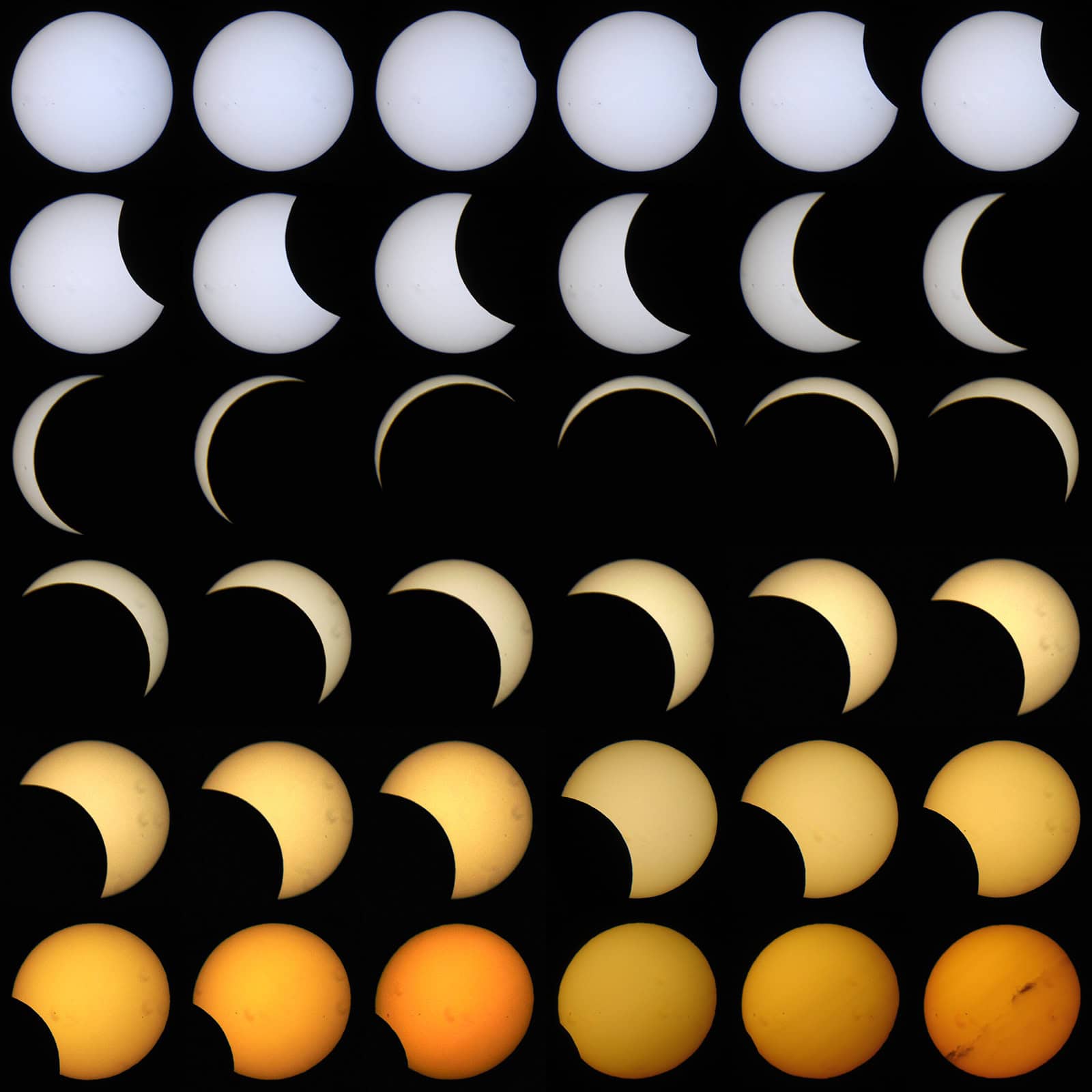
The UK’s hot, dry summer provided widespread clear skies for the solar eclipse that took place on Wednesday 12 August 2026. It was not a total eclipse – you had to be in northern Spain for that – but Britain still enjoyed a partial eclipse between around 6 p.m. and 8 p.m. BST, depending on location.
With typically more than 90% of the Sun’s disc covered – and with the event occurring after many people had finished work – the circumstances were ideal for a rare, immersive mass-engagement with physics.
Many people had got hold of eclipse glasses in advance or searched through kitchen cupboards for a colander to produce shadow patterns
Widespread public-awareness raising by professional and amateur astronomical societies had led to a strong build-up to the event in mainstream and social media. As a result, much of the public was aware the eclipse was coming, and many people had got hold of eclipse glasses in advance or, failing that, searched through kitchen cupboards for a colander to produce shadow patterns.
Here in the UK, friends and families gathered on west-facing hills, parks and village greens that evening with folding chairs, smartphones, cameras, telescopes and colanders, to enjoy the spectacle over a picnic tea. In built-up areas of towns and cities, many sought out west-facing windows of homes and offices.
I’m an old-school visual observer and recorded the eclipse sequence using 20-year-old equipment
While the eclipse on the UK mainland was deepest in Cornwall, I took my chances on the Isle of Wight, just off the coast of southern England.
Amateur astrophotography has been revolutionized over the last few years thanks to specialized high-sensitivity astronomical CMOS cameras, but I’m an old-school visual observer and recorded the eclipse sequence using 20-year-old equipment.
The montage presented here contains 36 frames spanning the entire eclipse sequence and packs in a wealth of physics. Besides the obvious relative motion of the Earth, Moon and Sun, three sunspot groups are visible, approximately delineating the solar equator; the camera was aligned with the sunspot groups and the equatorial mount maintained this orientation.
The Moon’s sharp-edged silhouette is a reminder that it has no atmosphere, whereas the Sun is brighter in the centre than the edge. Known as “limb-darkening”, it arises because of the temperature gradient of the tenuous solar photosphere – and is a reminder that the perceived edge of the Sun is merely a wavelength-dependent opacity transition.
While we often describe the Sun as yellow, the transmission profile with the OD5 solar filter that I used here gives it a slightly silvery-blue tinge. But as the Sun sank lower in the sky during the evening, wavelength-dependent extinction and scattering reddened the light, so the silvery disc progressively turns distinctly yellow and then orange.
Along with the colour change, the solar disc takes on an oblate form in the final row of frames due to differential atmospheric refraction close to the horizon. Terrestrial clouds close to the local horizon are seen in the final frame.
For many people viewing an eclipse for the first time, talk of intersecting orbital planes is perhaps already too much physics for one evening, but for those who wish to look a little deeper, more questions – and more physics – pop up the closer you look. What have you spotted in the montage that I haven’t?
The technical stuff
I took these images using a portable 90 mm diameter Maksutov-Cassegrain telescope (a Meade ETX-90) on an equatorial mount with a battery-powered drive, a full-aperture glass OD5 solar filter, and a 25 mm focal-length eyepiece paired in eyepiece-projection mode with a 5 megapixel Sony Cyber-shot CCD digital camera.
The camera was set for manual operation: minimum ISO (100), minimum aperture (f/5.6), fixed focus (achieved at f/2.8), and manually adjusted exposure time (1/400 – 1/13 s). Image processing was minimal, conducted using ImageJ software, which is widely used in biomedical imaging.
Shadowing of the sensor by dust on the lens surfaces was partially corrected by dividing through by a normalized clear-sky exposure. Frames were cropped manually and re-scaled in intensity to compensate for increasing atmospheric absorption as the Sun sank towards the horizon, and for changes of exposure duration.
The post The 12 August 2026 partial solar eclipse as seen from the Isle of Wight appeared first on Physics World.
Radiation shielding vest could reduce cancer risk for astronauts on deep space missions
A new personal radiation shielding vest tested during the Artemis I flight could significantly reduce the radiation dose that future astronauts might receive
The post Radiation shielding vest could reduce cancer risk for astronauts on deep space missions appeared first on Physics World.
A radiation shielding vest tested during the uncrewed Artemis I flight in 2022 has been shown to significantly reduce the radiation dose that future astronauts or deep-space tourists might receive.
The data for this analysis were obtained via seating two human-tissue-equivalent female torso phantoms in the Orion crew capsule. While the “Zohar” phantom wore the new AstroRad vest, its travel companion “Helga” did not. Numerous radiation dosimeters placed in and on the phantoms allowed the received radiation dose to be compared.
“Exposure to radiation in space is unavoidable, and a single major solar particle event (SPE) can deliver more than one-third of NASA’s 600 millisievert career effective-dose limit. A three-year round trip to Mars would equal or exceed the career limit, which corresponds to a 3% mortality risk from radiation-induced cancer. So we developed the AstroRad vest to significantly reduce this hazard,” explains immunologist Oren Milstein, CEO of StemRad Radiation Protection, which began developing the vest with Lockheed Martin in 2015.
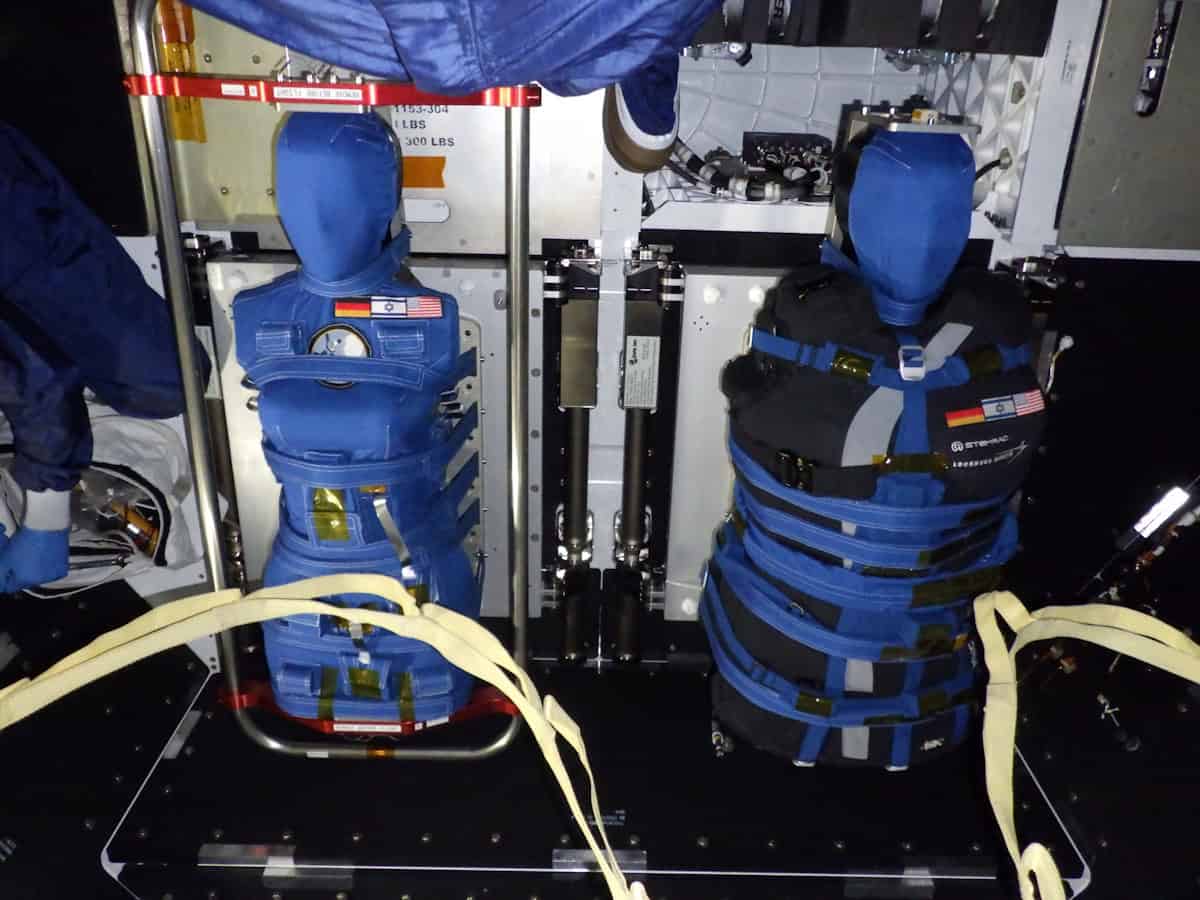
The shielding thickness varies throughout the garment according to the radiation sensitivity of the underlying organs, with breasts, colon, lungs, ovaries, stomach and red bone marrow having concentrated shielding in the test vest. Milstein was inspired to develop this targeted architecture based on the experiences of his PhD supervisor, who treated the first responders to the 1986 Chernobyl nuclear power plant disaster.
With damage to bone marrow the accepted cause of death for all those emergency workers who lost their lives within months of the accident, “that heritage instilled in me a desire to protect people from radiation by selective shielding of the bone marrow,” Milstein explains, adding that the female focus of this experiment is because women have a higher predicted risk of radiation-induced cancer than men.
Astronauts currently shield from SPEs in “storm shelters” consisting of barricades of supplies, or by moving into areas containing more hardware against the walls. AstroRad provides a similar level of protection to the most robust shelter configuration while also “allowing the astronaut wearing it to move around the cabin and continue mission-critical tasks,” radiation physicist Jordan Houri, lead scientist for space exploration at StemRad, tells Physics World.
To maintain flexibility, the vest is constructed from thousands of hexagonal tessellated rods of high-density polyethylene (HDPE) sandwiched between two layers of elastic fabric. The shielding components can also slide past one another and stretch. HDPE was chosen for its high proportion of hydrogen – which is extremely effective at shielding against charged particle space radiation.
While Artemis I did not encounter a solar storm, Orion traversed the inner Van Allen belt, whose protons cover a similar energy range to those in SPEs. This enabled the team to construct a Monte Carlo model of the experiment for testing different radiation environments.
“We created digital twins of Helga and Zohar, the AstroRad vest, radiation detectors and spacecraft shielding,” explains Houri. “Using this model, we generated hundreds of billions of virtual protons and electrons representing the radiation environment of the inner Van Allen belt, before comparing the predicted detector responses directly with the measurements recorded during Artemis I.”
With close agreement found, the researchers then simulated measured SPEs from August 1972 and October 1989. As detailed in their recent Science Advances paper, this revealed that wearing AstroRad would reduce effective dose by around 60% in an August 1972-type scenario, and by almost 40% for a 1989-type SPE – sparing astronauts the dose equivalent from up to 193 and 131 days of deep space travel, respectively.
Combining these results with those from previous experiments, which tested the vests’ ergonomics on the International Space Station, is allowing the researchers to improve comfort and ease of motion, and reduce mass. They are also exploring whether lighter, empty vests could be filled with recycled polyethylene after launch.
Alongside the health benefits, reducing radiation exposure makes economic sense as it extends astronauts’ careers, concludes Milstein, who hopes that the AstroRad vests can help “make lunar habitation and Mars travel truly sustainable and not just a dream”.
The post Radiation shielding vest could reduce cancer risk for astronauts on deep space missions appeared first on Physics World.
Improved QLEDs with Machine Learning
Machine learning identified solvent formulations that produce highly homogeneous quantum dot films
The post Improved QLEDs with Machine Learning appeared first on Physics World.
Quantum dot LEDs (QLEDs) are of interest because they emit bright light with highly pure colours, making them attractive for display and lighting applications. They also have the potential to be manufactured at lower cost using solution-processing techniques. However, producing high-performance QLEDs remains challenging because the quantum dots must be uniformly distributed within a densely packed film. Poor film uniformity can lead to lower efficiency and faster device degradation.
In this study, machine learning was used to identify solvent conditions that produce the most uniform quantum dot films. Several solvents were characterised using five key solvent parameters that influence how quantum dots arrange themselves as the solvent evaporates. Film uniformity was assessed using atomic force microscopy, which provides detailed information about surface morphology and roughness.
Three machine learning models were trained to predict film uniformity from the solvent properties. Support Vector Regression was found to provide the most accurate predictions and was subsequently used to identify an optimal mixed-solvent formulation. Grazing-Incidence Small-Angle X-ray Scattering confirmed that the resulting films exhibited more homogeneous quantum dot packing.
The optimised solvent formulation produced QLEDs with higher efficiency and longer operational lifetimes than devices fabricated using single solvents. Overall, the study demonstrates that film homogeneity is a critical factor in QLED performance and highlights the potential of machine learning as a powerful tool for optimising solution-processed optoelectronic devices.
Read the full article
Beomsoo Chun et al 2026 Rep. Prog. Phys. 89 078002
Do you want to learn more about this topic?
Materials, photophysics and device engineering of perovskite light-emitting diodes by Ziming Chen et al. (2021)
The post Improved QLEDs with Machine Learning appeared first on Physics World.
Quantum computers may pay a price for keeping time
A quantum computer that runs itself using an internal clock can only compute accurately if that clock is precise, and that precision comes with a thermodynamic cost
The post Quantum computers may pay a price for keeping time appeared first on Physics World.
Most quantum computers today do not work in isolation. They rely on carefully timed signals from classical electronics, lasers or magnetic fields to tell the qubits when to perform each operation.
In ordinary quantum-computing theory, the qubits are treated as the computer while these timing signals are treated as external infrastructure. When calculating the energy required to run a quantum computer, drawing a boundary around the qubits like this will inevitably hide part of the real-world energy cost. Draw the boundary around the whole computing machine, including its clock, and a new energetic cost appears.
This is the idea behind new research from a team of researchers from Austria. In a new study, they introduced the idea of an autonomous quantum processing unit (aQPU). The aQPU has four main parts: a memory where the calculation happens, an instruction register that stores the program, a tick register that counts the steps, and an internal quantum clock that drives the whole process. The idea is similar to a mechanical machine that, once started, runs without an external operator.
The team showed there is an inescapable trade-off between accuracy and thermodynamics. If the clock ticks at slightly uncertain times, the quantum gates are applied imperfectly, reducing the fidelity of the computation. The authors found that the error grows with the length of the program and shrinks as the clock becomes more accurate. But more accurate clocks generally dissipate more entropy, meaning they produce more thermodynamic irreversibility.
In practice, such entropy production is usually associated with dissipated energy, often as heat. For quantum computers, this is especially awkward because many platforms already need delicate cooling and isolation procedures.
The new study does not propose a practical computer yet. Instead it gives physicists a cleaner way to ask how much energy quantum computation fundamentally requires. Even when quantum gates are mathematically reversible, the physical act of controlling them with sufficient precision may not be thermodynamically free.
Read the full article
Florian Meier et al 2026 Rep. Prog. Phys. 89 077601
The post Quantum computers may pay a price for keeping time appeared first on Physics World.
A new route to perfect energy absorption
A fundamental physics discovery could help reduce energy losses in future wireless power technologies
The post A new route to perfect energy absorption appeared first on Physics World.
Wireless power transfer systems are used to transfer electricity without a physical cable, for example in wireless electric vehicle charging, medical implants and consumer electronics such as smartwatches. In real systems, poor alignment and variable distances can reduce efficiency, causing some of the transmitted energy to be reflected back towards its source rather than being absorbed by the receiver.
Wireless power transfer research tends to focus on engineering solutions such as improved coil designs, impedance matching and frequency tuning. However, in this work, the researchers investigate a more fundamental question: how can the physics of time-domain wave interference be used to control energy flow within resonant systems?
A phenomenon known as Coherent Perfect Absorption occurs when a system completely absorbs incoming energy with negligible reflection. However, this requires specific conditions and a system that is perfectly matched, operating at a point of equilibrium known as the steady state. Here, the researchers report a new effect called Transient Coherent Perfect Absorption. Rather than relying on a steady state, TCPA operates during the brief transition period immediately after a system is switched on.
During this transient period, a steady wave produced by the source coexists with a temporary, decaying wave created by energy stored within the system. These waves interfere with one another and both contribute to the reflected signal. When they are exactly out of phase, the reflected signals cancel out. As a result, a system that would normally reflect a significant amount of incoming energy can briefly behave as though it were perfectly matched, absorbing almost all of the incoming energy.
While this is fundamentally a physics study of wave behaviour and interference, it introduces a new way to suppress energy reflections in resonant systems. In the future, the approach could help improve the efficiency of wireless power transfer and other energy-delivery technologies by reducing losses under imperfect operating conditions.
Read the full article
Transient coherent perfect absorption enables efficient wireless power transfer
Liang Hu et al 2026 Prog. Energy 8 024001
Do you want to learn more about this topic?
The rise of electric vehicles—2020 status and future expectations by Matteo Muratori et al. (2021)
The post A new route to perfect energy absorption appeared first on Physics World.
Big science seeks big wins from sustainability efforts
Joe McEntee examines attempts to make particle accelerators more sustainable
The post Big science seeks big wins from sustainability efforts appeared first on Physics World.
For particle physicists, bigger has always been better. The first working cyclotron, which was built by Ernest Lawrence in California in 1931, was little more than 35 cm in circumference and accelerated protons to 80 keV. Compare that with CERN’s Large Hadron Collider (LHC), which is more than 27 km long and has been creating protons with energies of 7 TeV per beam – some eight orders of magnitude higher.
Only recently, though, have the burgeoning energy requirements of ever-larger accelerator facilities become a cause for concern. It was not until 2020 that CERN published its first-ever environmental report, which outlined to the public how the lab was reducing its energy consumption. Thanks to innovations in cryogenics, for example, CERN reported that the “data per joule” doubled between the LHC’s first and second experimental runs.
All good and well. Yet while their core mission of fundamental scientific discovery remains paramount, it’s clear that – if nothing changes – the environmental impact of new and upgraded accelerator complexes will track in tandem with the size, energy footprint and resource consumption of these large-scale research facilities.
The numbers are eye-watering. Particle-accelerator research centres currently consume hundreds of gigawatt-hours (GWh) of electricity per year – roughly the energy budget of a mid-sized European city. CERN’s unique array of accelerators, detectors, computers and technical infrastructure, for example, together account for about 95% of the lab’s total electricity use of 1290 GWh in 2024, with the LHC alone soaking up 695 GWh.
What if bigger isn’t better?
It’s not a good look given the climate crisis – and only made worse with oil and gas prices soaring after the effective closure of the Strait of Hormuz. Fortunately, the accelerator-science community is ramping up efforts to make its core technologies and facilities more sustainable. The aim is not only to cut the energy and resources that accelerators use, but also to understand – and, more importantly, minimize – their “whole-lifetime” environmental impact.
In fact, with CERN bringing the upgraded High Luminosity LHC online by 2030, mulling over a 91 km-circumference Future Circular Collider, and China eyeing up a 100 km collider of its own, now is a good time to embed environmental impact-reduction techniques into accelerator designs from the start.
That, at least, is the hope of a group of accelerator scientists and sustainability experts from the UK, Switzerland and Germany, who in June published a “living document” that puts environmental sustainability front-and-centre in the planning, construction, operation and decommissioning of large-scale accelerator facilities (EPJ Research Infrastructures 10 12).
“We’re seeing a surge in interest from colleagues across the accelerator community, all of them eager to incorporate environmental sustainability into their work and to share lessons learned,” says Hannah Wakeling, lead author of the report. An accelerator physicist in the John Adams Institute at the University of Oxford, UK, Wakeling’s own research involves measuring the carbon footprint of particle accelerators, their use of raw materials and even their wider impact on biodiversity.
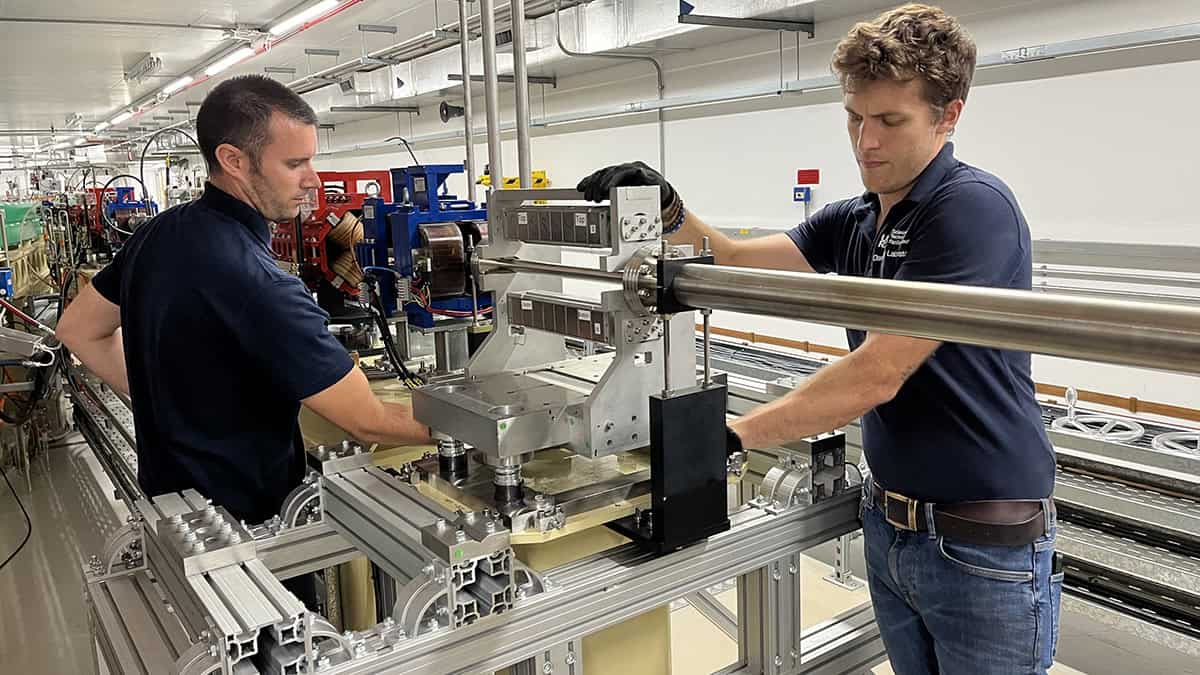
Trouble is, measuring and improving the environmental sustainability of accelerator facilities is not easy. Labs often don’t have enough funding, staff or time for such initiatives. Sustainability recommendations are either too generic or cannot be applied to accelerator science and technology. There’s also uncertainty about how to incorporate environmental sustainability into day-to-day operations.
We hope that the guidelines will help accelerator facilities make informed decisions that balance scientific progress with environmental responsibility
Hannah Wakeling, University of Oxford
Inspired by various initiatives in big science (see “Sustainable acceleration”, below), Wakeling and colleagues’ open-access resource has 110 practical sustainability recommendations for anyone building, planning or running accelerator facilities. It includes advice on procuring resources responsibly and reducing environmental impact through, for example, tunnelling, shielding, component design, waste management and green computing. There are also recommendations on skills, knowledge transfer and culture change, the latter being what the authors think will have most impact.
“Looking at accelerator programmes through the lens of sustainability gives us an opportunity to do things differently,” notes Wakeling. “We hope that the updated version of our high-level guidelines [v1.0 was published in 2025] will help accelerator facilities make informed decisions that balance scientific progress with environmental responsibility.”
Towards accelerator 2.0
In general, the biggest opportunity to make accelerators more sustainable is when they are still being designed and conceived. “At these crucial stages,” says Wakeling, “environmental impact assessments should be employed to highlight the areas of highest potential for impact reductions and more sustainable designs.”
What’s more, argues Wakeling, any decision to build or upgrade an accelerator shouldn’t depend just on its cost or scientific output but on how environmentally sustainable it will be too. That, in turn, means prioritizing R&D funding for enabling technologies that can make the most difference and co-ordinating efforts between large-scale facilities to avoid scientific duplication and to minimize the consumption of resources.
One relevant effort is a pan-European consortium called Research Facility 2.0 (RF 2.0), which is aiming to develop accelerator facilities that can run entirely on renewable energy – in effect, almost independently of the public power grid. A three-year, €5.6m initiative funded by the European Union’s Horizon programme and the Swiss State Secretariat for Education, Research and Innovation, RF 2.0 includes major accelerator labs like CERN, DESY and HZB (both in Germany), ALBA (Spain) and MAX IV (Sweden) plus the Karlsruhe Institute of Technology (KIT) and four high-tech SMEs.
Large-scale research infrastructures are a public good but they are inflexible and found wanting when it comes to environmental sustainability
Giovanni De Carne, director of KIT’s Institute for Technical Physics
“We are addressing a couple of fundamental problems,” says RF 2.0 head Giovanni De Carne, who is director of KIT’s Institute for Technical Physics. One issue is purely economic: a particle accelerator consumes a lot of electrical energy and therefore accounts for a recurring chunk of operating expenditure. In “run” years, for example, electricity costs typically equate to 5–10% of CERN’s annual budget.
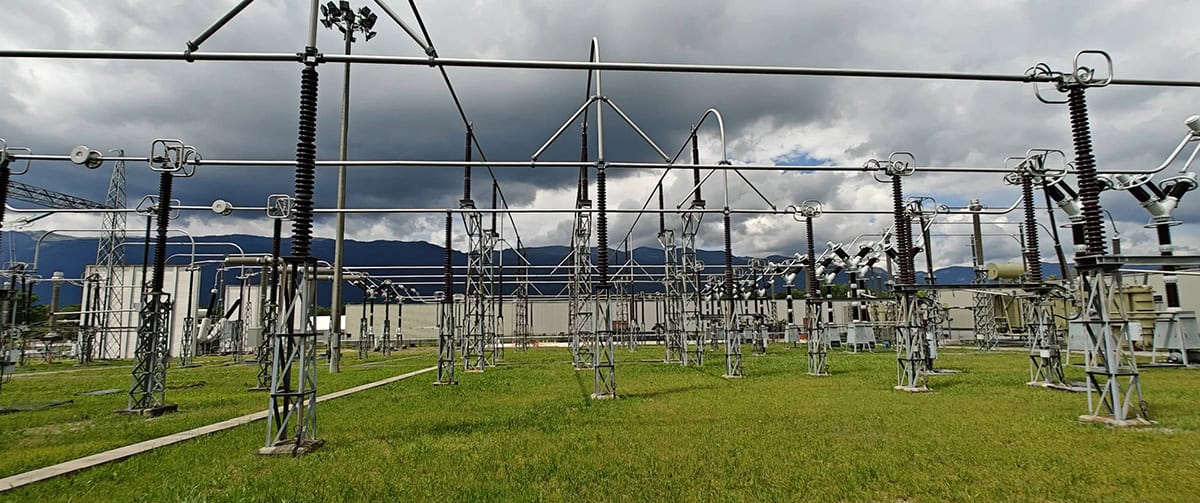
“The second problem is practical, but also philosophical,” De Carne adds. “Large-scale research infrastructures are a public good – driving scientific and societal impact – but they are inflexible and found wanting when it comes to environmental sustainability, consuming large amounts of raw materials during construction and regular operations.”
RF 2.0’s goal is therefore to analyse the many ways accelerators use energy – from components and systems to experiments and engineering – and to develop and test novel platform technologies in real-world settings. One notable RF 2.0 demonstrator project, for example, led to a redesign of permanent magnets that steer and focus beams at the MAX IV synchrotron, reducing energy use and heat losses by up to 40%.
Another involved retrofitting solid-state amplifiers with energy-efficient “active parameterization” controllers to enhance particle acceleration at the ALBA synchrotron; it yielded 18% energy savings in one year versus prior technologies. A parallel R&D track has also led to sustainable high-performance computing initiatives such as a summer energy-saving programme at DESY’s data centre, reducing the power draw during the hottest parts of the day.
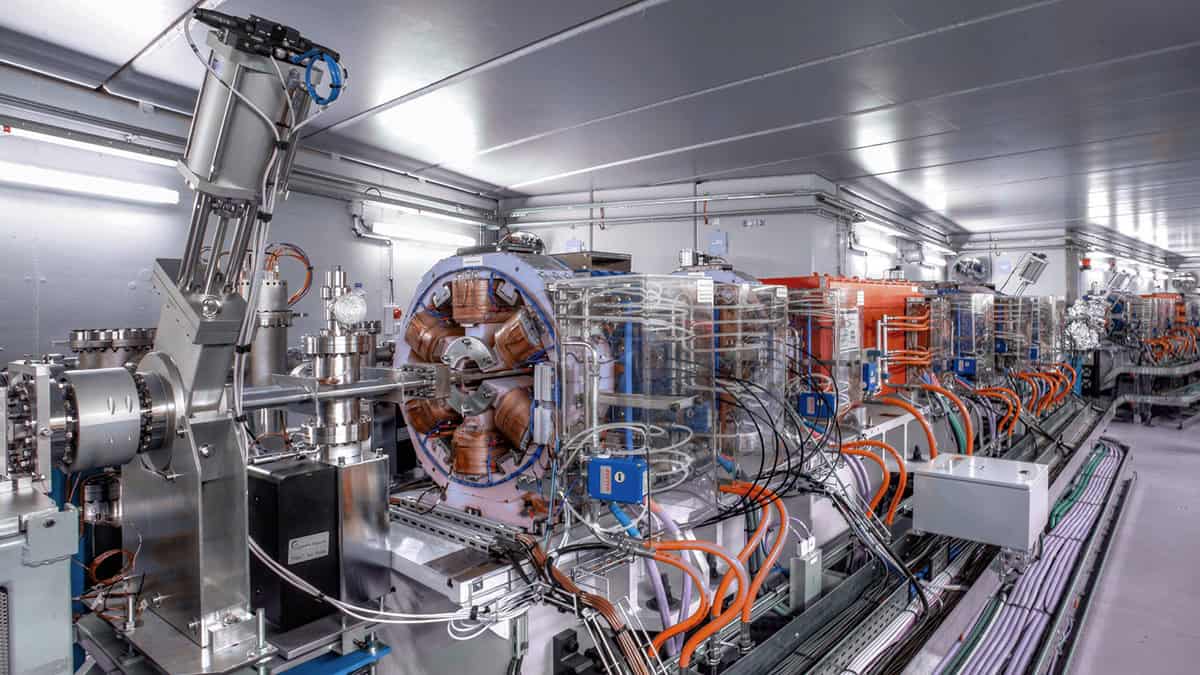
Meanwhile at CERN, an RF 2.0 team has installed 24 phasor measurement units (PMUs) at the lab. These smart grid devices, which record the magnitude and timing of voltage/current fluctuations, are able to monitor harmonics, voltage sags and grid disturbances within the LHC’s power network.
By recording phenomena that would otherwise go unnoticed with traditional metering systems, the PMUs help engineers to implement counter-measures to make the accelerator grid more robust. In the first year of operation, the devices recorded 135 voltage sags and rapid voltage-change events, with 18 of these adversely impacting operation of the accelerator complex – mainly affecting magnets and radio-frequency (RF) acceleration schemes.
“RF 2.0 cannot work in one single direction – a multidisciplinary approach is key,” says De Carne. “We are bringing together physicists, engineers and technologists who, under normal circumstances, rarely talk to each other. The project provides a forum for them to connect and share insights on common problems but from their own unique perspective. It’s been a real game-changer.”
The RF 2.0 programme finishes at the end of 2026, after which De Carne hopes to secure follow-on EU funding for RF 2.0 to merge with another pan-European project called Innovate for Sustainable Accelerator Systems (iSAS). The two projects look like a neat fit, with iSAS consisting of 11 academic labs and six companies seeking to make superconducting RF cavities – a workhorse accelerator technology – more energy-efficient.
Sustainable acceleration
The following sustainability initiatives are a useful starting point for scientists and engineers who want to evaluate and lower the environmental impact of accelerator projects at an institutional, project or individual level.
- Sustainable HECAP+ is a group of researchers in high-energy physics, cosmology, astroparticle physics and beyond who are promoting environmentally sustainable practices in areas such as computing, energy, mobility, research infrastructure, resources and waste.
- The ICFA Panel on Sustainable Accelerators and Colliders is promoting “energy-efficient and sustainable accelerator concepts, technologies and strategies…and the use of accelerators for the development of carbon-neutral energy sources”.
- Flexibility in RIs for global CArbon Neutrality (FlexRICAN) is a pan-European academic-industry consortium evaluating how research facilities can enhance energy flexibility for the European electrical grid and contribute to local heating networks through waste heat recovery.
- Europe-America-Japan Accelerator Development Exchange Programme (EAJADE) has a work package of sustainable technologies for accelerator facilities including high-efficiency superconducting RF cavities and RF amplifiers.
- ErUM Data Hub is a German initiative helping 20,000 scientists exploring “the universe and matter” to make data management, software and digital tools more environmentally sustainable.
Disruptive thinking, sustainable outcomes
Along another coordinate, there’s also top-down pressure for a more sustainable approach to future accelerators from the European Strategy Group for Particle Physics (ESG), which guides the future of the field in Europe. “Energy consumption and emissions must be minimized when realizing and operating facilities and projects,” is the ESG’s unequivocal message in the 2026 update to its third strategy paper. “The design of new particle physics infrastructures should be as sustainable as possible, balancing important sustainability aspects with cost and physics performance.”
The ESG argues that R&D funding should be allocated to platform technologies with the most potential to yield energy savings. These include systems that convert grid power to RF more efficiently for particle acceleration, with some studies suggesting it could be possible to quadruple the efficiency with which RF systems convert electrical power into radiant power. Other promising technologies include thin-film superconducting RF cavities operating at higher cryogenic temperatures (around 4.2 K or higher versus 2 K for bulk niobium cavities).
Also important are novel permanent and high-temperature superconducting magnets that minimize heat losses. “Comparing the carbon footprints of electromagnet and permanent-magnet quadrupoles,” says Wakeling in Oxford, “the higher manufacturing impact of a permanent magnet can, in certain cases, be offset by its lower operational impact in as little as one year. Worth noting as well that this conclusion only considers carbon and doesn’t compare other environmental impacts.”
Another sustainability pathway is the use of AI and machine-learning to optimize the efficiency of accelerator experiments – for example, by focusing on intersecting parameters tuned to improve equipment reliability, lifetime and resource consumption. In parallel, AI could cut the huge computational needs of particle physics by requiring fewer “events” to be stored and lowering computing time.
Longer term, researchers are prioritizing disruptive accelerator concepts that could slash the size, cost and carbon footprint of next-generation facilities. One example is the energy-recovery linac, in which superconducting RF cavities decelerate a “used” particle beam and recycle the kinetic energy to accelerate new particles to higher energies. Another is plasma-wakefield acceleration, which uses laser- or particle-beam-driven intense “plasma waves” as the accelerating medium, yielding electric fields up to 1000 times greater than in classical accelerators.

The best of all worlds
Notwithstanding all this technology innovation, so many factors influence accelerator design that the “best” decision in terms of its environmental benefits can’t always be made. “In the end,” says Wakeling, “this is all a balancing act: we want accelerator facilities to be cutting-edge in terms of their scientific output, but we also want them to be cutting-edge when it comes to environmental sustainability.”
As for next steps, Wakeling and co-authors now plan to assess the anticipated impact of their 110 recommendations – whether high, medium or low – and the potential difficulty of putting them into practice (by referencing technology-readiness level, for example). Work is also underway to incorporate more quantitative analyses, including target figures for selected recommendations based on case studies from the accelerator community.
Equally, when assessing an accelerator’s emissions over its whole life-cycle, Wakeling thinks there is much to learn from the space-science community, which has developed the Open-source Rocket and Constellation Lifecycle Emissions (ORACLE) GitHub repository. This initiative seeks to cut the carbon footprint of the space industry – especially large constellations of satellites – by allowing researchers to share code and data.
“We applaud efforts like ORACLE and wish to encourage and promote similar programmes within fields applicable to accelerator science,” says Wakeling. But it’s clear that significant research is still required to tackle the complex environmental challenges in accelerator science, with Wakeling and colleagues aiming to update their living document as new information and technologies become available.
“We invite contributions from colleagues within the accelerator community,” Wakeling concludes, “to ensure this resource remains relevant, comprehensive and impactful.”
The post Big science seeks big wins from sustainability efforts appeared first on Physics World.
Quantum voting system aims to keep ballots secret
Two teams implement entanglement-based protocol
The post Quantum voting system aims to keep ballots secret appeared first on Physics World.
A voting system with a high level of security intrinsically guaranteed by quantum mechanics has been demonstrated by two independent teams – one led by Federico Centrone at the Barcelona Institute of Technology and the other led by Rob Thew at the University of Geneva.
Their systems employ a quantum protocol that was first proposed by Centrone and colleagues in 2022 and uses a system of entangled qubits to ensure every voter has complete anonymity.
A conventional voting system – paper or electronic – could be hacked or corrupted at the counting stage, resulting in a rigged outcome or lack of anonymity. In 2007, Anne Broadbent and Alain Tapp at the University of Montreal proposed a possible solution: an e-voting protocol in which an election is broken into as many rounds as there are voters.
Before anyone casts a vote, Broadbent and Tapp’s system secretly assigns each participant to be the “real” voter in exactly one designated round. In that round, the chosen voter picks a value (either 0 or 1) representing their actual choice.
Secret ballot
In every other round, the system automatically submits a pre-assigned value on the voter’s behalf, engineered so the round’s total has a fixed parity – either always odd or always even. The real voter’s free choice then either flips this total to the opposite parity or leaves it unchanged, and the final odd or even result is recorded. Once every round is complete, each voter will have had their real say – but from the outside, the identity of the real voter in any given round is completely hidden.
Although this scheme is watertight in principle, there is still no guarantee that the e-voting system itself can be fully trusted. In 2022, a team led by Centrone proposed how this loophole could be closed by harnessing entanglement between quantum bits, or qubits.
In the quantum protocol, each voter is assigned a single qubit, prepared as part of one joint entangled state spanning all voters together. When measured, each qubit is randomly either a 0 or 1, But, because of the type of entanglement between the qubits, the total number of 1s across all voters is guaranteed to have the expected parity. Since not even the e-voting system itself can know the outcome of any individual measurement in advance, the protocol removes the need to trust whoever is distributing the values.
Easily adapted
Thew’s team realised that it could create this protocol in the lab. “We had just finished another experiment concerning distributed polarization entanglement and realized we could ‘easily’ adapt our setup to produce the entangled states required for the voting protocol,” says Geneva’s Joey Marcellino.
Both teams used spontaneous parametric down-conversion (SPDC) to create the entangled qubits, which were photons. Here, a laser is fired into a nonlinear crystal, splitting single photons into pairs of lower-energy photons that are entangled in terms of their polarization states.
SPDC is then repeated using the newly-entangled photons, chaining pairs together until reaching the same number of entangled photons as there are voters – albeit a small number in these demonstrations. The result is one single, large entangled state. Each individual photon then passes through a 50/50 beam splitter, is coupled into an optical fibre, and sent to a detector, where its state is measured.
Fidelity and success
In their first experimental tests of the technique, Centrone and colleagues were able to create the entanglement required for the voting protocol at success rate of about 96%. Meanwhile, Thew’s team achieved an 87% success rate.
Commenting on his colleagues’ result, Marcellino says, “This suffices as a proof-of-principle for the protocol and our modified approach, although obviously we would want to improve these numbers significantly for real-world applications”.
For now, the result demonstrates that e-voting systems with quantum-guaranteed security are achievable, using existing technologies including single-photon sources, detectors, and entanglement generation schemes.
“Moreover, in the end the protocol is just a way to anonymously distribute a bit with perfect security,” Marcellino adds. “While this is obviously useful for voting, it could also work as an anonymous message board, or to enable anonymous distributed computation.”
The research is described in Physical Review Letters: Thew and colleagues; Centrone and colleagues.
The post Quantum voting system aims to keep ballots secret appeared first on Physics World.
Researchers harness sunlight to generate quantum entanglement
Sunlight may provide an energy-efficient alternative to lasers used in quantum computing
The post Researchers harness sunlight to generate quantum entanglement appeared first on Physics World.
As the world of quantum computing grows and researchers work towards scaling up quantum systems, energy consumption is becoming a major concern. Beyond the small scale and high level of control in a laboratory environment, the lasers that power quantum systems result in a large energy cost that may act as a bottleneck for the integration of quantum technology.
Publishing their findings in Optica, researchers have demonstrated that sunlight can be used to generate pairs of entangled photons, providing a more energy efficient alternative to laser-pumped systems. This collaborative project combined theoretical research led by Robert Boyd at the University of Ottawa with technology developed by Hanieh Fattahi’s research group at the Max Plank Institute for the Science of Light in Erlangen, Germany.
Overcoming assumptions
Optical quantum computers use pairs of entangled photons as qubits, with the nonlinear optical processes used to produce them typically relying on lasers. This is largely due to two assumptions: firstly, that high optical coherence is required, meaning that the light waves maintain a steady phase relationship; and secondly, that lasers are the only way to achieve the necessary optical power density for these methods.
Sunlight, while naturally abundant, is largely incoherent and is difficult to collect in concentrations comparable to that of lasers. As such, this natural reservoir of optical input has been largely overlooked as a direct resource for nonlinear optical processes.
The researchers behind this latest study are challenging these assumptions with a new system that uses sunlight to fuel a process called spontaneous parametric down-conversion (SPDC). In this process, a pump beam – usually a laser but replaced here with solar light – interacts with a nonlinear crystal, splitting individual photons into entangled pairs.
Previous work from Boyd’s team demonstrated that incoherent light from an LED can produce photons with entangled polarization states. By achieving entanglement powered by sunlight, this new research further overturns both assumptions about the necessary properties of the optical input.
Harnessing the Sun
To harness the plentiful yet highly dispersed sunlight, Fattahi’s team had to develop a device that focuses sunlight down to a point approximately 2 mm wide, to be coupled to a fibre as thin as a human hair. To achieve this, they used a Fresnel lens and spectral filter to collect sunlight, and a glass cone-shaped concentrator to funnel the light to a point, where it is coupled to the fibre. The fibre then directs the sunlight into the nonlinear crystal to induce SPDC.
Fattahi described the “significant practical challenges” involved with implementing such a system. Along with having to continuously track the Sun, the outdoor nature of the experiment left it vulnerable to both environmental effects and background light. Eventually compensated for by enclosing the system in a tent, the background light was initially offset by students beginning measurements at around 3 a.m. to make the most of the natural darkness.
Overcoming both theoretical and practical concerns, the system was able to successfully produce entangled photons. The states produced violate Bell’s inequality (as the photon correlations cannot be modelled classically) with an S value of 2.54, where S = 2 is the threshold for indication of quantum behaviour, and a 94% fidelity to the target entangled Bell state.
Significantly, when normalized in terms of the spectral bandwidth of the pump, sunlight-powered SPDC demonstrates a photon pair generation rate comparable to that of the laser-pumped process. This method eliminates the need for electrical-to-optical energy conversion, providing a viable path towards increasing energy efficiency.
The future of photon production
The development of quantum technology is vital for the future of secure communication, ultraprecise sensing and high-performance computation. Taking steps to develop a sunlight-driven method of photon pair production will potentially allow scaling of this technology without the major energy cost.
Minimizing energy consumption and system complexity would be a huge benefit for systems operating in demanding conditions, such as polar deserts. This research is particularly striking when considering space-based quantum technology. Sun-synchronous orbits could allow near constant access to a naturally occurring, reliable pump-source.
Fattahi and her team intend to develop a field-deployable version of this system, with a focus on greater integration which should “significantly improve mechanical stability, efficiency and overall practicality”. There is also potential to expand the portion of the solar spectrum used in this experiment. Fattahi described the “exciting possibility” of using different spectral regions to drive multichannel entangled-photon generation, increasing efficiency and capacity.
Research into new, energy-efficient photon production has the potential to remove a major barrier for the integration of quantum technologies and contribute to a brighter future for quantum computing.
The post Researchers harness sunlight to generate quantum entanglement appeared first on Physics World.
Honor Powrie: 10 things I wish I’d known (or done better) when I started my career
Honor Powrie offers advice for physicists at the start of their careers
The post Honor Powrie: 10 things I wish I’d known (or done better) when I started my career appeared first on Physics World.
When I went to university, I didn’t know what kind of career I wanted to pursue. I’d originally applied to study geophysics, but after a few weeks realized mineral exploitation wasn’t my thing and quickly switched to maths. Then, at the end of my first year, I had a range of degree options open to me and, whilst I preferred (and was better at) maths, I just didn’t feel it was my best choice for a career.
So I decided to switch again, this time to physics. During my degree, a few friends and I joined the Student Industrial Society (now known as the Bright Future Society). It gave us the chance to visit a range of companies – from micro-breweries and wine importers to TV studios, nuclear-power stations and semiconductor manufacturers. We also went to Llanwern steelworks in South Wales, where a closing session with a British Steel careers advisor really shook me up.
A feisty Yorkshireman, he started off by directly asking each of us what we planned to do after university. We were all put on the spot and our answers, which were embarrassingly unsure, failed to impress him. The advisor firmly suggested that if we didn’t know what our plans were by now, we had better find out before it was too late. For me, it was a wake-up call and when I got back to campus, I went straight to the careers office and started applying for summer student placements.
To my amazement, and despite my lack of experience, I was offered several positions and decided to take a summer job in Malvern at the Royal Signals and Radar Establishment, which is now part of the private defence-technology firm QinetiQ. Somehow, I managed to find something useful to work on and after 12 weeks had done enough to be as included as co-author on a peer-reviewed publication.
Summerlove sensation
After the placement, I continued with my physics degree, but began to feel something about physics wasn’t quite right for me. Whilst I loved the classical side of the subject and the real-world applications, I struggled with the less visible aspects, such as quantum and nuclear. So after a final-year project investigating the aerodynamics of cars – and finding myself more interested in my housemate’s mechanical engineering course – I wondered if I might be better suited to a career in engineering.
On the back of this growing interest, I applied to do a PhD in high-speed aerodynamics at the University of Southampton. My final-year project – coupled with my grounding in physics and the fact that I had a journal publication to my name – must have impressed my future supervisor, who picked me for the project. I had a great time on my PhD, which proved I loved engineering – particularly aerospace.
After four years in research, I realized an academic career wasn’t for me. But my PhD proved handy as it led to me getting a job with a small business called Stewart Hughes Ltd, which built vibration-monitoring equipment for use on mechanical machines. The company was looking for people with an academic background whose presence could help secure US government research funding. It turned out to be a sound strategy, as the firm built up a significant track record in winning high-value government grants.
My advice to you
These days I work a lot with interns and science or engineering students, who often ask me about my career path. As you can see, it wasn’t straightforward – and I believe a lot of people struggle making choices early in their careers. It’s easy to think you need to have everything mapped out in advance, which is rarely how things pan out. With that in mind, here are a few tips if you are starting out on your own career journey.
Top 10 tips
1 Even if you’re not sure what’s right for you – just try things out. Visiting industrial sites or attending topical lectures is great, even if it doesn’t lead to any work experience.
2 Be honest about what you like and don’t like – and don’t be afraid to change direction if things don’t feel right.
3 Be prepared to stretch yourself to find out more. Go outside your comfort zone.
4 Remember your degree subject may not be the most important thing unless you’re aiming for a career needing specific vocational training to get in. It’s far more important to study a subject you enjoy.
5 Get yourself a mentor who can be a constant in your career. They don’t have to be more senior to you; they could be a peer or someone more junior (i.e. a “reverse mentor”).
6 It’s fine if you enjoy doing lots of different things – but it doesn’t mean you have to do them all at once.
7 Being happy in what you do is more important than ultimate career goals.
8 Career opportunities don’t arise exactly when you’d like them to so be prepared to jump in or try different options if they pop up. A lateral move can be just as effective.
9 Don’t be afraid to nominate yourself for awards and prizes. An award will look good on your CV and there are a surprising number of opportunities.
10 Network and use your friends’ and peers’ experience.
Doing the rounds
One interesting bit of advice was once given to me on a career session led by a senior human-resources executive who works for a global corporation. The exec told us how he’d been having a golf lesson and was about to hit the ball down the fairway when the coach stopped him and asked where he was aiming. After explaining he was hoping to land the ball on the green, the coach shot back: “Yes…but where exactly on the green?”
Set your goal, do your best to reach it, and don’t worry too much about potential pitfalls.
Obviously the exec said he wanted to get a hole in one, but he was also trying to avoid the bunker and the long grass. The coach went on to explain that golfers should aim at the target and not be distracted by obstacles. Stay focused and the ball will land at or near the target. The exec saw this as the perfect analogy for one’s career: set your goal, do your best to reach it, and don’t worry too much about potential pitfalls.
Now that’s easier said than done – in fact, my career journey has not been the epitome of this advice. There have been bumps and detours along the way, which haven’t necessarily been through lack of focus, but because it took me time to discover what I really wanted to do. To stretch the golf analogy to breaking point, my first green might have not been great, but I’ve certainly had fun making it round the course.
The post Honor Powrie: 10 things I wish I’d known (or done better) when I started my career appeared first on Physics World.
Earthquake sensors reveal vital information about how hurricanes move and grow
Seismic stations in Louisiana have been found to provide insights into Hurricane Isaac
The post Earthquake sensors reveal vital information about how hurricanes move and grow appeared first on Physics World.
Sensors designed to record earthquakes can reveal insights into a very different natural hazard – how hurricanes evolve and intensify as they strike land. The surprising connection has been made by researchers in the US, who examined data from seismic sensors installed in Louisiana for studying the interior of the Earth. They found that the sensors, which collected data on pressure fluctuations, provided information about how Hurricane Isaac grew and intensified as it struck and devastated the state in 2012.
Earthquakes and hurricanes are very different in how they form, move and impact the Earth. The parameters governing these natural hazards – and the way that we measure them – are also distinct given that one is a geophysical phenomenon and the other atmospheric.
Hurricanes, which form over warmer tropical and subtropical ocean waters, are rotating systems of cloud and thunderstorms. They consist of a calm, central “eye”, a surrounding layer of tall thunderstorms, and strong winds called the “eyewall”. Spiralling away from the eyewall are bands of clouds and thunderstorms.
Forecasters describe the structure and evolution of hurricanes using three main parameters: track, intensity and the radii of the wind layers around the eye. But when hurricanes strike land, particularly important is the turbulence in the lowermost layer. That’s where momentum, heat and moisture mix between the atmosphere and the ocean or land.
Eyeing up hurricane path and intensity
Measuring the turbulence in this boundary layer is critical both for forecasting wind intensity and for developing and validating weather models. Such data are usually collected using reconnaissance aircraft, ocean buoys and onshore towers and radar. But flying planes into hurricanes is dangerous, while onshore towers are sparse, making data-gathering tricky. Continuous monitoring of a storm’s passage is not easy either.
In the new study, Qing Ji, Ipshita Dey and Eric Dunham from Stanford University processed data from seismic stations in Louisiana that are part of a network of 1700 stations across the US. Equipped with both infrasound sensors and seismometers, these “seismoacoustic” stations are designed to record seismic activity.
The infrasound sensors measure pressure fluctuations at the Earth’s surface, with the seismometers recording the resulting elastic response. But when the hurricane passed through the equipment, the winds were strong enough to leave an additional signal. In fact, the Stanford team found that the data revealed the calm eye and the turbulent eyewall – as well as the circular layers of thunderstorms and winds as the hurricane passed through the sensors.
“The infrasound sensors provide direct measurements of turbulent pressure fluctuations,” says Dunham. “We also used the seismometer data together with data from other atmospheric sensors to calibrate a computer model of hurricane turbulence.” The model provided space-time correlations of pressure fluctuations around the station, while the simulated pressure spectra matched the recorded data at station.
The researchers then calculated the Earth’s elastic response using the simulated pressure field, which aligned with the observed vertical displacement. More importantly, the simulations showed that the relevant parameter for calculating the Earth’s elastic response to pressure fluctuations is the velocity at which those fluctuations are carried downstream — rather than the near-surface wind speed as had been assumed.
Exploiting existing sensor networks
Dunham told Physics World that he hopes the study will draw attention to the potential of seismoacoustic networks for atmospheric sciences. “Perhaps this will lead to deployments of seismometers and infrasound sensors in areas where coverage is currently sparse, like in the southeastern US,” he adds.
Those hopes are echoed by Ji – now based at the University of Texas, Austin – who says there is a growing interest in the use of these “noise” signals for environmental monitoring. As Ji points out, the beauty of seismic stations is that they record data continuously and have a high sampling rate compared to other sensors.
Seismoacoustic stations have already been used to study various environmental and climatic phenomena, such as rising amounts of energy in ocean waves as waters warm and the evolution of tropical storms and accompanying winds. “The atmospheric imprints, however, are less studied partly due to the overall smaller amplitudes and the potentially more complicated nature,” Ji adds.
Dunham also sees an opportunity to add infrasound sensors and barometers, both of which measure atmospheric pressure, to existing seismometers. “Having multiple sensors at a single location opens up new opportunities for studying both the solid Earth and atmosphere,” he says.
The researchers report their findings in Science.
The post Earthquake sensors reveal vital information about how hurricanes move and grow appeared first on Physics World.
Protons and neutrons are more than just groups of three quarks
Comparison between theoretical models and experimental data favours alternative “baryon junctions” picture
The post Protons and neutrons are more than just groups of three quarks appeared first on Physics World.
Particles such as protons and neutrons are more accurately represented as “baryon junctions” than as simple collections of three quarks, say physicists. This finding, which is based on studies of heavy-ion collisions, is at odds with textbook descriptions, but it confirms a longstanding belief among many nuclear physicists that these descriptions are over-simplified.
Like charge and energy, baryon number is conserved in all experimentally observed reactions. This conservation law was first articulated in 1938, long before physicists developed the theory of quantum chromodynamics (QCD) to explain the behaviour of nuclei. It also predates the coinage of the term “quark” by Murray Gell-Mann in 1963.
Initially, theorists working on QCD felt that the simplest way to incorporate baryon number conservation was to assign a baryon number of 1/3 to every quark and -1/3 to every antiquark. As bound states of three quarks, protons and other baryons therefore have a baryon number of +1, antibaryons are -1, and quark-antiquark pairs, or mesons, are 0. However, this association of the baryon number with the quark – known as the valence quark model – is not fundamental to QCD, and as early as the 1970s theorists were already considering alternatives. In 1996, for example, Dmitri Kharzeev of Stony Brook University in New York, US proposed a model in which the baryon number was assigned not to the quarks themselves but to the Y-shaped junction in the gluon field that mediates their interactions.
At high-energy accelerators such as the LHC, collisions are usually modelled in the high-energy “perturbative QCD” regime. Here, quarks can be treated as isolated particles, and the two models are effectively equivalent. Inside a proton or in a quark-gluon plasma, however, quarks are more deeply immersed in the gluon field. This makes perturbative calculations such as those used in the theory of quantum electrodynamics (QED) impossible. “You can’t do these Feynman-like calculations anymore,” explains Anselm Vossen, an experimental nuclear physicist at Duke University in North Carolina, US. “Every diagram you write out has the same importance.” Within this so-called “lattice QCD” regime, the two models’ predictions can differ.
Discrepancies between models
In the new work, the STAR collaboration – which studies particles produced in quark-gluon plasmas generated at Brookhaven National Laboratory’s Relativistic Heavy Ion Collider (RHIC) in New York, US – homed in on these differences. By comparing predictions from the baryon junction model with those from the valence quark model in various scenarios, and matching them against experimental results, they hoped to find evidence to support one model over another.
First, they studied head-on collisions of gold nuclei, plus near-misses that led to the exchange of a virtual photon and the break-up of one nucleus. They found that the proportion of particles scattered varied sharply with the energy of the incoming nuclei, but not as the valence quark model predicted.
“The net baryons scattered decreases as the beam energy increases – that is expected – because the higher the energy the more things will just move straight through without being scattered to a large angle,” explains Chun Yuen Tsang, a STAR project leader who is now at Argonne National Laboratory in Illinois. However, he adds that the rate of decline “is actually slower than the existing valence quark model would have you believe”. A baryon junction should scatter more easily than a valence quark, so the fact that a simulation designed using the latter model underpredicts scattering at high energies points towards the baryon junction model.
A charged result
The researchers also compared fragments produced in collisions with zirconium-96 and rubidium-96 nuclei. Since both particles contain the same number of nucleons, they have the same baryon number. However, the ruthenium-96 nucleus has 44 protons, whereas the zirconium-96 nucleus has only 40, giving them different electric charges.
In a nuclear collision, both charge and baryon number – while being conserved overall – are rearranged among the fragments. The charge is localized to the quarks, so, according to the valence quark model, charge and baryon number should move approximately the same amount. Because the colliding nuclear pairs in this experiment differed only in their charge, the outcomes of collisions could be predicted relatively well across a range of energies. However, these predictions were strongly violated, with baryon number moving much more easily than electric charge. “This is evidence for quarks not being the carriers of both baryon number and electric charge,” Tsang says.
The researchers now wish to study collisions from other experiments. They also hope that the Electron-Ion Collider currently planned to replace RHIC will provide a more precise baryon probe and yield a definitive answer.
Vossen, who was not involved in the research, says that in some sense, its conclusions are “not that surprising”. His own research has examined the so-called “proton spin crisis” precipitated by the discovery that the proton’s spin cannot be explained by the spin of its constituent quarks, while the proton’s mass is much greater than the sum of the quark masses. “It’s part of this general picture that shows that a proton is much more complex than three valence quarks,” he says. Nevertheless, he says the STAR findings are not trivial: “It’s still a very interesting result,” he concludes.
The work is published in Science.
The post Protons and neutrons are more than just groups of three quarks appeared first on Physics World.
Quiz of the week: where does new research say the universe’s ‘missing’ baryonic matter is?
Have you been keeping up to date with physics news? Try our short quiz to find out
The post Quiz of the week: where does new research say the universe’s ‘missing’ baryonic matter is? appeared first on Physics World.
Fancy some more? Check out our puzzles page.
The post Quiz of the week: where does new research say the universe’s ‘missing’ baryonic matter is? appeared first on Physics World.
No quantum advantage (yet) in the world of tensor networks
Classical computation is more accurate that quantum annealer for some Ising spin glasses
The post No quantum advantage (yet) in the world of tensor networks appeared first on Physics World.
Researchers at the Flatiron Institute in New York City have used a new tensor network (TN) scheme to simulate how Ising spin glasses evolve in time. In many cases, their classical method is more accurate than the latest quantum annealers running the same problem. The results scale in two and three dimensions and raise the bar in the ongoing competition between classical and quantum computers for simulating many-particle quantum systems.
Classical versus quantum
Quantum many-particle systems provide a good way of comparing computational techniques because their complexity grows exponentially with the number of particles. In theory, quantum computers hold an advantage rooted in entanglement and superposition. In a classical computer, the spin of a particle (up or down) is encoded in bit that is either zero (down) or one (up), but never both. In a quantum computer, the spin can be encoded in a qubit holding a quantum superposition of up and down. This is a much more natural way to represent what the simulated system is actually doing.
Recently, a team of quantum computing researchers used the D-Wave’s Advantage2 quantum annealer to simulate Ising spin glass dynamics and claimed that classical computers could not match their results. But now, Joseph Tindall and colleagues at the Flatiron Institute have shown that a classical scheme can do just as well -and sometimes better- than the annealer.
In this occasion, the competition involved the simulation of the Ising spin glass model, which describes spins on a lattice pointing in random directions. This disordered state is product of different nearest-neighbor interactions for different pairs of spins. The difficulty of this famous problem grows with the system size, which makes it a good benchmark for comparing classical and quantum performance.
Tensor networks
The tensors used by Tindall and colleagues can be thought of as LEGO pieces. Just as LEGO bricks have knobs and tubes that snap together to build a bigger array, tensors have legs (bond indices) that join through a process called contraction to form networks. In a many-particle simulation, each tensor represents a site along with its physical attributes: for instance, the type of particle it hosts, which could be a spin or an electron. Connected together, the tensors form a network that encodes how those particles interact and how entangled they are. Widening the legs (increasing the bond dimension in technical terms), allows the network to capture the correlations more accurately.
In simple terms, the pattern of connections describes how particles can move or interact, and what Tindall and colleagues built is a tensor network representation of both the Ising spin glass Hamiltonian and wave function. The first specifies the interactions between spins and the second describes the state of spins. Writing quantum states this way has proved enormously useful for accessing large systems, where the sheer number of particles rules out any exact solution.
Tindall’s group used these tensor network ideas to simulate the spin glass model’s dynamics. But there is a catch: as a TN wave function evolves forward in time, entanglement builds up between different parts of the system and the bond indices must widen to keep track of the growing correlations. This increases the computational cost of finding the ground state of the system at different times, making it more difficult and sometimes impossible.
Belief propagation
To compensate for this, the team used a belief propagation (BP) message passing approach to perform the contraction. In this scheme, each tensor receives a compact summary of what the rest of the network “looks like” from its perspective (the effective environment of each tensor). This unlike the conventional approach of accounting for every single contribution exactly. As Tindall points out, their approach can be understood as a mean field approximation on each tensor’s environment since the pieces of information reaching a particular given tensor from each of its neighbours are assumed to be independent.
By implementing this TN–BP approach, their classical implementation could evolve the system to much longer times than conventional TN schemes and manage far enough to reach the regime the quantum annealer operates. Conceptually, passing messages about an effective environment lets the computation to keep pace with the entanglement inherent to the system’s time evolution. The researchers then measured how the spin at one site relates to the spin elsewhere on the lattice (the two-point correlator) at various times and system sizes on two and three-dimensional lattices with cylindrical, diamond and cubic geometries.
Starting with a cylindrical lattice, the team compared the error in the two-point correlator error from the annealer with that from the TN-BP message passing approach. Once the bond dimension was large enough, the classical error was markedly lower error than the quantum counterpart at different annealing. On the diamond lattice, the classical error obtained again came in below the annealer’s, while on the cubic lattice the error was of the same order at a fixed annealing time.
What comes next
This work, which is described in Science, shows how fast classical simulation of quantum physics is advancing and how the on-going competition between classical and quantum computation is driving this progress. In the future, Tindall and colleagues want to apply the TB-BP to interacting electronic systems such the Hubbard model. Additionally, the group is also extending their scheme to finite temperature problems as well as maintaining their open-source tensor network quantum simulator library.
The post No quantum advantage (yet) in the world of tensor networks appeared first on Physics World.
Betelgeuse is not alone
Orion constellation's red supergiant has a companion star, say astronomers
The post Betelgeuse is not alone appeared first on Physics World.
Astronomers have found the best evidence yet for a companion star to Betelgeuse, the brightest star in the constellation Orion. Based on data obtained by the SPHERE instrument on the European Southern Observatory’s Very Large Telescope (VLT) in Chile, they say this companion may be responsible for the red supergiant star’s periodic changes in brightness, which have puzzled scientists for decades.
Betelgeuse is a red supergiant star located about 548 light-years away. As the 10th brightest star in the night sky, it is generally visible even in locations with substantial light pollution. However, its brightness varies over a period of roughly 420 days, superimposed on a longer 2200-day modulation.
For decades, astronomers have suspected that some of these variations could be caused by a companion star that modifies the distribution of cosmic dust that Betelgeuse produces and expels. These changes in cosmic dust would, in turn, change the amount of its light that reaches us here on Earth.
A few years ago, two studies (published in The Astrophysical Journal in 2024 and 2025, but available as preprints beforehand) predicted that in December 2024, this companion star would be at its greatest distance (maximum elongation) from Betelgeuse, making it easier to detect. To take advantage of this opportunity, researchers led by Miguel Montargès of the Observatoire de Paris – PSL, France, requested observing time on the VLT. Although the same studies predicted that the companion would not be massive enough to be detectable with current instrumentation, Montargès and colleagues nevertheless hoped to place upper limits on its stellar parameters.
A difficult analysis
The astronomers used the SPHERE instrument on the VLT to image light from the region where the companion was expected to be, followed by advanced post-processing techniques originally developed to search for exoplanets. Betelgeuse’s brightness and large angular size made this analysis difficult, explains Montargès, but he and his colleagues were nevertheless able to gather enough data to identify a “Betelbuddy” with a confidence of 6σ. As Montargès points out, this is better than the previous upper limit of 1.5σ reported by astronomers at NOIRlab in 2025, and above the usual 5σ threshold that constitutes an “observation” or “discovery”.
Despite this, the astronomers say that before they can be certain that they have really detected a companion that it is indeed gravitationally bound to Betelgeuse, they will need to perform additional observations next year. At that point, they will attempt to confirm the companion’s presence by observing it half a period after the initial detection, on the other side of the red supergiant. “We will then continue observing it to get a precise characterization of its orbit (semi-major axis, eccentricity and inclination, among other parameters),” Montargès says. “These will be required to understand the past and future evolution of the system.”
What happens next
As a mature supergiant star, Betelgeuse is expected to undergo a supernova explosion at some point. The presence of a companion star could affect how this process plays out, and even dictate when the eventual explosion occurs. “It is clear to me that this companion detection will now trigger a wave of new studies on the evolutionary status of Betelgeuse,” Montargès says. “Depending on past, present and future interactions between the two stars, the supernova could possibly be advanced or delayed.
“Betelgeuse is a star that has been observed throughout history,” Montargès continues. “It was even depicted in prehistoric paintings, yet we are discovering one of its fundamental characteristics only now.”
And that is not all: “30% of red supergiants in our galaxy show the type of light variations that led to the discovery of Betelgeuse’s companion,” he tells Physics World. “We may have opened a new avenue to find such binary systems, when the primary star is an evolved star like Betelgeuse.”
The new study is detailed in Astronomy and Astrophysics.
The post Betelgeuse is not alone appeared first on Physics World.
Colliding molecules reveal their ‘cone of reaction’
New measurements advance our understanding of chemical reactions at the atomic scale and could shape our ability to optimize them
The post Colliding molecules reveal their ‘cone of reaction’ appeared first on Physics World.
For a chemical reaction to occur, atoms and molecules need to collide. However, not every collision produces a reaction. If the atoms and molecules are not favourably aligned with each other, nothing will happen. The “point of impact” of the colliding entities is also important, and it is hard to control because it requires confining the reactants along precise paths.
A team at the University of Graz, Austria, has now shed fresh light on this question by observing molecular coupling reactions on a single-crystal surface. “For the first time, we have been able to directly observe in real space and with single molecules which collision geometry must be met for a successful reaction,” explains Leonhard Grill, a physicist at Graz who co-led the study with post-doctoral researcher Matthew Timm. “Importantly, our experiment covers all geometric aspects of a reaction, namely, the precise location at which the reactants ‘touch’ each other upon collision, the ‘impact parameter’ (that is, how far the collision is from the reactants’ centre of mass) and the orientation of the reactants.”
Based on these observations, the researchers concluded that reactions only occur within a so-called “cone of reaction” that is defined by the colliding particles contacting at a specific point and a certain angle. This finding could lead to a better understanding of chemical reactions at the atomic scale and, ultimately, to ways of controlling and optimizing them.
Control of impact parameters
Grill and Timm used a scanning tunnelling microscope (STM) to project a molecule of difluorocarbene (CF2) onto a target radical (BTFyl) anchored to a copper surface. This set-up enabled them to control the impact parameter by launching the CF2 molecules directly and in a straight line along different atomic rows on the surface. They were also able to control the orientation of the BTFyl target by rotating it around its anchor point.
The researchers observed that reactions mainly occur when the CF2 approaches the BTFyl target on the same copper row to which the target is bound. This didn’t happen often. In fact, only six of the 79 collisions they observed – corresponding to a narrow range of impact parameters – resulted in a chemical reaction, and reactions did not happen at all when the orientation of the CF2 and the BTFyl deviated by more than 15 °.
“Controlling the impact parameter was for a long time considered to be the ‘forbidden fruit’ of reaction dynamics because of the technical difficulties to control it,” explains Grill. “The main challenge for us was how to do such experiments with relatively large molecules, which can have many adsorption orientations on the surface.”
A new view of collisions
Grill believes that the study’s findings could change the way we view collisions between reactants. “The new picture we have gleaned concerns not only the impact parameter, so where one reactant has to collide with another, but also the orientation of the involved compounds,” he tells Physics World. “If the reactants become larger and also have various side groups, understanding the cone of reaction might become even more important to understand, control and predict reaction rates.”
The researchers, who detail their work in Science, say they are already studying similar systems to assess whether the behaviour they observed can be generalized. In a related article, Jonas Björk of Linköping University, Sweden, suggests that further measurements could reveal how molecular structure, reactive sites and environment shape reaction pathways, enabling more predictive control of surface chemical transformations. “They could also enable single-molecule studies of how chirality influences chemical reactivity by directly controlling the handedness and orientation of reactants,” he adds.
The post Colliding molecules reveal their ‘cone of reaction’ appeared first on Physics World.
Advances in molecularly imprinted polymers for electrochemical sensing
Discover how molecular imprinting enables selective electrochemical sensors for next-generation chemical detection
The post Advances in molecularly imprinted polymers for electrochemical sensing appeared first on Physics World.
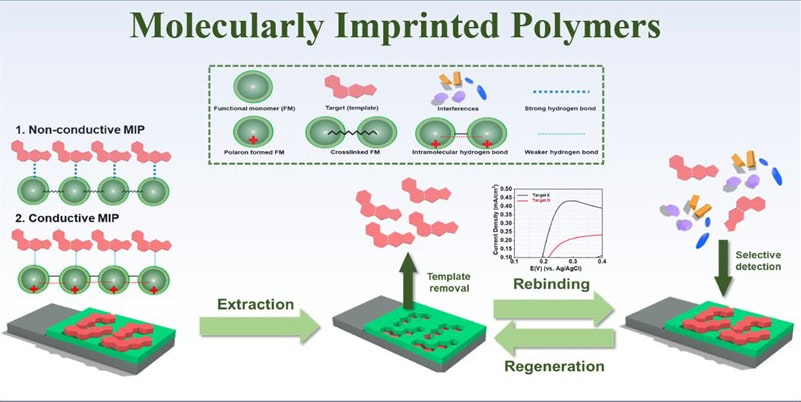
Molecularly imprinted polymers (MIPs) are synthetic receptors that can recognize target analytes through tailored binding sites, offering a stable, cost-effective and versatile alternative to natural bioreceptors. In electrochemical sensing, MIPs have attracted growing interest because they can provide high selectivity while enabling rapid, portable and low-cost detection.
This webinar will introduce the fundamentals of molecular imprinting, including binding site design, polymerization strategies, template removal and immobilization on electrode surfaces. It will then compare molecularly imprinted non-conducting polymers (MINPs) and molecularly imprinted conducting polymers (MICPs), focusing on their differences in conductivity, binding-site accessibility, reproducibility, sensitivity and selectivity. Recent advances in MIP-based electrochemical sensors will be discussed across representative applications, along with current limitations and design strategies to improve sensor performance.
The webinar will conclude with perspectives on how conducting polymers, nanomaterials and optimized molecular recognition can guide the development of next-generation selective and sensitive electrochemical sensors.

Wonhyeong Kim is a postdoctoral research associate in the department of materials science and engineering at the University of Arizona. He received his PhD in materials engineering from Auburn University, where his research focused on molecularly imprinted polymers, conducting polymers and electrochemical sensors for selective chemical and biomarker detection. His work has resulted in multiple publications in leading journals and he was the recipient of the 2025 ECS Sensor Division Student Research Award for his contributions to molecularly imprinted polymer-based electrochemical sensors. His research interests include molecular imprinting, conducting polymers, electrochemical sensors and functional materials for selective chemical sensing, with recent work expanding into advanced polymeric materials and nanomaterials for environmental applications.

The post Advances in molecularly imprinted polymers for electrochemical sensing appeared first on Physics World.
Physics research in India: a slide puzzle
Can you reconstruct the quantum computing image in our interactive slide puzzle?
The post Physics research in India: a slide puzzle appeared first on Physics World.
Image courtesy: iStock/guirong hao
Fancy some more? Check out our puzzles page.
The post Physics research in India: a slide puzzle appeared first on Physics World.
‘Little red dots’ could herald the birth of supermassive black holes
Did cocoons of dense gas shine brightly in the early universe?
The post ‘Little red dots’ could herald the birth of supermassive black holes appeared first on Physics World.
Newborn and rapidly growing supermassive black holes could be powering the mysterious “little red dots” that litter the early universe. That is the conclusion of an international team of astronomers who have found the best evidence yet for a new kind of object called a “black-hole star”, which appears to be driving a little red dot that existed just 660 million years after the Big Bang.
“A little red dot is an extraordinary object,” says team leader Rohan Naidu, of the University of Hawaii and MIT. “Somewhere within it lies a black-hole star, surrounded by a good old fashioned galaxy.”
When the James Webb Space Telescope (JWST) began observing the distant universe in the summer of 2022, astronomers were astonished to find lots of little red dots. They are highly luminous as one would expect an active black hole to be, but their spectra are odd, looking more like stars with no X-ray emission.
Some astronomers believe little red dots are dense cocoons of gas incubating a growing black hole at their cores. As the black hole accretes gas from the interior of the cocoon, it radiates energy that is absorbed by the cocoon – making it glow brightly. This is similar to how stars shine, the radiation from their core heating their outer layers. Hence these hypothesized objects are dubbed black-hole stars.
Until now, however there had only been circumstantial evidence for this hypothesis. Part of the problem is that in most cases the light from the little red dots mingles with the light from the unresolved host galaxy, clouding the observations.
Miracle or mirage?
Naidu is co-lead of the Mirage or Miracle (MoM) survey. When pushing to high redshifts (further distances) with the JWST, it can be difficult to discern whether a faint red splotch is really a high-redshift galaxy or a cool star in the foreground masquerading as something from the early universe.
Now, MoM has found a black-hole star shining 100 billion times brighter than any known star, and drastically outshining its host galaxy.
Called MoM-BH*-1, the object is incredibly luminous at longer wavelengths, but below the wavelength corresponding to the Balmer series of hydrogen emission there is no light at all. This sudden drop in luminosity is called the Balmer break and is often seen in young stars.
“In MoM-BH*-1 the Balmer break is three to four times stronger than any we’ve seen ever before,” says Naidu. “This feature alone tells us there is something truly singular afoot, and that this is a new kind of astrophysical object.”
Extremely dense cocoon
Simulations modelling the Balmer break and the object’s luminosity strongly suggest that there is a 100,000 solar mass black hole at the centre of MoM-BH*-1, surrounded by an extremely dense cocoon of gas.
“The physics of how its light is being produced by this dense gas cocoon around this black hole is radically different from what we see around us in the local universe,” says Naidu.
If the object is indeed a black-hole star, a salient question is how did the black hole form? Numerous possibilities have been raised, from the direct gravitational collapse of a gas cloud to the merger of a cluster of massive stars.
Naidu favours an explanation involving a supermassive star – an object that could have formed about 150 million years after the Big Bang when the universe was dense with hydrogen and helium. According to many popular models, these conditions spawned stars thousands of times the mass of the Sun.
Recent outburst
Naidu points to the life cycles of the massive stars in the Milky Way, which top out at a few hundred solar masses. Eta Carinae, for example, had an outburst in the 1840s that made it the second brightest star in the sky for several days. The outburst from this 100-solar-mass star left a cocoon of gas called the Homunculus Nebula. A much larger supermassive star could have had a similar outburst and then collapse to a black hole, thereby creating a black hole star.
“In the past few months I’ve seen so much evidence for this, that at this point, it is the main hypothesis that needs to be proved or disproved because the similarities to supermassive stars are uncanny,” says Naidu.
Indeed, it is possible that every supermassive black hole in the universe could be a relic of the very first giant stars created just after the Big Bang. Over time these objects would steadily erode their gaseous cocoon, eating it away from the inside-out while radiation from accretion onto the black hole would blow away the remainder of the cocoon. This is supported by a recent discovery by NASA’s Chandra X-ray Observatory of a little red dot that existed 11.8 billion years ago and from which X-rays are starting to peak through holes in its shredded cocoon.
Naidu is suitably awe-struck by the possibilities, describing how “it’s inspiring to be witnessing the birth of supermassive black holes.”
The discovery of MoM-BH*-1 is reported in Nature.
The post ‘Little red dots’ could herald the birth of supermassive black holes appeared first on Physics World.
The Quantum Kid: childhood curiosity makes physics more accessible
Our podcast guest makes science videos for young people
The post <em>The Quantum Kid</em>: childhood curiosity makes physics more accessible appeared first on Physics World.
This episode of the Physics World Weekly podcast explores how the innate curiosity of children can help make quantum mechanics more accessible to the public. My guest is Katia Moskvitch, who co-hosts The Quantum Kid video channel with her 10-year-old son Kai.
As well as interviewing leading lights in quantum science and technology – including Nobel laureates – the duo has toured science labs including CERN. Moskvitch explains how the programme’s child-led approach puts guests at ease and helps them explain difficult concepts to a general audience.
Moskvitch believes that children can be more receptive to counterintuitive quantum concepts than adults and argues that an early familiarity with quantum physics could inspire young people to study science. This, she believes, will provide a foundation for success in the burgeoning quantum sector.
This podcast is supported by American Elements, the world’s leading manufacturer of engineered and advanced materials. The company’s ability to scale laboratory breakthroughs to industrial production has contributed to many of the most significant technological advancements since 1990 – including LED lighting, smartphones, and electric vehicles.
The post <em>The Quantum Kid</em>: childhood curiosity makes physics more accessible appeared first on Physics World.
Upconverting colloidal quantum dots bring ‘colour vision’ to the infrared
The nanostructures can be incorporated into wearable eyeglasses
The post Upconverting colloidal quantum dots bring ‘colour vision’ to the infrared appeared first on Physics World.
Most people can perceive different colours in the visible range of the electromagnetic spectrum – at wavelengths between about 400 and 700 nm. However, our eyes cannot see infrared radiation, let alone perceive infrared “colours”. But now a team at China’s Beijing Institute of Technology has created colloidal quantum dot-based light upconverters that convert the infrared to the visible while preserving the spectral notion of colour. These nanostructures can be incorporated into wearable eyeglasses and, more ambitiously, could someday be implanted directly into the retina.
Photoreceptors in mammalian eyes contain light-absorbing pigments consisting of opsins and their covalently linked retinals. Infrared light at wavelengths greater than 700 nm cannot be absorbed by these photoreceptors, so when such light reaches the retina no corresponding electric signal is sent to the brain. Seeing infrared radiation could reveal otherwise invisible features and improve night vision, which relies on infrared light.
In recent years, researchers have made great strides in developing materials that capture photons with lower energies (in the infrared, for example) and re-emit them as photons with higher energies (typically visible or ultraviolet light). This process is known as upconversion, and the emitted light is said to be anti-Stokes shifted. This has led to the development of photoreceptor-binding upconversion nanoparticles that convert infrared light into visible emissions. These have been injected into mouse eyes and have been used to create wearable lenses for humans – with nonlinear upconversion projecting infrared-transformed visible light onto the cornea. While effective, these applications are limited to the narrow near-infrared (NIR) spectral range.
Confined electrons
Now, a team led by Ge Mu and Xin Tang studied a structure made up of semiconducting mercury telluride (HgTe) colloidal quantum dots (CQDs) atop an organic light-emitting diode (OLED). The OLED contains two light-emitting layers, one red-light-emitting and one cyan-light-emitting. Because of the small size of the CQDs, the electrons in them are confined in all three directions. This means that the electrons are restricted to discrete and separate atomic-like energy subbands rather than having access to a continuous band of allowed energies as they would in a bulk material.
When the CQDs absorb photons with infrared wavelengths, spanning the NIR to short-wave infrared regions, they produce excited carriers (electrons and holes) that then travel from their different energy levels into the OLED. This is a seamless process because the OLED is designed so that its electronic bands align with the sub-bands of the HgTe. When either the light intensity or the wavelength of the incident infrared light changes, explains Tang, the excited photocarriers are transported and recombined in the different emissive layers of the OLED thanks to the hole-trapping barriers that were engineered in these layers. The result is infrared-to-visible-light (red and cyan) upconversion.
Semi-transparent wearable eyeglasses
As a proof-of-concept, the researchers integrated their upconverter into lightweight, semi-transparent wearable eyeglasses and found that they can project multispectral infrared light onto the retina without affecting normal vision, so allowing the wearer to see infrared light as well as visible light. Indeed, a wearer can detect infrared light at wavelengths greater than 2 μm with a luminance of over 700 cd m−2.
Looking ahead, Tang says that the upconverter could be bound to light-sensitive proteins in the retina and so serve as an implantable next-generation retinal bionic photoreceptor. This structure would transform infrared light into visible light emissions that stimulate light-sensitive proteins on retinal neurons to bypass damaged photoreceptor cells and potentially restore visual function across both the visible and infrared.
This full colour upconverter has been a long-term project in my group, Tang tells Physics World. “Starting from an efficient single-colour upconverter, we then successfully demonstrated colour-tuneable OLEDs and Si-/Ge-/CMOS-integrated upconverters. And with our recent progress on the understanding of interfacial carrier transport between quantum dots and colour-tuneable OLEDs, we have now demonstrated this new full-colour upconverter.”
The latest work is detailed in Science Advances.
The post Upconverting colloidal quantum dots bring ‘colour vision’ to the infrared appeared first on Physics World.
Careers at the frontier of space technology
The European Space Agency recruits from all over Europe (and beyond) to further its mission of peacefully exploring and using space for the benefit of everyone
The post Careers at the frontier of space technology appeared first on Physics World.
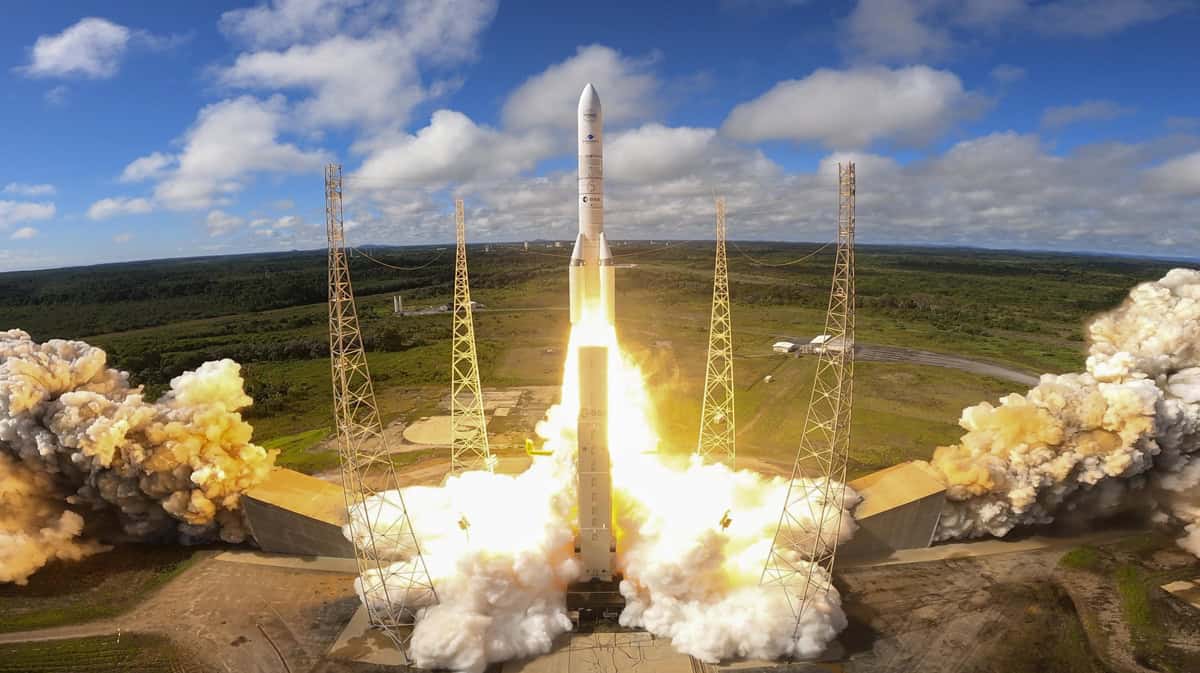
The European Space Agency (ESA) is globally recognized for its iconic space missions that push the boundaries of science and technology, whether it’s a rendezvous with a comet, landing a probe on Saturn’s giant moon Titan or mapping the stars of the Milky Way in unprecedented detail. But ESA does so much more than these headline-grabbing scientific and exploratory endeavours.
“Space is no longer solely a playground for curious minds,” says Eric Wille, ESA Head of the Opto-Electronics Section. “It’s really important for our everyday life too.” In fact, modern society relies on space technologies.
Satellite-based environmental monitoring, weather forecasting and global navigation are obvious examples, but there are many other important applications. For instance, the global financial system could not function without atomic clocks aboard satellites time-stamping millions of stock trades and digital payments every second. Similarly, when natural disasters strike, satellite networks become essential lifelines: mapping floods, tracking wildfires and helping with the co-ordination of emergency response efforts on the ground.
Fulfilling all of these roles and ESA’s bold space ambitions – from seeking answers to big questions about the universe to watching over our precious planet – requires a highly dedicated, technically proficient and multi-skilled workforce made up of scientists, engineers and various other professionals.
Diverse and challenging work
When Wille joined ESA as an optical systems engineer in 2009 after completing his PhD in experimental quantum optics, it was the sheer diversity of challenging work that attracted him. “Working in an international space agency, you’re partly a researcher, partly a project manager, partly also someone with ambassadorial skills,” he says. “That mixture is really something which I found at that time very attractive and I still like today, very much.”
Charlotte Pachot also craved a technically challenging role after her master in optics. She found it at Thales Alenia Space in France as a space engineer working on optical instruments. But after a few years, her interactions with ESA staff through joint projects convinced her to join the Agency as an optical engineer. She is now Lead Payload Engineer for the Laser Interferometer Space Antenna (LISA) mission, intended for launch in 2035, which will be the first gravitational wave detector in space.
Both Wille and Pachot have found that the technically challenging work at ESA is particularly satisfying because it has real-world impact. The first 10 years of Wille’s ESA career were largely spent on Athena (Advanced Telescope for High ENergy Astrophysics; now renamed NewAthena), a powerful X-ray observatory set to launch in the late 2030s that will provide fresh eyes on a wide range of hot and energetic processes in the universe.
In this role, Wille and the ESA team collaborated with an industrial consortium led by Dutch measuring instrument supplier cosine to develop a completely new type of optics, called silicon pore optics. Using techniques perfected by the semiconductor industry, cosine bonded and stacked many silicon plates on top of each other. By shaping the plates, a lightweight mirror to focus X-rays was created; in fact, 10 times lighter than the ones flying on current X-ray missions XMM-Newton and the Chandra X-ray Observatory.
Like Athena, LISA will also provide fresh eyes on cosmic events, but through the unique prism of gravitational waves. This will be achieved through a completely new approach involving a triangle of three satellites spaced 2.5 million kilometres apart.
Understandably, LISA calls for a unique optical bench, which Pachot is managing from design to manufacturing and testing. She sees her role as being like that of a conductor of an orchestra: a lot of her time is spent co-ordinating team members and partners, while also helping to solve technical, budget and schedule problems. For Pachot, tackling these daily friction points is part and parcel of working on real-world big science. “The instruments are very complex technically, very challenging, but they are also real pieces of hardware as part of a real project,” she says.
International community
As Wille and Pachot’s stories show, ESA selects talent from different career stages. The Agency offers several programmes that support students, graduates and experienced professionals in finding the right role for their profile and interests.
For example, university students can benefit from ESA Academy sponsorship, such as participating in hands-on projects or training sessions. They can also join ESA as interns. Graduates can apply to ESA’s Graduate Trainee Programmes where they can gain experience on actual ESA projects and develop technical and professional skills. And for those currently in industry with less than three years’ experience, the Junior Professional Programme allows them to join ESA as staff members for four years and benefit from tailored learning and development opportunities to prepare them for a long-term position.
Whichever pathway they take, once new recruits get started in their first role, an excellent employment package – including competitive salary and pension scheme, hybrid working and flexible hours, and professional development training opportunities – comes as standard.
What sets ESA apart is the multicultural work environment. Team members might come from any of ESA’s 23 Member States and nine further Cooperating States and Associate Members. And recruits can be based in more than nine locations in seven countries (France, Germany, the Netherlands, Italy, Belgium, Spain and the UK). This makes for a melting pot of cultures.
“There’s a very lively expat community,” says Wille. “At the European Space Research and Technology Centre (ESTEC) and other big sites, it’s like a small Europe.” This cultural diversity is of course intentional. “The problems we have to solve require teamwork,” says Pachot. “And this is made easier at ESA because we all see problems in a different way depending on our culture.”
Working life at ESA
Want to learn more about working at ESA? Take a look at life at ESA and what ESA offers. Quickly find out which programme could be the best fit for you by following the pathways to ESA on this flowchart.
The post Careers at the frontier of space technology appeared first on Physics World.
The physics of novel computation: beyond bits and chips to spikes and spins
Sidney Perkowitz looks into alternative computing methods inspired by physics to improve computational efficiency and power
The post The physics of novel computation: beyond bits and chips to spikes and spins appeared first on Physics World.
Modern computation ranks among the great technical achievements of the 20th and 21st centuries and touches nearly every area of human activity. Today digital computing uses billions of transistors etched onto semiconducting silicon chips to work as tiny switches that represent binary 0 or 1. The technology underlies personal phones and laptop computers, and extends to supercomputers that perform nearly one quintillion operations per second (1018 floating point operations per second, or FLOPS) and manipulate up to 100 petabytes of data.
Supercomputers can simulate otherwise intractable problems in science, from climate and weather patterns to protein folding and even black-hole interactions. However, further progress in scientific and general computation is approaching saturation because of fundamental limits, while the explosion in artificial intelligence (AI) based on large language models (LLMs) is clearly showing where computation needs to be improved. Physics is essential for this effort.
Nearing the physical limits
Back in 1965, Intel co-founder Gordon Moore famously predicted that the number of transistors we could fit onto a silicon chip would increase exponentially. He later forecasted that the number would double roughly every two years. Moore’s law has held for decades, albeit at a lower rate since the mid-2010s. More transistors meant increased computing power per chip, as well as faster computing.
That’s because smaller transistors switched between binary states more quickly, and higher transistor densities reduced the distance signals had to travel. These factors made it possible to increase “clock speed” – the frequency at which a computer’s central processing unit (CPU) synchronizes its internal operations – which helps determine computational speed. That frequency grew from tens to hundreds of megahertz in the 1970s–1990s until it reached gigahertz levels.
But by the early 2000s, the increase in clock speed with density of transistors no longer held. Transistors that switched more frequently used more power, generating heat beyond what could easily be dissipated. Essentially, clock frequencies have stagnated at 3–5 GHz.
Within this limitation, the strategy for faster computing has been to design chips for parallel processing. Modern CPUs contain “cores”, which are separate processing units on a chip that independently read and execute instructions. In a CPU with four cores, each operates at the clock rate of 5 GHz, say; but since they operate in parallel, the throughput can approach a fourfold increase.
Another, more specialized form of parallel processing was introduced in graphics processing units (GPUs). While a CPU typically has between four and 32 powerful cores that have been optimized for flexibility in carrying out different tasks, a GPU has hundreds to thousands of simpler cores, designed to deal with many data elements for such tasks as rendering images or multiplying large matrices.
GPUs have become essential for supercomputers, but they also face limits. Trouble is, not all computational tasks can be broken into parallel operations, while adding more transistors to a chip still requires more power and generates yet more heat.
Large scales and rising costs
Supercomputer-level capabilities, however, are needed to support the rising use of LLMs such as ChatGPT, which are trained on huge data-sets and can create content based on natural language. Other LLMs followed, and by 2025 up to a billion individuals, corporations and governments were using AIs globally. This enormous scale of usage is highly demanding of computational and electrical power.
LLMs need two kinds of computation. First there is training computation, which analyses massive amounts of text from books, articles and websites containing trillions of tokens – words or parts of words. The training’s aim is for the model to learn statistical patterns in a given language, and estimate the probabilities for the next token in a given sequence.
Training the largest LLMs can take up to 100,000 GPUs using tens to hundreds of megawatts, comparable to the biggest supercomputers. A few dozen of these centralized installations are estimated to be operating around the world, concentrated in the US and China.
The second type of computation is inference, where an already trained model responds to user prompts. Inference processing needs less computational and electrical power, but runs continuously to serve users. It must also respond with little latency, the time delay between request and response, so inference infrastructure is geographically distributed, not centralized.
Of about 12,000 general data centres operating globally, hundreds to a few thousand now support a large AI cluster for inference, with the number rapidly growing. With this scale of continuous operation, inference is expected to dominate long-term AI energy use.
By 2030, global data centres, driven largely by AI, are expected to consume some 1000 TWh per year, corresponding to an average load of roughly 100 GW. This is a few percent of global electricity use and the resulting waste heat must be removed, requiring millions of gallons of water for some facilities. This heat discharge, along with the necessary additional electricity generation, will have a significant impact on the environment.
That’s provoked reactions to AI infrastructure, both from communities objecting to local data centres and governments concerned about national power grids. Scaling today’s relatively few specialized supercomputers to many large AI centres around the world carries significant costs, not to mention AI’s uncertain societal impact. As AI stretches resources, researchers are keen to rethink the very nature of computation.
Building a better bit
The use of electronic circuits to carry out binary logic, which defines modern computation, was mathematically formalized by the US mathematician Claude Shannon. In 1937 he showed that on/off electrical switches, arranged in what we now call a “logic gate” (based on the true/false logic George Boole invented in the 19th century), can carry out arithmetic as well as logical decision-making.
This approach has been embodied in computers, first using electromechanical relays, then vacuum tubes, followed by discrete transistors, and finally CMOS (complementary metal-oxide-semiconductors) integrated circuits. Each succeeding generation has slashed the energy required for a single binary switching event – for example, from nanojoules for an older discrete transistor to femtojoules for a transistor in a modern CMOS chip.
But this gain has been far outstripped by the rapidly growing volume of computation. Despite improved energy efficiency, our increasingly computerized world demands more electrical energy. Fortunately, there are other, more efficient ways to encode binary information using physical systems that support two stable states: the horizontal or vertical polarization of a photon; the up or down orientation of the spin magnetic moment of an electron; or persistent superconducting currents circulating in opposite directions.
Each approach has its own advantages and drawbacks. Photon-based computing offers high speed and reduced resistive heating; but it is difficult to store photons. Superconducting currents offer high speed, and require low energy per operation. But the energy cost for cryogenic cooling at 4 kelvin, hundreds of watts per one watt of heat removed, diminishes or wipes out the energy advantage.
“Spintronics” technology, however, has been the most successful of the three. Its basic device is the magnetic tunnel junction (MTJ), where a thin insulating barrier separates a “reference” and a “free” magnetic layer. The device’s electrical resistance depends on whether the magnetizations of the layers are parallel or antiparallel.
MTJs exist in hard disk drives and can also serve as read-write units in a magnetoresistive random-access memory (MRAM). To read, a small current is passed through the MTJ, and the resulting voltage shows the state of the bit. To write, a larger current is applied. The fixed layer polarizes the spin of the electrons, which carry angular momentum as they tunnel into the free layer.
This flips that layer’s magnetization, switching the magnetic bit, whose state survives even without power. That’s a key advantage of MRAMs compared to volatile CMOS RAMs, which require power and lose their stored data without it. MRAMs are not yet competitive with CMOS RAMs, but are already used in automotive, aerospace and other applications where their non-volatile nature is essential to reduce power needs and maintain their data under extreme conditions.
Along with this benefit, new possibilities for spintronics are emerging. In 2024 Nuh Gedik at the Massachussetts Institute of Technology (MIT) and colleagues reported that they had rapidly induced magnetism in iron phosphorus trisulfide with light (Nature 636 609). FePS₃ is an antiferromagnet where atomic spins in opposite directions result in little or no net magnetic field. The researchers found that picosecond pulses of terahertz light produced magnetic states that persisted for milliseconds – far longer than any other reported light-induced magnetism (see box below).
Metastable magnetization
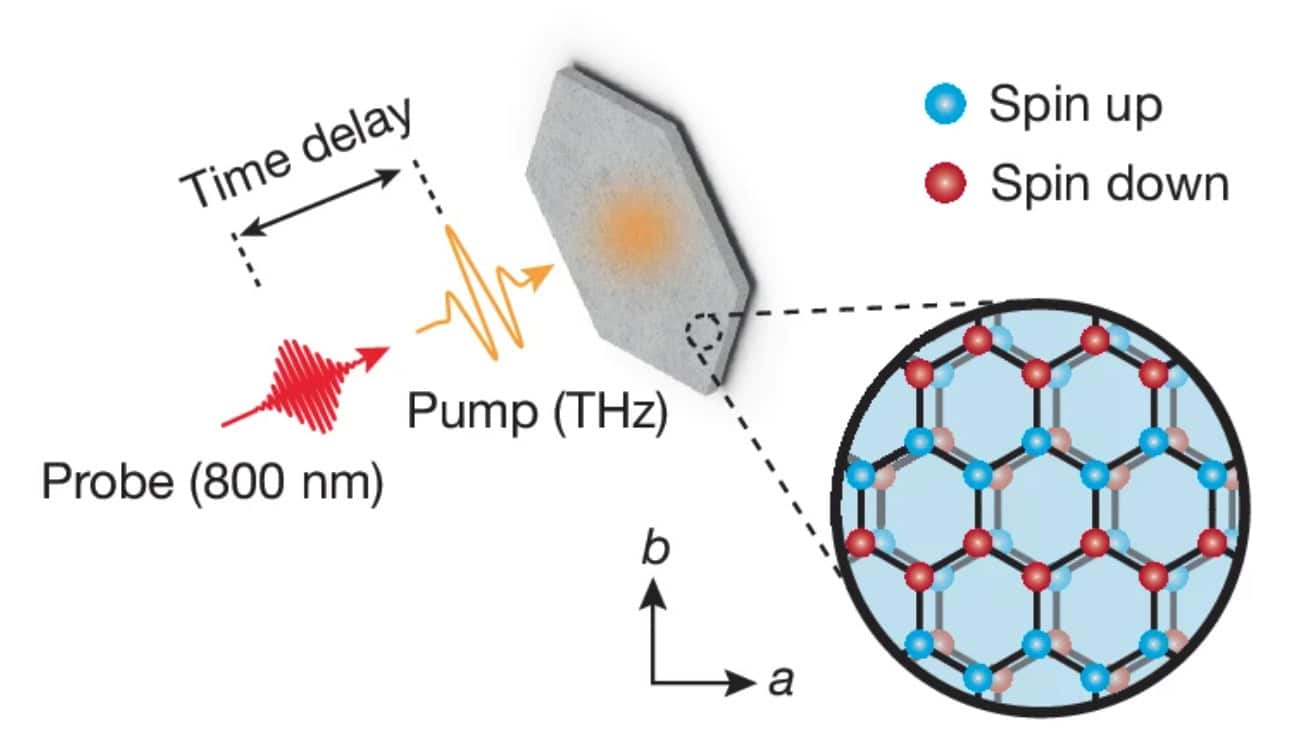
Shown here is the experimental set-up that an international team of physicists use to produce a long-lasting, light-driven magnetic state in a material such as iron phosphorus trisulfide (FePS3), which becomes antiferromagnetic when cooled below about 118 K. They used an intense terahertz-frequency (THz) pulse (orange) to drive low-energy collective excitations, which induce transient changes in optical properties that can be probed with an 800 nm probe pulse (red). Fe2+ ions form a hexagonal lattice and their spins arrange ferromagnetically along the zig-zag chain (a-axis) and antiferromagnetically between the adjacent chains (the structure in the circle). The magnetic coupling between the layers is antiferromagnetic together with a small interlayer shear distortion along the a-axis. The THz pulses put the material in a metastable magnetic state that lasts for more than 2.5 milliseconds even after the light source is switched off.
Earlier this year, researchers at Beijing Normal University in China found that light-induced magnetic transitions consume little energy (ACS Nano 20 9051). If magnetic bits become competitive with electrical ones – activated by light or otherwise – they would unite working memory and long-term storage in one computational stage rather than two as we now have. Magnetic bits could also play a role in a bigger change in computer structure.
Bringing it all together
A novel form of computer architecture could also remove a famous bottleneck in computing that dates back to the influential 1945 proposal by the mathematician John von Neumann for a general computational design. He suggested using separate processing and memory (first put forth in 1837 by Charles Babbage for his mechanical “Analytical Engine”) but added the idea of the stored program.
By holding the instructions for computer operations in memory along with data, a computer program makes computation more flexible but has one big drawback. Data and instructions have to shuttle between processor and memory along the same channel, reducing computing throughput and using more energy than processing – the “von Neumann bottleneck”.
Novel computing: liquids, soft solids and deuterium
At the heart of modern computing technology are ultra-pure silicon wafers. These nearly perfect regular crystalline solids form the substrates for integrated circuits, making it all the more surprising that less ordered materials – such as liquids and soft solids – have their own history in computation.
In 1949, for example, the UK-built Monetary National Income Analogue Computer (MONIAC) simulated the flow of money within a national economy using coloured water moving through transparent tubes under gravity. Water levels representing economic conditions were set by pumps and valves. As the water negotiated the system, it dynamically illustrated how parameters such as tax rate affect an entire economy, eventually settling into equilibrium.
Another liquid – mercury – also appeared in the early days of electronic computing. The first commercial unit in the US, UNIVAC I (1951), stored nine kilobytes of data as sound pulses continually recirculating in tubes filled with liquid mercury acting as delay lines. The units, which were bulky and heavy, provided serial rather than random access because the pulses travelled in sequence. Timing was crucial, and the mercury was held at a constant 40 °C to keep the speed of sound stable. Another early computer, EDVAC, also stored data in liquid mercury.
Since the 2000s researchers have shown that tiny droplets of oil, moving through small channels filled with water, can implement binary logic. If a droplet blocks a channel, a second droplet arriving behind it is diverted into another channel, representing a “decision”. Proper design can emulate the Boolean logic that underlies conventional computing. With channels only 100–200 µm across, microfluidic logic could route and process small samples, providing a lab on a chip for chemical analysis, biological research or medical diagnostics.
Yet another liquid – one more exotic than mercury – and a soft solid were apparently at least considered for computation in the same era as UNIVAC 1. According to Iain Dey and Douglas Buck’s 2017 biography The Cryotron Files: the Strange Death of a Pioneering Cold War Computer Scientist, the MIT scientist Dudley Buck once worked on a data storage system using magnetic pulses in liquid deuterium held at cryogenic temperature. In that Cold War era, US government money was available for any research that might help America and the authors describe how some of it also went on studies into a soft, wobbly foodstuff, lemon Jell-O as well as the viscous semi-liquid hair preparation Wildroot Creme Oil, which might also support sound waves in a memory unit. None of this Cold War research panned out, although at least the Jell-O experiments could treat the entire lab team to dessert.
One solution is to carry out processing and memory functions in the same physical element, potentially using a new type of electric circuit element originally proposed in 1971 by the US electrical engineer and computer scientist Leon Chua. Its resistance depends on the accumulated charge and, since charge is the time integral of current, therefore carries a memory of the device’s past electrical activity.
Chua dubbed his new element a memory resistor or “memristor” – and the concept can be used when a read-write MTJ holds a memory of past electrical activity as a magnetic bit. In 2026 Shahar Kvatinsky at the Israel Institute of Technology and colleagues showed that small MRAMs formed from MTJs can perform logical operations inside memory (Adv. Electron. Mater. 12 e00348).
In principle, therefore, this could also provide arithmetic processing inside memory, thereby removing the von Neumann bottleneck. The non-volatile memory would also save energy relative to CMOS memory. Problems remain though, such as reducing noise and producing large-scale MRAMs – but the ability to merge memory and computation within MRAMs has been established at small scales.
Certain material structures can also play a dual function. The wonder-material graphene – a 2D hexagonal lattice of carbon atoms – is electrically conductive when a voltage is applied in its plane, driving the electrons. If the graphene sheet is also placed between proton-conducting electrolytes, a second voltage applied across the sandwich produces a proton current (a flow of positive charge) perpendicular to the plane.
In 2024 Marcelo Lozada-Hidalgo at the University of Manchester and colleagues found that certain values of electron density in this structure make the graphene an insulator (Nature 630 619), producing a reversible change from conducting to insulating that forms a non-volatile two-state memory. Their set-up allowed the researchers to perform logic and memory operations in a single device for the first time.
As graphene, MRAMs, and other approaches are under study for in-memory computing, another method emulates a natural process – and is perhaps the biggest departure from conventional computing.
Dual purpose
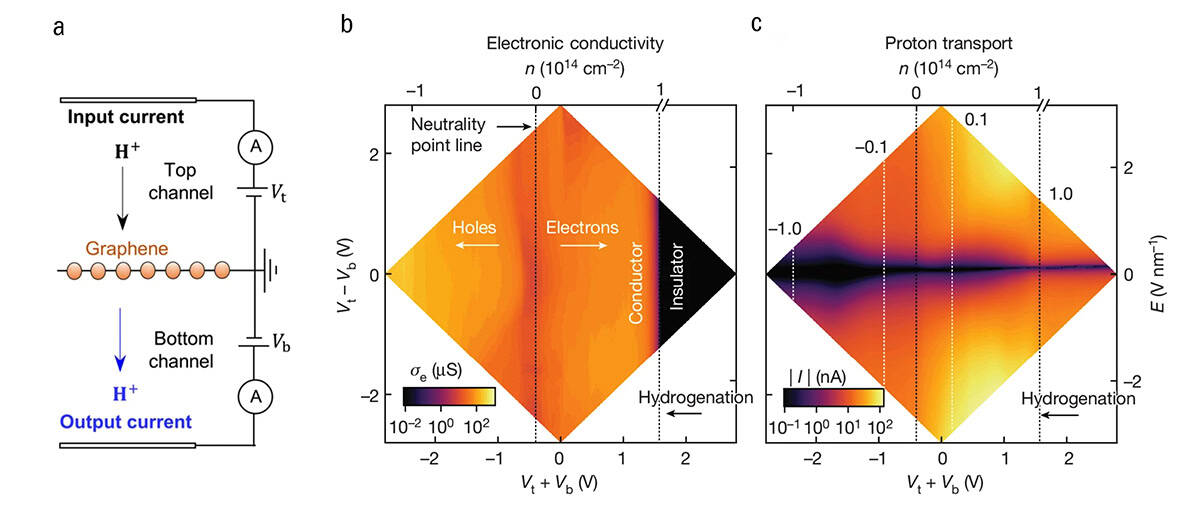
(a) Graphene is well known to be a good electrical conductor, but in 2024 an international team of researchers used the 2D substance to make a new electrically-controlled switching device that supports both memory and logic functions. The device exploits graphene’s ability to conduct protons as well as electrons. The team showed that placing a sheet of it between proton-conducting electrolytes also produces a proton current perpendicular to the plane, with the proton and electron transport allowing independent control of field and charge density. Shown here are the top and bottom voltages and the direction of electron and proton flow. (b) Map of in-plane electronic conductance, σe, as a function of electric field E and charge density n. The left and bottom axes show that these variables are controlled by the difference and sum of the top and bottom electron voltages, respectively). (c) Map of proton transport current, I, as a function of E and n.
Copying biology
In the 1980s, Carver Mead – a Caltech physicist and engineer who had been instrumental in developing integrated circuits and deeply understood the physics of computing – made a radical proposal. Instead of building computers around centralized digital logic, we should instead design them to imitate the strategies that make the human brain highly efficient. He coined the term “neuromorphic” computing for this approach and is widely considered its founder.
Using specific biological and biophysical features, the brain performs its cognitive and sensory tasks at the modest power of 20 watts. Its 86 billion neurons do not constantly use energy, but act sparsely in response to events, firing brief electrical spikes at definite timings and rates. A system like this can be expected to save energy compared to a conventional computer, which steadily consumes energy at the CPU clock rate.
Also, there is no von Neumann bottleneck in the brain. Information is stored as changes in synapses: the ~1014–1015 connections among neurons that control signal flow. As a spike arrives, a synapse immediately applies its stored information. The modified signal is passed on to neurons that repeat the cycle. Storage and processing occur together within this closely linked 3D network, which also operates in a massively parallel manner.
Mead had envisioned an analogue neuromorphic design, but in practice the biological features are expressed digitally to match CMOS technology. For example, in 2017 Intel introduced its Loihi chip with event-driven spiking and closely connected computation and memory. A later model was reported in 2025 (arXiv:2503.18002) that trebled the throughput for matrix multiplication – the main computationally-intensive operation needed to train an LLM – with half the energy a standard GPU chip uses.
Similarly, in 2014 IBM built and tested a chip that emulated spiking behaviour, while a later version, dubbed NorthPole, does not use spiking. In 2025, meanwhile, IBM researchers reported that 288 linked NorthPole chips could carry out AI inference on certain sizes of language models at favourable speeds and power usage.

The future of computing and AI
Most of the novel approaches are in the proof-of-principle or pre-commercial phase and may never reach wide use, for both economic and engineering reasons. The investment in CMOS technology and the associated computer architecture is enormous. Any overall change would be a massive undertaking. Although a neuromorphic chip might be more efficient, it would require huge investment to be formally adopted by today’s markets and chip-making industry.
Even so, there are valuable lessons to be learned from the research into novel approaches – such as better integration of memory and computation. There is also a consensus that hybrid solutions can yield immediate benefits. An accelerator unit, such as a bank of neuromorphic chips, integrated with CMOS technology, could increase speed and decrease power use for the critical matrix multiplication stage. Upgrades like these can be included as new supercomputers and AI centres are being built, improving general and AI computation and reducing their energy costs.
We should also think of the problem from the other end: yes, we can now produce a form of AI based on LLMs. But this is ultimately a brute-force approach that demands a great deal of time, money and resources. It should continue to be refined, but there should also be space for bold ideas that may lead to better and more sustainable forms of AI, and of the computation it requires.
The post The physics of novel computation: beyond bits and chips to spikes and spins appeared first on Physics World.
Seven writers, four physicists, one room, lots of plushies
Robert P Crease attends a workshop bringing physicists and journalists together
The post Seven writers, four physicists, one room, lots of plushies appeared first on Physics World.
How many times have you wanted to throttle a journalist? Do you ever get incensed about articles, podcasts or videos that simplify, dumb down or belittle your research? Don’t you ever want to teach a science writer the basics?
Earlier this summer the US quantum physicist Christopher Fuchs got the chance. Thanks to some funding at the end of a grant cycle, Fuchs arranged a face-off between science journalists and writers, and a philosopher (me) at Royal Holloway, University of London. But the meeting wasn’t all about Fuchs having a big fat moan; he also gave the journalists the chance to push back.
Fuchs, who is from the University of Massachusetts, Boston, is the principal expositor of QBism, originally an acronym for “Quantum Bayesianism”, a research programme devoted to trying to figure out what the world must be like if quantum formalism is correct. But even top-flight writers, Fuchs thinks, get it wrong. And so emerged his idea for the workshop, called “Communicating QBism”.
Attendees at the workshop, besides Fuchs himself, included his collaborator Rüdiger Schack from Royal Holloway – the gracious host of the meeting. There was also John DeBrota, who’s a postdoc at Ludwig Maximilian University, Munich, and Matthew Liefer, associate professor at the Institute for Quantum Studies at Chapman University, California.
The science writers were all experienced. One was Philip Ball, the author of some 30 books who has a PhD in physics and contributes regularly to Physics World. Jo Marchant, the sole female writer to attend, has a PhD in genetics and medical microbiology and is a New York Times bestselling author who recently wrote for New Scientist on QBism.
The four other writers were Robert Henderson, who has a PhD in quantum field theory; George Musser, who has a PhD in planetary science and is a contributing editor at Scientific American; Ulf von Rauchhaupt, a science editor at the Frankfurter Allgemeine Zeitung who has a PhD in extraterrestrial physics; and Zack Savitsky, a physics correspondent for Science.
I was invited at the last minute as a philosopher and writer who might find value in the event. I did.
Pugnacious and self-deprecating
Royal Holloway’s wooded campus on the western outskirts of London is dominated by the Founder’s Building, a beautifully ornate late-19th-century red-brick castle-like structure modelled on a French chateau with a central courtyard. But that’s only where we ate. Fuchs’s face-off, which took place on June 18–19, was holed in a modest modern science building down the hill.
Fuchs, whom I’ve met and written about several times, including for Physics World and a philosophy journal, is charmingly pugnacious. He approaches talks and conversations with unwavering zest and easily out-talks critics. He is relentless in pointing out even years-old mistakes to journalists and writers [editor’s note: I can confirm this]. Yet Fuchs can also be endearingly self-deprecating.
If you didn’t know Fuchs, you might be forgiven for thinking that he had an inquisition in mind. “I explain the ideas until I’m blue in the face,” the invitation ran, but you journalists are “pretty deficit in getting QBism right”. He continued, “What is it that makes QBism so damned hard to understand for journalists and the lay public?”
Fuchs then described himself as “communication impaired” – which was disingenuous. Based on Shack’s estimate, he’s sent about 150,000 QBism-related e-mails, he’s got “3 Million Miler” status from American Airlines thanks to his trips to give talks, and he was a lead speaker at the Helgoland conference on the centenary of quantum mechanics last year.
Some invitees were cautious, even sceptical. “QBism isn’t just another quantum physics interpretation”, Marchant replied to Fuchs’s invitation. “You’re challenging ideas of what physics is even about and requiring a radically different conception of what nature is”. Ball, meanwhile, perceptively reminded Fuchs that QBism is so novel that “the misrepresentations don’t just come from journalists”.
As for Musser, he warned Fuchs that the encounter may not be pleasant. “We will need to have free, open and frank discussions”, he responded, that may be “infuriating to you”. He counselled Fuchs to bring “plenty of plushy toys” for participants to safely throw at each other.
Fuchs’s invitation, however, also expressed warm and genuine respect for the coterie of science writers, who all agreed to come. Still, Fuchs brought a box of plushies just in case.
Speaking about science
On the meeting’s first day, the writers listened and learned. Schack opened the workshop by going over QBism’s vocabulary. “Probability” is not a property of things but refers to the expectations that an experimentalist has about outcomes of an action they are about to take. “Measurement” is that outcome.
“Quantum formalism”, meanwhile, is a tool that any experimentalist can use for making the best estimate they can about which outcome they will get. “Quantum states” are not properties of the world but compendia of probabilities to inform the agent about which actions they ought to take to achieve their goals.

After Schack, Fuchs gave a talk showing that QBism is neither a philosophical add-on to quantum theory nor something motivated by an attempt to resolve issues to do with entanglement, Bell inequality violations, and so on. Rather, QBism is the only satisfactory coherent account of what the world must be like if the quantum formalism is correct.
Fuchs quashed the idea that QBism is solipsistic; quantum formalisms, he pointed out, have been hammered out for a century and can be picked up by anyone as the best guide to their laboratory experience. He vented ire over stories that use the word “observe” and visual images to characterize what experimentalists do as if they were flies on the wall rather than actors in measurement events.
When Fuchs complained about a clause in an article by Savitsky which suggested such an interpretation, the writers cried “Foul!”. They accused Fuchs of “niggling” about a few words in a lengthy 4000-word article. When Fuchs replied, “I want to niggle over words!” he dodged a plushie.
Learning about writing
On the second day of the meeting, it was the scientists’ turn to listen and learn. Henderson talked about his struggle to “think like a QBist”, explaining how, during the Covid-19 pandemic, he joined Fuchs’s weekly Zoom sessions known as “QBukis”. These made him feel like he had come across “a more advanced civilization of aliens maybe, to whom premises I’d never thought to question were deemed antiquated and naïve”.
Henderson had an epiphany one day when he saw a bird hopping across his snow-covered lawn. The bird, he realized, was not a thing-in-itself but “the designation of a bundle of expectations” that he was bringing to bear to recognize it. What’s most challenging in learning to think like a QBist, Henderson concluded, is that QBism is “playing a different game than the rest of physics, or even science”.
Marchant followed with a talk entitled “Why QBism keeps getting misheard”, in which she showed a picture of a tennis player about to smash a rocketing tennis ball. What was happening, she said, wasn’t just body movements and ball trajectories – but a process of unfolding and continually updated predictions of actions.
QBism sees experimentalists like that tennis player, Marchant said, shepherding new events into the world, but it’s unintuitive to think that way. “QBism isn’t just another quantum physics interpretation,” Marchant said; “you’re challenging ideas of what physics is even about and requiring a radically different conception of what nature is and how we are related to it”. This, she concluded “is always going to be difficult”.
Ball pointed out that journalists are forced to keep in mind “mental attractors” that entice the public, journalists and even scientists to think in classical rather than quantum terms.
Between talks, the writers cited other constraints, such as time, money, audience and the space allotted by editors, all of which shape and dictate their output. Furthermore, writers are sometimes forced to use words whose meanings vary from their technical use.
At one point Fuchs showed a slide of Marchant’s New Scientist article and complained about the word “perspectives” in the standfirst. But Marchant and others objected that Fuchs’s “Gotcha!” play was again committing a foul; writers must lead readers gently into difficult stories with prose that sometimes must violate what researchers mean. “We have to write so people keep listening,” Marchant pointed out.
Impressed, Fuchs had to admit that he does something similar in his lectures, not leading with his most radical ideas but holding off until later.
One scientist then asked why writers don’t routinely run stories by sources before publication. Even if you accurately regurgitate the sources’ words, the writers replied, they often insist on changes, demand that their editors alter or retract the story, heap abuse on you, or even threaten to sue, causing the magazine to drop your article.
When a writer asked why scientists should even care about representations of their work in the media, the answers were difficult to synthesize. They ranged from the noble wish to nurture a scientifically literate public to the self-interested hope that good coverage might influence public perceptions and thus lead to more money from funding agencies.
But what’s hardest writing about QBism, explained the writers, has to do with Henderson’s “civilization of aliens” and Marchant’s “keep ‘em listening” points. Readers instinctively think, contra QBism, that the world has permanent residents and chiselled-in laws. The tennis player’s dive for the ball can always be reconstructed afterwards from a god’s-eye perspective in terms of classical physics, and it’s second-nature for both the public and even scientists to assume that the end of physics is to make such reconstructions.
The critical point
Years ago I wrote a column “The press is a foreign country” whose message was that communicating science is like engaging with another culture. Science and the media, I wrote, are separate institutions with different values, traditions and methods and reasons for seeking and justifying knowledge. The cross-cultural interaction, though, cannot always be made trouble-free, with all conflicts reconcilable by facilitators or relationship counsellors.
Given the qualifications of the participants at “Communicating QBism” – all but Zack had PhDs – one might have thought that the cross-cultural interaction at the workshop would be relaxed. It was, for the most part. But good scientific communication, it emerged, is not always a matter of clear explanations, demonstrations of relevance, dazzling imagery, or scientifically literate journalists.
Positive interactions may require constantly negotiating trade-offs between accuracy and comprehensibility, as well as setting up flinty encounters in which both scientists and writers actively hunt down and expose their own assumptions. These encounters must risk conflict and discomfort on both sides. Good science communication, in short, can use some genial pugilism, and Fuchs’s workshop was an excellent example.
The post Seven writers, four physicists, one room, lots of plushies appeared first on Physics World.
Fast radio bursts reveal that the universe’s ‘missing matter’ is found far from galaxies
Counterintuitive finding could help us better understand how highly energetic galactic activities impact the formation of cosmological structures
The post Fast radio bursts reveal that the universe’s ‘missing matter’ is found far from galaxies appeared first on Physics World.
By analysing the signals from extragalactic fast radio bursts, astronomers at the Massachusetts Institute of Technology (MIT) say that the “missing matter” in the universe is distributed further away from galaxies than most theoretical simulations predict. Their finding – which is counterintuitive since the gravity from galaxies tends to pull everything closer to them – could help us better understand how highly energetic galactic activities, such as jets from supermassive black holes and explosions from old dying stars, impact the formation of cosmological structures.
“Ordinary” matter, which is built from atoms and their protons and neutrons (collectively known as baryons), makes up stars and galaxies and everything we see around us. However, the best models of the universe we have today suggest that close to 90% of this baryonic matter is “missing”.
The radio signals of FRBs are stretched
As their name implies, fast radio bursts (FRBs) are brief, intense bursts of radio waves spanning multiple wavelengths. They were first detected in 2007 and since then, astronomers have spotted thousands of others, including some within our own galaxy. They are thought to originate from cataclysmic processes involving compact celestial objects such as neutron stars and typically last a few milliseconds or even less. And these FRBs can be used to probe the missing baryonic matter.
As they pass through the missing matter, the radio signals of FRBs are stretched (or “dispersed”) over time – that is, their overall duration becomes longer. The more missing matter they pass through, the more the signals are dispersed. The missing matter has an extremely low density – of just a single proton per cubic metre – so it is extremely difficult to identify, but researchers recently found that they could use the dispersion effect to detect it. In that previous study, they confirmed that intergalactic space, which contains most of the universe’s baryons, is home to tenuous clouds or filaments of diffuse plasma that make up the missing matter.
Data from CHIME and DESI
In the new work, a team led by astrophysicists Haochen Wang and Kiyoshi Masui has now gone a step further and mapped the extent to which this plasma extends. They did this by cross correlating the locations of millions of galaxies with the dispersion of nearly 3000 background FRBs on length scales of 0.1 to 50 Mpc.
The researchers used data from the Canadian Hydrogen Intensity Mapping Experiment (CHIME) catalogue and the Dark Energy Spectroscopic Instrument (DESI) survey. CHIME, a large radio telescope located in British Columbia, scans the entire northern sky for incoming radio waves and it can detect ultrashort, ultrabright radio signals. Indeed, it has detected about 4000 FRBs since it became operational. DESI, for its part, is an instrument mounted on the Mayall Telescope at Kitt Peak National Observatory, near Tucson, Arizona. It makes detailed measurements of the light coming from over 30 million galaxies – originally to provide estimates of dark energy, the mysterious force that is driving our universe’s expansion.
In all, the researchers detected 2870 FRB signals with CHIME and correlated these with the locations of around six million galaxies with DESI.
Missing baryonic matter scattered across a large radius
Their analyses revealed that on scales smaller than about 1 Mpc, the missing baryonic matter was indeed found around galaxies and galaxy clusters, but rather than being close to galaxies in a dense ball as expected, it was scattered across a large radius. “A galaxy is maybe a few 100,000 light years across, and we found missing matter out to about four million light years,” Masui says. “That’s further than the simulations predict.”
The new result backs up the idea that missing matter is projected out from a galaxy through highly energetic events, such as jets from supermassive black holes and explosions from old dying stars. These processes could be much more energetic than we think, note Wang and Masui, and they are stronger and much more violent.
The work, which is detailed in Physical Review Letters, proves that FRBs are a good way to study large-scale structures in the universe – in a similar way to how cosmologists have been using galaxies and the cosmic microwave background for decades, says Wang. “It has helped to establish FRBs as a new cosmological probe, especially for detecting the missing matter.”
FRBs will only become a more popular tool in this context, he adds, especially given that several new radio telescopes, with upcoming surveys such as CHORD, DSA-2000 and the SKA, are being constructed around the world to offer much better FRB data in the coming years. “Indeed, we have already received more FRB data from our telescopes and are working on expanding our study,” Wang tells Physics World.
And that is not all: the researchers say they are also busy improving their analysis technique. “Until now, we have mostly examined the dispersion of FRBs but we are now working on extracting information from FRBs’ spatial positions relative to galaxies. This will reveal more details on how the missing matter is distributed in the universe.”
The post Fast radio bursts reveal that the universe’s ‘missing matter’ is found far from galaxies appeared first on Physics World.
Do exceptional-point sensors really measure better?
New research shows that sensors based on exceptional points can beat ordinary sensors in ideal quantum-limited measurements, but only if the light input, loss rate, and the perturbation being measured are carefully matched
The post Do exceptional-point sensors really measure better? appeared first on Physics World.
Exceptional points occur in open physical systems where two or more resonances merge so completely that both their measured values and their underlying states become identical. (Technically speaking, the eigenvalues and the eigenvectors coalesce.) Exceptional points are different from ordinary degeneracies, where two frequencies may be the same but the corresponding states remain separate.
Near an exceptional point, a tiny change in the system can produce a relatively large change in the resonances. That is why exceptional points have been proposed for sensitive devices such as optical sensors. But there is a catch: a large response is not automatically useful if quantum noise also increases at the same time.
In a new paper, researchers Jan Wiersig and Stefan Rotter tackled this problem using quantum Fisher information. This is a quantity that sets the best possible precision of a measurement under ideal conditions.
Their approach treats the sensor as a scattering device, where incoming coherent light is transformed into outgoing light, and asks how much information about a small perturbation can be extracted from that change.
The results are, unsurprisingly, complicated – but that complexity turns out to be revealing.
For several years, different groups have reached seemingly contradictory conclusions about whether exceptional points actually improve sensing at the quantum limit, with some studies reporting a clear advantage and others finding none. Wiersig and Rotter’s analysis helps explain these disagreements: the answer depends on the physical assumptions and, in particular, on how the input light, losses and perturbation are matched to the resonant modes.
The analysis therefore does not yield a simple yes-or-no verdict. Under suitably matched conditions, exceptional points can provide substantially more quantum Fisher information. For example, a factor-of-four enhancement for a second-order exceptional point in a two-microring system, and an even larger enhancement in the third-order case.
What’s more, the optimum operating point need not be the exceptional point itself. Moving slightly away from it can produce linewidth splitting, creating a longer-lived mode that interacts more strongly with the perturbation and thereby increases the useful signal.
The take-home message is that exceptional points are not magic sensitivity boosters. They can provide an advantage when the light field, perturbation and resonant mode are well matched. Internal losses may weaken or remove this advantage, although small losses do not destroy the overall picture.
Future exceptional-point sensors will therefore need to be designed as complete measurement systems, rather than around the exceptional point alone.
Read the full article
Fundamental limits of non-Hermitian sensing from quantum Fisher information – IOPscience
Jan Wiersig and Stefan Rotter 2026 Rep. Prog. Phys. 89 067501
The post Do exceptional-point sensors really measure better? appeared first on Physics World.
Quantum effects in chemical reactions
New research shows that chemical reactions in an ultracold quantum gas can generate entanglement and transfer phase information from atoms to molecules
The post Quantum effects in chemical reactions appeared first on Physics World.
Chemical reactions are usually modelled as random, statistical events, with particles bumping into each other and rearranging according to energy and probability. But at extremely low temperatures, atoms and molecules can behave as coherent matter waves, meaning many particles share a common quantum phase. In this setting, a reaction can look less like classical chemistry and more like wave mixing in optics.
In order to learn more about this phenomenon, a team of researchers from the University of Chicago studied a gas of caesium atoms, cooled down to 11nK to form a Bose–Einstein condensate.
Their approach was to use a Feshbach resonance to initiate the chemical reaction. This resonance is a way of using a magnetic field to tune how strongly ultracold atoms interact with each other.
At this point, two atoms can couple strongly to a bound molecular state, so pairs of atoms can be converted into weakly bound caesium diatomic molecules. Using this technique, they were able to transform an atomic Bose–Einstein condensate into a molecular Bose–Einstein condensate, consisting of about 10,000 molecules.
Their key result is the observation of phase doubling. This is the matter-wave version of phase matching in second harmonic generation, where two red photons in a nonlinear medium combine to produce one blue photon with twice the frequency and twice the momentum. Here, two atomic matter waves combine into a molecular matter wave whose phase is twice the atomic phase.
They also showed that molecules formed from atoms in different momentum states were enhanced beyond a classical expectation. This allowed the team to identify non-separable, entangled two-atom momentum states created during the reaction.
This work is one example of quantum many-body chemistry, where reactions are governed by the shared quantum phase of many atoms and molecules. This is also similar to how the direction of a Josephson supercurrent is determined by the phase difference across its junction.
Read the full article
Observation of phase doubling and entanglement in coherent matter-wave reactions – IOPscience
Shu Nagata et al 2026 Rep. Prog. Phys. 89 060501
The post Quantum effects in chemical reactions appeared first on Physics World.
Semiconducting nanorods help laser-powered drones keep cool
Researchers incorporate a heat blocking technology into the solar cells onboard remote uncrewed aerial vehicles
The post Semiconducting nanorods help laser-powered drones keep cool appeared first on Physics World.
Remote uncrewed aerial vehicles (UAVs), or drones, equipped with solar cells could be wirelessly charged using laser beams directed at them from the ground, rather than relying on traditional onboard batteries. The problem until now, however, has been keeping the drones cool – since laser light heats them up, so reducing the efficiency of the photovoltaic cells they carry on their wings. A team of researchers at the Civil Aviation University of China has now overcome this problem by incorporating a heat blocking technology based on antimony selenide (Sb2Se3) nanorods into these solar cells.
As drones take on longer missions, battery life has become one of the biggest barriers, explains Jianhua Han, who led this new research study. “Our team has been looking into laser wireless power transmission, which is a leading approach for long-distance wireless energy transfer, to replace these batteries.”
Laser wireless power transmission is particularly suited to aerospace applications such as UAVs equipped with photovoltaic cells. Perovskite solar cells show much promise in this context because they are cheap to manufacture, absorb light strongly in the visible part of the electromagnetic spectrum and have long charge-carrier diffusion lengths.
A perovskite laser cell-thermoelectric tandem device
In the new work, detailed in Matter & Light, Han and colleagues studied a type of solar cell known as a perovskite laser cell-thermoelectric (PLC-TE) tandem device, which consists of a carbon-based CsPbBr3 perovskite as the PLC and bismuth telluride (Bi2Te3) as the TE material. The TE module is directly fixed beneath the laser cell and a carbon electrode is attached to its negative terminal to create a series connection. When laser light is shone onto the device, the carbon electrode converts a portion of the incident laser energy into heat. The TE then harvests this heat, converting it into electricity through the thermoelectric effect.
And that’s not all: since one side of the device ends up being warmer than the other, this temperature gradient also helps convert the thermal energy into electricity. The larger the temperature gradient, the more electricity the TE layer can generate.
There is a problem though: while the carbon in the hybrid structure dissipates some of the heat produced by the laser, the structure can still heat up – reaching temperatures of up to 90°C, says Han. “That was much higher than we expected and made us realize that heat buildup was a far more serious problem than we had imagined.”
Sb2Se3 behaves like a thermal barrier
To overcome this problem, the researchers turned to Sb2Se3, which is a promising photovoltaic material. As well as its good optoelectronic properties, this semiconductor also has a low thermal conductivity, which allows it to behave like a thermal barrier when embedded in a device.
Han’s team synthesized nanorods from the Sb2Se3 and incorporated them into the upper portion of the CsPbBr3 layer. The Sb2Se3 reduces heat dissipation in the carbon electrode and so helps maintain a significant temperature gradient in the TE device, thereby improving its overall energy conversion efficiency. Its thermal barrier properties also help decrease the PLC’s overall operating temperature during prolonged laser exposure.
The team then inserted the tandem device containing the Sb2Se3 nanorods beneath the wing of a stationary drone and carved out air channels through the wing to simulate real-world airflow conditions. When illuminated with high-power green laser light with a wavelength of 520 nm, they found that the device converted 38.49% of the incoming laser energy into electricity and successfully powered the drone’s propellor blade. This power conversion efficiency, says Han, is among the highest reported for this class of technology operating under similar conditions.
Device could help UAVs stay airborne for longer
“In terms of concept, this is the first time that a system-level scheme of the devices has been applied to a UAV power supply, expanding the work from pure materials research to application-oriented system design,” Han tells Physics World. “It demonstrates that powering UAVs with light is not just a theoretical concept, but an engineering pathway that can be practically implemented.”
The device could help UAVs stay airborne for longer, something that will be useful for applications like forest patrol, disaster monitoring and delivering packages, he says. But there is still much work to do before such applications become a reality. For one, the researchers will need to integrate the PLC-TE device into a lightweight drone for flight testing outdoors and to assess the safety of their technology. They will also need to find a way of accurately tracking moving drones with laser beams.
“Going from the ground-based proof stage to the real flight validation stage will require solving many engineering challenges,” says Han, “but our technology is a good starting point and verifying its viability is the core objective for the next phase in our study”.
The post Semiconducting nanorods help laser-powered drones keep cool appeared first on Physics World.
Shortcut for simulating logical magic states could accelerate the design of fault-tolerant quantum computers
New classical simulation technique makes it practical to benchmark large-scale logical magic-state preparation protocols under realistic noise conditions
The post Shortcut for simulating logical magic states could accelerate the design of fault-tolerant quantum computers appeared first on Physics World.
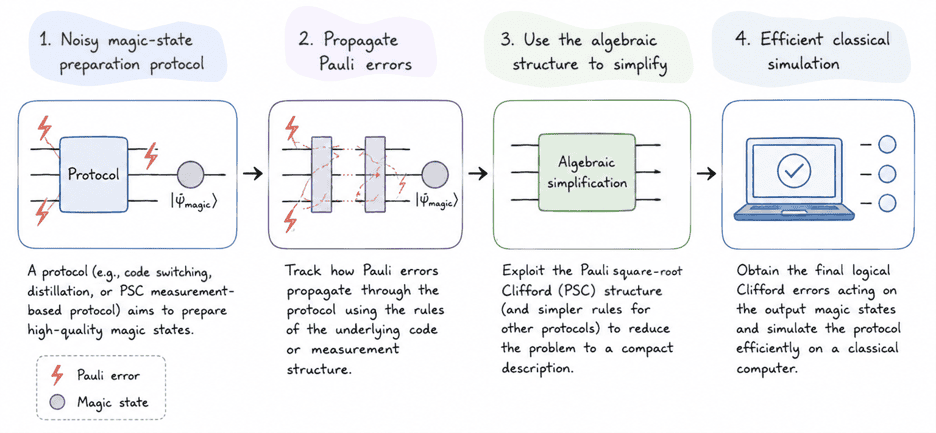
Building a useful quantum computer is not simply a matter of adding more qubits. The greater challenge is making these qubits reliable enough to perform long computations without errors overwhelming the result. Quantum error correction addresses this problem by encoding each logical qubit across many physical ones, but it comes at a cost: many of the operations required for a general-purpose or “universal” quantum computer become highly resource intensive once fault-tolerant error correction is introduced.
To address this resource challenge, researchers at the University of California, Davis, US have developed a classical simulation method that efficiently models the preparation of some of the most demanding quantum states. The method, which they describe in PRX Quantum, works even for large, high-fidelity protocols that were previously beyond reach.
Building a universal quantum computer
Logical operations in fault-tolerant (that is, error-corrected) quantum computing architectures fall into two broad categories. The first category is a set of operations known as Clifford gates that are relatively straightforward to implement and, importantly, can be simulated efficiently on a classical computer. By themselves, however, Clifford gates are not computationally universal. For that, you also need non-Clifford operations, which lie outside the set of classically-simulable gates and provide the missing ingredient for universal quantum computation.
To realize these non-Clifford operations in a fault-tolerant way, some qubits need to be in a special state known as a magic state. Preparing these magic states with sufficiently high fidelity is expected to dominate the cost of large-scale error-corrected quantum computers, so quantum computing theorists are searching intensively for more efficient preparation protocols. The problem is that this search contains a challenge of its own: how can we compare the efficiency of these approaches?
To assess a magic-state preparation protocol, we need to simulate it under realistic levels of error-inducing circuit-level noise. Yet the same non-Clifford operations that make magic states indispensable for quantum computation also make them difficult to simulate. Existing methods therefore become prohibitively expensive as protocols grow, limiting exact simulations to relatively small logical circuits.
Simplifying a difficult simulation
Rather than searching for a more efficient simulation algorithm directly, the UC Davis team of Samyak Surti, Lucas Daguerre and Isaac Kim first asked a more fundamental question: what mathematical structure do these protocols share?
Their framework for answering this question encompasses three broad classes of logical magic-state preparation protocols: code switching, magic state distillation, and Pauli-square-root Clifford (PSC) measurement-based protocols. In the first two classes, error propagation is relatively straightforward to analyse, but PSC protocols require a more sophisticated mathematical treatment. Rather than viewing these protocols simply as quantum circuits, Surti, Daguerre and Kim characterized their underlying algebraic structure, showing that Pauli errors (the fundamental types of qubit errors) propagate in a highly constrained and predictable way under sequential commutation. This commutation preserves the algebraic relationships between errors and logical operators, while anti-commuting operations exhibit predictable transformations rather than generating uncontrolled complexity.
These properties mean that commuting operations can be systematically reordered without changing the outcome, allowing much of the circuit’s complexity to be absorbed into its algebraic structure. Hence, rather than tracking an exponentially large quantum state, the simulator follows how a compact description of logical Pauli and Clifford errors evolves through the protocol.
The paper formalizes these ideas through a sequence of lemmas, propositions and theorems that establish the mathematical properties of PSC protocols. The result is a series of algorithms for simulating realistic, noisy, logical magic-state preparation protocols with a computational cost that scales polynomially with both the number of qubits and what is termed the stabilizer rank of the target magic state, which is a measure of its non-Clifford complexity. Since the standard single-qubit magic state has a stabilizer rank of only two, this complexity remains manageable even as the underlying error-correcting code grows, in marked contrast to state vector simulations that scale exponentially with qubit number. The team’s advance therefore makes large-scale logical simulations practical for the first time.
Accelerating fault-tolerant quantum computing
Although the new framework does not reduce the physical resources required to prepare logical magic states, it does change how those protocols can be analysed and designed. By exposing the algebraic structure underlying a broad class of logical magic-state preparation schemes, the UC Davis team transformed a computationally hard problem into one that admits efficient classical simulation. Researchers can therefore evaluate, compare and refine candidate preparation protocols under realistic circuit-level noise without resorting to exponentially expensive simulations or uncontrolled approximations.
“The main motivation behind our work was to speed up the development of fault-tolerant quantum computer,” Kim tells Physics World. “I believe there is a large amount of uncertainty in how we will design and optimize magic state factories, which will likely remain as a bottleneck in the foreseeable future.”
As quantum computing progresses from proof-of-principle demonstrations to large-scale fault-tolerant architectures, the ability to characterize and benchmark logical operations efficiently will become increasingly important. This work offers more than just a faster simulator; instead, it provides a new theoretical foundation for designing one of the most resource-intensive building blocks of future quantum computers. “My hope is that this line of work can help us better design the fault-tolerant quantum computers we will be getting over the next few years,” Kim says.
The post Shortcut for simulating logical magic states could accelerate the design of fault-tolerant quantum computers appeared first on Physics World.
Has vacuum birefringence been seen at long last?
Polarized X-rays from magnetar could be first direct observation of quantum effect
The post Has vacuum birefringence been seen at long last? appeared first on Physics World.
The first direct glimpse of vacuum birefringence has been claimed by astronomers who have studied X-ray and radio emissions of a neutron star that is both a magnetar and a pulsar. A central, but unconfirmed prediction of quantum electrodynamics (QED), vacuum birefringence involves the polarization of the quantum vacuum by powerful magnetic fields.
Made by a US-led international team, the observation could lead to the use of magnetars as natural laboratories to study other extreme-field phenomena of the quantum vacuum. However, another group headed by researchers in Italy remains unconvinced that the data constitute a “smoking gun” for vacuum birefringence. They believe that alternative explanations remain viable.
Birefringence occurs when the refractive index of a medium depends on the polarization of the radiation passing through it. When refraction occurs at such a medium, there is an angular separation of the two differently-polarized waves. This occurs with certain crystals such as calcite and lithium niobate, where the anisotropic lattice structure interacts differently with oppositely polarized photons. Birefringence can also arise from the interaction of photons with magnetic fields in plasma.
Virtual pairs
A key prediction of QED – first made in 1935 by Werner Heisenberg and Hans Euler – is that sufficiently strong magnetic fields can make a vacuum birefringent by polarizing the virtual electron–positron pairs that fluctuate in and out of existence. Ninety years on, however, vacuum birefringence had not been observed because the huge fields required cannot be generated in the laboratory.
“Having a natural lab already existing that could look into some of these effects is something that would be very beneficial,” says astronomer Rachel Stewart of George Washington University in the US. “That’s something people have probably been looking into for decades.”
Stewart and colleagues’ natural lab is a magnetar. These objects comprise a rare subtype of neutron star that have extreme magnetic fields of up to 1011 T. This makes magnetars the most magnetic objects observed in the universe and bright sources of X-rays. Data from NASA’s Imaging X-ray Polarimetry Explorer (IXPE) telescope have shown that this radiation is often polarized.
This is not surprising because the surface of a magnetar is likely to be surrounded by magnetized, birefringent plasma. The plasma’s field, however, should be tangled and variable, so the net polarization imprinted on light emitted into the far field should be relatively small.
Magnetic axis
If the magnetar’s intense magnetic field polarizes the vacuum of empty space, then the birefringence polarization imprinted onto the X-rays should follow the orientation of the magnetic poles into the far field as the magnetar rotates. Disentangling the two effects is difficult, however, because it is not generally possible to ascertain the orientation of the magnetic poles with respect to the direction of our observation.
A very few magnetars, however, are also pulsars that emit narrow beams of radio waves from their magnetic poles. The magnetic and rotational poles of a pulsar are misaligned, which causes the radio beam to sweep around like a lighthouse beam. If Earth happens to be in the path of the beam, we observe radio pulses.
In the new research, Stewart and colleagues observed the magnetar 1E 1547.0−5408, which is unique among observed objects for having persistent, bright radio emission alongside its X-ray emission. They combined observations from two space-based X-ray telescopes – IXPE and the Neutron Star Interior Composition Explorer (NICER) – with radio observations from Australia’s Murriyang telescope.
The radio observations allowed the team to the work out the angle between the magnetar’s magnetic and rotational poles and the angle between the rotational pole and the direction of our observation. This gave them the information needed to disentangle the two birefringence effects.
Large polarization
The researchers found a high degree of polarization in the detected X-rays – up to 80% at photon energies 2–3 keV in energy. They point out that this high degree of polarization is consistent with vacuum birefringence being driven by the magnetar’s powerful field.
The X-ray emission is closely aligned with the radio emission, which the researchers believe is naturally explained by the magnetic poles of the star being closely aligned with the rotational poles – and difficult to reconcile with alternative explanations.
However, another recent paper challenges this interpretation. Roberto Taverna of the University of Padova in Italy, who led the work, says that pairing the radio emission data with the X-ray observations was “very smart”, but he says that “it is not obvious to me whether the two observations – the radio and the X-rays – are compatible or not.” He says that, if the X-ray emission all emerged from one small region such as a hotspot slightly away from the radio polarization axis, the X-ray radiation would be polarized in the absence of vacuum birefringence. As a result he does not believe the observation is a “smoking gun”.
George Younes of NASA’s Goddard Space Flight Center in Maryland – part of the US group – argues that Taverna and colleagues are “ignoring about 60 years of radio pulsar science…They are hiding behind the fact that magnetars are different from pulsars, so we don’t know exactly where the radio emission comes from and all results are on the table,” he says, “but there are fundamentals that we should not ignore.”
The US-led team is now investigating further to see whether they can find more evidence for vacuum birefringence. Nuclear astrophysicist Hoa Dinh Thi of Rice University in Texas, who led the theoretical effort, is now modelling QED effects of magnetism on radiation in the plasma. “In the far future we also plan to use machine learning in the model so we can explore the different sources together and understand better the properties of neutron stars and magnetars.”
Stewart and colleagues describe their work in Nature. Taverna’s team has published in The Astrophysical Journal.
The post Has vacuum birefringence been seen at long last? appeared first on Physics World.
Frame-dragging measurement around the Earth sets new precision record
Laser-ranging technique proves Einstein right again
The post Frame-dragging measurement around the Earth sets new precision record appeared first on Physics World.
A laser-ranging technique has allowed physicists to measure the frame dragging of the Earth with an uncertainty approaching one part in a thousand, representing the highest precision yet for this parameter. The new result not only provides one of the most stringent confirmations of Einstein’s theory of general relativity in the near-Earth environment to date, it also sets stronger constraints on some alternative theories that have been put forward to explain the unsolved mystery of the universe’s accelerated expansion.
Frame dragging, also known as the dragging of inertial frames, is one of the predictions in Einstein’s theory of general relativity. Here, a massive, rotating object not only curves spacetime, it also drags it around as it rotates. The effect is very large around huge objects like black holes but is much smaller around Earth. It can be detected, however, by monitoring the motion of certain satellites in orbit around our planet.
There is a problem though in measuring the very tiny shift of the orbital plane around the Earth predicted by general relativity because the Earth is not a spherically symmetrical body, explains Ignazio Ciufolini of the Chinese Academy of Sciences, who led this new study. He and his colleagues overcame this difficulty by analysing motion data from the recently launched Laser Relativity Satellite 2 (LARES-2), developed by the Italian Space Agency, and its predecessor LAGEOS.
The combined orbits of these satellites act like a huge gyroscope and their position can be measured via laser ranging: a laser pulse is emitted towards the satellite and reflected back from the retroreflectors covering its surface. “By measuring the time it takes the laser light to come back, we can very precisely determine the position of the satellite,” says Ciufolini.
LARES-2 is a small, spherical satellite with a radius of 0.212 m and it is extremely heavy, weighing in at nearly 295 kg. Its orbit, he notes, is therefore perturbed only by the Earth’s gravitation and to a much lesser extent by non-gravitational effects, such as the push of the photons from the Sun and the Earth.
Removing the influence of Earth’s lunisolar tides
One of the difficult steps in the measurements, Ciufolini explains, was removing the influence of Earth’s lunisolar tides. These are the subtle distortions in the Earth’s gravity field caused by the tides raised by the Moon and Sun, which would otherwise hide the signal the researchers were looking for. “The most challenging part was to get rid of the orbital influence of Earth’s ‘K1 tide’, which biases the precision of the frame-dragging measurement,” he says.
“Thanks to this precise measurement, which is an order of magnitude better than previous Solar System measurements, we have been able to set stronger limits of validity to some theories alternative to general relativity proposed to possibly explain the great mystery of the accelerated expansion of the universe,” he tells Physics World. “Some of these theories predict something that may be related to quintessence (a mysterious time-dependent scalar field).”
While these theories predict the same so-called post-Newtonian weak-field effects as general relativity, they predict a different frame-dragging effect, he adds. Increasing the accuracy of frame-dragging (and indeed other tests of general relativity) can therefore place further limits on these other theories. It could also shed more light on phenomena like the flow of time around rotating black holes, where frame-dragging is extremely pronounced.
Laser-ranged satellites remain in orbit for many decades (LAGEOS was launched by NASA in 1976) and will carry on providing data for a very long time. “The more time we have, the more observational data we can obtain and therefore tests of general relativity (not only frame-dragging but also other tests) can be carried out with much increased precision,” says Ciufolini. “This data could also improve our knowledge of the Earth and allow, for example, improved determinations of the Earth tides and its centre of mass, which is useful for the Global Positioning System.”
The study is detailed in Nature.
The post Frame-dragging measurement around the Earth sets new precision record appeared first on Physics World.
Quiz of the week: what are engineers using to control the growth of artificial blood vessels?
Have you been keeping up to date with physics news? Try our short quiz to find out
The post Quiz of the week: what are engineers using to control the growth of artificial blood vessels? appeared first on Physics World.
Fancy some more? Check out our puzzles page.
The post Quiz of the week: what are engineers using to control the growth of artificial blood vessels? appeared first on Physics World.
Seismic waves reflected from Earth’s core moved parts of Japan 5 mm east
Shift followed the 2011 Tohoku-Oki earthquake and represents a new type of seismic hazard
The post Seismic waves reflected from Earth’s core moved parts of Japan 5 mm east appeared first on Physics World.
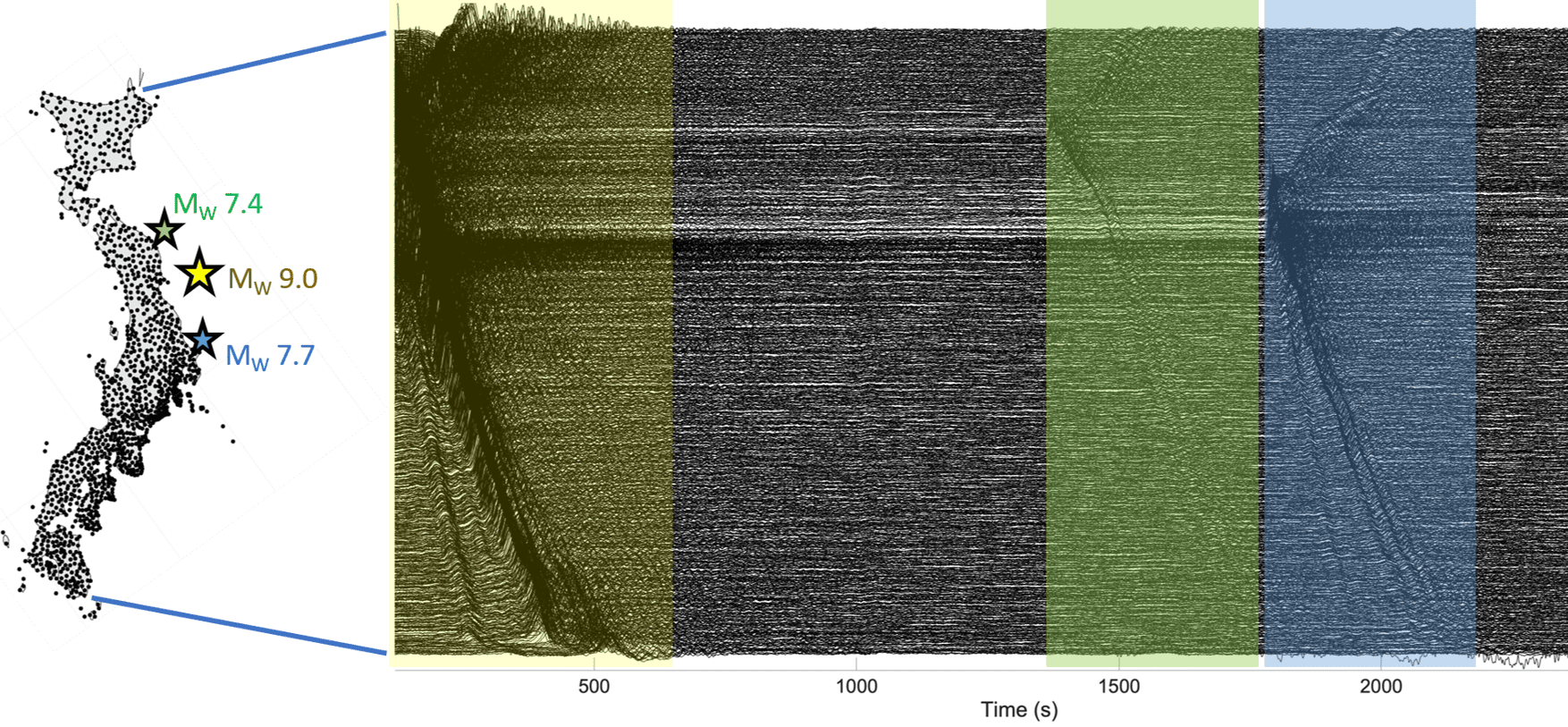
A previously unrecognized source of seismic hazard caused parts of Japan to move eastwards by up to 5 mm within minutes of the 2011 Tohoku-Oki earthquake. Conventionally, such shifts occur when seismic waves generated by rupturing tectonic plates cause the plates to slip, triggering movements of the land mass and the ocean floor. But a new study finds that in the Tohoku-Oki quake, the real culprit was waves that travelled down to Earth’s core and back – a phenomenon more usually associated with efforts to image structures deep inside the Earth.
The 2011 Tohoku-Oki quake occurred at the boundary between the Pacific plate and the North American plate, with an offshore epicentre around 130 kilometres east of Sendai. At magnitude 9, it was one of the largest recorded earthquakes in history, and it caused widespread devastation, including thousands of fatalities. The tsunami that followed exacerbated this damage, with meltdowns of three out of six nuclear reactors at the Fukushima Daiichi power station releasing radioactive caesium into the air and water and prompting a large-scale evacuation with long-term health impacts.
The earthquake was bigger than most models estimated, which compelled seismologists to examine and revise existing models of the largest possible earthquakes and their frequencies in the boundaries of tectonic plates. Instrumented records of this earthquake are still revealing new information about geophysical processes in the boundaries of tectonic plates.
Surface to core and back
In the new work, researchers led by Sunyoung Park at the University of Chicago, US studied shear waves recorded following the earthquake in Japan’s dense network of high-rate Global Navigation Satellite System instruments. Along with the expected seismic waves from the earthquake rupture, the team found so-called ScS waves that travelled thousands of kilometres through the Earth, bounced off the core and travelled back to the surface, arriving across Japan almost simultaneously 13 minutes after the main shock. “The name ScS reflects that path: S[hear] through the mantle, c for reflection at the core-mantle boundary, and then S again on the return path,” Park explains.
Although seismologists have studied ScS waves extensively, they have mostly done so for the purpose of imaging the deep Earth. “Because [ScS waves] reflect from the core-mantle boundary, they have helped constrain the depth and properties of the core-mantle boundary; the structure of the lowermost mantle; attenuation and anisotropy in the mantle; and source characteristics of large earthquakes,” Park explains.
The team’s study offers the first evidence that ScS waves can also trigger significant displacement-causing slip after an earthquake, meaning that earthquake hazard researchers may need to consider these waves to fully capture consequences of earthquake ruptures on the land as well as deep within tectonic plates.
A high-quality, high-resolution dataset
Two aspects of the Tohoku-Oki earthquake made it an incredible opportunity to study the role of ScS waves in triggering a slip event. The first is the nature of the earthquake itself. As well as releasing tremendous amounts of energy, it occurred on a shallow tectonic fault that is dipping down. This combination sent strong shear wave energy travelling nearly vertically down to the core, generating ScS waves strong enough to trigger movement in the tectonic plates.
The second was the quality and resolution of data. “Because Japan is so densely instrumented, we can look for small, coherent signals that would likely be invisible elsewhere,” Park says. “This made it a natural case in which to ask whether delayed seismic phases might trigger additional deformation.”
Working with Hiroo Kanamori at the California Institute of Technology (Caltech), US, and Luis Rivera at the University of Strasbourg, France, Park considered whether Earth’s elastic response to the main shock could explain Japan’s 5-mm displacement. To better understand this possibility, they calculated displacements at all the instrumented locations for many possible configurations of the earthquake rupture. However, the results did not reproduce the observed eastward motion.

The researchers then simulated possible slip scenarios across the tectonic plate interfaces, hoping to better characterize the levels and spatial extent of the slip that caused the eastward displacement. “The inferred slip event likely involved interfaces where the Pacific plate subducts beneath the Okhotsk Plate, and where the Philippine Sea plate subducts beneath the Eurasian plate,” Park says. Exactly how far this slip propagated, however, is still unknown because of the paucity of instrumented locations beyond Japan.
A slow-motion slip
Although the most memorable earthquakes and tsunamis are the ones that manifest havoc on Earth’s surface, the tectonic plates underneath are in perpetual but slow motion. At higher depths, these slow-moving plates produce earthquake events that unfold over days or weeks. Such events are called slow-slip or silent earthquakes and are important for accumulating and releasing stress as part of the earthquake cycle.
Rather than triggering a fast earthquake rupture, the ScS waves from the Tohoku-Oki quake appear to have set off a slow slip event spread over a very large area at intermediate depths of 20–60 km. This is the depth range where seismologists commonly observe silent earthquakes, and it provides avenues for understanding the dynamic processes that impact the earthquake cycle. This continuous flux in Earth’s deeper layers is a source of curiosity for many seismologists, including Park.
“A broader motivation for me is a general interest in deep-shallow interaction in the Earth,” Park tells Physics World. “I am especially interested in cases where processes or wave propagation involving the deep interior can influence faulting and deformation in the shallow lithosphere or vice versa.”
The researchers report their findings in Science.
The post Seismic waves reflected from Earth’s core moved parts of Japan 5 mm east appeared first on Physics World.
New image captures glowing shock waves in the Helix Nebula
Data were taken with the MOTHRA telescope, which is still under construction
The post New image captures glowing shock waves in the Helix Nebula appeared first on Physics World.
Astronomers have created a spectacular composite image of a dying star’s remains in the act of being recycled.
The image shows the Helix Nebula, a bright ring of gas that is located 650 light-years from Earth in the constellation Aquarius.
Resembling a giant human eye, its familiar ring formed from material expelled by a star near the end of its life. The remnant of that star, a white dwarf, lies at the nebula’s centre.
Astronomers trained the Modular Optical Telephoto Hyperspectral Robotic Array (MOTHRA) on the nebula while it was still being constructed at the El Sauce Observatory in Chile’s Coquimbo Region.
When complete later this year, MOTHRA will use 1,140 high-end telephoto lenses and filters that function as a giant 4.8-m aperture refractor telescope to detect the extremely faint glow of gas across large swaths of the sky.
In the image above, the MOTHRA data are shown in black and were collected in November 2025 using 190 or so lenses. These have been combined with previous observations made by the Hubble Space Telescope and the Kitt Peak 4 m telescope, which are shown in colour.
The MOTHRA data reveal a collection of 22 complete or partial arc-shaped glowing shock waves on the eastern side of the nebula.
Dubbed bow shocks, the waves resemble those that form in front of a boat moving through water. In the Helix Nebula, mostly invisible clumps of stellar debris dart rapidly through the thin gas among stars. The glowing bow shocks mark where those clumps collided with the surrounding gas.
By studying the image, astronomers traced the star’s debris as it is stripped, broken apart and gradually mixed into interstellar space.
“We are seeing material shed near the end of a star’s life being broken apart and returned to the galaxy,” notes Yale University astronomer Pieter van Dokkum, who led the study. “That handoff – from recognizable stellar debris to the diffuse gas between the stars – has been very difficult to observe.”
The post New image captures glowing shock waves in the Helix Nebula appeared first on Physics World.
Motivation is key to the public’s trust in science, study reveals
Social scientists Shumaila Bhatti and Dara Wald are our podcast guests
The post Motivation is key to the public’s trust in science, study reveals appeared first on Physics World.
Credibility is a cornerstone of modern science and concepts such as reproducibility and peer review have evolved to ensure that the knowledge produced by scientists is high quality. However, for science to thrive and benefit everyone, scientists themselves must be seen as credible to the general public.
This episode of the Physics World Weekly podcast features Shumaila Bhatti and Dara Wald who are social scientists at Virginia Tech in the US. They have done a comprehensive study that reveals that the perceived motivation of a scientist plays an important role in how credible they appear to the public.
The study involved nearly 1000 subjects in the US and a key result is the identification of five audience classes that differ in terms of their perceptions of scientific credibility. Wald and Bhatti talk about their motivation for doing the study and its interpretation. One of their findings is that people in all classes don’t tend to doubt the expertise of scientists, but they would prefer scientists to honest and motivated by the public good.
The paper discussed in this episode is “There is not one public: divergent perceptions of scientists’ source credibility in the United States”.
The post Motivation is key to the public’s trust in science, study reveals appeared first on Physics World.
‘Kinetic electronics’ make self-connecting circuits
Eventual goal is electronic devices that can reconfigure and even repair themselves
The post ‘Kinetic electronics’ make self-connecting circuits appeared first on Physics World.
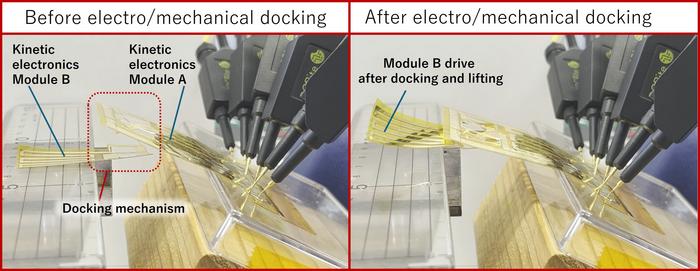
Researchers at Kyushu University in Japan have developed a flexible electronic circuit that can connect itself to another electronic circuit and then disconnect from it. The prototype structure is an important step towards electronic devices that can reconfigure and even repair themselves, and it could have applications in wearable sensors, soft robotics and medical devices.
Most of today’s electronic devices are fixed, or “non-modular”, explains study leader Fumihiro Sassa of Kyushu University’s Department of Electrical and Electronic Engineering. Typically designed for specific tasks or environments, they are not readily adaptable to new ones, and they often cease to function if even a single component in their electronic circuitry fails. This leaves them dependent on human operators or external robotic systems if it becomes necessary to expand their functionality or repair damage.
“This can be a serious limitation inside very small machines, in space equipment, in devices requiring specialized handling, such as wearable chemical sensors, or in systems containing very large numbers of wires and electronic elements,” Sassa explains. “In such cases, in-situ repair can be difficult. The whole system may need to be replaced.”
Connection and disconnection
To overcome this problem, the Kyushu University researchers have been developing what they term “kinetic electronics” modules. These consist of electronic circuits and actuators that deform when an electrical current is applied to them so that they can mechanically and electrically connect to other modules. Before this connection takes place, different modules are separate, but after connection or “docking” takes place, one module can independently deform another when power is supplied through the point that connects them.
In this way, explains Sassa, the circuits can rearrange their own hardware structure. “Such functions have traditionally been used in mechanical systems, such as spacecraft, trains and modular robots, but we have now applied them to an electronic device.”
Sassa and colleagues fabricated their electrothermal bimorph actuators from polypropylene and polyimide films with heater electrodes and electrical circuits formed on them through a two-dimensional top-down process. Because the two polymers expand differently, Sassa explains that Joule heating causes selected actuator sections to bend. “Prescribed sequences of these motions produce docking and undocking and once docked, passive mechanical engagement maintains the connection without continuous power being supplied,” he says. “Undocking requires a separate actuation sequence.”
Towards miniaturization and more intelligent control
The researchers say they are working on miniaturizing their system and looking how to control it more intelligently. In the present study, which is detailed in npj Flexible Electronics, they demonstrated the docking mechanism using a small number of millimetre-scale independent sensors and actuators formed together on the circuit, with motion being controlled in sequence by an external microcontroller. They are now developing photolithographic processes to further decrease the size of these components and have already fabricated actuators smaller than 100 μm using these techniques.
“In a similar way to large-scale integration in conventional electronics, doing this will allow us to integrate very large numbers of these sensing and actuation elements, allowing the electronic circuit to form and change much more complex mechanical structures and functions,” says Sassa.
“We are also interested in so-called distributed control, in which the central controller does not need to specify every movement,” he adds. “Instead, many elements would follow relatively simple local control rules, from which advanced self-reconfiguration and self-organization could emerge.”
The post ‘Kinetic electronics’ make self-connecting circuits appeared first on Physics World.
Word flower puzzle no. 7
How many words can you find in this puzzle?
The post Word flower puzzle no. 7 appeared first on Physics World.
How did you get on?
12 words Warming up nicely
16 words Getting hot, hot, hot
20 words Top dog!
Fancy some more? Check out our puzzles page.
The post Word flower puzzle no. 7 appeared first on Physics World.
Researchers propose ‘economic Q’ metric for judging fusion power plant viability
New framework includes 10 parameters that can be used to evaluate the viability of fusion
The post Researchers propose ‘economic Q’ metric for judging fusion power plant viability appeared first on Physics World.
Researchers in the US have proposed a new metric to determine the economic viability of future fusion power plants. The measure is similar to one used by fusion researchers to ascertain the output of fusion reactions, which is known as the Q factor.
Nuclear fusion, which powers the stars, involves two light nuclei binding to form a heavier nucleus, releasing huge amounts of energy in the process. Harnessing fusion on Earth using the hydrogen isotopes deuterium and tritium could lead to an environmentally friendly and almost limitless energy source.
In the 1950s, the engineer and physicist John Lawson laid out what became known as the “Lawson criterion” for fusion. It describes the combinations of temperature, plasma density and energy confinement time that can produce net energy from the plasma due to fusion, regardless of its absolute power or volume.
Specifically it calculates a factor known as “plasma Q”, which is the ratio of fusion power produced to the external power required to sustain the plasma, with a Q = 1 meaning break-even.
When it comes to magnetic confinement, in which magnetic fields are used to contain a high-temperature plasma, the Joint European Torus based in Oxfordshire, UK, which ended experiments in 2024, achieved a Q of 0.67 in 1997.
The ITER experimental fusion reactor, which is currently being built in Cadarache, France, aims to have a Q of 10 when fully operational towards the end of the 2030s.
Developments in industry have also sped up in recent years and just last month the Fusion Industry Association released a report finding that private fusion companies raised almost $4.5bn in funding over the past year – a 70% increase over the previous year.
The report discovered that 71% of the 65 companies surveyed expect the first fusion plant to deliver commercial electricity by the 2030s. Others, however, remain unconvinced that fusion will soon be a viable energy source.
With that in mind, researchers are now proposing a framework for understanding what is required to make fusion energy commercially viable in the marketplace.
While the costs of basic experiments can be easily documented, estimating the costs of a fusion reactor is somewhat more challenging.
“It’s challenging to reduce complex scientific and engineering requirements to economic consequences,” says economist Andrew Lo from the Massachusetts Institute of Technology (MIT), who co-authored the new study (J. Fusion Energy 45 49). “But if we don’t do that, we’re not going to get the funding we need to achieve the impact we want.”
A new ‘Q’
The new framework includes 10 parameters that evaluate the economic viability of a fusion energy power plant. Some of these are scientific and physical, dealing with the energy consumed and produced in a given plant.
Other parameters are based on engineering and economics, such as the costs of plant construction, returns from invested capital, the efficiency of converting fusion power into an economic product as well as the durability of components used in the energy conversion.
The “economic Q” is then given as the ratio of capital gained to that expended.
MIT nuclear engineer Dennis Whyte, who also co-authored the study, says that the framework is about what it takes to achieve a net-positive economic return with the economic Q needing to be greater than 1 for basic viability.
Whyte, who was yesterday appointed chief executive of the United Kingdom Atomic Energy Authority, adds that the parameters do not depend on the size of the reactor being built, so any inputs can be scaled to a given project or power output.
“When you’ve got a framework to evaluate it in a quantitative way, it tells you about the literal worth of making a particular design decision,” adds Whyte. “That seems to me at this moment of fusion development absolutely critical, and what we’ve been missing.”
The post Researchers propose ‘economic Q’ metric for judging fusion power plant viability appeared first on Physics World.
Crystal symmetry controls hydrogen’s quantum tunnelling
Discovery could support the development of safer and more efficient hydrogen storage media
The post Crystal symmetry controls hydrogen’s quantum tunnelling appeared first on Physics World.
The quantum tunnelling of hydrogen atoms plays a central role in many physical, chemical and biological process, but a practical means of controlling it has proved elusive. Researchers from the University of Tokyo, Japan have now demonstrated that the way hydrogen permeates through a material depends on the degree of symmetry in the material’s crystal structure. By controlling this symmetry, scientists could therefore gain control over hydrogen’s ability to tunnel, potentially leading to safer and more efficient media for storing this industrially important clean-burning fuel.
“We found that hydrogen undergoes pronounced quantum tunnelling in a highly symmetric crystal environment, whereas the tunnelling is strongly suppressed when the symmetry is lowered,” explains Katsuyuki Fukutani, who led the research together with colleagues Takahiro Ozawa and Sudhansu Sekhar Das. “This is particularly exciting because it identifies crystal symmetry as a fundamental principle for controlling the quantum behaviour of hydrogen in materials, opening new possibilities for tailoring hydrogen transport.”
A model hydrogen-storage material
The researchers, who work at Tokyo’s Institute of Industrial Science, obtained their results by studying how hydrogen atoms move through a model hydrogen-storage material, vanadium, at low temperatures. To do this, they combined two complementary techniques. The first is called nuclear reaction analysis and it measures the hydrogen’s depth distribution directly with high resolution. The second involves measuring electrical resistance, which sensitively monitors how the hydrogen redistributes itself over time.
These measurements revealed that at temperatures of around 70 K, hydrogen atoms begin to migrate through vanadium’s crystal lattice, hopping between its interstitial spaces. At low hydrogen concentrations, this hopping occurs within a highly symmetric structure known as α-phase vanadium, and the hydrogen atoms easily tunnel between neighbouring lattice sites. At higher hydrogen concentrations, however, vanadium’s crystal lattice distorts, forming a β-phase. Under these conditions, the hydrogen atoms must overcome an energy barrier (of 148 meV in this case) before they can tunnel to neighbouring sites.
Quantum tunnelling or classical thermal activation?
Based on changes to vanadium’s electrical resistance, the researchers were able to calculate the diffusion coefficient of hydrogen over a wide range of temperatures, including those for which quantum tunnelling is important. They then interpreted these results using quantum-mechanical calculations of hydrogen motion, which revealed that the crystal symmetry determines whether hydrogen moves by quantum tunnelling or by classical thermal activation. They found that in the α-phase, hydrogen’s ground states are delocalized over tetrahedral sites thanks to tunnelling. In the β-phase, in contrast, the uniaxial strain produced by the distortion of the crystal lattice leads the quantum states of the hydrogen atoms to localize around certain (Oz) sites in the material.
Hydrogen is the lightest element, so Fukutani says it’s not surprising that it exhibits pronounced quantum behaviour. However, while quantum tunnelling had long been assumed to play an important role in hydrogen diffusion, it was difficult to obtain direct experimental evidence for it because we cannot easily observe hydrogen inside materials using conventional techniques. “We wanted to clarify how hydrogen actually behaves in the quantum regime and identify the factors that control its tunnelling,” he explains.
New possibilities for controlling hydrogen permeation and storage
“Our findings suggest that hydrogen transport can be controlled by tuning quantum tunnelling through crystal symmetry — for example by applying external strain,” he adds. “This capability opens up new possibilities for controlling hydrogen permeation, storage and even catalytic reactions.”
More broadly, Fukutani says the team’s work establishes crystal symmetry as a new design principle for tailoring quantum hydrogen behaviour in functional materials. The Tokyo researchers now plan to extend their work to a wider range of hydrogen storage media, including metal alloys and oxide materials. “Ultimately, we hope to establish a universal framework describing how local atomic structure and crystal symmetry govern the quantum behaviour of hydrogen,” Fukutani tells Physics World.
They report their present work in Nature Communications.
The post Crystal symmetry controls hydrogen’s quantum tunnelling appeared first on Physics World.
Knowing through uncertainty: probability and the evolution of our cosmos
Chrysi Malouchou Kanellopoulou reviews The Random Universe: How Models and Probability Help us Make Sense of the Cosmos by Andrew H Jaffe
The post Knowing through uncertainty: probability and the evolution of our cosmos appeared first on Physics World.

All scientific inquiry involves some kind of uncertainty, but the uncertainties in cosmology are particularly daunting. As well as being complex and difficult to describe, the systems cosmologists investigate are almost by definition out of reach. In these conditions of uncertainty, how confident can we be in the models we’ve built? How can we come to know how galaxies form, how the universe began or how much dark matter it contains?
In The Random Universe: How Models and Probability Help us Make Sense of the Cosmos, cosmologist and astrophysicist Andrew Jaffe offers a masterful and refreshing take on these questions. As the director of the Centre for Inference and Cosmology at Imperial College London, UK, and a past co-investigator on ESA’s Planck satellite that provided us with so much new information about the cosmos, Jaffe is well-equipped to walk readers through the tools that allow us to learn about the world despite its uncertainties. Anchoring his insights in beautifully narrated episodes from the history of physics, astrophysics and cosmology, he sheds light on how our theories of the universe evolved into our current best cosmological model – which nonetheless still has limitations.
Jaffe is particularly good at recounting how we refined, revised and even replaced some of our assumptions in light of incoming evidence such as the first measurements of stellar distance; the discovery of galaxies beyond our own; and precise measurements of cosmological parameters. Throughout this journey, he engages thoughtfully with a rich philosophical tradition that runs from David Hume in the 18th century through Willard Van Orman Quine, Imre Lakatos and Paul Feyerabend in the 20th.
Bayes’ theorem is important because it tells us how to update our degree of belief in light of new evidence
The book’s main protagonist, though, is the mathematician Thomas Bayes. For Jaffe, Bayesian probability is key to dealing with uncertainty, and even to solving Hume’s notorious problem of induction: how do we justify inferences from a finite set of observations to generalizations that go beyond them? Bayes’ theorem is important, Jaffe argues, because it tells us how to update our degree of belief in light of new evidence. It shows us why and how, even in an uncertain world, “the more observations we make, the surer we become”.
Of course, before we can use probability to deal with uncertainty, we first need a model. As Jaffe puts it, “Absent a model, I can’t assign a probability, and absent a probability, I can’t quantify my uncertainty about the world.” So, what exactly is a model? I found Jaffe’s answer to be one of the most captivating elements of the book. As the title of a subsection of chapter five puts it, “a model is a story about the world”. Without models, Jaffe tells us, our world would be an unexplained series of unrelated events. Models are also what allow us to take a finite set of data and use it to create something new. Without this leap, Jaffe suggests, we cannot learn anything about the world, because “you can’t make sense of an experimental result unless you have some model to interpret it”.
Of course, if the way we interpret data depends on our model, then different people may well obtain different interpretations depending on which model and which prior probability they choose. This charge of subjectivity is a longstanding accusation against Bayesians, but Jaffe offers at least a partial solution: “If you and I agree on the model, we should assign the same probability.” This, Jaffe argues, is where objectivity emerges, writing that “we come to the same conclusions if we start from the same premises”.
Models allow us to understand the world by bridging subjectivity with objectivity, and the personal with the collective
Many contemporary philosophers are at odds with the idealized view of science as an objective and linear enterprise that produces theories from a God’s-eye view. Instead, they strive to portray it as something that is social and human, but reliable nonetheless. Jaffe’s own views seem to align with this endeavour; as he puts it, “the scientific coupling of models and observations is a living, breathing, subjective endeavour, simultaneously collective and personal”. Through their interplay with data, he argues, models allow us to understand the world by bridging subjectivity with objectivity, and the personal with the collective.
Not everyone will agree with Jaffe that Bayesian probability offers a solution to Hume’s problem of induction. Personally, I (or perhaps the hardcore rationalist in me) was not convinced. Nevertheless, I found the book’s thesis – that uncertainty is not a hindrance to knowledge, but an opportunity to learn (and learn more) about the world – simultaneously liberating, humbling and empowering. I recommend The Random Universe to scientists, philosophers and anyone interested in better understanding the role of probability in science; the philosophical problems with how we handle uncertainty; and how our standard cosmological model came to be. I also hope it will encourage more collaborations between philosophers and scientists. There are many questions we can explore further if we work together.
- 2025 Yale University Press, £25hb, 288pp
The post Knowing through uncertainty: probability and the evolution of our cosmos appeared first on Physics World.
Physicists extend Hawking’s black hole laws to dynamical objects
Thermodynamics can describe the mechanics of black holes that change over time
The post Physicists extend Hawking’s black hole laws to dynamical objects appeared first on Physics World.
The event horizons of black holes that are far from equilibrium can now be described by the first and second laws of thermodynamics thanks to new work by theoretical physicists at Pennsylvania State University in the US. The result augments the work of the late Stephen Hawking and others who showed in the 1970s that these classical concepts have applications in idealized, static black holes.
Black holes are objects so dense that their gravitational pull prevents anything – even light – from escaping them. The “point of no return” of any object falling into a black hole is called the event horizon, and it represents the black hole’s mathematically defined “edge”.
Although black holes can be described using concepts from quantum mechanics and Einstein’s general theory of relativity, some 50 years ago physicists like Hawking and Jacob Bekenstein showed that the equations governing them are also astonishingly similar to the fundamental laws of thermodynamics. “This seminal observation sparked a rethinking of black holes in thermodynamics terms,” explains Abhay Ashtekar, a physicist at Penn State’s Eberly College who led the new study. In particular, Ashtekar says it meant that black holes could be assigned an entropy that is equal to the area of their event horizon.
The problem, he continues, is that technically, these relationships are only valid for black holes in equilibrium – that is, those that are stable and do not change over time. In contrast, real astrophysical black holes are constantly changing: they form, merge and eventually evaporate because of quantum effects.
“In these dynamical objects, event horizons are ‘teleological’, meaning that we need to know how a black hole will behave for all of eternity to be able to define its entropy today,” Ashtekar explains. “This notion of black hole entropy is therefore physically untenable. Indeed, this limitation was already recognized in the 1990s and it has been the elephant in the room since then.”
Extending the laws of thermodynamics
In their new work, Ashtekar and colleagues sought to overcome this limitation by replacing static event horizons with an alternative concept known as dynamical horizon segments. These segments are characterized by the physical properties of a black hole at a given moment in time, and other researchers have employed them in numerical simulations of black hole mergers and gravitational collapse. Indeed, Ashtekar and various colleagues had previously shown that dynamical horizons were a physically admissible replacement for event horizons.
However, Ashtekar says that these earlier studies had not addressed two central questions. These involved defining intensive parameters – analogues of pressure and temperature in ordinary thermodynamics systems such as gases – and defining the energy of a black hole by itself in a highly curved region of space-time at a given instant.
“Our study now shows that Einstein’s equations imply that these dynamical horizons also satisfy equations very similar to the first and second laws of thermodynamics,” Ashtekar tells Physics World. “What is more, the change in thermodynamical quantities of these horizons at any given moment in time are caused directly by fluxes of energy and changes in the angular momentum of the black hole at that instant.”
The researchers’ new calculations show that even when black holes are very far from equilibrium, their evolution defines specific trajectories in the space of different equilibrium states. “This allows us to transport observables from these states to instantaneous non-equilibrium ones,” explains Ashtekar. “Such a procedure cannot be applied to conventional thermodynamics systems; black holes are very special in this regard.”
Event horizons “entirely absent” when quantum effects are included
According to team member Daniel Paraizo, the new work treats the event horizon as a dynamical horizon segment that forms in a gravitational collapse and then evaporates because of quantum effects. Intriguingly, Paraizo says that within this framework, event horizons vanish entirely when quantum effects are included – a fact which, he says, “removes a great deal of confusion currently surrounding the issue of information loss from a black hole, for example”. This same finding, he notes, also supports an idea that Hawking advocated shortly before his death in 2018: the possibility that a “true” event horizon never actually forms.
The Penn State researchers now plan to build on their present work with theories involving both classical and quantum gravity. Team member Jonathan Shu says that such theories may provide a thermodynamic explanation of several puzzling features that have been observed in numerical simulations of black hole mergers. “We have also already extended our results to theories of gravity beyond general relativity,” he reveals. “For quantum gravity, dynamical horizon segments have been successfully deployed in the so-called semi-classical phase of black hole evaporation and work is underway to address still unanswered questions about the final stages of the process using a theory known as loop quantum gravity.”
The researchers report their work in Physical Review Letters. Ashtekar will also be speaking on this subject at Penrose Fest@95, which is due to be held in Oxford, UK in September.
The post Physicists extend Hawking’s black hole laws to dynamical objects appeared first on Physics World.
Memory effects in nanoparticle suspensions
Researchers uncover how memory effects arise in electrically aligned nanoparticles in suspension and use this understanding to accelerate relaxation
The post Memory effects in nanoparticle suspensions appeared first on Physics World.
A system will generally move towards equilibrium when a change is made to it in a process called relaxation. To predict the state of the system after some period of time, we only need to know its current state and the external conditions. However, some polymers have memory behaviours where the evolution of the system is not only dependent on the current state, but also on previous states. This is known as the Kovacs effect.
In this work, the researchers investigated the Kovacs effect in a system consisting of suspensions of rod-like nanoparticles. By applying an electric field to these nanoparticles they align, therefore the particles change the liquid’s optical anisotropy, which can be measured as birefringence, which is how the liquid changes light polarization. More birefringence means the particles are more aligned. Importantly, there are faster- and slower-relaxing nanoparticles because of their polydispersity and different sizes, meaning they align at different rates. By changing the strength of the electric field, the faster and slower nanoparticles become out of sync with each other. The future behaviour will then depend on the system’s previous history that is overall hidden by the global birefringence measurement; this is the Kovacs effect.
The researchers modelled the orientational dynamics using the Smoluchowski equation, which describes rotational diffusion of particles. They found that relaxation is not determined by a single timescale or relaxation mode. When some of the modes are fast and some are slow, memory effects will occur. The Kovacs effect is important because it shows that a simple strategy of applying a strong electric field before switching to the target field does not necessarily speed up relaxation. Due to memory effects arising from particles relaxing at different rates, the system overshoots the target state, reducing the expected gain in speed.
To overcome this, the researchers designed improved two- and three-step protocols that suppress the slowest relaxation modes rather than simply matching the average birefringence. These protocols reduce the memory effect, produce a smoother approach to equilibrium, and achieve faster relaxation, although the benefit of additional switching steps becomes progressively smaller. This research improves our understanding of memory effects in complex systems and provides a practical strategy for controlling nanoparticle dynamics more quickly and efficiently.
Read the full article
Memory-aware acceleration of orientational dynamics in nanoparticle suspensions
Miguel Ibáñez et al 2026 Rep. Prog. Phys. 89 068005
Do you want to learn more about this topic?
Scientific developments of liquid crystal-based optical memory: a review by Jai Prakash, Achu Chandran and Ashok M Biradar (2016)
The post Memory effects in nanoparticle suspensions appeared first on Physics World.
When topology meets entanglement
New research explores how a material’s unusual topological behaviour is connected to the way quantum states are shared between different parts of its lattice
The post When topology meets entanglement appeared first on Physics World.
Topological materials have been receiving a lot of attention in recent years because of their potential applications in future electronic and quantum technologies.
These are a type of material whose electrons have properties that stay stable even when the material has small defects, impurities, or imperfections. They often have surface or edge behaviour that is very different from the interior, because of the structure of the material’s quantum states.
Researchers use quantities such as Berry curvature and Chern numbers to describe topological materials. Berry curvature measures how an electron’s quantum state changes as its momentum changes. Adding this curvature across the whole band gives a Chern number, a whole-number label that can show whether the material is topological.
A key question in this area is: when a material has topological properties, how much of that behaviour is actually tied to quantum entanglement?
In a new paper published recently, Kazuki Ikeda and Steven Rayan tackled this question using the spinless Haldane model. This is a widely used theoretical model for understanding topological materials. This model describes electrons moving on a honeycomb lattice, which has two different sublattices, called A and B.
Here, the researchers added an extra layer of analysis. Instead of only calculating whether the model is topological, they were able to determine where the topological signal comes from.
By introducing a filter based on quantum entanglement, they tested whether the Berry curvature is associated with electron states that are spread across both A and B sublattices, or with states that mostly sit on one sublattice.
They also focused on what happens when the system moves between different topological phases, giving a more organised way to describe what changes when the energy gap closes and the material switches phase.
These results will provide invaluable insights into understanding and designing topological materials going forward.
What’s also interesting here is that, in order to obtain these results, the authors employed Langlands-inspired mathematics to keep track of what changes when the material switches between topological phases.
The Langlands programme is an ambitious mathematical dictionary that tries to translate problems about numbers into problems about symmetry, geometry and analysis.
Although the link in this work is purely conceptual, it does show that Langlands-style structures can organise real physics problems in topological matter.
Read the full article
Kazuki Ikeda and Steven Rayan 2026 Rep. Prog. Phys. 89 067601
The post When topology meets entanglement appeared first on Physics World.
Artificial blood vessels grow with the help of mechanical forces
New technique could allow for the scalable production of vascular tissue networks for regenerative medicine
The post Artificial blood vessels grow with the help of mechanical forces appeared first on Physics World.
Tissue engineering offers a means to restore, maintain or replace biological tissues. But it is difficult to grow blood vessels using conventional fabrication techniques like 3D printing, as they are typically not precise enough to print fine capillaries and veins. A team of engineers from the Massachusetts Institute of Technology (MIT) has now developed a new approach to do just that, by using mechanical forces. Their blood-vessel-on-a-chip could be the first step in the scalable production of vascular networks that could then be implanted in the body to replace tissue that has been damaged by disease or injury.
The researchers, led by Ritu Raman, made their chip by filling a Petri dish with a gel containing nutrients and cell-growth factors. They then embedded a small magnet into the gel. Finally, they introduced a thin, hollow tube into the gel and coated the inside of the tube with live endothelial cells – the cells that naturally line blood vessels in the body.
Once anchored onto the inner walls of the tube, the endothelial cells began sprouting new, capillary-like vessels in the gel. And when the researchers moved the embedded magnet back and forth in different directions and by varying degrees, they found that the mechanical forces created by the moving magnet could stretch the vessels and increase the number of new capillaries that grew, as well as their length.
‘Steering’ blood vessel growth
“We also showed that blood vessel growth, or angiogenesis, could be directionally patterned using the mechanical forces created by the magnet and that these directions could change dynamically over time,” explains Raman. “This allows us to ‘steer’ blood vessel growth in all three spatial directions (x, y, z) and make complex geometries (like L-shaped branches) that would not be possible to fabricate using conventional methods.”
The researchers had previously demonstrated that biological cells are highly responsive to mechanical forces in the body, but they did not know how different types of forces – for example, stretching in different directions and at different degrees and frequencies – impacted the 3D structure of blood vessels. The main obstacle lay in developing a coupled magnet system to precisely stretch blood vessels in different directions. To achieve this, they designed a method for mechanically stimulating tissues, dubbed “magnetic matrix actuation”.
In their new work, which is detailed in PNAS, they went a step further and developed a method to accurately yet non-invasively stretch 3D blood vessel tissues they had built in the laboratory.
To better understand the effect of mechanical forces on angiogenesis, the MIT team decided to look into the role of a gene known as PIEZO1, which is just one of the many mechanically sensitive genes in the body. They built on the work of molecular biologist Ardem Patapoutian, who received the 2021 Nobel Prize in Physiology or Medicine for discovering that ion channels in cells open and close in response to mechanical pressure. One such ion channel is PIEZO1, which is regulated by the PIEZO1 gene.
By suppressing this PIEZO1 gene in the endothelial cells they studied, the researchers indeed observed that significantly fewer new blood vessels grew in the gel. This, they say, provides evidence that the applied mechanical forces in their experiment may have been opening the PIEZO1 ion channel in the endothelial cells, so triggering the new blood vessel growth.
“My group has always been interested in engineering artificial tissues that can be implanted in the body to repair damage caused by disease or traumatic injury, but such artificial tissues require integrated networks of blood vessels in order to function,” says Raman. “We hope that our method for precisely fabricating complex networks of blood vessels within engineered tissues will enable the development of such implants,” she tells Physics World.
The post Artificial blood vessels grow with the help of mechanical forces appeared first on Physics World.
Transit-based exoplanet survey finds its first microlensing exoplanet
Additional planetary signals may be hidden in TESS data, say astronomers
The post Transit-based exoplanet survey finds its first microlensing exoplanet appeared first on Physics World.
NASA’s Transiting Exoplanet Survey Satellite (TESS) mission has notched up its first discovery of an exoplanet via a method known as microlensing. The planet is a “super Jupiter” known as Gaia23bra b, and TESS observed it when the planet and its host star acted as a gravitational lens, magnifying the light from a second, more distant background star.
Astronomers have several ways of finding planets beyond our solar system. The most successful of these by far – and the one that TESS was designed for – is the transit method, which is responsible for roughly 75% of all exoplanet detections to date. This approach relies on observing the periodic dimming of a star’s light as a planet passes between the star and an observer here on Earth.
The transit method does have limitations, however. The main limitation is that we can see transits for only a small number of planets, namely those with orbital planes that are almost exactly edge-on to Earth. An alternative approach known as photometric microlensing is somewhat more flexible in this respect, as it relies on the star-planet system magnifying the light from a background star, which is known as the source. This magnification occurs because the gravitational pull of the planet-star system warps space, bending and magnifying the source’s light (as Albert Einstein predicted as part of his general theory of relativity) like a lens and producing characteristic spikes in its brightness.
A second bite at the exoplanetary cherry
Astronomers initially identified a planet in the Gaia23bra system using observations made in 2023 by the European Space Agency’s now-retired Gaia space telescope. However, while Gaia picked up the unexpected brightening of a background star, it did not identify this event as coming from a binary-star system, and it could not pick out the planet itself because its observations were too sparse, explains Mallory Harris, an astronomer at the University of New Mexico, US who led the TESS study.
In the new work, Harris and colleagues scoured TESS data from the same period. Because TESS’ observations were much denser – it observed the region every 200 seconds for nearly 60 days – they were able to identify extra features in the brightness of the light curve that indicated the presence of a planet in the system. Subsequent analyses revealed that this planet is about 1.63 times the size of Jupiter, and it orbits its host – an orange dwarf star 20% smaller than our Sun – at a distance similar to that of Jupiter from our Sun.
Complementary techniques
The transit technique is particularly sensitive to planets that orbit close to their star because these planets are the most likely to transit and block out most of their host stars’ light as they pass in front of them. In contrast, Harris explains that microlensing is most sensitive to planets orbiting at Earth-like distances or further from their stars, making it better for studying planetary systems more like our own solar system. “With microlensing, we can find smaller planets with greater orbital distances, including worlds in the habitable zone of their star and even farther away,” she says.
The transit technique and microlensing are therefore complementary because each reveals a category of planet that the other may not be able to detect, adds team member Diana Dragomir. The only problem, Harris notes, is that microlensing observations are limited-time opportunities. “Microlensing events happen once and they’re gone – they don’t repeat,” Harris says. “I like to joke that we’ll probably find the first Earth analogue with microlensing and then wave at it as it goes by because we’ll never see it again.”
That said, Harris says that Gaia23bra will be an important observing target for the Nancy Grace Roman Space Telescope. “Microlensing is currently the only method capable of detecting Earth‑mass planets at Earth‑like orbital distances,” she explains. “We already knew that this technique could find planets, because it has done so in the past using ground-based observatories.
“What we demonstrated in this work is that high-cadence observations (even with low spatial precision) and high-precision long-baseline observations can work together to find a microlensing planet. And that it is possible to specifically do this by pairing TESS observations with those from another instrument.”
This synergy between long-time-scale surveys and high cadence observations could be therefore applied towards future searches for potentially habitable worlds, she tells Physics World. Although Gaia was retired last January, making it unlikely that astronomers will find many additional events via a Gaia–TESS combination, Harris adds that there could nevertheless be other microlensing planets in the past eight years of archived TESS observations. “I’m excited to see whether there are other events like this already hiding in the TESS data and whether future surveys can work together with TESS to find more microlensing planets in different parts of the galaxy,” she says.
The post Transit-based exoplanet survey finds its first microlensing exoplanet appeared first on Physics World.
Thermal imaging technique helps overcome a major problem for gravitational-wave astronomy
Correcting heat-induced distortions in interferometer mirrors will dramatically increase the sensitivity of gravitational-wave detectors
The post Thermal imaging technique helps overcome a major problem for gravitational-wave astronomy appeared first on Physics World.
Black hole collisions, merging neutron stars, exploding supernovae – these massive cosmic events are all observed by interferometer-based gravitational-wave observatories such as LIGO. Detection of the ripples in space-time caused by these phenomena is dependent on the careful control of the mirrors used in these observatories.
Led by Jonathan Richardson at University of California, Riverside, a research team has demonstrated a new wavefront actuator that can correct deformations in the surface of the mirrors by applying carefully mapped heating patterns. In a new development, reported in Classical and Quantum Gravity, Richardson’s team has used thermal imaging cameras to pinpoint where the corrections are needed. This approach should massively reduce the main limitation on the sensitivity of gravitational-wave observations.
Limiting LIGO
Since their first detection in 2015, the world of gravitational-wave observation has thrived. Now, with two major updates planned for pioneer interferometer observatory LIGO (LIGO A+ and LIGO A#) and plans for a more powerful generation of new sites, the field has reached a major turning point. Richardson describes this transition as moving from “an initial discovery era – a time when the closest, loudest events were just barely resolvable above the detectors’ noise floors – to an era of precision science”.

Richardson notes that, even now, observations such as that of a binary black hole merger with a record signal-to-noise ratio of 80 are allowing researchers to test our most fundamental theories of the nature of gravity and black holes. Heightened sensitivity will allow the observation of waves that have travelled far greater distances, over longer time periods, and are weaker as a result. These new developments will allow astrophysicists to peer further out into our universe and further back in cosmic time than ever before.
This major increase in sensitivity requires new levels of power, with LIGO A# reaching an unprecedented 1.5 MW of circulating laser arm power. The mirrors used in these detectors absorb some of the power of the incident lasers as thermal energy, resulting in heat-induced distortions that have a detrimental effect on the sensitivity of the detector. It is these deformations that place a limiting factor on the capabilities of gravitational-wave observatories.
A surprisingly simple solution
Richardson’s team has already taken huge steps towards reducing this effect with the development of new adaptive optics. In principle, these devices can apply a variable blanket of heat across the surface of the mirror that cancels out the thermal deformation from the laser heating at the nanoscale. Unfortunately, the application of this method is limited by researchers’ ability to precisely map these aberrations. This lack of sensing capability posed a roadblock on the path to high-powered gravitational-wave observation.
Richardson’s group discovered a solution to this problem when testing this new technology on a full-scale 40 kg LIGO mirror. They realised that they could accurately reconstruct the optical distortions across the entire 34 cm-diameter mirror by combining direct measurements of the surface temperature with a well programmed model of heat flow in the material.
In a surprising turn of events, the thermal imaging cameras needed to survey the full aperture of the mirror are widely commercially available and can be calibrated using LIGO’s Hartmann wavefront sensors that are already in place. Without the need for a lengthy process of technology development, as is usually required to solve LIGO instrumentation problems, Richardson is “all the more hopeful that we will reach megawatt-scale interferometry in the coming years”.
The future of gravitational-wave detection
The planned improvements to LIGO will drastically increase the observational power of this leading facility, but designs for a new generation of observatories could present even greater opportunities.
Cosmic Explorer is the US-led contribution to a new class of interferometers. Its arms will reach an enormous 40 km each, with ten times the sensitivity of LIGO. Richardson’s team will be responsible for implementing their cutting-edge research in laser wavefront sensing and correction as part of Cosmic Explorer’s base design. As a testing ground for these developments, LIGO will pave the way for an exciting new era of gravitational-wave detection.
With these levels of sensitivity, Cosmic Explorer aims to observe gravitational waves from hundreds of thousands to millions of black hole and neutron star mergers per year. Gravitational-wave detection will then reach close to the edge of our observable universe, looking back approximately 14 billion years across cosmic time.
Using existing, widely available technology, Richardson’s research group is pushing the limits of gravitational-wave detection and spurring on the development of a new, more powerful class of observatory.
The post Thermal imaging technique helps overcome a major problem for gravitational-wave astronomy appeared first on Physics World.
Quantum principle allows heat to flow from cold to hot
Indefinite causal order reverses the direction of heat flow without violating thermodynamics
The post Quantum principle allows heat to flow from cold to hot appeared first on Physics World.
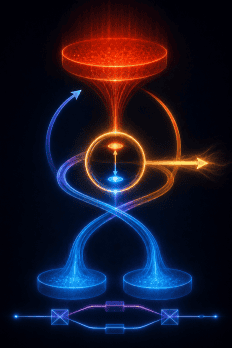
Heat flows from hot objects to cold objects – or does it? Although unidirectional heat flow is a natural consequence of the second law of thermodynamics, which states that entropy must either increase or stay the same, an international team has experimentally demonstrated that a quantum mechanism can reverse this flow of heat while remaining consistent with the laws of thermodynamics. The team then used the same mechanism to design a quantum engine that acts as a refrigerator while simultaneously extracting work.
The demon in the details
Imagine two chambers of gas side by side, separated by a permeable membrane. If the gas in one chamber is hotter than the other, then as time passes, more particles from the hotter chamber will move to the cooler chamber than vice-versa and heat will flow from the hotter chamber to the cooler one.
Now imagine a small agent, or “demon”, standing next to the partition. What if the demon allows cold gas particles to move into the hotter chamber, but stops the hot gas particles from moving to the colder chamber? In this scenario, we have achieved something called anomalous heat flow: the transfer of heat from a cold object to a hot object.
But there’s a catch. For the demon to accomplish this task, it must have a finite memory. That means that eventually, its memory will need to be erased before it can store new information. And it turns out that the erasure of this memory, even when combined with the anomalous heat flow, increases the total entropy. Thus, the second law is not violated.
Causality and the quantum switch
How can one realize such a demon? In the latest work, which is published in Physical Review Letters, Giulio Chiribella, Enrico Russo and Rosario Lo Franco worked with Zhong-Xiao Man and colleagues at Qufu Normal University in China to show that a quantum mechanical tool could perform the task of such a demon experimentally.

In quantum mechanics, things don’t need to be in a definite state all the time. They can be in a superposition of multiple states. For instance, a cat in a box can be both dead and alive at the same time until you open the box (perform a measurement). Then the cat’s wavefunction “collapses” into a definite state of either dead or alive.
Similarly, quantum mechanics also allows superpositions in the order of events. In the classical world, event A might happen before event B or vice versa. However, in quantum mechanics, we can instead have a scenario where the orders of operations are in a superposition. This indeterminate sequence of events is known as indefinite causal order, and it was crucial for achieving anomalous heat flow.
“The direction of heat exchange is not determined only by temperatures,” explains Man, a physicist who studies quantum information and quantum optics at Qufu. “When the order of two thermalization processes is coherently controlled, a quantum system can show heat flows that would be impossible in an ordinary classical picture.”
Experimental implementation
The team implemented this control using a device called a quantum switch that has an extra input known as the control quantum bit, or qubit. If the control qubit is in a 0 state, the order of operations is A followed by B. If it is in a 1 state, the order of operations is reversed (B followed by A). However, because the control qubit is a quantum object, it can also be in a superposition of the 1 and 0 state, just like the cat in a box. It is this superposition that implements indefinite causality.
To create this quantum switch, the experimentalists in the team used an interferometer to put light in a superposition of two different paths, with the photons experiencing a different order of events in each path. “A photonic set up…reproduces the effect of a quantum switch with modest resources,” explains Chiribella, a quantum information theorist at the University of Hong Kong.
The team also used this set-up to build a version of an engine that transfers heat from a cold body to a hot body while performing work. This is counterintuitive, given that in one framing of the second law of thermodynamics, heat transfer from a cold to hot body must be accompanied by work being done on the engine (rather than being done by it). However, the experiment didn’t break the second law because the control qubit of the quantum switch behaves like the memory of the demon. At the end of each engine cycle, the control qubit must be reset to its initial superposition state. In totality, the second law is obeyed.
“One of the most exciting aspects of this work is that a highly counterintuitive thermodynamic effect can be explored with photons in an optical laboratory,” observes Lo Franco, a quantum physicist in the Department of Engineering of the Università degli Studi di Palermo, Italy. “This makes the result not only conceptually interesting, but also experimentally accessible and relevant for future quantum technologies.”
The post Quantum principle allows heat to flow from cold to hot appeared first on Physics World.
Why physics should move beyond prestige in PhD admissions
Fairer criteria must be used when recruiting doctoral students
The post Why physics should move beyond prestige in PhD admissions appeared first on Physics World.
Physics faces a persistent and uncomfortable paradox. While we repeatedly assert that scientific excellence depends on creativity, rigour, resilience and collaborative problem-solving, the way we select the next generation of researchers still relies heavily on institutional prestige, grades and prior access to opportunity. Although easy to use, these criteria are deeply entangled with structural advantage resulting in a system that is efficient to operate and familiar – yet systematically exclusionary.
Traditional admissions criteria are heavily shaped by unequal access to resources, inside knowledge, mentors and cultural capital
Most academics recognize the limitations of traditional admissions criteria, but we continue to rely on them. Degree classification, university ranking, publications and reference letters feel like comfortable objective indicators of merit. In reality, however, they are heavily shaped by unequal access to resources, inside knowledge, mentors and cultural capital.
Two students with equal underlying potential, for example, can present very different CVs depending on whether they had access to a research-intensive institution, informal advice networks, paid research internships, or simply, the financial security to take risks. When admissions panels default to these signals as primary filters, they are not solely selecting for ability – they are also selecting for accumulated advantage.
This is not merely a matter of fairness but a strategic problem for science. Science and technical subjects in the UK face chronic recruitment and retention challenges. At the same time, major issues facing our society are too complex to solve from a single perspective. Physics skills are in growing demand across the UK and Ireland with PhD graduates entering industry, policy, entrepreneurship, education and beyond. This demands not only technical brilliance, but adaptability, communication and ethical judgement.
To achieve the interdisciplinary breadth required to tackle today’s issues, we need to implement thoughtful strategies and processes. If we continue to draw from a narrow and self-reproducing talent pool, we constrain not only who gets to participate in science, but the kind of science we are able to do.
A new approach
At the Centre for Doctoral Training (CDT) in Diversity-Led, Mission-Driven Research (DiveIn) based at the University of Glasgow, we saw an opportunity to move away from PhD admissions criteria being focused on prior privilege towards one based on demonstrable competencies relevant to excellent research and successful completion of a PhD. While most PhD programmes recruit students to predefined projects, which rewards prior disciplinary alignment and insider knowledge, DiveIn instead recruits a cohort first and co-creates projects later.
We worked with the Equity in Doctoral Education through Partnership and Innovation (EDEPI) programme to design a CDT with this mind. EDEPI was created to tackle persistent inequalities that create barriers to access and participation for racially minoritized groups. The EDEPI framework identifies three broad areas: comprehension and evaluation (analytical and problem solving, communication, planning and organization); delivering results (integrity, working with others, independence); and socio-emotional competencies (motivation, curiosity, resilience). We expanded the EDEPI framework to emphasize an appetite for interdisciplinary research; cohort-based development; and advocacy.
A core pillar of the DiveIn approach to the EDEPI framework is anonymization. Our applications are divided into separate components, with personal data, CVs and competency statements de-linked during evaluation. Assessors also never see names, genders, nationalities or institutional affiliations.
The DiveIn admissions process consists of four key elements. The first is an anonymized, competency-based written application, structured around five targeted questions probing motivation, resilience, curiosity and self-reflection. The second is a task-based exercise, in which all applicants analyse the same dataset and explain their reasoning – testing analytical thinking and communication independently of discipline.
Another aspect of the process is a double-marked, wide-ranging assessment, ensuring that no single impression dominates and that different aspects of the application are judged independently. The final aspect is a transparent, structured interview with questions shared in advance and mapped explicitly to competencies.
Applicants are assessed for their ability to thrive in a diverse, collaborative cohort
Importantly, applicants also receive active support, which includes webinars explaining the process, guidance videos for each question and live drop-in sessions. This is not coaching for advantage – it is an explicit attempt to dismantle the “hidden curriculum” that privileges those already familiar with academic selection rituals. Applicants are, therefore, assessed not only for individual PhD readiness, but for their ability to thrive in a diverse, collaborative cohort.
Diversity gains
DiveIn’s first full recruitment cycle provides some encouraging evidence that our approach is working. The resulting cohort is naturally diverse in background, discipline and experience. Our results also suggest that undergoing such a shift can widen participation without lowering standards and may, in fact, improve the quality and impact of the research that the PhD cohort carry out. In other words, the process did not abandon standards but changed what those standards were designed to measure.
If we continue to admit PhD candidates primarily based on narrow retrospective signals, we will systematically under-select precisely the kinds of researchers the future requires. Conversely, if we treat admissions as a design problem – something that can be structured, tested, iterated and improved – we open the door to a more resilient, creative and socially responsive generation of researchers. As diversity gains in the technology sector are stalling, this reform to admissions could help sustainably boost diversity in UK Tech.
We can build systems that are fairer, more principled, and more aligned with the realities of modern research
We now need to refine, scale and continue to evaluate the programme. But the core insight is robust: we can do better than prestige-driven selection. We urge anyone who selects PhD students for their programme to think about these issues and make use of the resources available at EDEPI on inclusive PGR admissions. We can build systems that are fairer, more principled, and better aligned with the realities of modern research.
For a discipline built on careful measurement and experimental design, it is striking how little physics has applied those principles to choosing who gets to become a scientist. Perhaps it is time we did.
- This article was written with Ross Forgan, Sandra Dopico Ardao, Qammer Abbasi and Caroline Gauchotte-Lindsay.
The post Why physics should move beyond prestige in PhD admissions appeared first on Physics World.
Artificially rotating system reflects radiation like a black hole
Rotational super-radiance observed for twisted radio waves
The post Artificially rotating system reflects radiation like a black hole appeared first on Physics World.
A radio signal has been amplified by scattering it from a stationary coin-sized electronic circuit that behaves as though it is rotating at an enormous rate. Conceived by a team at the City University of New York, the experiment is said to provide the first observation of rotational super-radiance involving electromagnetic waves. This wave-amplification effect is inspired by rotating black holes and was predicted more than half a century ago. Andrea Alù and colleagues found that only radio waves carrying a particular kind of twist were boosted, by as much as a factor of six in power.
In 1969 Roger Penrose pointed out that a rotating black hole holds a vast reservoir of energy that, in principle, can be tapped. “An object entering the region around the black hole can split into two parts, one falls into the black hole while the other escapes with more energy than the original object had, effectively taking some rotational energy from the black hole,” Alù, explains.
Two years later the Soviet physicist Yakov Zel’dovich realized that the same thing should happen to waves. “If a wave carrying angular momentum reflects from a rapidly rotating absorbing cylinder, the reflected wave could be amplified and come back stronger than it arrived,” says Alù. That amplification is called rotational super-radiance, which Alù describes as, “a process in which a wave becomes stronger by extracting energy from a system that rotates very rapidly”.
The catch has always been the word “rapidly”. For the effect to occur, the rotation must outrun the wave itself, and for light or radio waves that means rotational rates no mechanical object could survive. The effect has been coaxed out of water waves swirling around a vortex and out of sound waves bouncing off a spinning absorber, but electromagnetic waves had been out of reach. “While the idea is fascinating, no experimental demonstration was reported for electromagnetic waves, due to the required very fast speeds,” Alù says.
Clever solution
The CUNY team has found a clever way around the speed restriction. “Instead of physically spinning an object, we created an artificial rotation by periodically changing the properties of a network of resonators in space and time in a way that mimics rotation,” says Alù. The new device is disarmingly simple, comprising three small electrical circuits wired into a loop roughly two centimetres across, each one tuneable like a radio dial. The tuning of all three is wobbled up and down, with each kept slightly out of step with its neighbours, so the pattern sweeps around the loop like a wave passing through a stadium crowd.
“Although no physical object is rotating, this travelling modulation pattern acts like a rotating system,” Alù explains. And because the apparent speed is set purely by how quickly the electronics are driven, it can be pushed as high as one likes. “In fact, this speed can be faster than the velocity of light without violating any physical law.” Nothing material moves, so nothing outruns light.
The researchers fed a 100 MHz radio signal into the loop. This light was in a specific twisted state (possessing orbital angular momentum). They then swept the rotational rate from 5 MHz up to 195 MHz. Below 100 MHz the reflected light weakened steadily, as expected. Above 100 MHz, however, the synthetic rotation overtook the wave and the behaviour flipped. The reflected signals reappeared at the same frequencies as before — 60, 70 and 80 MHz — but were twisted the opposite way, and were stronger rather than weaker. That reversal, Alù notes, is “a key signature of entering the regime associated with super-radiance”. The gain arises in special windows the team calls angular-momentum bandgaps, which open once the synthetic rotation is fast enough and through which “energy can be transferred from the synthetic rotation to the wave”.
Fussy amplfier
The amplification was fussy about its input. “Our observed amplification was selective to the angular momentum of the input wave, only waves with particular angular-momentum properties experienced gain,” says Alù. Stranger still, the effect feeds on waste. In an ordinary amplifier, energy leaking out of the device is the enemy. Here a leakier circuit gave more gain, exactly as the thermodynamic reasoning behind super-radiance demands.
Alù is careful about what the experiment does and does not deliver. “The experiment does not study actual black holes or quantum gravity. Instead, it creates a laboratory system that reproduces some of the same physical principles involved in rotational energy extraction.” What it offers, he says, is “a controllable analogue platform where researchers can test and explore concepts that are otherwise difficult or impossible to study experimentally in astrophysical black holes”.
Three circuits in the loop allow only three distinct twists, so the immediate goal is bigger loops supporting a wider range. Beyond that lies the jump from radio waves to visible light, and a quantum version in which synthetic rotation might conjure photons out of empty space. Practical spin-offs may arrive sooner. Amplifying only one twist at a time is a natural fit for encoding information, and, Alù suggests, “new forms of lasers, with selective emission of angular momentum, can be envisioned”.
The research is described in Nature.
The post Artificially rotating system reflects radiation like a black hole appeared first on Physics World.
Quiz of the week: what age of science is the US entering according to Trump?
Have you been keeping up to date with physics news? Try our short quiz to find out
The post Quiz of the week: what age of science is the US entering according to Trump? appeared first on Physics World.
Fancy some more? Check out our puzzles page.
The post Quiz of the week: what age of science is the US entering according to Trump? appeared first on Physics World.
AI model helps physics Nobel laureate out of a decade-old mathematical jam
Artificial intelligence is radically changing how researchers in some disciplines work
The post AI model helps physics Nobel laureate out of a decade-old mathematical jam appeared first on Physics World.
Two theoretical physicists – including a Nobel laureate – have solved a mathematical problem that flummoxed them for 10 years with help from Claude, the large language model (LLM) developed by the US-based firm Anthropic. In addition to its importance for fundamental physics, the result is significant because it offers further evidence that artificial intelligence (AI) is reshaping the nature of research in some fields.
The problem that kept Francesco Zamponi and Giorgio Parisi awake at night originates in the field of complex systems and relates to a phenomenon known as jamming. “Jamming describes a sudden transition at which a fluid system becomes completely rigid, yet remains disordered,” explains Zamponi, a physicist at the Sapienza Università di Roma, Italy.
To visualize this, Zamponi suggests imagining a box filled with spheres (such as tennis balls) that are floating in zero gravity, free from friction or weight. When there are only a few spheres in the box, they have plenty of room to move, bouncing off each other and the box like a classical gas. However, if you add more spheres or inflate the existing ones, space becomes increasingly scarce, and a sphere that tries to move soon impinges on its neighbours. Eventually, a critical density is reached, and every sphere is securely held by those around it, causing the entire system to “lock up” into a state where no more movement is possible.
If the spheres freeze into a regular, geometric pattern, they form a crystal-like structure that resembles carefully stacked oranges at the market. If they are compressed or added quickly, though, a crystal cannot form. Instead, they freeze into a completely disordered packing state, like a traffic jam.
Generalizing the problem
Moving beyond physical spheres into more abstract territory, Zamponi notes that jamming is an example of a highly general mathematical problem known as constraint satisfaction. “In this framework, the spatial positions of the spheres act as the variables, or degrees of freedom, while the strict rule that no two spheres can overlap serves as the constraint,” he explains. As more variables are incorporated, Zamponi adds, satisfying all the rules simultaneously becomes increasingly difficult.
Because of this precise mathematical mapping, jamming concepts are widely applied in neuroscience and artificial intelligence. In a machine learning model or a biological brain, for example, the synaptic weights represent the degrees of freedom, while the data classifications or memories that must be learned serve as the constraints.
“Just like physical spheres, an artificial neural network undergoes a jamming transition,” Zamponi observes. “In the ‘liquid’ phase, the network easily configures its weights to satisfy all constraints, allowing it to classify data perfectly. But when tasked with too much data, it hits a wall, corresponding to the ‘solid’ phase. It can then no longer satisfy all the conditions, and it begins to make errors.”
A surprising relation
In 2014, Parisi, who received half of the 2021 Nobel Prize in Physics for “the discovery of the interplay of disorder and fluctuations in physical systems from atomic to planetary scales”, and Zamponi spotted a surprising relation in the theory of jamming. Working with colleagues in the US and France, they found that in numerical calculations, two mathematical parameters, denoted a and b and related to the scaling of the distribution of contact forces and inter-sphere gaps as the system reaches the jamming point, mysteriously add up to 1. These parameters are very important for characterizing the physical structure of the packing, but try as the researchers might, they could not obtain a formal mathematical proof that a + b = 1.
Asking generative AI for help was Parisi’s idea. The problem was well-suited for machine assistance because it was well-defined, with a clear conjecture and a known numerical answer but no analytical proof. He and Zamponi chose Claude because it boasts more advanced coding and mathematical reasoning capabilities than other models of its kind.
Even so, they didn’t ask it for the proof immediately. “We first prompted Claude to replicate the numerical calculations our group had developed a decade ago,” Zamponi explains. “Once it had successfully reproduced those exact results, we took the natural next step and asked it: ‛If a + b = 1, can you prove why?’”
The model produced an initial conceptual path that was essentially correct, but that contained minor mathematical errors and required several iterative refinements and verifications. Still, Zamponi says, the “core intuition” belonged to the AI: “We had spent years looking for a complicated solution – like deeply hidden structural symmetry – but Claude showed us that the solution was far simpler; it was right there in front of us, but we had just missed it.
“The new proof connects our infinite-dimensional theory, which is more abstract but mathematically rigorous, with a framework developed at the same time by our colleague Matthieu Wyart and his team at the École Polytechnique Fédérale de Lausanne (EPFL),” Zamponi continues. “Wyart’s theory is built on more concrete physical notions, but it relies nevertheless on some assumptions.” The new result, he tells Physics World, confirms that both starting points lead to the same physical laws.
“More important than the industrial revolution or the birth of the Internet”
Zamponi believes that the advent of generative AI could be on par with, or even more important than, the industrial revolution or the birth of the Internet. As a “telescope for the mind”, he says it could become indispensable for research, allowing scientists to test ideas at unprecedented speeds. It could also lower specialization barriers and facilitate interdisciplinary work by unlocking complex literatures that would otherwise take too long to master.
On the downside, though, Zamponi is concerned that LLMs also encourage the production of poor-quality, pseudo-scientific research, straining the peer-review system. “We desperately need to figure out how to filter and review this influx,” he says. “We also need to design novel pedagogical frameworks to responsibly integrate tools like Claude into undergraduate and graduate research courses.
“To use these tools responsibly, we believe transparency is key. This is why we chose to publish our full conversation with Claude alongside our paper. If an AI sparks a genuinely new idea, we believe that its ‘thought processes’ should be public record.”
Jamming and random sequential absorption
Zamponi is now applying the approach detailed in the new work, which is published in Journal of Statistical Mechanics: Theory and Experiment, to a problem involving the random sequential absorption (RSA) of hard hyperspheres. This classic protocol for generating random packings involves introducing spheres one by one at completely random positions. “It is a vital tool for understanding the geometry of void spaces and packing efficiency, which directly relates to finding optimal error-correcting codes and navigating the mathematical ‘curse of dimensionality’,” Zamponi says.
While both RSA and jamming transitions describe how systems of hard spheres lock up, they represent two fundamentally different physical processes, he explains. In traditional jamming, particles are mobile and fluid and they continuously rearrange and relax until the entire system undergoes a collective, sudden transition into a rigid, solid-like state. RSA, on the other hand, is a strictly out-of-equilibrium, irreversible process where particles never move once placed. RSA therefore reaches a “saturation” limit rather than a true collective jamming transition.
The post AI model helps physics Nobel laureate out of a decade-old mathematical jam appeared first on Physics World.
New material was created in Hiroshima nuclear explosion
Rapid cooling locked in unusual crystal structure in silicon-rich metal alloy
The post New material was created in Hiroshima nuclear explosion appeared first on Physics World.
One of my favourite books about physics is The Second Kind of Impossible: the Extraordinary Quest for a New Form of Matter by Paul Steinhardt. It chronicles how the physicist and his colleagues established the extra-terrestrial provenance of a mysterious quasicrystal sample and then trekked to its likely place of origin in the Siberian wilderness.
That sample was first identified by the Italian geologist Luca Bindi, who features throughout the book and specializes in the discovery of new minerals. I was delighted to see that Bindi has a new paper out that identifies a hitherto unknown material. That excitement was tempered by the fact that the alloy was created by the catastrophic nuclear explosion over the Japanese city of Hiroshima.
On this day in 1945, an atomic bomb was detonated at 580 m over the city, creating a fireball where temperatures exceeded 7000 °C. As many as 140,000 people were killed by the bomb, which destroyed about 70% of the city’s buildings.
Rapid condensation
The fireball was a turbulent plasma of vapourized material from the city. This included building materials, metals, soil, water and, we mustn’t forget, some of the city’s residents. The plasma condensed rapidly creating glassy particles of micron–millimetre size that rained down on the Hiroshima area. These “hiroshimaite” particles mostly comprise of calcium, aluminium and silicon and can be found in the sandy beaches of Hiroshima Bay.
“The fireball left behind materials that never existed before,” says Bindi – who is based at the University of Florence. He adds that these hiroshimaites are helping scientists understand how matter behaves under extreme conditions – describing the fireball as a “giant accidental material-science laboratory”.
Unusual structure
In this latest study, Bindi and colleagues in Italy, the US and Switzerland have identified a new metal alloy in a piece of hiroshimaite. The metallic grain is about one micron in size and is a homogenous mixture of six metals and silicon. X-ray diffraction shows that the alloy has an unusual crystal structure. This, along with the alloy’s high silicon content, make it a special material that has never been seen before.
According to Bindi, the alloy was formed by the condensation of a complex metallic vapour that was created by a range of materials that were caught up in the nuclear fireball. As the fireball cooled rapidy, a tiny droplet of metals and silicon condensed from the plasma. Then as the temperature dropped at an extraordinary rate, the droplet solidified and its metastable crystal structure was frozen in. This violent quenching prevented the alloy from evolving to a more common crystal structure.
This is not the first time that Bindi has found a new material in the debris of a nuclear explosion. A few years ago his was part of a team that discovered a quasicrystal in a piece of trinitite – glassy material that was created in July 1945 by the Trinity nuclear bomb test in New Mexico.
Bindi and colleagues report their results in Science Advances.
The post New material was created in Hiroshima nuclear explosion appeared first on Physics World.
Building bridges between quantum and classical computing
Yonatan Cohen of Quantum Machines is our podcast guest
The post Building bridges between quantum and classical computing appeared first on Physics World.
This episode of the Physics World Weekly podcast features Yonatan Cohen, who is co-founder and chief technology officer of Quantum Machines.
The company was started in 2018 by three physicists from Israel’s Weizmann Institute. It develops control systems for quantum computers and has about 300 employees and 500 customers worldwide.
Cohen explains why hybrid quantum–classical control systems are increasing in importance as quantum computers scale-up to include more and more qubits. He also talks about Quantum Machines’ strategy to support a wide range of qubit types – including superconducting circuits, trapped ions, neutral atoms, spins and NV centres.
We chat about some of the company’s products and its collaborations with quantum-technology companies including Rigetti Computing and Diraq. Cohen also gives career advice for physicists who want to work in the quantum sector.
The post Building bridges between quantum and classical computing appeared first on Physics World.
Word wave puzzle no.7
Can you work out the word in this puzzle?
The post Word wave puzzle no.7 appeared first on Physics World.
Here’s how the game works:
-
- Enter a word guess – in this game the word has six letters.
- After submitting your guess, each letter in the guessed word is coloured to provide feedback:
- Green: The letter is correct and is in the correct position in the target word.
- Yellow: The letter is correct but is in the wrong position in the target word.
- Grey: The letter is not in the target word at all.
- Using this colour feedback, refine your next guess.
- Continue guessing until you correctly identify the hidden word(s) or run out of attempts.
If you want a clue to the answer, read the article here.
Fancy some more? Check out our puzzles page.
The post Word wave puzzle no.7 appeared first on Physics World.
Astronomers capture highest-resolution image ever of the Sun’s surface
Picture reveals tiny plasma whirlpool-like patterns that have never been seen before
The post Astronomers capture highest-resolution image ever of the Sun’s surface appeared first on Physics World.
An international team of astronomers has released the highest-resolution image ever captured of the Sun’s visible surface. Taken by the Daniel K Inouye Solar Telescope in Hawaii, the picture reveals tiny plasma whirlpool-like patterns that have never been seen before (Nature doi:10.1038/s41586-026-10871-3).
The Sun’s visible surface – the photosphere – is a thin layer of its atmosphere where the fluid plasma becomes transparent. This region is known to be dynamic and complex, with factors such as magnetic field and convection currents shaping the atmosphere.
The studied region by the astronomers is a magnetically active area close to a sunspot. In the image, the solar surface appears dominated by band-like and vortex-like structures.
The authors associate these features with Kelvin-Helmholtz instabilities, a well-known effect in fluid dynamics in which rippled structures form when two fluids slide past each other at different speeds.
This generates shear forces at the interface, causing minute disturbances to grow into wave- or vortex-like flows.
The vortices occur at the edges of so-called granules, which densely cover the Sun’s visible surface and measure between 500 and 2000 km in diameter.
Some of these “fringes” are little more than 20 km wide and resolving these structures is comparable to discerning a €1 coin from a distance of 180 km.
The findings provide the first known confirmation of Kelvin-Helmholtz instabilities on the Sun and researchers suggest that the instability might explain why the Sun’s outer atmosphere gets so hot, and why magnetic energy builds up and moves around the surface.
“The newly discovered plasma vortices impressively demonstrate how minute processes – at the limit of what we can resolve using all available techniques – significantly determine the nature of our star,” notes Sami Solanki, director of the Max Planck Institute for Solar System Research in Göttingen, Germany.
The post Astronomers capture highest-resolution image ever of the Sun’s surface appeared first on Physics World.
Topology affects the crumpling of growing elastic sheets
Discovery could lead to new metamaterials
The post Topology affects the crumpling of growing elastic sheets appeared first on Physics World.

A new mechanism governing the geometric shapes of growing elastic sheets has been identified by a trio of physicists in Israel. Through a combination of simulations and experiments, Eran Sharon and colleagues at the Hebrew University of Jerusalem showed that the dimpled patterns that form in a growing elastic object have topological origins.
This mechanism is unrelated to geometric incompatibilities, which are known to dimple natural materials. The discovery could lead to a deeper understanding of how complex shapes emerge in the natural world – and to the development of new artificial materials.
Thin sheets are ubiquitous in nature: examples include leaves, petals, and the cellular linings of organs and blood vessels. The complex makeup of natural sheets means that local regions within them have preferred mechanical rest states that are incompatible with those of other regions. As a result, there is no way to arrange the sheet so that every part is simultaneously stress free – leading to effects like wrinkling, bending, and buckling.
Called geometric incompatibility, this phenomenon is responsible for numerous geometric forms in the natural world, enabling growing tissues to shape themselves without any external influence. For some time, researchers have attempted to mimic these natural mechanisms in synthetic materials.
Richness of shapes
“Looking at natural growth processes, as in plants growth, or embryo development, we see amazing richness of shapes and shape development that currently cannot be achieved with conventional fabrication methods,” says Sharon.
Sharon’s group has already shown that many patterns in nature can be understood in terms of the Gauss and Mainardi-Codazzi-Peterson incompatibilities – which were developed in the 19th century. Together with team member Michael Moshe, whose group explores the interplay between mechanics and geometry in soft materials, their work led to discoveries including the mechanical origins of shape selection in rose petals.
Now, Moshe and Sharon have teamed-up with Yafei Zhang to identify a phenomenon that cannot be explained by those mechanical instabilities. In their experiment, they started with a uniform elastic sheet formed into a hollow sphere, with circular holes at each pole. When they added wedges of material into the sheet to mimic growth, it initially behaved like a smooth, growing sphere – but only up to a certain point.
Missing mechanism
“The growing sheet satisfies the established local compatibility conditions, and is thus expected to show smooth ‘boring’ shape,” Moshe explains. “Yet it unexpectedly, develops a crumpled appearance, suggesting that an important shaping mechanism was missing from the existing framework.”
Important clues came when the team cut into the crumpled sphere along a meridian, from pole to pole. Instantly, the crumpling disappeared, and the sphere relaxed back to its original smooth shape. This effect also occurs in simulations of a smoothly growing sphere.
With no changes to the Gauss or Mainardi-Codazzi-Peterson incompatibilities governing the mechanical forces in the sheet, the trio concluded that the sudden transformation emerged from an entirely different mechanism, rooted in the mathematical principles of topology. In this view, unlike smooth geometric transformations such as bending, stretching, or twisting, which preserve a shape’s mechanical properties, cutting introduces a sudden transformation that changes its mechanical behaviour.
In this way, the meridional cut brought the sphere into a new topological state. “Unlike conventional incompatibility, this frustration is topological in character, and can be quantified by a global measure,” Moshe explains. “It provides a new mechanism by which growing sheets can select complex, wrinkled or dimpled shapes.”
The trio’s discovery now raises new mathematical questions about the limits of growing elastic sheets, beyond which their smooth geometries can no longer be maintained. “What we have discovered that the geometrical principles we knew before should be supplemented with topological considerations, leading to an even wider class of shaping principles,” Sharon says. “This allows a better understanding of morphogenetic processes and expands our abilities to shape synthetic structures.”
In turn, the team’s insights could uncover new understanding of how shaping mechanisms could be harnessed, perhaps leading to the discovery of new metamaterials, with shapes and mechanical functions programmed into their growth.
The research is described in Physical Review Letters.
The post Topology affects the crumpling of growing elastic sheets appeared first on Physics World.
Critics deride US administration’s ‘golden age of science’ report
The document comes as the administration looks to cut the science budget for 2027
The post Critics deride US administration’s ‘golden age of science’ report appeared first on Physics World.
A new report by the Trump administration that outlines a model for the future government support for science and technology has drawn heavy criticism from the US scientific community. Entitled Science: A New Golden Age, it emphasizes developments by public–private partnerships at the expense of university-driven research with critics asserting it places politics above science.
The 104-page report aims to update a 1945 document – Science, the Endless Frontier – that was issued by Vannevar Bush, who served as director of the US government’s Office of Scientific Research and Development in the 1940s. The report eventually led to creation of the National Science Foundation (NSF) in 1950.
The 2026 report focuses on how government R&D spending reaches the scientific community and claims that the US research enterprise has become too centred on established research institutions rather than individual researchers.
The report wants the government to significantly reduce the amount and number of grants it gives universities and instead make large investments in industry and non-profits. It also calls for a significantly scale-up of the use of artificial intelligence in science.
“We must renew the R&D enterprise on which our scientific leadership depends,” US science adviser Michael Kratsios and Office of Management and Budget (OMB) director Russell Vought write in an accompanying memorandum.
Yet critics says that funding for exploratory science is not the administration’s only target. “It’s very clear that Kratsios/Trump want to destroy universities, or what he calls ‘legacy institutions’,” says public policy expert Shobita Parthasarathy from the University of Michigan. “There is no respect for basic research, which has historically driven innovation in the US [but that] industry won’t fund.”
Neal Lane, former US science adviser who served as NSF director between 1993 and 1998, takes issue with how individual agencies are asked to implement the points raised in the report. “Unlike previous rules, which were uniform guidance, allowing an agency like NSF to set their own rule, the new rule is a binding uniform regulation applying to all agencies as written,” he says.
Lane is also unhappy with the report’s dismissive approach to peer review, which it argues slows down innovation, proposing instead to diversify funding mechanisms with alternatives such as “golden tickets” rapid grants and prize challenges.
“For many decades, expert peer review has been regarded as the gold standard for funding research and publishing the results,” he says. “It is not credible for the administration to claim it supports ‘gold standard science’ without peer review.”
‘Misguided approach’
While some see merit in aspects of the report, or at least a need to rethink the underpinning of scientific research, the American Association of University Professors (AAUP) see the administration’s approach as a misguided way to address those challenges. “Reforms must strengthen scientific independence – not weaken it,” an AAUP statement asserts.
That view is echoed by the Federation of American Scientists (FAS), which note that while the report calls for a “lighter, faster, and more capable research enterprise”, it says that the to the “uniform guidance that governs how federal grant funding is administered runs counter to that goal”.
The report comes as the administration’s proposed budget for financial year 2027, which Congress must approve, would cut overall government spending on R&D by 22%, with support for the NSF slashed by more than 50%, NASA by 23% and the Department of Energy’s Office of Science by 15%. The OMB also proposes guidelines that would allow agencies to terminate grants that “no longer serve agency priorities or the national interest”.
Tess DeBlanc Knowles, a senior director at the US thinktank the Atlantic Council, says US science will be hit badly if those cuts go ahead. “No amount of experimentation can counteract the damaging effects that dramatically reduced funds will have on the foundation of the US’s scientific and technological leadership and ability to train the next generation of scientists,” she says.
- A new report by the American Institute of Physics has found that physics and astronomy PhD graduates are quitting the US in record numbers. The proportion of non-US citizens leaving the US post-degree nearly doubled, from 16% in 2024 to 29% in 2025 – the largest one-year increase since 1997. The report also says about 12% of US citizens post-physics PhD left the US in 2025, compared to just 5% two years earlier.
The post Critics deride US administration’s ‘golden age of science’ report appeared first on Physics World.
Ask me anything: Kristian Dominek Barajas – ‘I’m able to take a really complicated problem and give it my best guess’
Kristian Dominek Barajas is head of quantum theory at Oxford Ionics, an IonQ company
The post Ask me anything: Kristian Dominek Barajas – ‘I’m able to take a really complicated problem and give it my best guess’ appeared first on Physics World.
Kristian Dominek Barajas is head of quantum theory at the UK-based quantum computing company Oxford Ionics, which merged with the US firm IonQ in 2025. Barajas got his PhD – which was focused on developing analytic methods for high-accuracy models of driven quantum systems beyond the rotating-wave approximation – at the University of California Los Angeles, US, via the American Physical Society’s Bridge Program. The programme provides pathways into research for qualified students who might not otherwise continue their physics education. He now serves as chair of the APS Committee on Minorities (2025–2026), where he helps shape national initiatives that support physicists from historically marginalized backgrounds – particularly people of colour, LGBTQIA+ physicists, and physicists with disabilities.
What skills do you use every day in your job?
Because I’m relatively new to the field, I often have to break difficult questions down into simpler ideas before I can grapple with them. That has trained me to take a really complicated problem and give it my best guess, and that first-pass intuition often gets me surprisingly close to the full solution.
The other thing I’d highlight is leadership skills. I come from an untraditional background – it took me a long time to do my undergraduate degree, and afterwards I worked in a lot of different jobs, including working at a pet store, where I was training to become a team lead. When I went to grad school, I applied through the APS Bridge Program, which is great, and it gave me an opportunity to get into research. But again, my path wasn’t traditional: I did soft condensed matter physics for four years, and then my advisor passed away unexpectedly, so I switched fields to trapped ions because I needed to graduate. I had no background in quantum physics at that point, so it was quite a transition.
Experiences like this added up. By the time I joined Oxford Ionics right before the merger with IonQ, even though I was the “greenest” person in my team in terms of being new to the field, I had the most leadership experience. That meant I went from being an entry-level quantum theorist to a senior quantum theorist in two or three months. A month and a half later, I became the atomic, molecular and optical (AMO) theory manager. The experience I’d gained made it easy to set priorities and get people to go in the correct direction.
What do you like best and least about your job?
My least favourite part of the job is that I don’t get to read much new research. The job is so fast-paced and there’s so many things happening every day that getting the chance to sit down and read an article is quite rare. I use AI tools to help me find and keep up with new research. Part of my workflow involves asking AI to identify relevant papers and give me an initial sense of what I need to know. I still skim the papers themselves as much as I can, but I don’t get the chance as often as I’d like to pick up a manuscript and spend a whole day working through it like I did in academia.
We also don’t always have the time to write papers about what we’re doing. It’s not that we aren’t allowed to – in fact, we’re encouraged to pursue that if we want to do it – but finding time is challenging.
I’m constantly getting to do new and interesting physics, and I absolutely love that about my job
The upside is that the pace at which I get to do research far, far outweighs what I experienced in academia. What we accomplish on our team in four to six weeks is comparable to the amount we would do in six months in academia. It is absurd how fast we get to move. I’m constantly getting to do new and interesting physics, and I absolutely love that about my job.
What do you know now that you wish you’d known at the start of your career?
I wish I’d known that feelings of imposter syndrome don’t always have to be something to fear. For me, they can also be a reminder that there is still so much more to learn, and that can be exciting. That’s why I was so excited for the opportunity to earn my PhD in physics: it gave me the chance to keep learning. Now, whenever that old imposter feeling comes up, I try to see it as an opportunity to learn rather than a reason to hold myself back. I wish I had embraced that earlier in my career and not been so afraid to try things.
The post Ask me anything: Kristian Dominek Barajas – ‘I’m able to take a really complicated problem and give it my best guess’ appeared first on Physics World.
Magnetic molecules explain a puzzling material
Researchers have uncovered how a two-dimensional magnet reorganises itself into hexagonal magnetic clusters, producing an unusual quantum-disordered state
The post Magnetic molecules explain a puzzling material appeared first on Physics World.
Na₂Mn₃O₇ is a magnetic material that behaves unusually and therefore can provide insight into how magnetism emerges in complex materials. Magnetic materials contain entities known as spins, which can be thought of as tiny magnets with north and south poles. These spins interact with neighbouring spins, and as a material is cooled, they often align into an ordered pattern that extends across the entire material, known as long-range magnetic order.
However, Na₂Mn₃O₇, which contains magnetic Mn⁴⁺ ions, behaves differently. It has strong magnetic interactions, very little disorder, and a two-dimensional arrangement of magnetic ions. Under these conditions, a material with relatively large spins would normally be expected to develop long-range magnetic order at low temperatures. Surprisingly, no magnetic ordering is observed, even at very low temperatures.
The material also exhibits two distinct magnetic crossovers. Around 110-120 K, the magnetic susceptibility reaches a broad maximum, indicating that strong magnetic correlations are developing. Around 60-70 K, a feature appears in the specific heat, showing that the system is undergoing a further internal reorganisation. The presence of two separate temperature scales suggests that the magnetism develops in two stages.
Using theoretical and computational techniques, the researchers showed that this unusual behaviour originates from the crystal structure of Na₂Mn₃O₇. The crystal structure divides the magnetic lattice into strongly connected hexagonal clusters of six Mn ions. These clusters behave like magnetic ‘molecules’, with the spins inside each hexagon becoming strongly correlated. Interactions between different hexagons are much weaker and frustrated, preventing the formation of long-range magnetic order across the material.
This research is important because it demonstrates that even large-spin magnetic materials can exhibit quantum-disordered behaviour. More broadly, it shows that crystal structure can be used as a tool to engineer new magnetic states by organising spins into strongly correlated clusters that suppress conventional magnetic ordering.
“What is striking in Na₂Mn₃O₇ is that the crystal structure does more than slightly distort the magnetic lattice. It reorganises the spins into strongly correlated hexagons that behave as emergent magnetic molecules, while frustration and quantum fluctuations prevent these units from ordering collectively.“ – Yasir Iqbal, Indian Institute of Technology Madras
Read the full article
Crystallography-driven molecularization of a two-dimensional spin-3/2 magnet
Hari Borutta et al 2026 Rep. Prog. Phys. 89 068003
Do you want to learn more about this topic?
Frustrated magnets in high magnetic fields—selected examples by J Wosnitza, S A Zvyagin and S Zherlitsyn (2016)
The post Magnetic molecules explain a puzzling material appeared first on Physics World.
Mapping electric fields in working graphene devices
High-resolution imaging shows how oxide layers modify graphene's electrical behaviour
The post Mapping electric fields in working graphene devices appeared first on Physics World.
Graphene, an atomically thin material of a single layer of carbon atoms, is a fascinating material for high-speed electronics, spintronic devices, and neuromorphic components due to its exceptional tunable electrical conductivity. One area of research focuses on understanding how electrons flow through graphene to enable the design of advanced devices. For applications, ultrathin metal-oxide layers (e.g., aluminum oxide and titanium oxide) are routinely deposited on graphene, which deliberately alter electron flow and provide greater control over its properties, in devices ranging from transistors to spin valves. However, although the effects of these coatings are known, researchers have not previously been able to directly observe what is happening inside the device. Instead, their understanding has relied primarily on theoretical models, numerical simulations, and indirect electrical measurements.
In this work, the researchers used X-ray Photoelectron Spectroscopy (XPS) to map electrical potentials across devices while they were operating. They examined the electrical landscape, identifying regions with steep slopes corresponding to strong electric fields and flatter regions corresponding to weaker electric fields, to determine how oxide coatings modify this landscape. They found that metal oxides flatten the electrical landscape through a process known as p-type charge-transfer doping. This occurs when the oxide removes some electrons from the graphene, altering its local electrostatic environment and reducing the voltage gradient. As a result, local electric fields become weaker. The oxide layers suppress the electric fields, reducing them by more than 50%, a significant effect for device operation. A key advance of this research is the visualisation of this effect at very high spatial resolution, whereas previously it could only be inferred from electrical resistance measurements. In addition, by making a direct comparison with electrical measurements, the researchers confirmed the observed effects are due solely to electrostatics and charge redistribution.
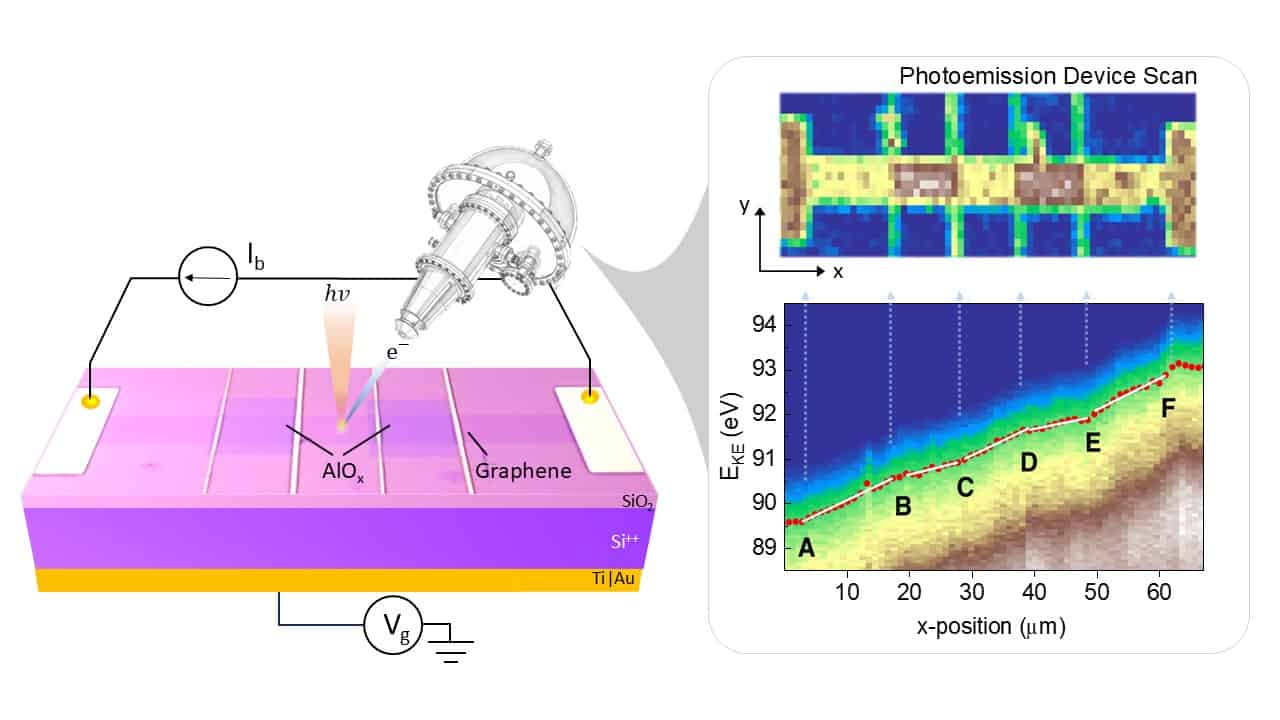
Modern electronic devices increasingly depend on controlling electricity at very small scales. By locally adjusting electric fields using oxide coatings, researchers gain an additional design tool that enables different regions of a graphene circuit to be tuned independently. This is particularly important for spintronic devices, which are highly sensitive to local electric fields, and neuromorphic computing hardware, which requires precise control of local electrical properties.
This work represents a breakthrough in the ability to directly map charge distributions and electric fields inside operating 2D-material devices, enabling improved device design.
Read the full article
Umidakhon Rayimjonova et al 2026 Rep. Prog. Phys. 89 060502
Do you want to learn more about this topic?
Phonons and thermal transport in graphene and graphene-based materials byDenis L Nika and Alexander A Balandin (2017)
The post Mapping electric fields in working graphene devices appeared first on Physics World.
How women physicists in India are breaking down barriers and shaping the future
Kaveri Hukku, Asima Pradhan and Urbasi Sinha describe their journeys as physicists in India
The post How women physicists in India are breaking down barriers and shaping the future appeared first on Physics World.
India has produced some exceptional women physicists over the years. From Bibha Chowdhuri, who co-discovered the meson and became the first Indian woman to receive a PhD in physics, to Ritu Karidhal, who played a pivotal role in making India the fourth country in the world to reach Mars, the country boasts a large pool of talented women.
But despite women accounting for more than 40% of Indian science graduates, they still only make up about 16% of all physics faculty at universities in India, close to the disappointing global average of roughly 17%. As in many other parts of the world, there are myriad reasons for the low numbers, ranging from social pressure to prioritize families over research careers to a lack of visible role models and even sexual misconduct.
IOP Publishing, which publishes Physics World, recently held a webinar to celebrate the contributions of female physicists in India and explore the challenges they face. It featured Kaveri Hukku, chief executive of ATOS Instruments Marketing Services, Asima Pradhan from SOA University, who recently retired from the Indian Institute of Technology in Kanpur, and Urbasi Sinha from the Raman Research Institute in Bangalore.

The webinar was organized by Shobha Shukla from the Indian Institute of Technology Bombay in northern Mumbai, who co-chaired the event with Physics World editor-in-chief Matin Durrani. One of India’s leading researchers in nanophotonics and materials science, Shukla is also a member of the editorial board of IOP Publishing’s Journal of Physics: Photonics.
“We are celebrating the women who are writing history in labs, industry and lecture halls right now,” said Shukla in her opening remarks. “This celebration is not a luxury. It is a necessity. It is how we build a culture of equity and innovation.” The following is an edited summary of the webinar, which you can watch in full on the IOP Publishing website.
Expert views

Kaveri Hukku did a bachelor’s and master’s degree in physics before going into industry, where she is now chief executive of the Bangalore‑based firm ATOS Instruments Marketing Services. Founded in 2013, it supplies research institutions and companies in India with advanced scientific instrument and equipment developed by third-party manufacturers from across the world.
Asima Pradhan is a laser physicist whose main interest lies in biomedical optics. With a PhD from City University of New York, Pradhan was based at the Indian Institute of Technology (IIT) in Kanpur for more than 30 years. After formally retiring in 2024, she is now an adjunct professor at SOA University in Bhubaneswar, where she also works for her start-up firm PhotoSpimedix, which is developing portable optical devices for clinical applications.
Urbasi Sinha, who studied physics at Jadavpur University and has both an MSci in natural sciences and a PhD from the University of Cambridge, UK, is head of the quantum information and computing (QuIC) lab at the Raman Research Institute in Bangalore. It is one of the first labs in India to use entangled and “heralded” single-photon sources for quantum science and technology applications – including India’s first project on satellite-based quantum communication.
How has your career developed and what kind of research are you currently involved in?
Kaveri Hukku: My story is actually very simple. Growing up, I was only interested in sports and games. There was no time for studies in my life. But when adulthood came knocking on my door, my parents sat me down and said “You need to support yourself – you’re not going to do it with your table tennis”.
So with some knowledge in maths and physics, I did a BSc in physics and then a master’s. After that, I found myself at the Indian Institute of Technology Bombay, where I managed to do some physics research at a serious level for a couple of years. But due to many circumstances outside my control, a PhD never happened.
Just as I was trying to decide on a future course for my life, our lab bought an ellipsometer [a device that measures changes in the polarization of light after it interacts with a sample], but the firm who sold us that system couldn’t set it up. It took me a few nights, but I managed to set it up, and from that I also got a job offer with the company. That started my career with instrumentation.
Urbasi Sinha: What excited me about physics from a very early age was how it combined clarity of thought with a sense of wonder, and this is what has driven me throughout my career. I’m an experimental quantum physicist, and I have worked extensively on different aspects, whether it is quantum optics, interferometry, quantum communication, randomness, and so on.
Essentially, I have used single photons and entangled photons both for making foundational insights and for developing emerging technologies. What is so exciting about my research is that it allows one to ask very deep questions about the nature of quantum mechanics, while also building systems that may have real technological value.
A recurring theme has been to connect fundamental aspects of quantum mechanics with practical questions of trust, validation and performance. A large part of my research currently is focused on quantum communication networks; the challenge of connecting photon sources with quantum memories, entanglement swapping, building these entanglement distribution-based quantum networks as part of India’s national quantum mission.

Asima Pradhan: After completing my master’s degree in physics in India, I moved to the US to do a PhD in experimental biophotonics under the supervision of Robert Alfano at the City University of New York. Coming from a family of doctors and engineers, I’d been keen on working in biophysics and, during my PhD, I did the first fluorescent spectroscopy experiments on human tissue. I’m very proud to have been part of that pioneering work.
When I came back to India and joined IIT Kanpur, I was based in the physics department, where an interdisciplinary research culture simply did not exist
Asima Pradhan
Then I did a postdoctoral stint at the University of Montreal, Canada, where I conducted some work on photodynamic therapy, collaborating with the physics, chemistry and pathology departments. I had a really good time working in such an interdisciplinary area, but when I came back to India and joined IIT Kanpur, the scenario was very different. I was based in the physics department, where an interdisciplinary research culture simply did not exist back then.
I worked around that and started collaborations with hospitals. We conducted experiments on light-tissue interactions with polarized light. From there, we went into translational research where we actually made a device for use in hospitals. So having begun my professional journey studying particle physics and field theory, I’m now trying to be an entrepreneur. I took voluntary retirement from IIT Kanpur two years ago, but I’m still doing research as an adjunct professor at SOA University in Bhubaneswar.
What skills do you use every day in your role?
Kaveri Hukku: Our profession can be made as simple or as demanding as you want it to be. I try to maintain high technical and analytical skills because the scientists I deal with do a lot of very involved science. But they don’t always come and ask for, say, a specific camera. Instead, they will just tell me what research goal they want to achieve.
So to keep up with them, even on a very simple level, you have to know a little bit of science. You also need to be pragmatic and say if a particular instrument is not right for the experiment, and which devices would be better for their aims. Moreover, it’s a people-facing job, so you have to be able to communicate, and have integrity and honesty such that people feel in safe hands.
Urbasi Sinha: Beyond having a textbook knowledge of physics and maths, precision is very important, as are good human skills. Patience is another vital attribute to have, whether we know it or not, as is the ability to persist when progress is slow. As I’ve grown older, I’ve also realized that communicating research in a way that excites people is vital, because we want to ensure that our field thrives.
Asima Pradhan: Technical skills, such as precision optical alignment, electronics and Monte Carlo simulations, are essential. But soft skills are vital too. For example, if you want to secure funding, you need to understand the psychology of the people sitting on the other side. The same goes for conducting interdisciplinary research: it can be very difficult to convey things using terminology everybody understands.
What do you like best and least about your job?
Kaveri Hukku: What I like most is keeping in touch with physics and physicists because they still let me potter about their labs and look over the shoulders of their students to make some comment here and there. And I get to work with a lot of young people, which always keeps you young yourself. It’s very satisfying seeing young scientists now building their own labs and wanting to buy instruments from me. That part gives me great joy: in my very small way to be part of their science journey, especially women.
The thing that I really don’t like, and never have, is travelling. My job involves a lot of travelling, packing bags, airports, hotels – but it’s not my cup of tea.
Urbasi Sinha: What I enjoy most is hearing about the everyday problems of younger people in the lab and helping them troubleshoot. I also enjoy translating fundamental quantum mechanics into technology. We do a lot of that sort of work in our in the lab – in fact, we have launched a start-up company called QuSyn Tech, where we are actually building a product.
What I don’t enjoy is avoidable friction. In any academic system, there’s inevitably some friction because research can be challenging. But when there are obstacles that are institutional, administrative or bureaucratic – or when things get petty, especially with our gender – that’s what I don’t enjoy very much.
Asima Pradhan: What I enjoy most is the fact that tissue fluoresces. I always say that when you shine light on someone and if you have the right camera, we all glow. The diffuse scattering itself is, for me, still very exciting. Playing with light and tissue gives me a lot of satisfaction, especially seeing the colours on tissue due to elastic scattering and fluorescence. Now I have a device that I’m testing in hospitals, and so it gives me pure joy just to see that we can get fluorescence from a patient.
What I do not enjoy is the fact that funding is always a little limited. There are restrictions, there are over-regulations, when there should be a certain amount of freedom. Even now, after retirement, I still feel the same.
What difficulties have you faced in your career and how did you overcome those barriers?
Kaveri Hukku: I actually faced huge challenges because, when I started my career, I was pretty much the only woman who was in this field. People would wonder why a woman had come to give this product presentation and she doesn’t even have a pretty face? What is she going to get out of this?
So it was hard getting acceptance, and then there was travelling and the expectation that you would not take time off for family. It was a very warped work–life balance that I had to take on as a challenge back then, because the commercial world was – and is – cut-throat.
If you just keep at it and you believe in yourself, I think you can overcome any gender bias
Kaveri Hukku
Even now, I can still be the only woman at a meeting, but I just keep going. If you just keep at it and you believe in yourself, I think you can overcome any gender bias.

Urbasi Sinha: So far as my personal family and extended family is concerned, I have been very privileged. I don’t think I’ve had any barriers in terms of what I wanted to do. But there can be less dramatic barriers, such as being underestimated as a woman or being held to different standards, just because you are a different gender from the rest. It could even be that important decisions are shaped in informal spaces where not everyone may be included.
In the sitcom Friends, there’s this beautiful episode in which Rachel wants to be part of her office culture, but all the decisions are made out on the balcony where everyone is smoking. Rachel doesn’t smoke, but she decides to pick up smoking just to be part of the group. It’s hilarious because it’s a sitcom, but it captures the sentiment very well. Decisions are often taken in surroundings that some of us do not naturally belong to, for whatever reason.
I have definitely encountered challenges of those kinds, the underplayed ones, over the years. What has helped me most has been to stay very anchored in the science, build a very clear intellectual identity, and to remain focused on depth and originality. I also think it’s important to be well prepared, have good documentation and be willing to speak up when needed.
What has helped me most has been to stay anchored in the science, build a clear intellectual identity, and remain focused on depth and originality
Urbasi Sinha
So I think one develops both resilience and perspective that not every obstacle reflects your worth. That is very important for us to realize as women. And we should not internalize low expectations or limiting assumptions. In the long run, strong work and consistency matter a great deal.
Asima Pradhan: My father was a well-known physicist, which inspired me to study physics. But when I was doing my undergraduate degree 50 years ago, we had a class full of boys and there were only a few girls there. This is true in IIT today; you still see fewer girls.
The boys came from boys’ schools, and had not seen many girls, so they caused some disturbances. Because of this, we had to stand outside, wait for the teacher to come in and then sit in the front, and we hated it. That actually affected us to some extent, but we took it all in our stride. In contrast, during my pre-doctoral studies, we had seven girls and three boys, so that was a privilege – and, interestingly, all of us stayed in physics.
What do you know today, that you wish you knew when you were starting out in your career? And what advice do you have for other women physicists at the start of their career?
Kaveri Hukku: I wish I had known that handling money is extremely important. Whenever money is involved – whether it is in your professional life, with your siblings or with your friends – always keep finances very clear and very well-documented and then you will maintain your relationships well. Money can be like poison, but if you handle it well, you can do a hell of a lot with it. You should neither be scared of it nor give it enough power, but give it the respect it needs and figure out how you want it to be part your life.
Urbasi Sinha: We often talk about working hard, which is very important, but it’s also about what you choose to spend your time on. I have realized, as I have matured, that the choices of problems, collaborators and environment matter just as much as how hard I work.
It’s also important to build depth in your subject and not just say yes to everything. Sometimes we, as women, have a tendency not to say no. Maybe we find it a little more difficult to say no. But if we don’t, then we end up being a Jack of all trades or, in our case, a Jill of all trades, and master of none. That is something I’ve learned as I’ve grown older.

Another thing – and it’s interesting because I didn’t think this in the beginning – is that visibility does matter. The phrase “good work speaks for itself” is something we say, but then at some point it is good to communicate work as well. And Physics World, of course, is the perfect forum for this. Confidence and communication early on as a scientist are important.
My advice to young women physicists would be to invest in real expertise, to cultivate a scientific voice of your own, and not to underestimate your capacity for leadership, because you can seek out mentors, but also those who will really advocate your case.
And finally, sometimes we say: “Only when I’m completely ready, will I step forward”. But you’re never completely ready. So, step forward. Confidence will follow.
Asima Pradhan: When I came back to India from the US, I didn’t realize certain things. For example, I got a job at one place and my husband, who happens to be a physicist too, got a job somewhere else. We were very clear that, once we got back to India, we would somehow be together at some place, but that did not happen. It did not happen due to many reasons that I feel should change.
There are unwritten rules about couples not being in the same department. Some people work around such things, but it did not happen for us. We ended up working for 30 years at two different places, and only now are we together after our retirement. So the younger women need to figure out what their priorities are.
If your priorities are both family and your profession, then do not compromise too much. The next generation loses out by that. So one has to negotiate before committing. The system should also work around it. The times were different when I joined and I see change. However, it is still not enough.
- You can rewatch the IOP Publishing webinar on which this article is based at tinyurl.com/2w79m3cs.
The post How women physicists in India are breaking down barriers and shaping the future appeared first on Physics World.
Physicists find unexpected connection between black hole mergers and thermodynamics
Properties of a merger remnant can be predicted using a simple entropy-maximization principle
The post Physicists find unexpected connection between black hole mergers and thermodynamics appeared first on Physics World.
Usually, when physicists want to model the merger of two black holes, they use supercomputers. Now, however, physicists in the US have found a possible shortcut. In a study published in Physical Review Letters, they show that, of the final states permitted by energy and angular momentum, the remnant of a non-spinning black hole merger ends up in a state quite close to one that maximizes the system’s entropy – a surprising and puzzling result that reinforces the deep connection between thermodynamics and black holes.
“Our group has long believed that black hole thermodynamics could provide a new perspective on binary black hole mergers,” says team member Monica Rincon-Ramirez, a postdoctoral researcher at Pennsylvania State University. “While black hole thermodynamics is well established for equilibrium systems, much less is understood in the highly dynamical regime of mergers.”
Merging black holes
Black hole mergers occur when two black holes that orbit each other spiral inward with increasing speed, losing both energy and angular momentum by emitting gravitational waves until they eventually converge in a violent clash. After the moment of merger, the remnant oscillates vigorously, “ringing down” into a quiescent, rotating object known as a Kerr black hole that can be described in terms of just two quantities: mass and spin.
Meanwhile, the gravitational waves – ripples in the fabric of spacetime – from this energetic collision propagate through space virtually uninterrupted. These gravitational waves encode information about their source, and when we detect them on Earth (millions of light-years away from their origin), we can use them to predict the remnant’s size and spin. However, doing this requires solving complex equations from Einstein’s general theory of relativity using computationally expensive numerical simulations.
Connecting black holes and thermodynamics
Thermodynamics is the branch of physics concerned with the relationships between energy, heat, work and temperature. For ordinary matter, thermodynamics can describe how energy flows from one system to another in simple terms, even for complex systems with numerous particles and degrees of freedom. For example, rather than meticulously tracking each individual particle, concepts such as entropy – a measure of a system’s disorder – can be used to describe the final state of the entire system.
Physicists have long known that black holes obey laws that closely parallel the laws of thermodynamics, with the event horizon and surface gravity of black holes being analogous to entropy and temperature, respectively. Building on this established connection, Rincon-Ramirez and colleagues at the University of Mississippi, the University of California, Berkeley, and Northwestern University as well as Penn State investigated whether black hole thermodynamics could go beyond describing the properties of isolated, stationary black holes and provide, in addition, a principle for determining the final state of a merger.
The maximum-entropy conjecture
After accounting for the energy and angular momentum carried away by gravitational waves, the researchers tracked the evolving mass and angular momentum of a binary, mapped these values to those of hypothetical Kerr black holes, and calculated the corresponding entropy. They found that the Kerr entropy reaches a maximum at a mass and spin strikingly close to the final mass and spin predicted by numerical relativity simulations. Indeed, the two methods agreed with each other to within a few percent. “The Kerr entropy turned out to be remarkably meaningful for the binary system as a whole,” Rincon-Ramirez says.
Interpreting and presenting these results proved to be a challenge, however. “What we found was completely unexpected,” says Rincon-Ramirez. After deliberating among themselves as to why the final black hole’s parameters should lie so close to those of the maximum-entropy black hole, they ultimately chose to extend the conversation to the scientific community. By presenting their puzzling results and a broad conjecture, which they term the “maximum entropy conjecture for black hole mergers”, they hope to sharpen their findings through rigorous testing and eventually place them on a firm mathematical foundation within general relativity.
In the meantime, the researchers plan to extend their conjecture to more general binary black hole systems. By studying systems such as highly spinning and eccentric binaries, they hope to gain further understanding of the role of thermodynamic quantities in general relativity. “Ultimately, we hope this work will contribute to a more complete thermodynamic framework for highly dynamical spacetimes,” Rincon-Ramirez says.
The post Physicists find unexpected connection between black hole mergers and thermodynamics appeared first on Physics World.
Nuclear fusion persists at ultralow energies inside metal foils
Experiment suggests the environment matters when deuterium fuses
The post Nuclear fusion persists at ultralow energies inside metal foils appeared first on Physics World.
Deuterium nuclei fired into thin foils of palladium and titanium keep fusing when the nuclei’s incident energies are reduced to the level where the process should be all but extinguished. Instead, physicists in the US have found that as the incident energy is reduced, the fusion rate plateaus – even at the lowest energies probed. Indeed, the low-energy fusion rate exceeds predictions for isolated nuclei by more than 1018. While significant, the enhanced fusion rates remain far too small for energy generation.
The results suggest that a metal’s electrons and internal defects can influence how fusion occurs, according to the researchers at the University of California, Davis and Lawrence Berkeley National Laboratory
Nuclear fusion powers the stars, but here on Earth it has so far been impossible to create a practical fusion reactor that delivers usable energy to the electricity grid
“Fusion is hard in the laboratory because positive nuclei repel each other,” explains team member Thomas Schenkel at Berkeley. Quantum mechanics offers a loophole – nuclei can tunnel through the repulsive barrier without having enough kinetic energy to overcome it. However, the tunnelling probability is very small at low energies.
Not fade away
Physicists measure these nuclear collision energies in kiloelectronvolts (keV). Today’s fusion reactors tend to operate plasmas at temperatures that correspond to collision energies of about 10 keV. Below that, reactions fade away, and earlier experiments showed that fusion pretty well stopped near 5 keV.
Yet a solid is a very different environment to a plasma. “Metal lattices contain electrons, defects, and locally concentrated deuterium, all of which can combine to create reaction environments that do not exist in a conventional plasma,” says Jeremy Munday who along with Micah Karahadian is based at UC Davis . The metal’s electron cloud partly shields the repulsion between nuclei, letting them approach more closely. This “screening” effect has been studied since the 1990s and is still not fully understood. The field also carries the scars of the 1989 cold-fusion debacle, during which experiments reporting enhanced fusion rates in solids at room temperature could not be reproduced.
Schenkel and Munday came to this field in the 2010s as participants in a Google-funded effort that revisited the 1989 claims. The programme found no evidence for room-temperature fusion, but it seeded their current collaboration.
Membrane reactor
The team’s apparatus places a metal foil, a quarter of a millimetre thick, between two very different environments. “At the heart of our experimental setup is a type of membrane reactor that combines an electrochemical cell with a deuterium ion beam,” says Schenkel. On one side, an electrochemical process – “similar in principle to charging a battery,” says Munday – pushes deuterium into the metal from a liquid. On the other side, in vacuum, a beam of deuterium ions strikes the same foil, burying itself just a few millionths of a millimetre below the surface.
Each fusion event spits out a fast proton or neutron, caught by two independent detectors. “Detecting these products independently, along with extensive background and control measurements, gave us confidence that the signals came from fusion,” Munday says.
As the team reduced the incident energy, they were surprised. “We observed the well-known exponential rate drop, but then the rates did not drop anymore but rather plateaued as we further decreased the ion energy,” says Schenkel. The plateau appeared below about 2 keV in both metals, and loading extra deuterium electrochemically roughly doubled the yield.
“This is an enormous relative enhancement, although the absolute fusion rate remains far too small for energy production,” Munday stresses. “The immediate significance of our work is therefore the discovery of a new physical regime in which the material actively influences the nuclear reaction, rather than the demonstration of a practical energy source.”
Welcome corroboration
Konrad Czerski, professor of nuclear and medical physics at the University of Szczecin, Poland, sees the result as welcome corroboration. “The Berkeley study represents an independent confirmation of the effect found by our research group over two years ago within Europe’s CleanHME project,” he says. His team saw a similar plateau in zirconium, palladium and titanium with a different technique. The palladium results of the two groups agree well, he notes, but the titanium data differ.
Czerski is not persuaded by the American team’s explanation, which attributes the plateau to unusually strong screening in the foil’s damaged surface layer. His group’s measurements, he argues, “demonstrate unambiguously that the yield plateau arises from fusion of deuterium at ordinary thermal energies, and the screening energy doesn’t change.”
The disagreement underlines how much remains open in the field. “The most important next step is to identify the microscopic origin of the low-energy plateau,” says Munday. This would involve untangling the roles of screening, surface damage and the way deuterium moves and gets trapped in the metal. The US team also wants to test whether light or crystal vibrations can affect the reaction rate. Near-term applications, he suggests, might include compact neutron sources rather than reactors.
Czerski has a bolder vision for the future. “The experimental setups and the results obtained can launch a new research field focused on materials and enhancing the electron screening effect in nuclear reactions,” he says – one that “can finally lead to commercial applications, and even possibly to construction of a new energy source.”
The research is described in Nature Communications.
The post Nuclear fusion persists at ultralow energies inside metal foils appeared first on Physics World.
Portable breast ultrasound enables imaging between cancer screening exams
An easy-to-use portable 3D ultrasound system enables nurses, physicians or even patients themselves to perform frequent breast imaging exams
The post Portable breast ultrasound enables imaging between cancer screening exams appeared first on Physics World.
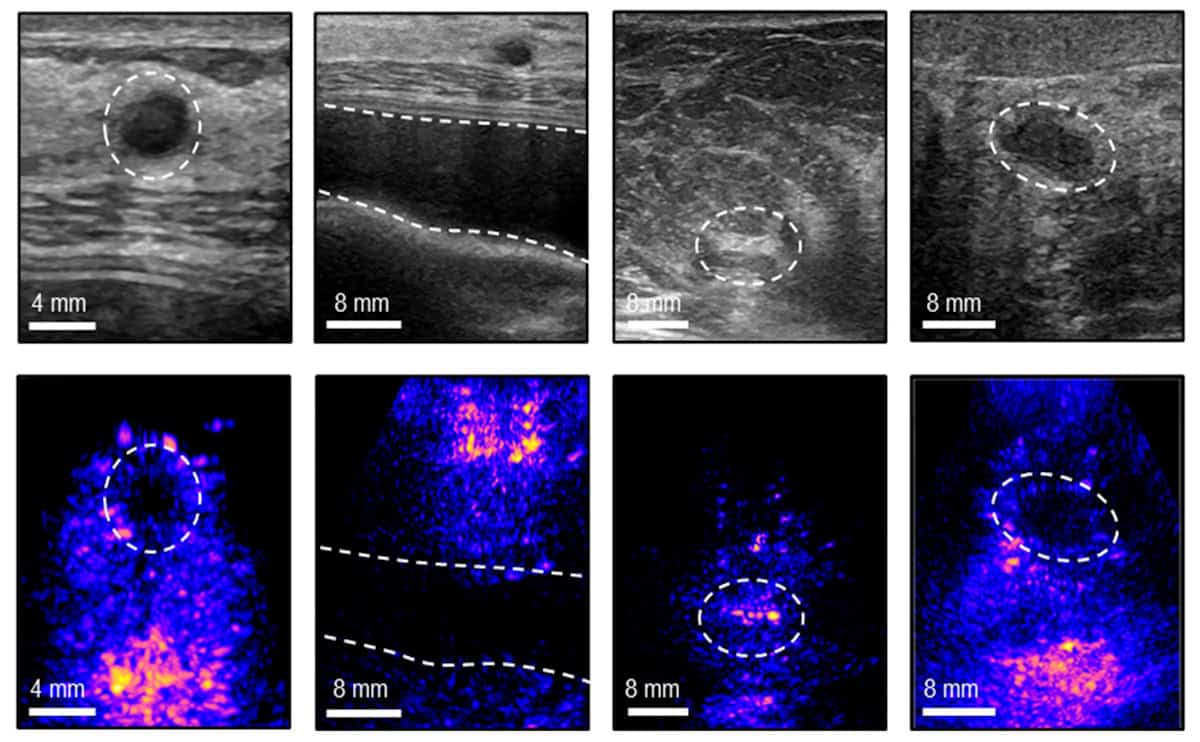
Women at high risk of breast cancer are more susceptible to developing cancers in the gap between routine screening exams. These so-called “interval cancers” tend to be fast-growing and account for 20% to 30% of all breast cancer cases.
To identify aggressive cancers that develop between scheduled screenings, researchers at Massachusetts Institute of Technology (MIT) have developed a point-of-care ultrasound system that generates high-resolution 3D images of breast tissue. The 3D portable ultrasound system for real-time examination (3D PURE) supplements mammography with its ability to detect anomalies reliably in dense breast tissue (in which mammography is less sensitive).
Guided by an easy-to-use visual interface, 3D PURE enables a nurse, a physician such as a primary care provider or gynaecologist, or even the patient herself to frequently perform longitudinal breast imaging.
Second-generation design
Principal investigator Canan Dagdeviren explains that this second-generation prototype overcomes limitations of a prior system designed by the MIT team, through advances in transducer design, acoustic materials and adaptive beamforming. These developments have enabled real-time wide-angle 3D imaging in a portable form factor, with improved image resolution to accurately identify cysts, solid masses, fibroadenomas and microcalcifications.
The ultrasound system comprises a newly designed 128-element box-shaped 2D transducer array incorporating a corner-gap offset geometry, which suppresses peak crosstalk by 3.73 dB at the corner-most element. This design prevents amplifier saturation, and supports operational transmit voltages of up to 24 V. The array is integrated into a compact multilayer electronics stack comprising preamplifiers, transmit electronics and a custom chirp data acquisition system.
There’s also a conductive backing layer (a toluene-diluted polyurethane matrix with a high percentage of tungsten and zirconia filler) that forms a continuous shielding layer around the elements, improving acoustic attenuation and providing electromagnetic shielding. The compliant mechanical nature of the material enhances acoustic damping, reducing ultrasound reverberations more effectively and improving signal fidelity.
“The addition of a backing layer to the ultrasound transducer is a key advantage to the system,” explains co-lead author Md Osman Goni Nayeem. “It provides both better directionality of ultrasound waves and better bandwidth, which improves the resolution and quality of the resulting images.”
The researchers also incorporated layered aberration-correction reconstruction (LACR), an adaptive 3D beamformer, into the 3D PURE design. LACR compensates for the heterogeneous speed-of-sound in the breast, which comprises glandular and fibrous tissues plus a superficial layer of fat. They believe that this represents the first wide-angle 3D ultrasound imaging system to implement aberration-correction beamforming.
“What we are trying to do is predict the speed-of-sound properties of the tissue being imaged, and then use that to reconstruct the image more accurately. We see up to a 10% improvement for the resolution just by applying this [beamforming] technique,” says co-lead author Shrihari Viswanath in a press statement.
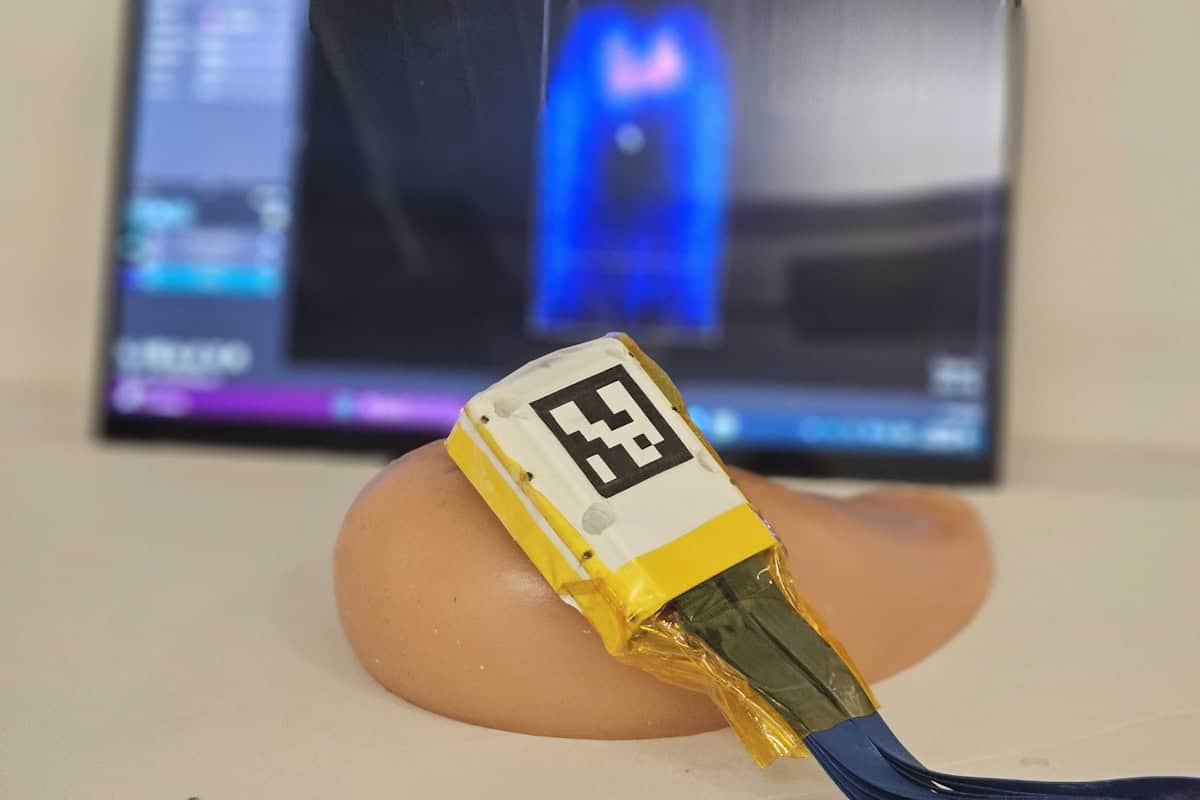
The system is designed for ease of use. A visual user interface called “Mirror my First UltraSound” (MyFUS) guides users to reliably reposition the ultrasound probe at the same anatomical location during repeated imaging and long-term monitoring. Meanwhile, a wide field-of-view minimizes the number of scans needed to cover the entire breast.
The team undertook an in vitro study comparing the performance of the 3D PURE system with that of a conventional 2D handheld ultrasound system (HHUS). Ten study participants imaged a breast-shaped tissue phantom embedded with sub-millimetre targets. Nine of the 10 participants showed improved microtarget detection efficiency with 3D PURE relative to the conventional system – identifying more of the targets using 3D PURE (79.7%, compared with 60.7% for the 2D HHUS), with a higher detection efficiency (14.02% of available targets per minute, compared with 9.58%).
The researchers also worked with radiologists to assess a variety of breast anomalies in vivo. The radiologists verified that the 3D PURE system could accurately visualize calcifications, cysts, implants, fibrous tissues and solid masses within a large volumetric field-of-view. The researchers independently validated the system’s accuracy when imaging dense fibrous breast tissue and rib structures.
Seven volunteers with no prior experience of using an ultrasound system tested the MyFUS visual interface. After initial instruction by an ultrasound technician, they were able to repetitively position the probe at a specific location on their breasts, achieving a 94.10% mean overlap value on frontal projections, and 87.42% on side projections. This test reconfirmed that novice users could achieve reproducible longitudinal monitoring results with the aid of the visual interface.
The researchers now hope to create an interface for use with mobile phones or tablets. This type of system could make breast ultrasound more accessible to patients in economically constrained countries lacking adequate breast cancer scanning and regions with shortages of trained ultrasound technicians.
“The high operator dependence of conventional ultrasound is a barrier to its use in decentralized or home-monitoring settings,” the researchers write. “The MyFUS vision interface transforms longitudinal monitoring from an expert-driven procedure to a self-guided, reproducible process that can be used by novice users. This reproducibility is vital for longitudinal monitoring in limited clinical settings, to regularly track the growth of an anomaly or the response of a tumour to therapies without visiting clinics.”
The 3D PURE system is described in Nature Communications.
The post Portable breast ultrasound enables imaging between cancer screening exams appeared first on Physics World.
Quiz of the week: what type of radiation travels on a photonic highway?
Have you been keeping up to date with physics news? Try our short quiz to find out
The post Quiz of the week: what type of radiation travels on a photonic highway? appeared first on Physics World.
The post Quiz of the week: what type of radiation travels on a photonic highway? appeared first on Physics World.
From pit stop to plant food: how Grand Prix crowd’s urine becomes fertilizer
Discover how a circular, science-backed solution is turning human waste into a sustainable resource – one loo at a time
The post From pit stop to plant food: how Grand Prix crowd’s urine becomes fertilizer appeared first on Physics World.
Peeing at the Grand Prix just got a lot more meaningful. In the latest episode of Physics World Stories, Lucy Bell-Reeves and Olivia Wilson, who work for the start-up NPK Recovery, based at the University of the West of England, explain how their mobile system upcycles urine into fertilizer, right where it’s produced.
The pair unpack the physics and chemistry behind their approach, contrasting it with the energy-intensive Haber-Bosch process, which converts natural gas into ammonia under extreme heat and pressure at centralized plants. With the UK importing 100% of its nitrogen, and recent global conflicts exposing the fragility of fertilizer supply chains, the case for local, circular alternatives is growing stronger.
Host Andrew Glester hears about the pair’s experience at the British Grand Prix in Silverstone, the UK’s leg of the Formula 1 World Championship. Bell-Reeves and Wilson reflect on what it’s like to experience the “Grand Pee”, and how attendees react when they discover where their urine ends up.
While not pitched as a replacement for industrial-scale ammonia production, the system offers a smart fix for off-grid sites facing sudden spikes in human waste.
The post From pit stop to plant food: how Grand Prix crowd’s urine becomes fertilizer appeared first on Physics World.
AI sniffs out tuberculosis in breath’s chemical signature
Machine learning decodes the complex chemical signatures in human breath to deliver rapid, non-invasive tuberculosis diagnoses
The post AI sniffs out tuberculosis in breath’s chemical signature appeared first on Physics World.
Every breath we exhale carries a complex chemical narrative written in thousands of volatile organic compounds (VOCs). These tiny molecules, produced by human metabolic processes and invading pathogens, hold immense diagnostic potential. Yet, translating this molecular cloud into a definitive medical diagnosis has long faced an analytical bottleneck. Now, an international team of physicists from Botswana and South Africa has harnessed machine learning to decode these complex signatures, offering a rapid, non-invasive pathway to detect tuberculosis (TB) directly from human breath.
Breaking the analytical bottleneck
Traditional gas chromatography-mass spectrometry (GC-MS) excels at separating complex molecular mixtures based on volatility and mass-to-charge ratios. However, a single breath sample generates thousands of overlapping spectral peaks. Manually sifting through this dense landscape is a painstaking, time-consuming process.
To find a faster, more systematic approach to molecule identification, researchers in the Nano –Breath taking group led by George Chimowa from Botswana International University of Science and Technology (BIUST) collected breath samples from three distinct cohorts: patients with active TB, individuals with multidrug-resistant TB (MDR-TB), and healthy control volunteers.
Standard analytical pipelines often rely on aggressive data pre-processing to smooth and simplify the GC-MS spectra. However, this filtering risks erasing subtle, low-concentration molecular features that might hold critical diagnostic clues. Bypassing this limitation, the BIUST group fed a high-dimensional dataset of 1867 spectral features (from 87 breath samples) directly into four competing supervised machine-learning algorithms: decision trees, random forest, k-nearest neighbours, and support vector machines (SVM). The researchers published their findings in Discover Artificial Intelligence.
Geometric optimization avoids the pitfalls of high-dimensional data
The team found that the linear SVM classifier led the algorithmic comparison, distinguishing among the three patient cohorts with 93% accuracy.
This performance stems from how the algorithm handles high-dimensional data spaces. While distance metric models often suffer from overfitting errors, where experimental noise is misidentified as a meaningful diagnostic signal, SVM relies on geometric boundary optimization to separate classes.
Much like clearing a wide highway down the centre of two opposing crowds, it identifies a hyperplane that maximizes the margin between groups. Instead of tracking every individual in the crowd, the algorithm relies solely on a sparse subset of border points known as support vectors. By focusing strictly on these boundary “guards” and ignoring the background movement, this approach completely isolates the classifier from the noise inherent to the surrounding high-dimensional feature space.

Beyond raw classification accuracy, the model yielded a crucial insight for future clinical applications. It pinpointed a specific window within the gas chromatogram, a retention time between 10 and 30 min, where the most diagnostic, high-variance VOCs elute. This 20-min window corresponds to medium- and large-molecule VOCs, including specific chemical biomarkers associated with TB, such as tridecane, decane and O-cymene.
By demonstrating that these vital diagnostic features are concentrated within this single slice of data, the physicists have shown that future diagnostic hardware can be specialized, eliminating the need to analyse the entire spectrum. Narrowing the focus to this specific elution window can drastically shrink data-processing times and maximize instrument throughput in clinical settings.
AI and the future of medical diagnostics
TB remains one of the world’s deadliest infectious diseases. Traditional diagnostics rely heavily on slow sputum cultures and backlogged laboratory queues, delaying critical treatment. A rapid, non-invasive breath test powered by an optimized physical classifier offers an ideal alternative for resource-limited settings where laboratory infrastructure may be scarce.
While the researchers emphasize that larger validation trials are required, the work signals a profound shift in medical diagnostics. It mirrors advanced data-modelling techniques used in engineering, such as those predicting structural degradation in self-healing aerospace composites.
By fusing analytical physics with artificial intelligence, this research points to a future where immediate, automated bedside disease detection could be rapid, accessible and driven entirely by the mathematical profiling of a patient’s breath.
The post AI sniffs out tuberculosis in breath’s chemical signature appeared first on Physics World.
Heat-transfer fins give phase change materials a boost
Modelling points the way towards optimal designs for systems that store and release heat
The post Heat-transfer fins give phase change materials a boost appeared first on Physics World.
If you’ve ever kept a drink cool on a hot summer day by placing it inside a frozen, gel-filled sleeve, you’ll understand the appeal of phase change materials (PCMs). The reason these sleeves work so well (and so much better than simply putting your drink in a cold bath or cool room) is that the solid inside them has a high latent heat, meaning it can absorb relatively large quantities of energy before melting and beginning to warm up.
But what if surrounding your drink with a frozen PCM isn’t enough? What if you want to cool your drink more quickly and evenly? One option would be to create a PCM sleeve with fin-shaped extensions that protrude into your drinking vessel. These fins would cool your drink – or, equivalently, allow your drink to melt the PCM – much more efficiently than a simple sleeve. But what should the fins look like? How far apart should they be? And how many of them do you need?
These are the questions that Paolo Proia, Mauro Sbragaglia and Giacomo Falcucci considered in a study published in EPL – though not with the aim of keeping their drinks cold. As researchers at the University Tor Vergata of Rome, Italy, Proia, Sbragaglia and Falcucci are interested in PCMs that store and release heat like a battery. Such materials are useful in fields such as electronics and refrigeration where heat is a common byproduct. Other applications include maintaining the efficiency of solar panels by preventing them from getting too hot and keeping buildings cool in the daytime via insulation.
Physics World spoke with them about their work.
What was your motivation for doing this research?
Our interest in PCMs stems, in part, from our interest in their many applications, especially in the ecological transition to less carbon-intensive fuels. PCMs are particularly good at managing heat in hydrogen storage with metal hydrides, for example, because storing hydrogen in these materials produces heat, while releasing the hydrogen requires it. Using a PCM to store the heat of the adsorption process and give it back during the release means that the produced heat doesn’t go to waste. Instead, it improves the efficiency of the process.
We’re also fascinated by the complexity of the equations involved. The coupling of fluid and temperature dynamics already causes interesting phenomena such as convection. By adding a phase transition to the mix, you introduce a moving boundary that complicates the system even more, both phenomenologically and analytically, since the describing equations must account for it.
We started this paper as a way of extending our previous work on the insertion of fins inside a PCM to three dimensions. PCMs are exceptionally good in latent heat but severely lacking in sensible heat; in other words, they store heat well, but they absorb and release it poorly. Fins are useful in relieving this flaw since they enhance the heat transfer surface and provide a horizontal heat source, which is instrumental for the development of convection, the main driver of heat transfer in this kind of system. By switching to a 3D system, we had more freedom to explore complex layouts of multiple fins and the importance of their relative position.

What is the most important advance in the paper?
The most important result is that naively inserting fins too close to each other can cause interference. If there are overlaps in the fins’ “influence zone”, the system will waste energy by, in effect, trying to melt something that was already molten from heating by a nearby fin. Moreover, by comparing a single fin and multiple fins with the same total surface, we found that the latter configuration benefits from the gaps between the fins. This is because the substance in these gaps melts early and starts acting as an extra heating surface, contributing to the development of bigger convective structures.
Why is it so challenging to model melting in phase change materials in 3D?
Beyond the analytical requirements we already mentioned, the success of this type of modelling depends on having a resolution that is high enough to capture correctly all the phenomena in the system. This means the number of computational sites N must be sufficiently large. In 2D, we “only” have N2 sites to model, but in 3D, this scales to N3. That creates a challenge because making N too large would severely slow down the simulation. Moreover, we must be sure to respect the restraints on the physical parameters for which the lattice Boltzmann method is a correct approximation of the equations involved. So, we underwent a thorough validation process to pinpoint the best parameters for the algorithm.
What do you plan to do next?
First, we’d like to further optimize the code. The main bottleneck is the speed of a single iteration. Ideally, we’d like to study a wider range of layouts and physical conditions, but with the code we have now, that would impact heavily on performance. For example, a slower-melting substance requires more iterations to completely melt, which translates into more real-life time to model, sometimes outside the limits of feasibility. This problem would obviously be solved if we can make a single iteration faster.
Another issue we have is that some ranges of physical parameters can make the simulation unstable. Fortunately, there exist some remedies to this, and we plan to eventually adopt them.
Finally, we would be happy to see other researchers use these findings in their own optimization studies on fin shapes and spatial layouts. It would also be very interesting to see someone study this problem from an analytical angle or to see some experimental validation. In the medium term, we are planning to conduct our own experiments to use as a benchmark for our computational results.
The post Heat-transfer fins give phase change materials a boost appeared first on Physics World.
Pressurizing EV battery electrodes could make them last longer, if it’s done right
Extending the lifetime of electric-vehicle batteries could reduce the need for mining critical minerals
The post Pressurizing EV battery electrodes could make them last longer, if it’s done right appeared first on Physics World.
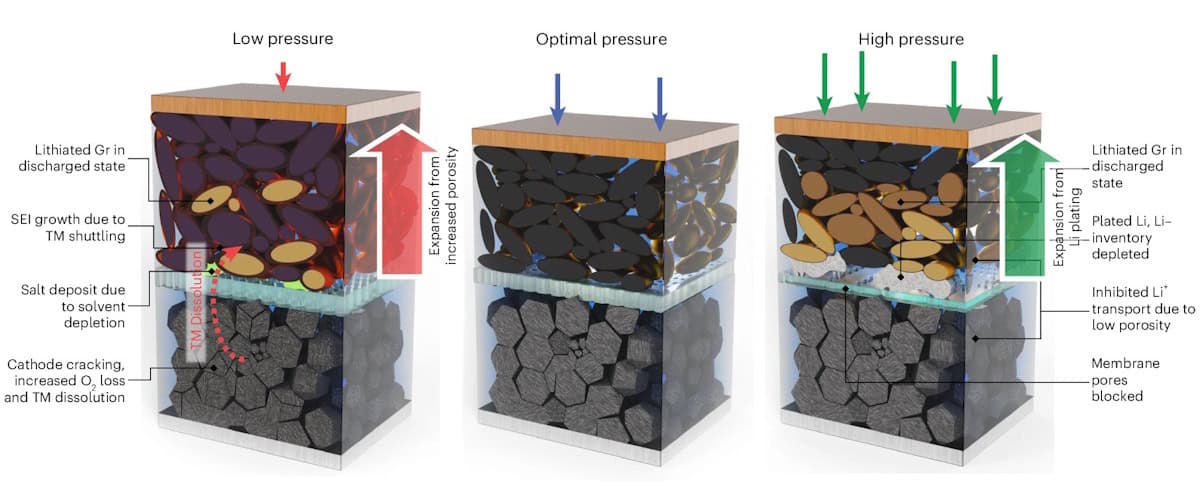
Engineers are constantly striving to improve the safety and performance of electric vehicle (EV) batteries. Much effort has been put into developing new electrode materials over the years, but future improvements may not follow the same path and may just be as simple as utilizing physical pressure.
A recent study, led by researchers at the University of Cambridge, suggests that EV batteries could be made to last up to twice as long, by applying the right amount of pressure to the electrodes. It is, however, a fine balancing act, as too high or too low a pressure can cause the battery to fail. To employ this approach in real world systems, engineers will need to make sure that the process is easily repeatable without significant pressure error, but it’s an interesting avenue of battery engineering that has come to fruition.
“We carried this work out to improve the sustainability of batteries,” says Michael de Volder, one of the lead researchers on the study. “Given that we are not very good at recycling batteries, extending the lifetime of batteries reduces the need for mining critical minerals for making new batteries and therefore improves their sustainability.”
For their study, reported in Nature Energy, the researchers developed a dilatometer with pneumatic bellows to apply pressure to the electrodes. The bellows act like a clamp to maintain a uniform and constant pressure on the electrode, while a sensor detects small volume changes that occur as the battery charges and discharges.
The researchers tested their electrode pressurization approach on commercial nickel manganese cobalt (NMC) lithium-ion pouch batteries (which have a flexible packaging), without changing their electrolyte or electrode composition. By using commercial batteries with a standard setup, they could test them fairly under different pressures.
“In this work we optimized how hard battery anodes and cathodes should be pushed together to maximize the lifetime of batteries,” de Volder tells Physics World. “Importantly, we also unravel which degradation mechanisms kick in if you press too hard, or not hard enough.”
Doubling battery lifetime
The researchers found that increasing the stack pressure fourfold over typical initial values used in conventional coin cells – to an optimal pressure of 12.5 bar – doubled the lifetime of the NMC811 cells. They compared the results with NMC cells tested at an extra-low pressure of 1.5 bar, a low pressure of 3 bar, a medium pressure of 6.5 bar and a high pressure of 37.5 bar.
Different degradation mechanisms emerged at high and low pressures outside of the optimal pressure zone. Low stack pressure accelerated cathode cracking, causing an increase in transition metal dissolution and excessive formation of the solid electrolyte interphase (SEI) layer. The cracking is likely due to a small number of particles bearing most of the mechanical load, leading to localized high-stress concentrations that initiate crack propagation.
Higher stack pressures, meanwhile, caused increased lithium plating on the anode. The team observed that the electrode thickness reduced during initial cycling but then underwent rapid thickness growth. When the electrodes are at their thinnest, they have a lower porosity that limits lithium transport, leading to higher overpotentials and higher lithium plating. This increases the amount of “dead” lithium and reduces the usable lithium inventory in the battery, causing it to degrade faster.
“We found that when the pressure applied to battery cells is sub-optimal, certain dangerous degradation processes can be accelerated. So, in a way, pressure optimization might improve the safety of batteries. However, more research is needed before we can draw reliable conclusions on this front,” says de Volder.
The pressurization results in this study are still in the early stages, but if shown to be viable at scale in commercial systems, could help EV batteries to last longer. In theory, this could give second-hand EVs a higher market value as the vehicle will have a longer battery life when sold. Additionally, if EV batteries can last longer, it will reduce the pressure on lithium mining operations and reduce the amount of raw material required for battery manufacturing (assuming the same demand) – something that is becoming an issue due to the skyrocketing price of lithium.
Cambridge Enterprise, the university’s innovation arm, has filed a patent, so the research team and university obviously see commercial viability in the process. When asked about the team’s future plans, de Volder tells Physics World that “we studied pressure optimization for one specific battery chemistry, but we anticipate that gains can be made in the lifetime of other battery chemistries too”.
The post Pressurizing EV battery electrodes could make them last longer, if it’s done right appeared first on Physics World.
How scholarly publishers are safeguarding trust in science
Antonia Seymour of IOP Publishing is our podcast guest
The post How scholarly publishers are safeguarding trust in science appeared first on Physics World.
This episode of the Physics World Weekly podcast features Antonia Seymour, who is chief executive of IOP Publishing.
Seymour has more than 30 years’ experience in a publishing industry that has evolved significantly from the days of paper journals to today’s sophisticated digital technologies.
In this interview we explore how scholarly publishers are responding to the rapid growth in research output, the rise of artificial intelligence and the increase in threats to research integrity.
A wholly owned subsidiary of the Institute of Physics, IOP Publishing produces more than 100 scholarly journals as well as Physics World.
The post How scholarly publishers are safeguarding trust in science appeared first on Physics World.
Identifying maximum viscosity: a slide puzzle
Can you reconstruct an image of part of the Mid-Atlantic Ridge in this interactive slide puzzle?
The post Identifying maximum viscosity: a slide puzzle appeared first on Physics World.
To play, click or drag one or more tiles to move them into the empty space. Repeat until you have reconstructed the image.
Image courtesy: iStock/Muhammed Zeynel Ozturk
Fancy some more? Check out our puzzles page.
The post Identifying maximum viscosity: a slide puzzle appeared first on Physics World.
Future of UK physics threatened by ‘ruinous’ funding cuts, says Institute of Physics
The cuts at UK Research and Innovation have resulted in the cancellation of several significant international projects
The post Future of UK physics threatened by ‘ruinous’ funding cuts, says Institute of Physics appeared first on Physics World.
Physicists in the UK have reacted with dismay following the decision by the Science and Technology Facilities Council (STFC) to cancel funding for several high-profile international projects. The Institute of Physics (IOP), which publishes Physics World, says that the axing of support threatens the UK’s international reputation as well as the ability to attract people into the subject.
The STFC cuts come after the council announced late last year that its core annual budget would rise by only £7m to £842m over the four years from 2026 to 2030. One of seven research councils within UK Research and Innovation (UKRI), the STFC runs the UK’s national facilities and supports particle physics, astronomy and nuclear physics (PPAN) research in the UK.
In a strongly worded statement, IOP president Paul Howarth is now urging the government to review “this ruinous set of decisions”, calling the cuts a “terrible blow” that will do “real damage” to the UK’s scientific reputation and put future economic growth at risk.
“Despite reassurances, physics has not been protected, crucial facilities remain under threat and jobs are being lost,” says Howarth. “Scientific capability that has taken years to build up is being put at risk by these decisions – it undermines a number of our most important international collaborations and could put a whole generation of young people off a career in science.”
Balancing the books
Although UKRI has received a record £39bn investment across the four-year period, it said last year that projects at STFC would need to be cut given inflation, rising energy costs as well as “unfavourable movements in foreign exchange rates”. Together, the STFC’s annual costs are projected to rise to over £1bn per year by 2030, forcing it to find ways to balance its books by 2029.
Earlier this year, the STFC said it would have to cut its core science budget by at least 30% over 2024/2025 levels. UKRI also noted it would stop funding two UK facilities – the Relativistic Ultrafast Electron Diffraction and Imaging facility and the C-MASS mass spectrometry centre. A UK-led upgrade to the LHCb experiment at CERN and support for the Electron–Ion Collider at Brookhaven in the US would be axed too.
That announcement caused significant distress within the physics community, prompting the heads of UK university physics departments to publish an open letter to then science minister Patrick Vallance, expressing their “deep concern” about funding changes adding that such cuts cause “reputational risk”.
UKRI then carried out further consultation with researchers and the STFC’s expert advisory bodies, with the results of this “funding prioritisation exercise”now revealed. There is some good news for STFC-funded “discovery-led” PPAN research, which physicists had feared could be cut by a third. Following lobbying, UKRI says this work is being “protected”, although it will still fall by 2.7% over the next four years.
Under attack
While facilities such as Diamond Light Source, the ISIS Neutron and Muon Source, and the Central Laser Facility will not be mothballed, the STFC’s budget for multidisciplinary facilities will reduce by 15% over the next four years to save £28m. As a result, ISIS will have to reduce operational time at the facility.
Yet the STFC warns that if saving and income targets for the programme are not met by 2028 then further action could be taken, which could involve closing a multidisciplinary facility.
STFC’s national laboratories and estates budget fares slightly better, falling by 8% over the four-year period, but individual facilities will be hit harder. The operational budget of the Boulby Underground Mine, for example, will be slashed by 40%.
Particle fever
The STFC insists that subscriptions for international projects, such as CERN and the European Southern Observatory, will remain protected despite their costs expecting to rise by 19% over the next four years. But other projects, including the EIC as well as the LHCb upgrade, will not be funded. The latter is expected to operate until 2033 by which time it would have reached the end of its lifetime after years of intense radiation damage.
An upgrade was planned so that it could take advantage of the upgrade to the LHC – the High-Luminosity LHC (HL-LHC) – and offer an order of magnitude increase in luminosity over upgrade I.
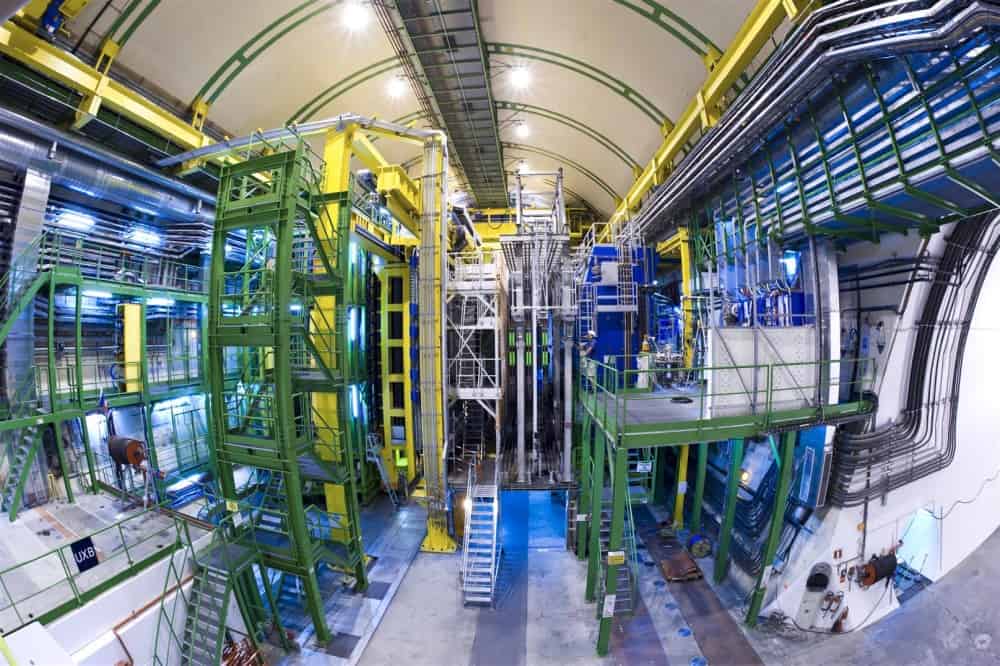
Tim Gershon from the University of Warwick, who became international spokesperson for the collaboration this month, says that the outlook for STFC-funded science is “grim”.
“With a 15% cut last year and an outlook that sees funding shrink further due to inflationary pressure, not even excellent-rated and internationally-leading science like LHCb can be supported,” he adds. “LHCb is the canary in the coalmine for the future sustainability of particle physics and astronomy research.”
Gershon states that the decision to cut UK involvement in LHCb will throw away the leadership it has built up. “Not only is this a tragedy for researchers and engineers who have dedicated their lives to making LHCb one of the most successful experiments in history, it destroys opportunities for current and future students to be involved in world-leading scientific discovery,” he adds.
This is a short-sighted move, to save a tiny fraction of the overall UK science budget
Catherine Haymans
Gershon says it will take some time to understand what the UK’s decision means for the upgrade and how other funding agencies will react but without UK expertise it will be hard to progress given the UK is the largest partner in LHCb with a 20% stake.
“Ultimately, the LHCb Upgrade is an essential part of the full exploitation of the HL-LHC, which is the top priority of the European and CERN strategies for particle physics,” adds Gershon. “We are determined to deliver the best detector that is possible within the available resources. But such a major change to the level of expected resources makes this extremely difficult.”
Peter Millington, a particle physicist from the University of Manchester, says that the outcome is “bad news” for accelerator physics and the applications that it fosters, particularly in medical physics. “It is completely at odds with UK priorities across all industrial strategy growth-driving areas, while also eliminating skills pipelines pivotal to a wide range of sectors and eroding the UK’s long-held position as a global scientific leader.”
Astronomy woes
Astronomy is another area that is bearing the brunt of the cuts. The UK contribution to the e-MERLIN network of seven radio telescopes, which includes the iconic Lovell telescope at Jodrell Bank in northern England, is also ear-marked for cancellation. Its funding will now run out in 2028 and the move not only threatens e-MERLIN but also the future of Jodrell Bank , which the Royal Astronomical Society calls a “deeply troubling development”.
Catherine Haymans, Astronomer Royal for Scotland, says she is “absolutely devastated” for those working on e-MERLIN. “This is a short-sighted move, to save a tiny fraction of the overall UK science budget,” she says. They are now considering contacting the new Department for Business, Innovation, Science and Trade to reverse the decision.
Other astronomy cuts include the UK withdrawal from the James Clerk Maxwell Telescope located in Hawaii as well as 20% cuts for the UK’s Square Kilometre Array Regional Centre and activities at the Vera C Rubin Observatory in Chile, which recently began a 10-year survey of the universe.
Jim Wild, president of the Royal Astronomical Society, notes the cuts are “devastating news” for UK astronomy. “At a time when technological innovation is crucial to our country’s prospects, discarding unique, globally significant observatories threatens both our scientific future and the inspiration of future generations of astronomers,” adds Wild.
Michele Dougherty, executive chair of the STFC, who is also Astronomer Royal, says that the situation requires “tough, but necessary decisions”.
“After listening to our community we have protected core discovery research within PPAN, through a more focused portfolio that safeguards postdoctoral researchers, protects PhD opportunities and maintains the UK’s international leadership.” adds Dougherty, who stepped down as president of the IOP in January over the conflict of interest with her position at the STFC. “These are never easy choices, but we have made what we feel are the right decisions to bring STFC to a sustainable financial position by 2029/30″.
The post Future of UK physics threatened by ‘ruinous’ funding cuts, says Institute of Physics appeared first on Physics World.
The Bayeux Tapestry: how optical techniques have let this artwork come home
Honor Powrie celebrates the optical techniques that have digitized, restored and protected the Bayeux Tapestry
The post The Bayeux Tapestry: how optical techniques have let this artwork come home appeared first on Physics World.

A few years ago, I was lucky enough to see the Bayeux Tapestry – the famous embroidered cloth depicting the Norman invasion of England in 1066. More than 900 years old, this historic piece of art is only 50 cm wide but more than 68 m long. It’s also extremely fragile, which why I was astonished when I heard that the Bayeux Tapestry was going to leave its home in Normandy and be transported across the English Channel to the UK.
The loan of the artwork, which was agreed between former British prime minister Keir Starmer and French president Emmanuel Macron last year, has now taken place. The tapestry arrived under police escort on 10 July and will be on display at the British Museum in London from September 2026 until July 2027. It is the first time the tapestry has been back in England, the country where this linen cloth was originally made.
I’m fascinated by how non-invasive optical techniques have been crucial in advancing our understanding of the tapestry
So what’s all this got to with physics? Well, I’m fascinated by how physics – and specifically, non-invasive optical techniques – have been crucial in advancing our understanding of the tapestry and its historical significance. Thanks to physics-based equipment developed by hi-tech manufacturers, we’ve learned about how the Bayeux Tapestry was initially made, what damage it subsequently suffered, how it was repaired, and the nature of its current condition.
Such information is vital not only for increasing our historical awareness, but also for current conservators who want to understand the tapestry’s underlying condition and find out how to preserve it for future generations. And before the pedants write in, yes I know that while it’s known as the Bayeux Tapestry, technically it’s an embroidery. That means it was created by stitching woollen threads onto a linen backing, which is helpful to know when reviewing the physics involved.
Optical sleuthing
The beauty of using optical methods to study the Bayeux Tapestry is that they are non-destructive and non-intrusive – and so can typically be applied in situ. In 2017 a three-year project was started, in which conservationists used high-resolution 2D imaging, photogrammetry, multimodal scanning and advanced image reconstruction techniques to determine the tapestry’s condition and conservation needs. The project revealed considerable information about how this artwork was created and modified over time.
Thanks to these high-resolution images, we now have a single digital map of the entire tapestry, making it possible to zoom in and look at individual threads. It’s yielded information such as the width of stitches and the positions where the wool threads cross the original linen background. As a result, historians now believe the tapestry was made by a single group of embroiderers, who – knowing the skills that existed at the time – were probably based in Canterbury, UK.
Techniques such as infrared spectroscopy and fluorescent and reflection ultraviolet imaging have revealed information about what’s underneath the surface of the tapestry
From the size and direction of the stitches, we also think the outlines of the figures were stitched first, with the shapes filled in afterwards using coloured wools in a strict, specific order. Meanwhile, techniques such as infrared spectroscopy and fluorescent and reflection ultraviolet imaging have revealed information about what’s underneath the surface of the tapestry. In particular, they’ve located the presence of stains such as glue, wax (dripped from candles that lit the tapestry) and even oil from the hands of people who touched it.
Infrared light passing through the dark-coloured wools have also revealed original sketch lines that were drawn on the linen base before the wool stitching started. It reveals the original artist’s draft, likely to be someone familiar with manuscript drawing – perhaps an illuminator of religious books.

3D imaging with photogrammetry
Researchers in France, led by Stéphane Le Mouélic from Nantes University, who originally did a PhD in astrophysics, have also used computer software to combine more than 440 overlapping 2D photos taken from multiple angles to create a detailed 3D model of the Bayeux Tapestry (J. Cult. Heritage 71 211).
It digitally “irons out” all the sags and wrinkles in the line fabric, recreating the original, “flat” tapestry and allowing the original physical shape of the artwork to be revealed for the first time. The 3D model can be viewed for free at the Bayeux Museum website, allowing historians, researchers and members of the public to study it without having to handle the delicate material.
Physics-based techniques have also allowed us to deal with the fact that parts of the fabric have been repaired over the last 900 plus years. Some of those repairs used non-authentic dyes and colours, while others covered up the original stitching. But using computer vision and image processing, threads that were added later can be subtracted digitally, providing a clearer, corrected view of what the original tapestry looked like.
Finally, optical tools can help keep the tapestry safe for future generations. Museum curators need to know if the cloth is sagging, tearing, or changing shape over time. Instead of putting heavy tools on the cloth, lasers can scan the cloth to accurately map of the contours of its surface. By repeating this exercise every few years, conservationists can spot if any part of the cloth has stretched or sagged, enabling minor problems to be rectified before they end up causing significant damage.
Without the huge amount of investigative and restorative work carried out, the Bayeux Tapestry would never have been allowed to make the journey to London
In 2025 Le Monde newspaper reported that experts had, over the previous five years, meticulously documented 24,204 stains, 9646 holes and 30 tears in the artwork. Without the huge amount of investigative and restorative work carried out, the Bayeux Tapestry would never have been allowed to make this year’s journey to London. Advanced and detailed optical measurement has “de-risked” the tapestry’s trip.
Tickets to the British Museum exhibition are reportedly being snapped up faster than those for Glastonbury. So if you don’t get to see the tapestry in person, feel free to marvel at this wonderful historical artwork by checking out the interactive online digital copy. It really is physics and history in the making.
The post The Bayeux Tapestry: how optical techniques have let this artwork come home appeared first on Physics World.
Can a 16-year-old really understand quantum teleportation?
Leron Borsten and Shanti Pise report from a week-long event that sought to teach quantum physics to teenagers
The post Can a 16-year-old really understand quantum teleportation? appeared first on Physics World.
Quantum theory is one of humanity’s great intellectual achievements, radically transforming our understanding of nature at the deepest level while delivering unprecedented technological advances. We have thus always felt it a great pity that most young people never get the opportunity to engage with the theory at a substantive level.
The solid-state physicist David Mermin, who has studied the fundamentals of quantum mechanics, once memorably wrote of quantum theory: “We now know that the Moon is demonstrably not there when nobody looks”. It was a comment that certainly captures the imagination, but it is difficult to appreciate what he meant meant without engaging with the mathematics that lies behind it.
In an attempt to see if we could change that, we ran our first Quantum in Pictures programme at the University of Hertfordshire earlier this month. A five-day, in-person course, it was attended by about 45 students aged 16–18 and was built around Quantum Pictorialism – a diagrammatic approach to quantum theory pioneered by Bob Coecke from the University of Oxford and collaborators.
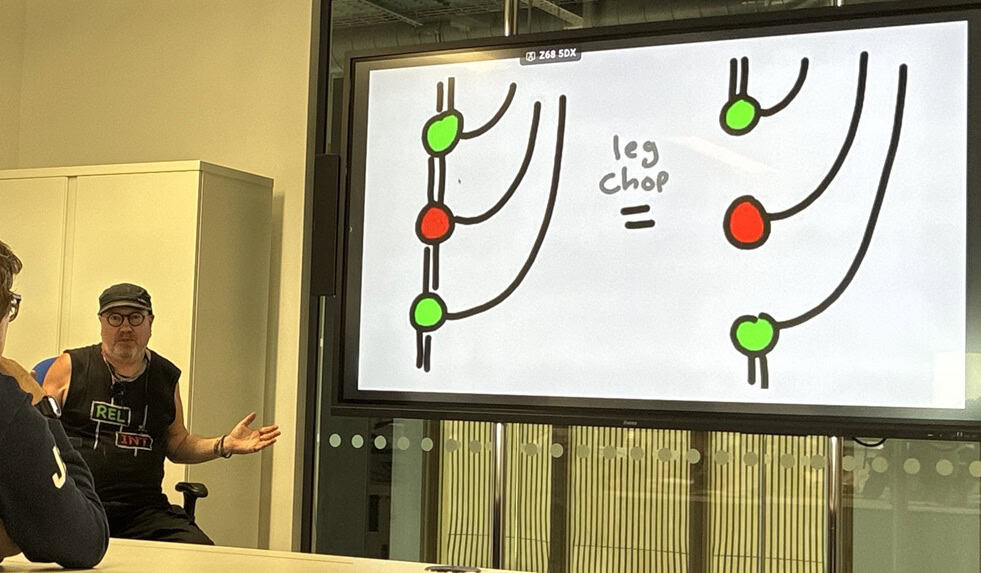
The crucial point is that the pictures aren’t illustrations of some more fundamental mathematics hidden underneath. The pictures are the mathematics. A rigorous graphical calculus built from spider diagrams enables students to reason directly about quantum processes. Since this diagrammatic formulation is fully equivalent to the usual Hilbert space formalism, the students were doing quantum mechanics for real.
We felt truly privileged to share the mysteries of quantum mechanics with a fantastically friendly, interested and diverse cohort from schools across south-east England. What struck me was how readily they engaged with the material: asking excellent (and sometimes rather challenging) questions, debating ideas and working collaboratively through the problem-solving sessions.
The graphical problems proved particularly popular, with repeated cries for “more spider diagrams!”. The course was deliberately ambitious, but by the end, they were able to work through the complete quantum teleportation protocol. Indeed, one student was confident enough to get up and reason through it for the whole class (something we certainly would not have dared to do at their age).
As Maya, a year-12 student from Highams Park Sixth Form in London, put it: “I really enjoyed seeing how ideas in quantum physics could be explained through simple pictures and diagrams. I was surprised that concepts like quantum teleportation, which seemed very complicated at first, could become much easier to understand through this approach. The programme has made me even more interested in studying physics and exploring quantum theory in the future.”
The approach also worked for students without a traditional mathematics or physics background, such as Andrew, a year-12 student from Sir John Lawes School in Harpenden.
“The programme was captivating,” he said. “The concept of using diagrams was innovative and explained things in a logical manner to help me understand topics such as quantum teleportation. The programme showed the stark differences between classical and quantum physics through real-world examples, enriched by talks from industry experts and pioneers with different backgrounds.”
Muhammad Hamza Waseem, who helped develop the programme and joined us on the final day, captured the atmosphere perfectly. “I found the enthusiasm, curiosity, and irreverence of the students very inspiring,” he said, “and I hope that they take the same spirit into their university education and beyond.”
That sense of joy and excitement was, for me, the lesson of the week. We’ve been thoroughly convinced that quantum theory isn’t intrinsically beyond the reach of curious 16-year-olds. We just need to give them the right mathematical language. The next step is an optional graduate-level exam, which will put that claim to the test. Watch this space.
- The authors would like to thank staff, researchers and students from the University of Hertfordshire who volunteered their time to make the programme possible. They are also grateful to Ian Loffler, Bob Coecke and Muhammad Hamza Waseem for their support and inspiring contributions.
The post Can a 16-year-old really understand quantum teleportation? appeared first on Physics World.
Bringing physics down to Earth through rocket science
Keith Cooper reviews It’s (Just) Rocket Science: Exploring Physics Through Spaceflight Missions by Trisha Muro
The post Bringing physics down to Earth through rocket science appeared first on Physics World.
Science is often easier to learn and understand when its abstract ideas are presented through the lens of our everyday world. Indeed, a key challenge for science teachers is to make the subject as interesting as possible to students, usually by showing its applications to real-world problems. As a former college lecturer turned science journalist, Trisha Muro is very well suited to this task.
To introduce her new book It’s (Just) Rocket Science: Exploring Physics Through Spaceflight Missions, Muro recalls how, while teaching high-school physics, she had a student drop out of her course because they “thought it would be more like ‘story’ physics”. Muro wasn’t exactly sure what the student meant, but the phrase stuck with her over the years, eventually leading her to write this book. Within its pages, Muro presents quintessential physics concepts in the context of spaceflight. She touches upon everything from the Apollo space programme to the Mars rovers, to provide the narrative aspect that makes abstract science relatable.
I’d argue that rather than story, the examples she uses in the book are more like case studies, as there is not much of a continuing narrative. Indeed, I couldn’t help but wonder if by “story”, Muro’s student meant science-fiction physics rather than real-life examples, but that’s semantics. What Muro has written is a very effective guide to all manner of basic physics that draws upon all her experience as a physics teacher and all her skills as a science writer.
In It’s (Just) Rocket Science, each chapter features an interview with one or two scientists (refreshingly, mostly women) providing insights into how the missions that they work on employ physics. There are some clear and concise explanations and neat analogies throughout. Muro provides a treatise on general relativity by highlighting the Hubble Space Telescope’s observations of gravitational lensing. She also includes a fascinating explanation of momentum via the physics of NASA’s DART mission, which impacted and deflected the little asteroid Dimorphos. Muro’s description of the electromagnetic spectrum is aided by discussions about interplanetary radio communications, the spectroscopic measurements of Venus that the forthcoming DAVINCI mission will make, and the X-ray vision of the Chandra Observatory.
The chapters I enjoyed best were in part two of the book where, as a self-confessed Space Cadet, Muro talks about how she attended a NASA Space Camp in the 1980s. (She is donating 100% of the proceeds from this book towards funding scholarships for children to attend the camp too.) In this section, Muro takes us through the science of rocket launches and landing on other worlds. She explains how the balance of forces as described by Newton’s laws of motion will enable NASA’s Dragonfly helicopter mission to fly on Saturn’s moon Titan. I especially liked the ice-skating analogy that Muro used to describe gravitational slingshots. Imagine two ice skaters, one being yourself and the other a champion speed skater, writes Muro. You get a head start, then the speed skater races up alongside you, takes your hand just for a moment and then lets you go, giving you an energy boost.
Muro gets through an impressive amount of science in a short space – the first 50 pages alone are full of heavy topics such as Kepler’s laws of orbital motion, planetary transits, exoplanet science, Lagrange points, gravitation, the three-body problem, general and special relativity, the concept of space–time, the speed of light, the Doppler effect, and even an equation or two. Phew! That’s a lot of science, and while at times it might feel dense to the uninitiated, at no point is it too confusing or impenetrable for the science or space enthusiast.
Muro’s willingness to include equations (there are even two interludes featuring derivations) reminds us of her teaching background. I found it refreshing to see maths presented front and centre when most popular-science books shy away from it, in an attempt not to lose readers. In this book, the maths isn’t complex and it is crucial in showing us why various physical laws work the way that they do.
One small issue for me was Muro’s decision to incorporate both imperial and metric units, which made for some confusing reading. In some instances, she mixes the systems in the same sentence – for example, giving a distance in kilometres followed by a weight in pounds, or a speed in miles per hour followed by energy in joules. Muro comments in the chapter about momentum and the DART mission that she has been using both systems to help readers become more comfortable with them. However, if the conversions between imperial and metric are not going to be given, then I’m not sure she really succeeds at making people more comfortable using metric.
If I were to nitpick further, I’d point out that when Muro strays from straight physics and engineering to astrophysics, some mistakes do crop up. These include stating that objects in the early universe are “red” because they have been cooling for billions of years. What is really happening is we are seeing them as they were long ago and their colour is the product of cosmological redshift, not temperature. Another is implying that gravitational waves are what cause the orbits of asteroids and comets to be perturbed. This ignores the fact that gravitational interaction from the planets, particularly Jupiter, is the dominant influence. However, these errors do not detract from the otherwise clear and correct explanations of the physics, which are easy to read and pitched perfectly for students below university level.
Overall, It’s (Just) Rocket Science is an excellent book that turns abstract physics into something more relevant. With the popularity of the recent Artemis II mission, the book’s focus on space missions will hopefully help it find an audience who will really take all that Muro has to teach on board.
- 2026 Johns Hopkins University Press £25.50 hb 384pp
The post Bringing physics down to Earth through rocket science appeared first on Physics World.
Understanding core-shell nanoparticle growth
A study of platinum-coated nanoparticles shows how energy balance controls crystal growth
The post Understanding core-shell nanoparticle growth appeared first on Physics World.
Many catalysts are made using core-shell nanoparticles, in which the core is a structurally important or inexpensive material and the thin shell surrounding it is an expensive metal such as platinum. Since catalytic reactions occur on the surface, this helps to reduce the amount of platinum required and therefore lowers costs. Crystal structures are described based on the smallest repeating unit of the crystal (the unit cell) using the Bravais lattice system. Three important crystal structures are face-centred cubic (fcc, atoms at the corners and faces of a cube), body-centred cubic (bcc, atoms at the corners and centre of a cube), and hexagonal close-packed (hcp, a hexagonal arrangement of atoms).
Different materials have different crystal structures; for example, platinum is fcc, many alloys are bcc, and magnesium and zinc are hcp. In core–shell nanoparticles, differences between the crystal structures of the core and shell mean that the atoms do not line up perfectly. This mismatch creates strain, which can significantly affect catalytic performance. In this work, the researchers explored how a platinum shell grows on a different crystal structure in a process known as heteroepitaxy.
They studied platinum shells (Pt, fcc) grown on cores made of ruthenium (Ru, hcp), palladium–copper (PdCu, bcc), and specially synthesised ruthenium with an fcc structure. It was found that each system accommodates the atomic mismatch differently. In hcp/fcc particles, some areas lined up coherently while others contained defects called dislocations, which formed networks in particles smaller than 10 nm. In bcc/fcc particles, both the core and shell stretched or compressed to fit together. In fcc/fcc particles, the matching crystal structures aligned more readily, but twin defects formed in which one region mirrored another.
Overall, this study shows that the way a Pt shell grows on a nanoparticle core is determined by a balance between the energies of the interface, shell, and core, with the system naturally adopting the lowest-energy configuration. These findings could help scientists achieve atomic-precision interfacial engineering, controlling the catalytic, mechanical, and electrical properties of core-shell nanoparticles.
Read the full article
Xilong Mu et al 2026 Rep. Prog. Phys. 89 068002
Do you want to learn more about this topic?
PLP-Logo-2.png, find out more. Single metal nanoparticles: optical detection, spectroscopy and applications by P Zijlstra and M Orrit (2011)
The post Understanding core-shell nanoparticle growth appeared first on Physics World.
A new way to trap and twist light inside quasicrystals
By reshaping quasicrystals with carefully designed defects, researchers can create and control stable twisting beams of light in new ways.
The post A new way to trap and twist light inside quasicrystals appeared first on Physics World.
Quasicrystals are unusual yet relatively common materials. They show up in lots of different places from alloys to colloids and even in meteorites. They have some ordered structure, but unlike ordinary crystals their patterns never repeat.
This mix of order and irregularity leads to interesting behaviour when waves move through them. In optical versions of these materials, light can become trapped or guided in ways that doesn’t happen in regular structures.
In a new study published recently, a team of researchers investigated what happens when light beams with a twist, called vortex beams, travel through quasicrystals that have been deliberately altered. They began with a classic pattern known as the Penrose tiling and then introduce large scale defects by removing or adding wedge shaped sections. This let the researchers tune the rotational symmetry of the structure and compare how light behaves in each case.
Using a standard model for how light travels through the material, the researchers showed that these modified quasicrystals can support new vortex states. These include two distinct types of vortex solitons, which are twisted beams of light that keep their shape as they travel rather than spreading out.
Usually, these light states require carefully tuned input power and are easily disrupted. What’s different in this case though is they form even with weak input and remain stable under small disturbances. This makes them far more applicable to real-world conditions.
These vortex beams can carry information in the amount of twist they have, providing an extra way to encode data alongside commonly used properties such as intensity or colour. If they remain stable as they travel, they would allow more information to be sent through the same optical system. This could be very useful in optical communication systems, where fast and efficient data transmission is essential.
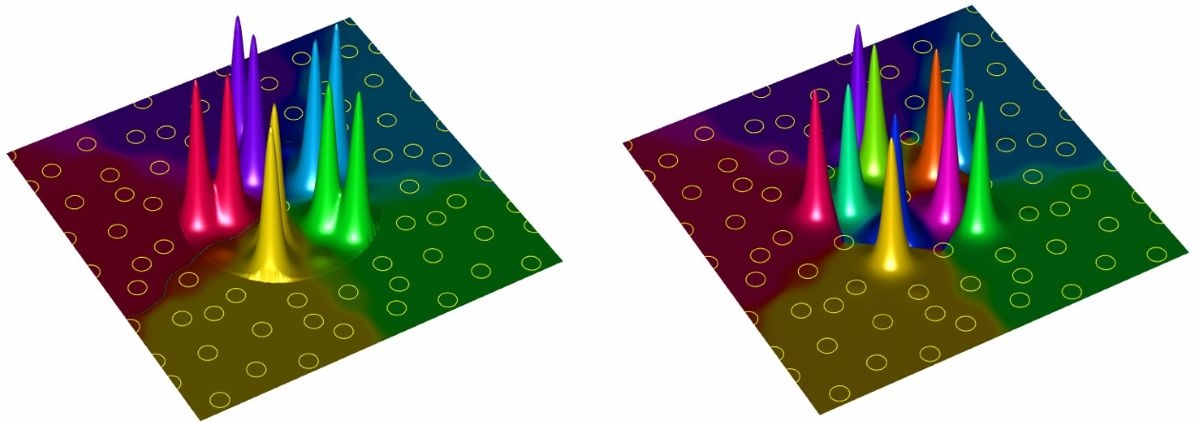
Read the full article
Vortex solitons in disclination quasicrystals – IOPscience
Hua Zhong et al 2026 Rep. Prog. Phys. 89 067903
The post A new way to trap and twist light inside quasicrystals appeared first on Physics World.