- home
-
news
- arXiv
- physics
- linux
- nature
- world
- BBC
- Al Jazeera
- earth
- universe
- wiki
- gemini
- python
- Explore peaceably and transparently
- Render aid to those in need
- Enable access to scientific data
- Ensure activities do not interfere with those of others
- Preserve historically significant sites and artifacts by developing best practices
- Applied Frameworks Award ($50,000): Ohā Kanu from Hilo, Hawaii with ʻOhā Kanu: An Ahupuaʻa-Inspired Food System for Mars
- Mission Simulation Award ($50,000): Orbital Health Systems, Inc. from Evansville, Ind. with New Lunar Settlers Cookbook (Mars Edition)
- Human-Centered Design Award ($50,000): Autonomic Resilience Collective from Bentonville, Ark. with Adaptive Endurance and Growth through Integrated Sustenance (AEGIS) Mars
- International Winner: Astrofood from Ellezelles, Belgium with Food Resilience Ecosystem for Space Habitats (FRESH)
- Dye, A. W., et al. (2020). Spatial patterns and trends of summertime low cloudiness for the Pacific Northwest, 1996–2017. Geophysical Research Letters, 47, e2020GL088121.
- EUMeTrain, Fog and Stratus. Accessed September 23, 2026.
- NASA Earth Observatory (2016, December 20) A Celebration of Clouds From Space, Earth Has an Elegant Atmosphere. Accessed September 23, 2026.
- National Weather Service, What are Marine Layer Clouds and How Do they Form? Accessed September 23, 2026.
- National Weather Service Portland, OR (2026, September 23) Area Forecast Discussion. Accessed September 23, 2026.
- National Weather Service Seattle WA (2026, September 23) Area Forecast Discussion. Accessed September 23, 2026.
NASA Welcomes Côte d’Ivoire as Newest Artemis Accords Signatory
Côte d’Ivoire signed the Artemis Accords on Thursday, becoming the 75th signatory and marking a major milestone for this growing coalition. With the signing ceremony in the nation’s largest city, Abidjan, Côte d’Ivoire joined other like-minded nations and committed to the peaceful, transparent, and responsible exploration of the Moon, Mars, and beyond. “The United States […]https://www.nasa.gov/organizations/oiir/nasa-welcomes-cote-divoire-as-newest-artemis-accords-signatory/
NASA Welcomes Côte d’Ivoire as Newest Artemis Accords Signatory

Credit: NASA
Côte d’Ivoire signed the Artemis Accords on Thursday, becoming the 75th signatory and marking a major milestone for this growing coalition. With the signing ceremony in the nation’s largest city, Abidjan, Côte d’Ivoire joined other like-minded nations and committed to the peaceful, transparent, and responsible exploration of the Moon, Mars, and beyond.
“The United States and Côte d’Ivoire already cooperate on Earth,” said NASA’s Deputy Administrator Matt Anderson. “Today, we expand that partnership beyond it. Joining the Artemis Accords opens new opportunities for our scientists, engineers, and institutions to work together as humanity returns to the Moon and prepares for what comes next. We’ve aligned on the principles. The opportunities are in front of us. And now we can get to work.”
The nation’s Minister of Higher Education and Scientific Research Adama Diawara signed on behalf of the country in a ceremony held during Africa Space Expo ASPEX 2026. Chargé d’affaires Junaid Munir from the U.S. Department of State witnessed the ceremony.
“This is a great achievement, and important for Côte d’Ivoire’s ambitions and for the rest of the African Union members,” said Director General of the Space Agency of Côte d’Ivoire Tidiane Outtara.
Côte d’Ivoire has expanded its involvement in space science and technology through years of international cooperation. Since 2019, the National Office of Technical Development of Côte d’Ivoire and NASA have collaborated on Earth observation and geodesy, a field that measures Earth’s shape, gravity, and movement. Together, the partners have advanced global geodetic networks, improved space‑based measurement techniques, and increased understanding of how Earth’s systems interact.
The country later established the Space Agency of Côte d’Ivoire in 2025 to coordinate national efforts in Earth observation, space weather, astronomy, satellite navigation, and communications.
In 2020, NASA and the State Department joined with seven other founding nations to establish the Artemis Accords, responding to the growing interest in lunar activities by both governments and private companies. The Artemis Accords are the first set of practical principles aimed at enhancing transparency, safety, and coordination among nations as they explore the Moon, Mars, and beyond, committing nations to:
By signing the Artemis Accords, nations open the door to opportunities for future lunar exploration with NASA, advancing humanity’s return to the Moon, and shaping the Golden Age of exploration and innovation.
Learn more about the Artemis Accords at:
https://www.nasa.gov/artemis-accords
https://www.nasa.gov/organizations/oiir/nasa-welcomes-cote-divoire-as-newest-artemis-accords-signatory/
NASA Shares SpaceX Crew-14 Assignments for Space Station Mission
Four crew members from three space agencies will launch to the International Space Station no earlier than spring 2027 for a long-duration science expedition as part of NASA’s SpaceX Crew-14 mission. NASA astronauts Kayla Barron and Chris Birch will serve as spacecraft commander and pilot, with JAXA (Japan Aerospace Exploration Agency) astronaut Makoto Suwa, and Roscosmos cosmonaut […]https://www.nasa.gov/news-release/nasa-shares-spacex-crew-14-assignments-for-space-station-mission/
NASA Shares SpaceX Crew-14 Assignments for Space Station Mission
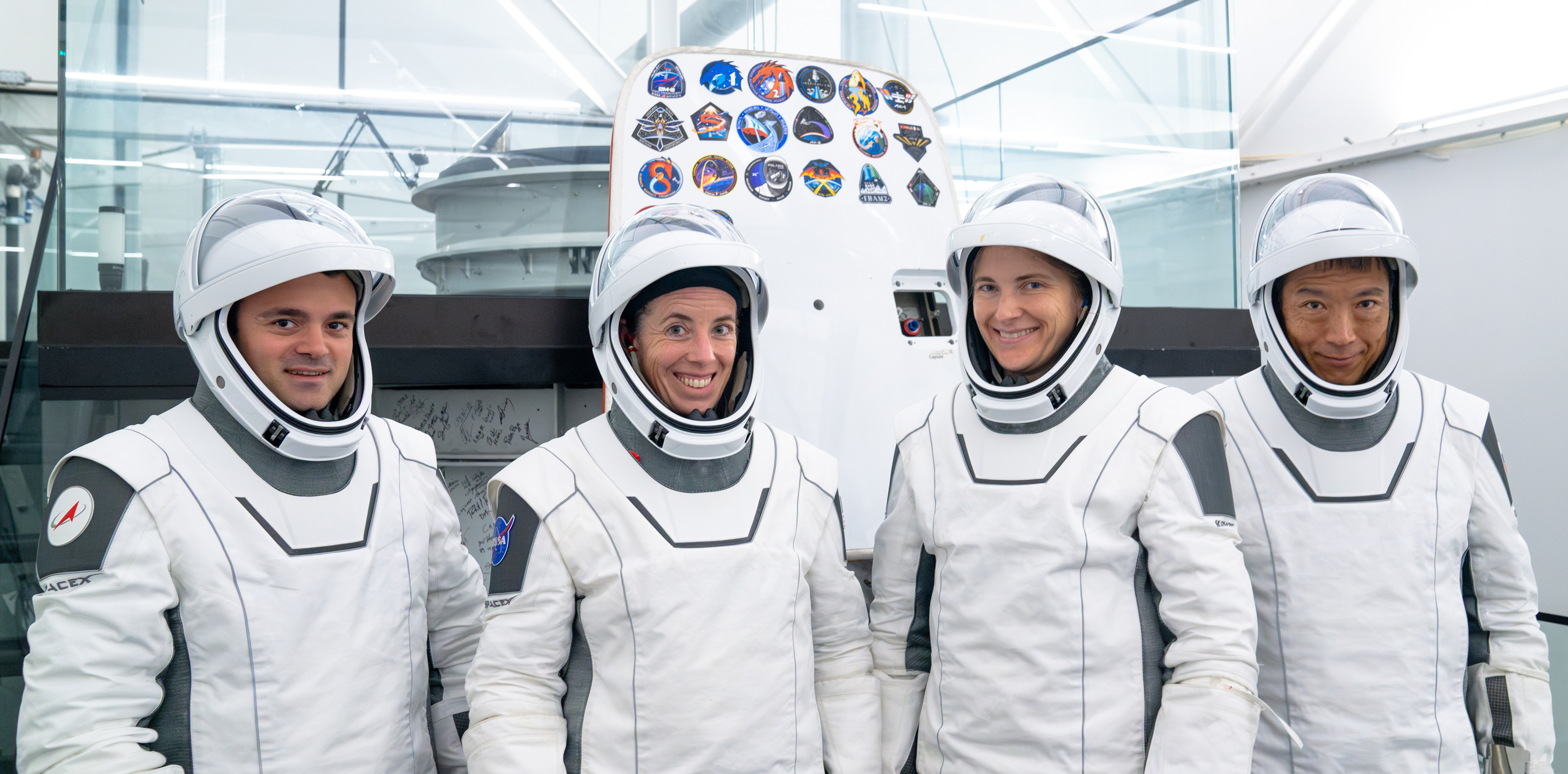
NASA’s SpaceX Crew-14 crew members during preflight training at SpaceX’s facility in Hawthorne, California (from left, Roscosmos cosmonaut Arutyun Kiviryan, NASA astronaut Chris Birch, NASA astronaut Kayla Barron, and JAXA (Japan Aerospace Exploration Agency) astronaut Makoto Suwa).
Credit: SpaceX
Four crew members from three space agencies will launch to the International Space Station no earlier than spring 2027 for a long-duration science expedition as part of NASA’s SpaceX Crew-14 mission.
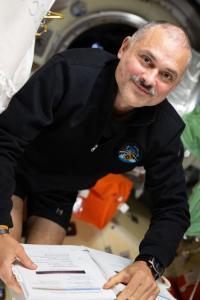
NASA astronauts Kayla Barron and Chris Birch will serve as spacecraft commander and pilot, with JAXA (Japan Aerospace Exploration Agency) astronaut Makoto Suwa, and Roscosmos cosmonaut Arutyun Kiviryan as mission specialists. After docking, Crew-14 will join the space station’s Expedition 75/76.
This mission is the 14th commercial crew rotation with SpaceX under NASA’s Low Earth Orbit Program. The crew will conduct scientific investigations and technology demonstrations to help prepare humans for future exploration missions to the Moon and Mars and to benefit people on Earth.
This will be Barron’s second flight to the space station. She was selected as a NASA astronaut in 2017. Barron earned a bachelor’s degree in systems engineering from the U.S. Naval Academy in Annapolis, Maryland and a master’s degree in nuclear engineering from the University of Cambridge in England. A commander in the U.S. Navy, Barron earned her submarine warfare officer qualification, deploying three times aboard the USS Maine. She first launched to the space station in 2021 aboard NASA’s SpaceX Crew-3 mission, spending a total of 177 days in space across space station Expeditions 66/67. She completed two spacewalks and served as lead robotics operator for another. Most recently, Barron supported the development of new technologies and operational concepts for NASA’s Artemis program.
Selected as a NASA astronaut in 2021, Birch graduated from the University of Arizona in Tucson with degrees in mathematics and biochemistry and molecular biophysics. She earned a doctorate in biological engineering from the Massachusetts Institute of Technology, and later taught bioengineering at the University of California, Riverside, and scientific writing and communication at the California Institute of Technology in Pasadena. Birch competed as a decorated track cyclist on the U.S. National Team and was named to the Olympic Long Team for the 2020 Tokyo Games. She has served as a capsule communicator, supporting crews aboard the space station and during the Artemis II mission. Birch was crew lead for Expedition 72, working with flight control teams to help manage daily operations, and served as a crew representative for NASA’s Orion Program, supporting Artemis II mission development and operations. This will be her first spaceflight.
The Crew-14 mission also is the first spaceflight assignment for Suwa. Before JAXA selected him as an astronaut candidate in 2023, Suwa spent nearly a decade with the World Bank Group. Previously, he served in Rwanda as a Japan Overseas Cooperation Volunteer before joining the United Nations World Meteorological Organization. Suwa holds a doctorate in geosciences from Princeton University and completed basic training to become certified as an astronaut in 2024.
This mission will be Kiviryan’s first trip to the space station. He graduated from Saint Petersburg Suvorov Military School in 2010 and later studied at the Baltic State Technical University. He graduated in 2015 as an engineer specializing in rocket science and completed training in the operation of computer-controlled machines. Kiviryan was selected for the Gagarin Research and Test Cosmonaut Training Center Cosmonaut Corps in 2021 and has served as a test cosmonaut since 2023.
For more than 25 years, people have lived and worked continuously aboard the International Space Station, advancing scientific knowledge and making research breakthroughs that aren’t possible on Earth. The space station helps NASA understand and overcome the challenges of human spaceflight, expand commercial opportunities in low Earth orbit, and build on the foundation for long-duration missions to the Moon, as part of the Artemis program, and to Mars.
Learn more about International Space Station research and operations at:
-end-
Joshua Finch / Jimi Russell
Headquarters, Washington
202-358-1100
joshua.a.finch@nasa.gov / james.j.russell@nasa.gov
Anna Schneider / Mary Pfister
Johnson Space Center, Houston
281-483-5111
anna.c.schneider@nasa.gov / mary.m.pfister@nasa.gov
https://www.nasa.gov/news-release/nasa-shares-spacex-crew-14-assignments-for-space-station-mission/
Travel
The NSSC provides travel reimbursement services for all authorized Agency travel including: domestic, foreign, local, ETDY, and Change of Station (COS). References Federal Travel Regulations (FTR) Traveler Extended TDY and Taxes Domestic Per Diem Rates Foreign Per Diem Rates Change of Station NSSC Travel now has another way that a transferee Traveler may submit his […]https://www.nasa.gov/centers-and-facilities/nssc/travel/
Travel
5 Min Read
Travel
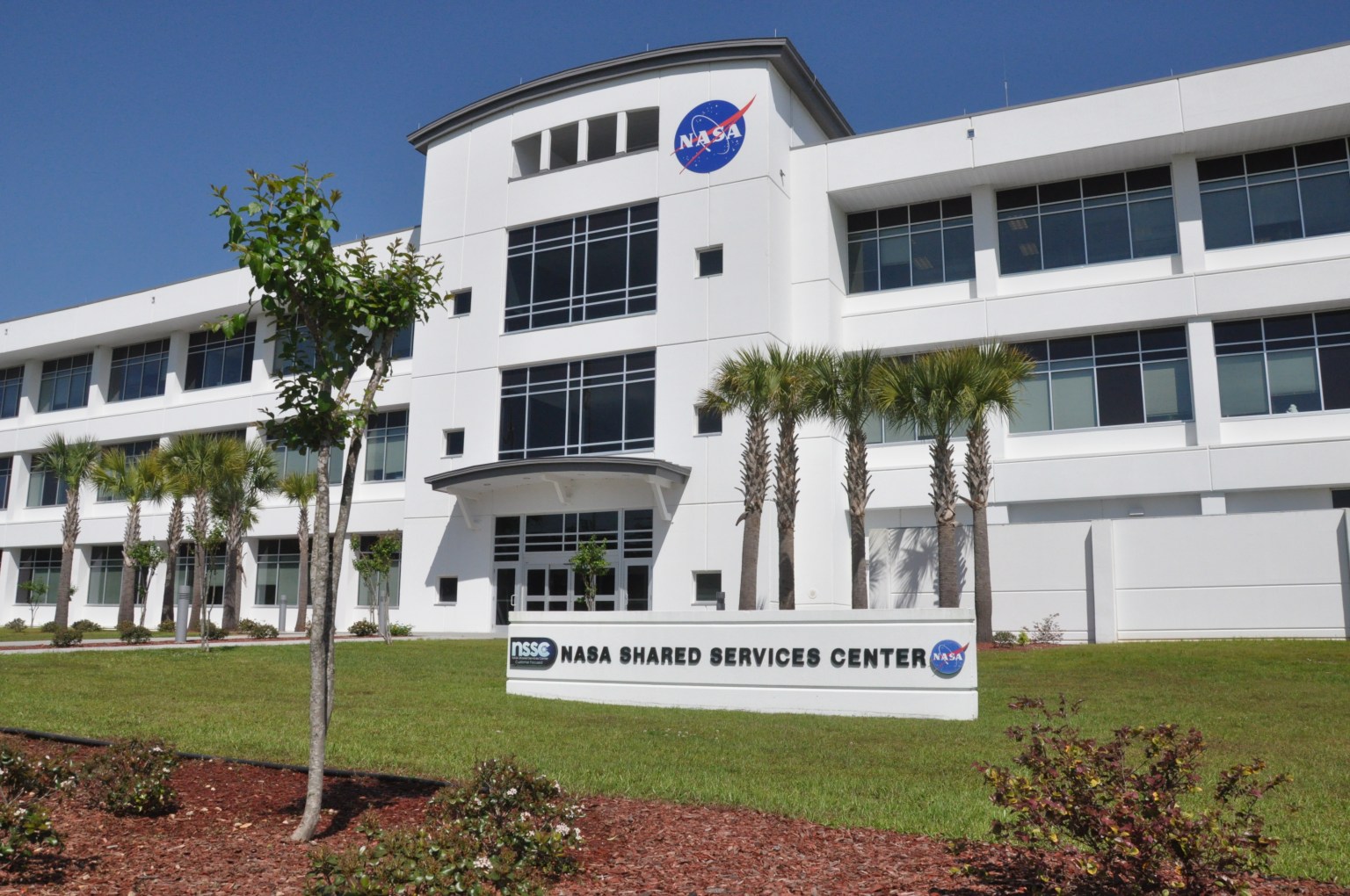
The NSSC provides travel reimbursement services for all authorized Agency travel including: domestic, foreign, local, ETDY, and Change of Station (COS).
References
Federal Travel Regulations (FTR)
Traveler Extended TDY and Taxes
Domestic Per Diem Rates
Foreign Per Diem Rates
Change of Station
NSSC Travel now has another way that a transferee Traveler may submit his or her vouchers. Please see, submitting Change of Station Process Steps
If traveling CONUS, review: NASA’s Guide to a Successful Move (CONUS)
If traveling OCONUS, review: NASA’s Guide to a Successful Move (OCONUS)
Change of Station References
Change of Station Voucher Information And Samples
GSA Smart Pay State Tax Information
Change of Station ServiceNow Instructions
Change of Station Forms
SF 1038 Advance of Funds Application and Account
NF420 Service Agreement-First Duty Station Appointment
NF513 Service Agreement and Duplicate Reimbursement Disclosure Statement OCONUS Employment
NF1204 Employee’s Claim for Damage to, or Loss of, Personal Property Incident to Service
NF1337 Service Agreement-Transferred Employee
NF1449C CONUS-Information Covering Persons Transferred or Appointed to First Duty Station
NF1449O OCONUS-Information Covering Persons Transferred or Appointed to First Duty Station
NF1450C CONUS Change of Station Authorization
NF1450O OCONUS Change of Station Authorization
NF1807 Househunting Trip Binding Decision
NF1808 Property Management Binding Decision
NF1810 Employee Agreement to Repay Withholding Tax Allowance (WTA)
NF 1811 Temporary Quarters Subsistence Allowance (TQSA)
NF1812 Temporary Quarters Subsistence Allowance (TQSA) Preceding Final Departure
NF1813 Temporary Change of Station (TCS) Duplicate Reimbursement Disclosure Statement
NF1814 Temporary Quarters Subsistence Allowance (TQSA) Predeparture Binding Decision
Related Tax Information:
Check out the latest Taxability Change Notice for Change of Station travelers.
To learn more, see: Relocation Income Tax Allowance Information
Domestic Travel
POV Mileage for NASA Travelers
For Privately Owned Vehicle (POV) Mileage Reimbursement Rates for TDY and ETDY Travel please refer to the GSA Web site: http://www.gsa.gov/mileage
NASA Domestic Travel: Day that Travel Ends
For the day travel ends (the day a traveler returns to the PDS, home, or other authorized point), the per diem allowance is 75% of M&IE.
NASA Domestic Travel Rental Car Liability
When making a reservation for a rental car, please remember the Government is only responsible to pay for rental car charges for official travel time. If a traveler decides to take annual leave in conjunction with official travel and keeps the rental car during annual leave, the portion of the rental rate applicable to annual leave is the responsibility of the traveler. Please refer to 41 CFR 301-10.453
What is my liability for unauthorized use of a rental automobile obtained with Government funds?
You are responsible for any additional cost resulting from the unauthorized use of a commercial rental automobile for other than official travel-related purposes.
NASA Domestic Travel: Tax Exemption
Prior to traveling, refer to the GSA State Tax Information webpage: https://smartpay.gsa.gov/smarttax. Select your State/US territory of interest to see the exemption status and download the appropriate form, if required.
Extended Temporary Duty (ETDY)
Reduced Per Diem rate
NASA’s standard reduced per diem rate for ETDY travel is 65 percent under the current policy as defined in the NASA Procedural Requirements (NPR) 9750.1-3.1.2.
a. Consistent with 41 CFR 301-11.200, an ETDY authorization can include reasonable further reductions from this standard rate or limitations on approved lodging for unique circumstances, to the extent it can be determined in advance that such will substantially lower costs without mission impact. For example, if lodging is obtained at 50 percent per diem, the ETDY authorization should be adjusted to authorize a lower rate.
b. The reduced rate of reimbursement begins on the first day of travel regardless of the mode of transportation, except as noted in 3.1.3. Allowances are covered by the reduced per diem rate; therefore, NASA will authorize the employee a per diem rate (up to 65 percent) to reasonably cover expenses for a one bedroom furnished apartment. For ETDY greater than 90 days, first consideration should be given to long-term lodging facilities. Long-term lodging facilities are available on the GSA schedule at http://www.gsa.gov. If a long-term facility is not selected, proper justification should be provided.
Find more about Allowable ETDY Expenses Included in Reduced Per Diem Rate, please see the following document:
Allowable ETDY Expenses Included in Reduced Per Diem Rate
GSA Long-term Lodging (Schedule 48)
GSA’s Schedule 48 is designed for lodging needs of 30 days or more. This program provides housing accommodations for temporary or permanent relocation. Typical facilities include apartment or condominium type properties that may be furnished with all the amenities of a regular home. The current list of vendors is available by clicking on the link above. Most of these properties will accommodate NASA Extended TDY travelers within the 65% reduce per diem rate and will allow use of the government charge card.
Foreign Travel
Please consult the Code of Federal Regulations (CFR), NPR 9710.1, and NPR 9750.1. Please call the NSSC Contact Center using this form for additional information.
https://www.nasa.gov/centers-and-facilities/nssc/travel/
NASA Unveils Winning Designs for Mars Space Food Systems Challenge
NASA announced the winners of the Deep Space Food Challenge: Mars to Table Thursday, with the top $300,000 prize being awarded to Chinyere Ukeje of Philadelphia, Pa. for the Adaptive Nourishment Infrastructure (ANI) food system concept. This competition challenged solvers to explore innovative solutions for integrated space food systems that would provide safe, nutritious meals […]https://www.nasa.gov/directorates/stmd/prizes-challenges-crowdsourcing-program/centennial-challenges/nasa-unveils-winning-designs-for-mars-space-food-systems-challenge/
NASA Unveils Winning Designs for Mars Space Food Systems Challenge
5 min read
Preparations for Next Moonwalk Simulations Underway (and Underwater)
NASA announced the winners of the Deep Space Food Challenge: Mars to Table Thursday, with the top $300,000 prize being awarded to Chinyere Ukeje of Philadelphia, Pa. for the Adaptive Nourishment Infrastructure (ANI) food system concept. This competition challenged solvers to explore innovative solutions for integrated space food systems that would provide safe, nutritious meals to astronauts living and working in space.
Mars to Table launched in January 2026 as a follow on to the Deep Space Food Challenge, which NASA ran from 2021-2014 in collaboration with CSA (Canadian Space Agency). The original challenge focused on prototyped novel food production methods, while the 2026 competition asked teams to conceptualize space meals not as individual technology components, but as a complete food-production system that would offer a variety of food with limited crew time and work needed to maintain the food system. After judging 113 submissions by teams hailing from 33 countries and 28 U.S. states, the agency selected five winning teams for the 2026 challenge, awarding a combined $650,000.
“We’re thrilled to keep advancing the future of space food systems with this challenge,” said Jennifer Edmunson, program manager for Centennial Challenges at NASA’s Marshall Space Flight Center in Huntsville, Alabama. “The future of human space exploration will rely on innovative food systems, and it is amazing how much ingenuity this challenge has helped us identify from participants near and far.”
Currently, astronaut meals are almost entirely cooked, packaged, and sent to the International Space Station from the Space Food Systems Laboratory at NASA’s Johnson Space Center. A one-way trip to Mars will take at least nine months, so bringing all required meals will not be sustainable for such missions. From shelf stability issues to mass restrictions, pre-packaged foods cannot be the default option for future Martian astronauts.
In search of viable solutions for future space food operations, teams were tasked with ideating and designing systems in response to a mission scenario that addressed a 15-person astronaut crew for 500 Martian sols, or about 513 Earth days. The challenge focused on surface operations and system integration, and each team delivered a design layout, meal plan, concept of operations, and walkthrough video.
“The criteria we laid out for this competition were challenging, but intentionally so,” said Mars to Table head judge Dr. Alexander Meyers, who supports NASA Centennial Challenges through Noetic Strategies from the agency’s Kennedy Space Center in Florida. “This challenge spotlights the complexity of a complete space food system and the human ingenuity required to solve these problems. Every new idea presented in this challenge represents a possible new tool in NASA’s plans for the future of space exploration.
NASA named five winners of the Mars to Table Challenge. These technologies provide NASA with inspirational launching pads for future deep space food systems.
The first-place winner, Chinyere Ukeje, developed the concept of ANI, a modular food ecosystem combining controlled-environment agriculture, fermentation and fungi cultivation, and closed-loop nutrient recycling through bioreactors with limited Earth-provisioned foods to produce 50% of the food away from Earth. ANI, named after the Nigerian Earth goddess of harvest and fertility, envisions a system that cooks fresh meals daily and has provisions to work through shortages of power, water, equipment, or crew time.
The second-place prize of $200,000 was awarded to Cislune of Rosemead, Calif. for the Fresh, Ferment, Reserve food infrastructure. The proposed system grows model-selected crops, converts part of the harvest into familiar foods in instrumented culture cassettes, and uses a protected Earth-loaded reserve to supplement in cases of biological variability, utility curtailment, and rejected batches.
Additional prizes include:
NASA also recognized one international team:
The Deep Space Food Challenge: Mars to Table is managed at NASA Marshall by Centennial Challenges, part of the Prizes, Challenges, and Crowdsourcing Program within NASA’s Research and Technology Mission Directorate. The challenge is also supported by NASA’s Division of Biological and Physical Sciences, Heliophysics Division, Planetary Science Program, Human Research Program, and Earth Science Division.
Centennial Challenges have a legacy of more than 20 years engaging the public to solve complex problems that benefit NASA’s broader initiatives. Past challenges have spurred advances in robotics, additive manufacturing, power and energy, textiles, chemistry, and biology.
The Deep Space Food Challenge: Mars to Table is also supported by subject matter experts at NASA Johnson and NASA Kennedy. The Methuselah Foundation and Floor23 Digital support the administration of this challenge.
To learn more about the challenge, visit:
https://www.nasa.gov/directorates/stmd/prizes-challenges-crowdsourcing-program/centennial-challenges/nasa-unveils-winning-designs-for-mars-space-food-systems-challenge/
NASA’s Machines for Mars Make Beer Bubbly
Carbon-capture technology repurposed for breweries spreads and finds new applicationshttps://www.nasa.gov/technology/tech-transfer-spinoffs/nasas-machines-for-mars-make-beer-bubbly/
NASA’s Machines for Mars Make Beer Bubbly
3 min read
Preparations for Next Moonwalk Simulations Underway (and Underwater)
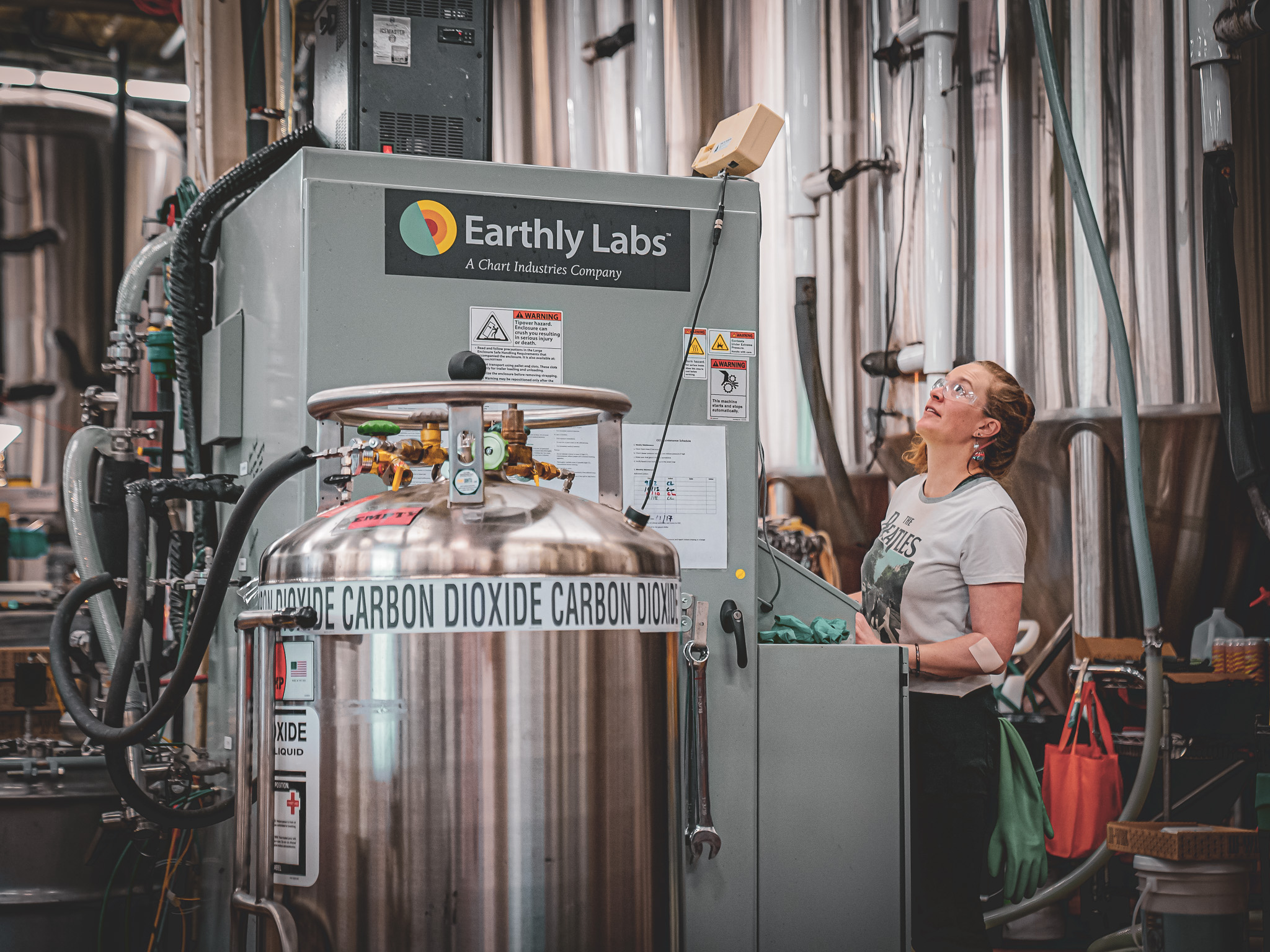
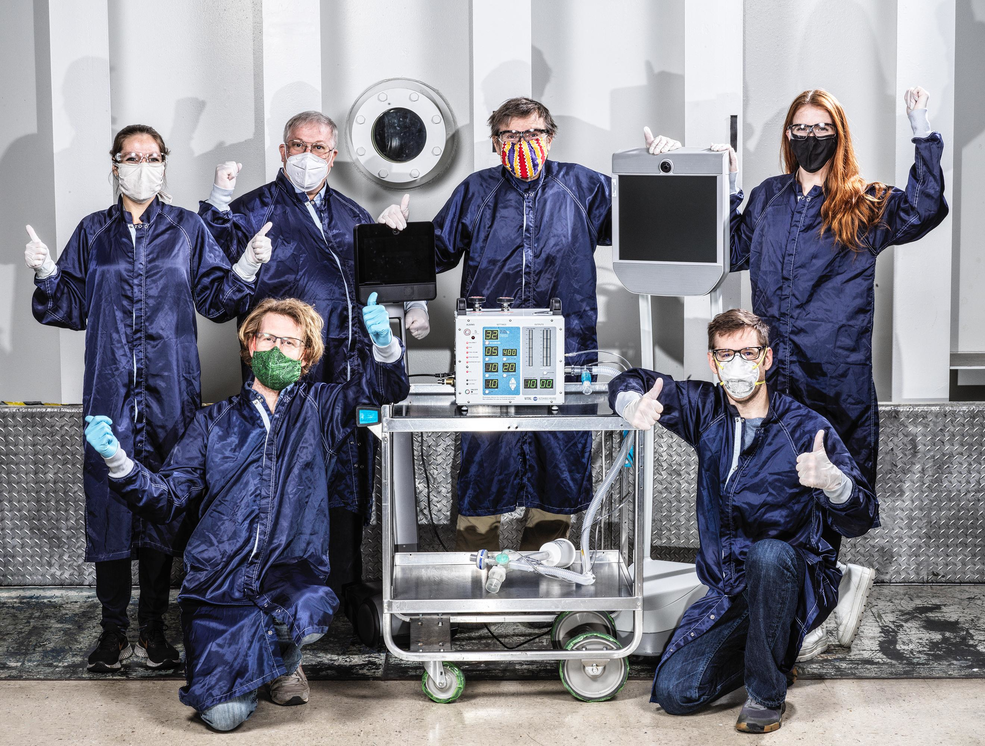
A brewer makes adjustments to the Earthly Labs carbon-capture unit, which purifies carbon dioxide from the beer brewing process for use in carbonation.
Credit: Chart Industries Inc.
In 2021, Maine Beer Company’s carbon dioxide supplier ran short on carbon dioxide.
“There was potential for our beer to go stale in the tanks,” said Dave Love, the brewery’s sustainability manager. “We wouldn’t be able to use CO2 for any of our bottling, kegging, or centrifuge operations.”
The solution the company settled on originated on Mars — or more specifically, in NASA’s plans for harvesting resources from the Red Planet. Now it’s saving money and reducing emissions for wineries, distilleries, power companies, helium producers, and more.
Beginning in the 1990s, the company Pioneer Astronautics won multiple Small Business Innovation Research (SBIR) contracts from Johnson Space Center in Houston to build systems that could generate resources on Mars. The technology could, for example, capture carbon dioxide from the Martian atmosphere and combine it with hydrogen to produce water for life support and methane for rocket fuel. These capabilities weren’t entirely new, but Pioneer’s systems were compact, efficient, and automated.
Later, Pioneer Astronautics founder Robert Zubrin created Pioneer Energy to rearrange these subsystems into technology for the oil and gas industry (Spinoff 2015, 2020). He soon realized technology for capturing and purifying carbon dioxide on Mars could do the same in a brewery, capturing CO2 from the brewing process for use in carbonation. By 2015, the Craft Brewery Recovery System was in production (Spinoff 2016). In the end, though, the company put the system up for licensing.
Amy George founded Earthly Labs of Austin, Texas, in 2016 to develop small-scale carbon capture. She discovered the Craft Brewery Recovery System and obtained an exclusive license.
Since the pandemic reduced its availability, carbon dioxide has continued experiencing shortages and volatility, and George said these have emerged as major drivers of interest in the technology.
And it isn’t just helping brewers. After expanding into wineries and distilleries, Earthly Labs started discovering other markets. Energy companies often generate carbon dioxide as a by-product, which they can sell if it’s captured. Several are now customers.
Another application finding new customers is helium production. Helium, which is used to make microchips and fiber-optic cables, among other applications, is found in underground deposits, mixed with other gases, such as methane and carbon dioxide, that need to be separated.
In 2021, Earthly Labs was acquired by Chart Industries Inc., which specializes in cryogenic equipment engineering and has helped scale up the technology for applications like power plants.
Details
Last Updated
Sep 24, 2026
Explore More


https://www.nasa.gov/technology/tech-transfer-spinoffs/nasas-machines-for-mars-make-beer-bubbly/
Practicing for Safe Landings on the Moon and Beyond
In this Aug. 27, 2026, image, an Alta-X drone flies an advanced guidance and navigation system known as the Safe and Precise Landing – Integrated Capabilities Evolution (SPLICE) experiment near NASA’s Armstrong Flight Research Center in Edwards, California. Researchers at NASA’s Johnson Space Center in Houston developed SPLICE, which successfully completed simulated lunar descent and […]https://www.nasa.gov/image-article/practicing-for-safe-landings-on-the-moon-and-beyond/
Practicing for Safe Landings on the Moon and Beyond
NASA/Ryan Kline
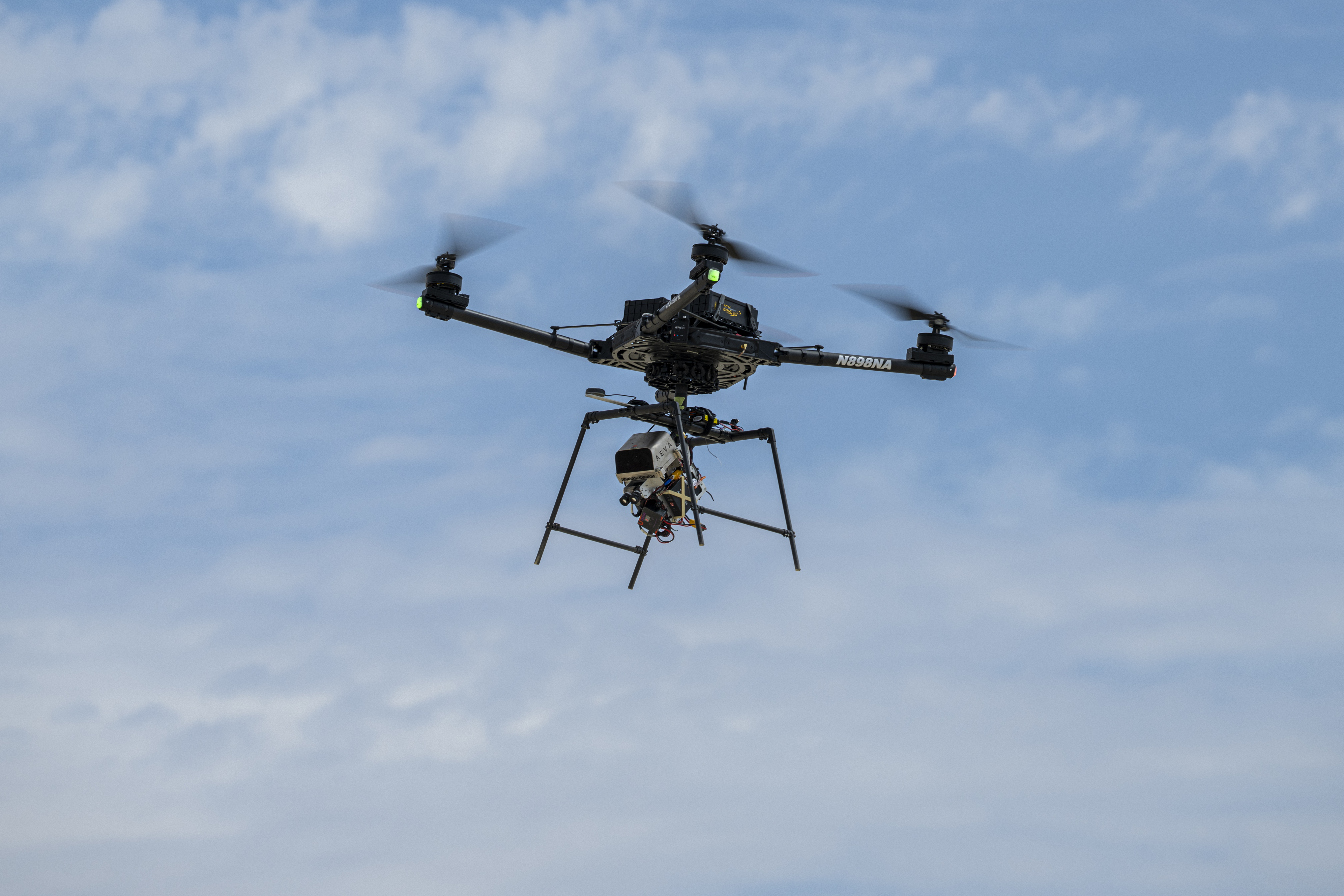
In this Aug. 27, 2026, image, an Alta-X drone flies an advanced guidance and navigation system known as the Safe and Precise Landing – Integrated Capabilities Evolution (SPLICE) experiment near NASA’s Armstrong Flight Research Center in Edwards, California.
Researchers at NASA’s Johnson Space Center in Houston developed SPLICE, which successfully completed simulated lunar descent and landing maneuvers during recent testing. Its technologies provide safe and precise landing for the Moon, Mars, icy worlds, and other destinations using specialized navigation, guidance, and processing techniques. It enables landing in hard-to-reach and unknown areas that are of high scientific interest.
Image credit: NASA/Ryan Kline
https://www.nasa.gov/image-article/practicing-for-safe-landings-on-the-moon-and-beyond/
US-India Satellite Captures Time-lapse Video of Volcanic Eruption
Like tendrils on a vine, lava spreads out from the northern crater of Krasheninnikov, a volcano pair on the Pacific coast of Russia’s Kamchatka Peninsula. On July 30, 2025, an 8.8-magnitude earthquake had struck in the nearby ocean, apparently jolting one of the two volcanoes awake. A few days later, for the first time in […]https://www.nasa.gov/missions/nisar/us-india-satellite-captures-time-lapse-video-of-volcanic-eruption/
US-India Satellite Captures Time-lapse Video of Volcanic Eruption
Credit: NASA’s Scientific Visualization Studio
Like tendrils on a vine, lava spreads out from the northern crater of Krasheninnikov, a volcano pair on the Pacific coast of Russia’s Kamchatka Peninsula. On July 30, 2025, an 8.8-magnitude earthquake had struck in the nearby ocean, apparently jolting one of the two volcanoes awake. A few days later, for the first time in nearly five centuries, Krasheninnikov started erupting. Since that day, the northern volcano has been spilling a steady, eastward-flowing field of molten rock and debris, and the NASA-ISRO Synthetic Aperture Radar (NISAR) mission has been tracking the changes in the landscape.
From its vantage point 464 miles (747 kilometers) above the surface, NISAR captured an image of Krasheninnikov on Dec. 25, 2025, just as the Earth-observing satellite was finishing post-launch checks and becoming operational. Twice every 12 days since — once as the satellite passed south to north, and again as it passed north to south — NISAR has returned to the same spot in orbit and taken detailed radar snapshots.
Researchers put 17 of the frames captured through mid-August into sequence, forming a time-lapse video that shows lava filling a smaller, inner caldera, then overflowing into a wider crater before widening into a fan. The animation highlights how NISAR’s observations can monitor the development of natural hazards, both for science and potentially for emergency response.
Though remote, many of Kamchatka’s dozens of volcanoes are closely monitored with ground instruments because they erupt frequently. Not so with Krasheninnikov, which has been quiet since about the year 1550. That NISAR’s L-band radar observed it at all speaks to the satellite’s near-global coverage of the planet’s land surface at resolutions in the dozens of feet; that it captured the erupting volcano over time shows the precision and reliability of its measurements.
“The consistency is crucial. Twice every 12 days, acquiring in this high-resolution mode and in two observation directions, this shows the promise of NISAR to closely monitor natural hazards,” said Matthew Pritchard, a member of the NISAR science team and geophysicist at Cornell University who analyzed the data used to create the animation.
Images from microwaves
The detail in a single NISAR image results from the use of synthetic aperture radar, or SAR, a specialized processing technique pioneered by NASA’s Jet Propulsion Laboratory in Southern California for Earth observation from space. As the satellite orbits, the radar sends thousands of microwave pulses per second to Earth and receives the return signals, each of which is effectively a snapshot in time that contains information about the properties and characteristics of the surface below.
The SAR processing combines the many images of the same area, sharpening the view just as a lens brings a blurry object into focus. Each pixel in the individual frames of the Krasheninnikov time-lapse represents about a 30-foot-by-30-foot (10-meter-by-10-meter) square on the surface — about half the size of a tennis court.
Lava shows up lighter in the images due to the way that microwaves reflect more brightly compared with the surrounding surface, which, depending on the time of year, is either snow or bare ground. In addition to the lava field growing to the east, the video shows another flow to the northwest, one that likely formed before NISAR captured the first NISAR image.
When Pritchard was doing his doctoral research on Kamchatka volcanoes more than 20 years ago, analysis-ready radar data was difficult to come by, both because satellites didn’t revisit as often and the resolution of the images was relatively low.
Now in addition to getting frequent and comprehensive coverage of virtually all the planet’s roughly 1,300 active, above-sea-level volcanoes, the images are sharp down to the several-meter scale and are easily accessible via the cloud.
“We’re seeing volcanoes around the world that we’ve never really had eyes on like this before,” said Pritchard.
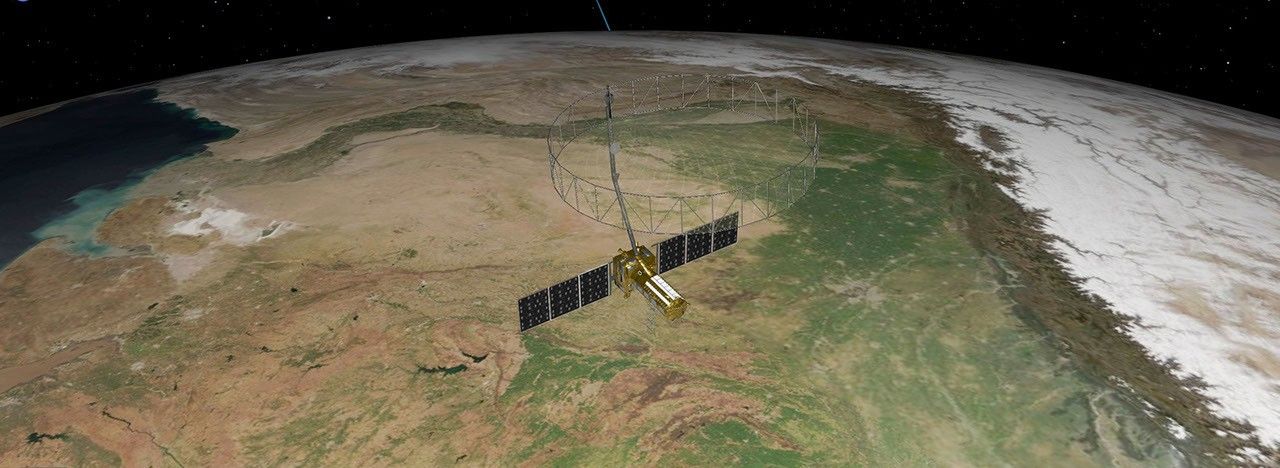
The NISAR satellite is the first free-flying space mission to feature two radar instruments: an L-band system and an S-band system. The systems are complementary due to their differing wavelengths. For example, the longer-wave L-band can pass through tree canopies, imaging the ground beneath. Meanwhile, depending on leaf sizes, S-band can collect observations of those canopies.
The data products from the NISAR mission’s L-band radar are available at the Alaska Satellite Facility Distributed Active Archive Center in Fairbanks, which hosts and distributes all NASA synthetic aperture radar data.
More about NISAR
Managed by Caltech for NASA, JPL leads the United States component of the project and provided the satellite’s L-band SAR and antenna reflector. The spacecraft bus and its S-band SAR were provided by ISRO (Indian Space Research Organisation).
The NISAR satellite is the first to carry two SAR instruments at different wavelengths, collecting data using the spacecraft’s giant drum-shaped reflector, which measures 39 feet (12 meters) wide, which is the largest radar antenna reflector NASA has sent into space.
To learn more about NISAR, visit:
https://science.nasa.gov/mission/nisar/
Media Contacts
Andrew Wang / Andrew Good
Jet Propulsion Laboratory, Pasadena, Calif.
626-379-6874 / 818-393-2433
andrew.wang@jpl.nasa.gov / andrew.c.good@jpl.nasa.gov
2026-064
Explore More
Keep Exploring
Discover Related Topics
NISAR
NISAR (NASA-ISRO Synthetic Aperture Radar) systematically maps Earth, measuring changes of our planet’s surface as small as a centimeter.
Earth Science Missions
In order to study the Earth as a whole system and understand how it is changing, NASA develops and supports…

Earth Science Data
Open access to NASA’s archive of Earth science data
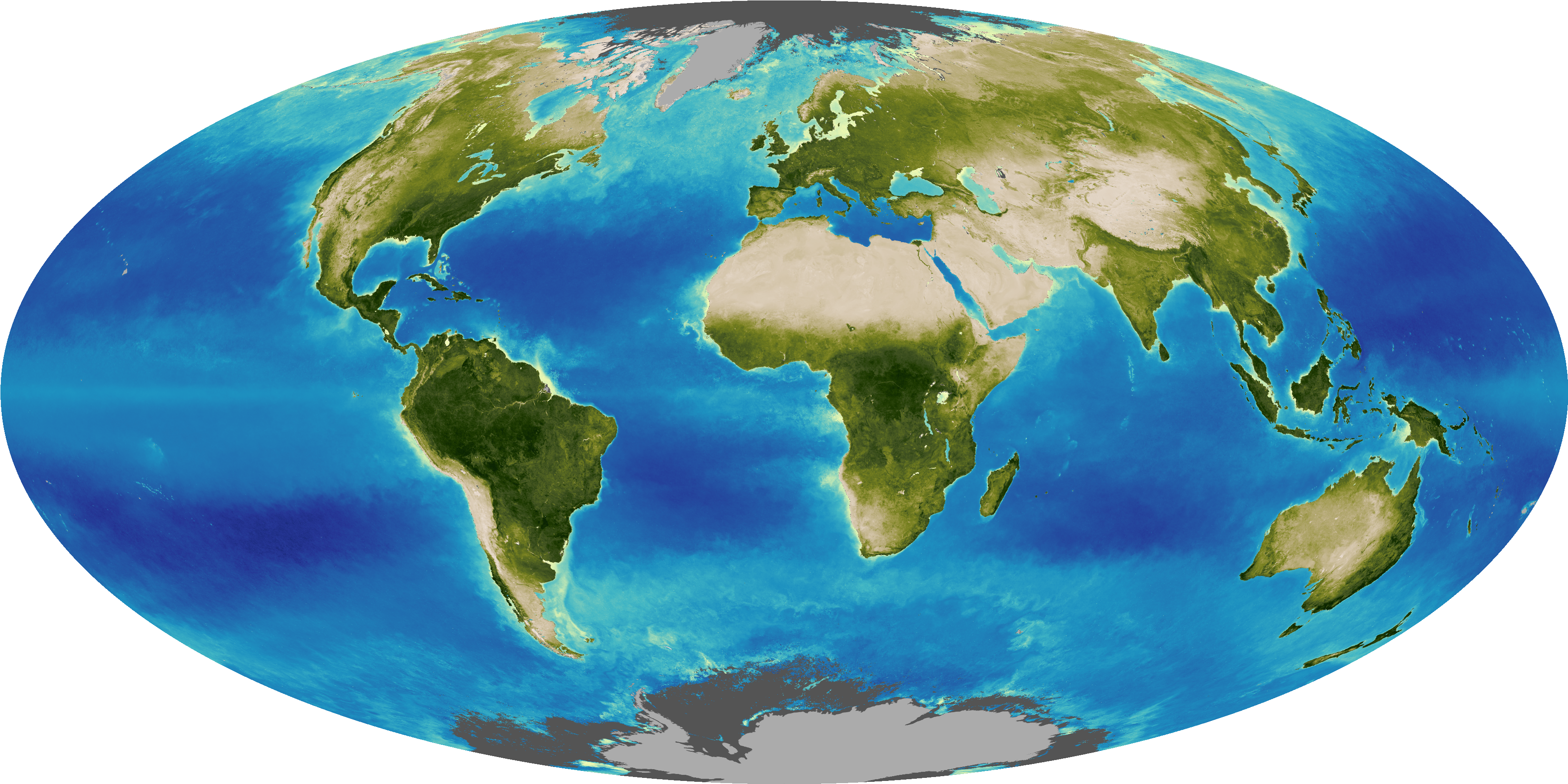
Earth Science at Work
NASA Earth Science helps Americans respond to challenges and societal needs — such as wildland fires, hurricanes, and water supplies…

https://www.nasa.gov/missions/nisar/us-india-satellite-captures-time-lapse-video-of-volcanic-eruption/
NASA to Study Human Health, Performance During Crew-13 Mission
During NASA’s SpaceX Crew‑13 mission aboard the International Space Station, astronauts will support a series of biomedical and human performance investigations, including a new collaborative effort to study how spaceflight affects blood flow and clotting. NASA also is testing crew members’ manual piloting skills, evaluating methods to counter vision and brain changes, gathering essential health […]https://www.nasa.gov/humans-in-space/nasa-to-study-human-health-performance-during-crew-13-mission/
NASA to Study Human Health, Performance During Crew-13 Mission
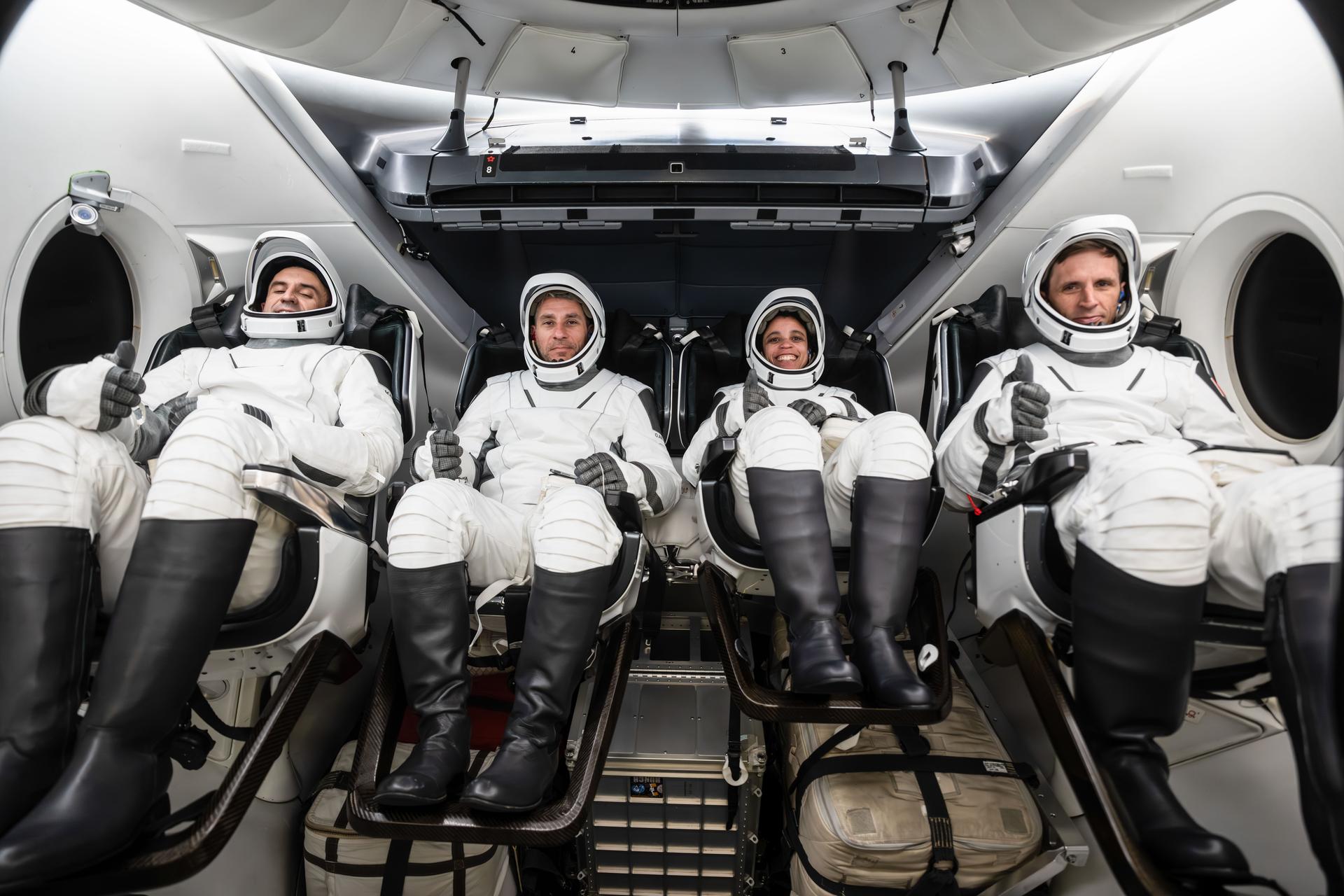
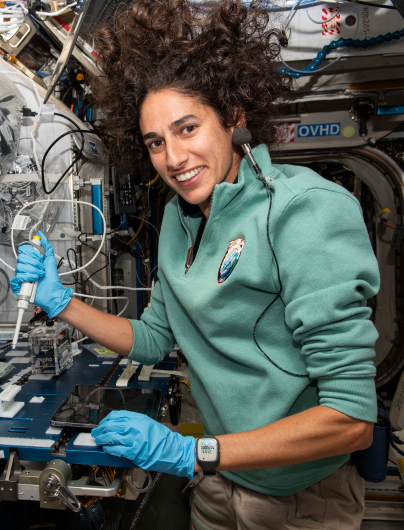
(April 30, 2026) — The SpaceX Crew-13 members are pictured in their pressure suits seated inside a mockup Dragon spacecraft during a preflight training session at the company’s headquarters in Hawthorne, California. From left are, Roscosmos Sergey Teteryatnikov, NASA astronauts Luke Delaney and Jessica Watkins, and CSA (Canadian Space Agency) astronaut Joshua Kutryk.
Credit: SpaceX
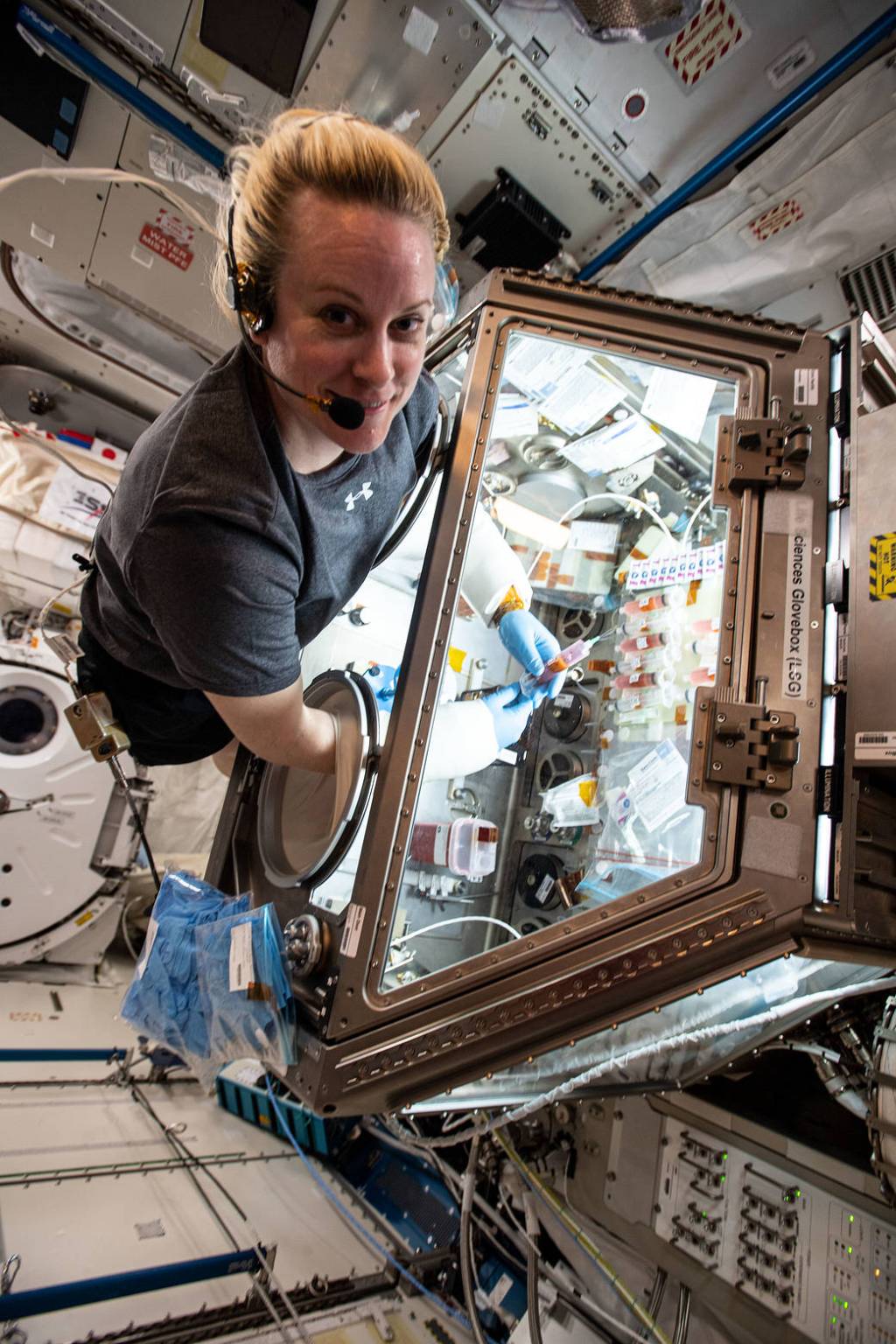
During NASA’s SpaceX Crew‑13 mission aboard the International Space Station, astronauts will support a series of biomedical and human performance investigations, including a new collaborative effort to study how spaceflight affects blood flow and clotting. NASA also is testing crew members’ manual piloting skills, evaluating methods to counter vision and brain changes, gathering essential health data to inform future missions, and measuring forces astronauts experience during return‑to‑Earth to help refine re-entry hardware and procedures.
Among upcoming research, a new collaboration with ESA (European Space Agency), called Venous Haemostasis, builds on previous studies of blood flow in space by combining the two space agencies’ research efforts. By coordinating blood collections and other physiological data, researchers can reduce how often astronauts need blood drawn while combining analytical measurements to better understand how microgravity affects blood clotting and circulation.
“In space, weightlessness can disrupt normal blood flow in astronauts’ veins,” said Jason Lytle, one of the study’s principal investigators and a cardiovascular researcher at NASA’s Johnson Space Center in Houston. “Irregular and slow blood flow can increase the risk of blood clot formation, a serious health condition. Venous Haemostasis will help us understand why these changes may occur in some astronauts but not others.”
Before, during, and after flight, astronauts will undergo MRI scans, jugular vein ultrasounds, blood pressure checks, and blood draws so researchers can track changes in blood flow and blood composition. Results will inform preventative measures for at-risk crew members and improve health and safety on future missions. Researchers also hope to learn whether knowledge gained from this and other studies may lead to better ways to prevent and treat blood clots both in space and on Earth.
A performance study, called Manual Piloting, uses lunar-landing simulations to test how well astronauts can handle challenging landings after spending extended time in microgravity. Because long-duration spaceflight can affect sensory systems, orientation, and motion control during shifts between gravity environments, researchers are evaluating how those changes influence piloting performance and whether refresher training shortly before landing can strengthen capabilities and decision-making.
Researchers also will continue the B-Complex study, which investigates if a daily B-vitamin supplement can reduce or prevent Spaceflight-Associated Neuro-ocular Syndrome (SANS), a condition that can change astronauts’ eye structure during long-duration missions. Past research suggests taking B vitamins daily during spaceflight may help protect astronauts from SANS. Participating crew members will undergo vision tests and take B vitamins before, during, and after flight to evaluate the supplement’s effectiveness. The study also will assess whether the B vitamins influence how crew members’ blood vessels function before and after flight.
Select Crew-13 astronauts also will participate in three additional Human Research Program studies: Standard Measures, Spacecraft Occupant Risk, and Zero T2. Standard Measures collects consistent physiological and behavioral data from as many crew members as possible to establish baselines for research aimed at countering adverse effects. Spacecraft Occupant Risk characterizes the forces astronauts experience during landing to help NASA refine strategies and hardware to reduce injury risks. Zero T2 tracks the exercise routines of select crew members to compare health and performance data between astronauts who use the treadmill for aerobic exercise aboard station and those who do not. The comparisons will help researchers build exercise plans for future Artemis and deep-space missions, where spacecraft size could limit or eliminate treadmill use.
“Together, these investigations will help NASA better understand how the human body responds to spaceflight and whether specific strategies can effectively protect astronaut health and performance,” said Michael Stenger, Human Research Program chief scientist at NASA Johnson. “Knowledge gained will pave the way for NASA’s efforts to safely send humans farther into the solar system, including Artemis missions to the Moon, work on the Moon Base, and future expeditions to Mars.”
____
NASA’s Human Research Program pursues methods and technologies to support safe, productive human space travel. Through science conducted in laboratories, ground-based analogs, commercial missions, the International Space Station and Artemis missions, the program scrutinizes how spaceflight affects human bodies and behaviors. Such research drives the program’s quest to innovate ways that keep astronauts healthy and mission ready as human space exploration expands to the Moon, Mars, and beyond.
Explore More


Keep Exploring
Discover More Topics From NASA

https://www.nasa.gov/humans-in-space/nasa-to-study-human-health-performance-during-crew-13-mission/
APOD: 2026 September 24 – The Ghosts of Five Supernovas
APOD Science APOD APOD: 2026 September 24 –… Today’s APOD Archive Submissions Index Search Calendar RSS Education About Discuss APOD Astronomy Picture of the Day Discover the cosmos! Each day a different image or photograph of our fascinating universe is featured, along with a brief explanation written by a professional astronomer. OriginalAnnotated The Ghosts […]https://science.nasa.gov/image-article/apod-2026-september-24-the-ghosts-of-five-supernovas/
APOD: 2026 September 24 – The Ghosts of Five Supernovas
APOD
Astronomy Picture of the Day
Discover the cosmos! Each day a different image or photograph of our fascinating universe is featured, along with a brief explanation written by a professional astronomer.


The Ghosts of Five Supernovas
Explanation: The ghosts of five supernovas haunt this extraordinary image. It was acquired at Oukaïmeden Observatory in Morocco with approximately 200 hours of observations and shows a large patch of the sky, equivalent to the area of one thousand full moons tiled together, in the constellation of Auriga (the Charioteer). From left to right, the five supernova remnants visible across the field are G181.1+9.5, G182.4+4.3, G179.0+2.6, G180.0−1.7 (Sh2-240, the Spaghetti Nebula), and G178.2−4.2. They are highlighted in the annotated image, together with open cluster M37 and the Tadpole Nebula. As each explosion expanded into space, it created a growing shell of shocked gas and delicate filamentary structures shown in red (hydrogen) and blue (oxygen), respectively. These ancient stellar explosions happened independently; they are at various distances up to about several thousands of light-years away from Earth and have estimated ages up to tens of thousands of years old. Early humans may have seen them as bright new stars, fading over weeks or months.
APOD’s email for image submissions has changed. Please see: APOD Submissions.
APOD’s main NASA site is moving : From apod.nasa.gov to science.nasa.gov/apod
Tomorrow’s picture: what’s next?
| Date | September 24, 2026 |
|---|---|
| Credit | Stephane Vetter, Yann Sainty |
| Authors & editors: | Cecilia Chirenti, Robert Nemiroff, Jerry Bonnell, Keighley Rockcliffe |
| A service of: |
ASD at NASA / GSFC, NASA Science Activation & Michigan Tech. U. |
https://science.nasa.gov/image-article/apod-2026-september-24-the-ghosts-of-five-supernovas/
Cloudy Cloak Over the Northwest
A low-lying cloud layer brought autumn ambience to western Washington and Oregon, while mountainous areas near the coast remained above the pall.https://science.nasa.gov/earth/earth-observatory/cloudy-cloak-over-the-northwest/
Cloudy Cloak Over the Northwest

September 19, 2026
NASA Earth Observatory/Michala Garrison
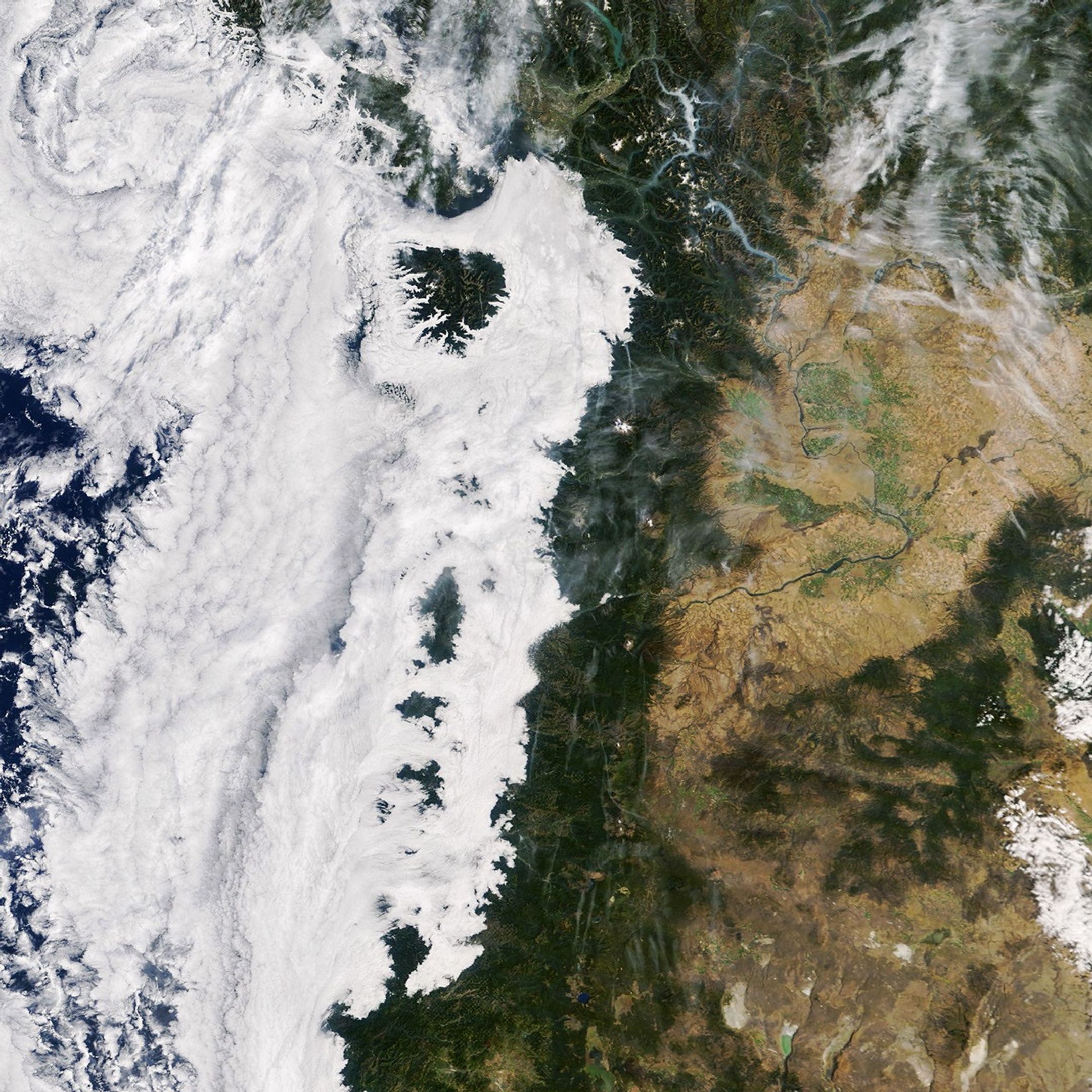
Cool, marine air rolling off the Pacific Ocean led to a picturesque layer of morning clouds over western Washington and Oregon in mid-September 2026. Low-lying stratus clouds and fog extended as far inland as the western foothills of the Cascade Range. Near the coast, taller portions of the Olympic Mountains in Washington and the Oregon Coast Range appeared island-like, protruding above the cloud layer.
The MODIS (Moderate Resolution Imaging Spectroradiometer) on NASA’s Terra satellite shows the extent of the Pacific Northwest’s cloudy cloak on September 19, 2026, at about 10:45 a.m. Pacific Time (17:45 Universal Time). Abundant clouds also appear offshore over the Pacific, while smoke from wildland fires fills valleys in the North Cascades.
For several nights in a row, marine air flowed onshore, according to the National Weather Service, bringing with it low-level clouds known as marine stratus. These clouds form when moist air near the surface, trapped beneath a warmer air layer in a temperature inversion, cools enough for its water vapor to condense. The surge of cool, moist conditions was particularly strong early on September 19, producing cloudy conditions all the way up to the Cascade foothills. Some areas witnessed foggy conditions, where clouds extended down to the ground.
That same day, when NASA’s Aqua satellite passed over the area at about 4:15 p.m. Pacific Time (23:15 Universal Time), skies had cleared over much of the area. However, some marine clouds still clung to the Oregon coast, where temperatures stayed cooler than inland locations.
NASA Earth Observatory image by Michala Garrison, using MODIS data from NASA EOSDIS LANCE and GIBS/Worldview. Story by Lindsey Doermann.

References & Resources
You may also be interested in:
Stay up-to-date with the latest content from NASA as we explore the universe and discover more about our home planet.
El Niño Is Underway
4 min read
Satellite observations of sea surface height indicated that the 2026 event continued to strengthen in early June.
Article

El Niño Alters Marine Life in the Pacific
5 min read
Satellite measurements of chlorophyll at the sea surface signal shifts in the ocean’s nutrient supplies in mid-2026.
Article

Olympic Mountain Glory
4 min read
Snow-capped mountains carved by deep river valleys preside over northwestern Washington state.
Article
Keep Exploring
Discover More from NASA Earth Science
Subscribe to Earth Observatory Newsletters
Subscribe to the Earth Observatory and get the Earth in your inbox.

Earth Observatory Image of the Day
NASA’s Earth Observatory brings you the Earth, every day, with in-depth stories and stunning imagery.

Explore Earth Science

Earth Science Data
Open access to NASA’s archive of Earth science data

https://science.nasa.gov/earth/earth-observatory/cloudy-cloak-over-the-northwest/